Tianjin Cancer Hospital: China Top Oncology for Breast Lung and Esophageal Cancer Treatment
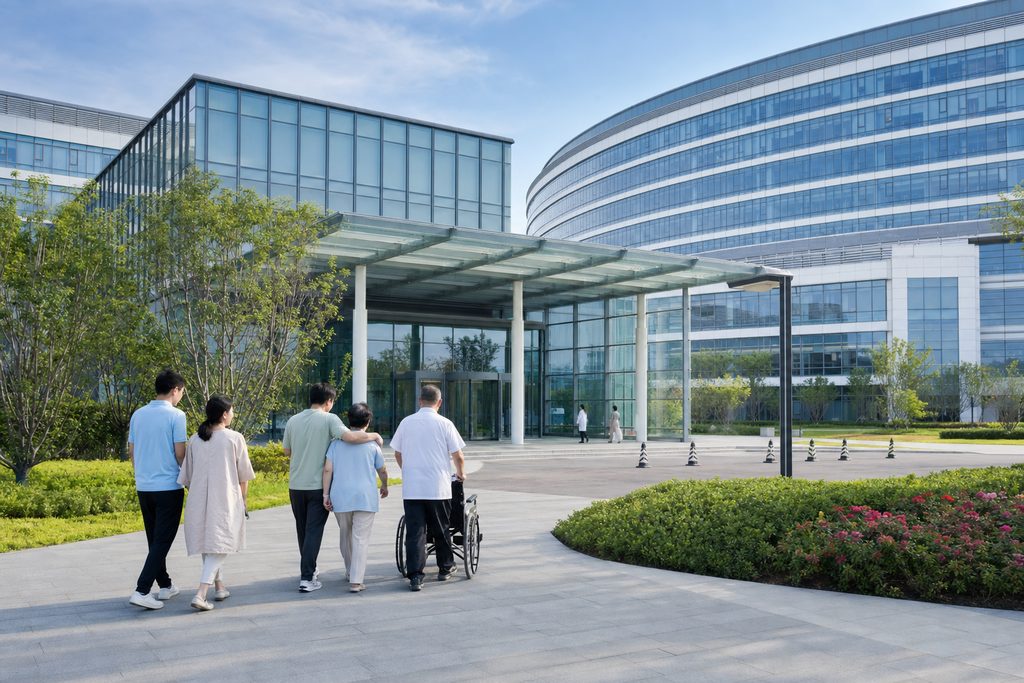
Key Takeaways
- Tianjin Medical University Cancer Institute and Hospital handles over 30,000 cancer surgeries annually — ranking it among Asia’s highest-volume oncology centers.
- Breast, lung, and esophageal cancer treatments here cost roughly 70-85% less than comparable US care, with internationally benchmarked clinical protocols.
- Public hospital systems in China do not allow overseas patients to pre-book surgeries through standard outpatient channels — international medical coordination is the only viable pathway.
- No hospital affiliation exists between our organization and Tianjin Cancer Hospital. We provide logistical coordination only — never medical advice or treatment guarantees.
The Problem: Cancer Treatment Costs Are Breaking People — Even With Insurance
A breast cancer diagnosis in the United States comes with an average first-year treatment cost of $35,000 to $120,000 depending on stage and therapy type. That figure comes from a 2023 analysis published in the Journal of the National Cancer Institute. Even insured patients face out-of-pocket costs exceeding $10,000 annually. And those are just the direct medical bills. Lost income, travel, and caregiving push the real burden far higher.
Lung cancer is worse. Stage IV non-small cell lung cancer treatment in the US averages $180,000 to $220,000 per year with modern immunotherapy regimens. Esophageal cancer? A combined chemoradiation and esophagectomy protocol can exceed $200,000 before complications even enter the picture.
Patients are searching. They are looking at options in Germany, South Korea, India, and increasingly, China. The question they ask us is always the same: can I get the same quality of care for a fraction of the cost without compromising my outcome?
The short answer: yes — if you go to the right institution and navigate the system correctly.
Who We Are
We are China Medical Services, a medical concierge organization that connects international patients with China’s top-tier hospitals. We are not a hospital. We do not provide medical treatment or clinical diagnoses. We are your logistical architects — we bridge the gap between you and China’s top-tier medical expertise. Our team handles hospital matching, appointment coordination through official international departments, bilingual medical companion services, visa guidance, and travel logistics. We work with over 340 top-ranked hospitals across 37 cities. We do not promise shortcuts. We promise clarity, honesty, and a system that works.
Why Tianjin Cancer Hospital Ranks Among China’s Best Oncology Centers
Tianjin Medical University Cancer Institute and Hospital — often referred to simply as Tianjin Cancer Hospital — is one of the largest dedicated cancer centers in Asia. It was founded in 1861, making it China’s first cancer hospital. Today it operates over 2,000 inpatient beds and performs more than 30,000 cancer surgeries each year. The hospital is ranked among China’s top 10 for oncology by the Fudan University Hospital Ranking, the country’s most authoritative hospital evaluation system. For international patients asking “is Tianjin Cancer Hospital good for lung cancer” — the volume data alone makes a compelling case.
But volume is only part of the story. The hospital houses four national key clinical specialties and runs one of China’s largest clinical trial programs for solid tumors. Its breast cancer center was among the first in China to achieve full integration of surgery, medical oncology, radiation oncology, and reconstructive surgery under one clinical pathway. That matters. Fragmented care is a known driver of worse outcomes in oncology. Integrated programs consistently outperform siloed ones.
Clinical Volume Drives Better Outcomes
There is a well-documented relationship between surgical volume and patient outcomes in oncology — the volume-outcome hypothesis. A 2017 study in The Lancet Oncology found that for complex cancer surgeries, hospitals performing more than 20 esophagectomies annually had significantly lower 30-day mortality rates than lower-volume centers. Tianjin Cancer Hospital performs roughly 800 esophagectomies per year.
Lung cancer resections exceed 3,000 annually. Breast cancer surgeries top 5,000. These numbers place Tianjin squarely in the highest-volume tier globally. For a patient researching the best hospital for esophageal cancer in China, volume data is a crucial filter. High-volume centers see complications earlier, manage them better, and simply have more refined surgical workflows.
Technology and Efficiency at Scale
The hospital operates 12 linear accelerators for radiation therapy — more than most European comprehensive cancer centers. It adopted da Vinci robotic surgery systems years ago and now performs over 1,000 robotic-assisted procedures annually across thoracic, gynecologic, and urologic oncology. Intraoperative radiotherapy, 3D-printed surgical guides, and molecular tumor boards are routine, not experimental.
What strikes many Western patients is the operational tempo. The hospital processes over 1.2 million outpatient visits annually. The system has been engineered for throughput without sacrificing clinical rigor. Tumor boards meet daily. Pathology turnaround for complex immunohistochemistry panels is often under 72 hours. This is not magic — it is the result of decades of investment in cancer-specific infrastructure.
Cost Advantage Without Quality Compromise
Let us address the elephant in the room directly. The breast cancer treatment cost Tianjin Cancer Hospital quotes for international patients is not low because of inferior care. It is low because of structural economics. Physician salaries in China are a fraction of US levels. Hospital construction costs are lower. Drug pricing — especially for generics and domestically produced targeted therapies — is significantly below Western markets. A full course of HER2-targeted therapy that costs $70,000 in the US might cost $15,000 to $25,000 in China for the identical biologic.
A comprehensive breast cancer treatment package — surgery, chemotherapy, radiation, and one year of targeted therapy — typically ranges from $18,000 to $45,000 at Tianjin’s international patient center. The equivalent US protocol runs $120,000 to $250,000. Lung cancer protocols show similar ratios. Esophageal cancer treatment packages generally fall between $25,000 and $55,000.
These are real numbers. They vary by stage, molecular subtype, and treatment complexity. But the structural gap is genuine and persistent.
| Cancer Type | Treatment Package | Estimated Cost (USD) | US Comparison |
|---|---|---|---|
| Breast Cancer | Surgery + Chemo + Radiation + 1yr Targeted | $18,000 – $45,000 | $120,000 – $250,000 |
| Lung Cancer | Surgery + Adjuvant Chemo / Immunotherapy | $22,000 – $55,000 | $150,000 – $220,000 |
| Esophageal Cancer | Chemoradiation + Esophagectomy | $25,000 – $55,000 | $160,000 – $250,000 |
What You Need to Know Before Going Alone
We tell every patient the same thing: the medical quality is real, but the system is not designed for foreigners. If you book a flight to Tianjin and walk into the outpatient lobby expecting to see a top specialist, you will fail. Here is what you are up against.
- Visa Requirements: Medical treatment in China requires an S2 visa with a medical purpose annotation. You need an official invitation letter from the hospital — and hospitals only issue these after confirming your appointment and treatment plan. Standard tourist visas do not cover medical treatment. Your accompanying family members also need S2 visas. Processing takes 2-4 weeks in most jurisdictions.
- Registration and Scheduling: Public hospital outpatient departments do not accept international self-registration for specialist consultations. The online booking platforms require Chinese ID numbers or local phone verification. Specialist slots — especially for the department heads that patients specifically seek — fill within minutes of release. You cannot book them from abroad without an intermediary.
- Language and Navigation: Tianjin Cancer Hospital sees over 5,000 outpatients daily. Signage is predominantly in Chinese. Lab slips, pharmacy instructions, and discharge summaries are all in Chinese. One missed direction can mean hours of delay. In oncology, delays cascade.
- Payment Systems: International patients pay upfront via hospital international departments. Credit card systems sometimes fail with foreign-issued cards. Wire transfers require precise coordination with hospital finance offices that may not respond in English. Insurance reimbursement is almost always retroactive — you pay first, claim later.
How We Help You Navigate This
These barriers exist for structural reasons, not malice. The system was built for 1.4 billion domestic patients. International patients are an afterthought in most public hospitals — even the top-ranked ones. That is where we come in.
Our process starts with your medical records. You send us your pathology reports, imaging, treatment history, and current status. We translate everything into clinical Chinese — not Google Translate, but medically precise translation done by bilingual clinicians. We then submit your case through the official international patient channel at Tianjin Cancer Hospital or whichever institution best matches your clinical needs.
The hospital reviews your records and provides a preliminary treatment recommendation and cost estimate. This is not a binding quote — it is an expert assessment based on documented evidence. If you decide to proceed, we coordinate your S2 visa invitation letter, schedule your initial consultation, and arrange your hospital registration. Our bilingual medical companion meets you at the hospital entrance on day one and stays with you through every appointment, every test, every billing interaction. They translate in real time, explain what is happening, and ensure nothing gets lost.
After discharge, we coordinate follow-up teleconsultations and manage prescription logistics. Many patients ask us how much does cancer treatment cost in China for foreigners — the honest answer is that it depends entirely on your specific diagnosis and protocol. But we provide transparent cost breakdowns before you commit to anything. No surprises. No hidden fees.
For those seeking to book cancer treatment package Tianjin China, we should clarify: Tianjin Cancer Hospital does not sell pre-packaged treatment bundles online. What exists is a coordinated care pathway — a sequence of appointments, procedures, and therapies arranged through the international department. We handle that coordination. Our hospital appointment coordination service starts from $300, with full refund if we cannot secure the confirmed appointment.
Frequently Asked Questions
Technically yes — the hospital has an international department with English-speaking staff. In practice, response times vary widely, and the process of submitting foreign medical records, obtaining a treatment assessment, and coordinating schedules often takes months when attempted independently. Most international patients work through a medical coordination service to compress this timeline and ensure nothing is lost in translation.
No. This is a hard rule across Chinese public hospitals. Surgery requires an in-person consultation first. The surgeon must examine you, review your current imaging, and confirm the treatment plan face-to-face. What we can do is schedule that initial consultation for the earliest possible date and ensure all your records are reviewed beforehand so the surgeon is prepared. Surgery typically follows within 1-3 weeks of the consultation, depending on preoperative testing requirements.
At China’s top oncology centers — including Tianjin Cancer Hospital — the answer is yes for most solid tumor treatments. Clinical protocols follow NCCN and ESMO guidelines. Radiation equipment is current-generation. Surgical techniques are modern. The key variable is the institution, not the country. A top-10 Chinese cancer center delivers care comparable to a major US academic medical center. A random provincial hospital does not. This is why hospital selection matters enormously. Our database covers only the top 5% of China’s 35,000+ hospitals, ranked by Fudan and JCI criteria.
This is a legitimate concern. We arrange post-treatment teleconsultations with your treating physicians so they can review recovery progress and advise on any issues. Your local oncologist should also receive a translated treatment summary and be looped into follow-up care. We do not provide emergency medical support outside China — that responsibility transfers to your home healthcare system. But the continuity pathway is established before you leave.
Your Next Step
Cancer forces difficult decisions under time pressure. The financial burden of treatment should not be the thing that breaks a family. China’s top oncology hospitals offer a genuine alternative — clinically credible, structurally cost-advantaged, and increasingly accessible to international patients who know how to navigate the system.
If you are researching the best hospital for esophageal cancer in China or comparing treatment costs for breast or lung cancer, we can help you get clear answers. Our consultation is free. Send us your medical records and we will provide an honest assessment of your options — which hospital fits your case, what the likely costs will be, and whether traveling to China makes clinical and financial sense for your situation. No pressure. Just clarity.
Disclaimer: This article is for informational purposes only and does not constitute medical advice. Treatment decisions should be made in consultation with qualified medical professionals. Costs cited are estimates based on typical international patient pathways and vary by hospital, case complexity, and clinical requirements.
For more medical information and treatment options in China, visit chinamedservices.com (China Medical Services).
