Neurology & Endocrinology at Tianjin Medical University General Hospital: A Guide for International Patients
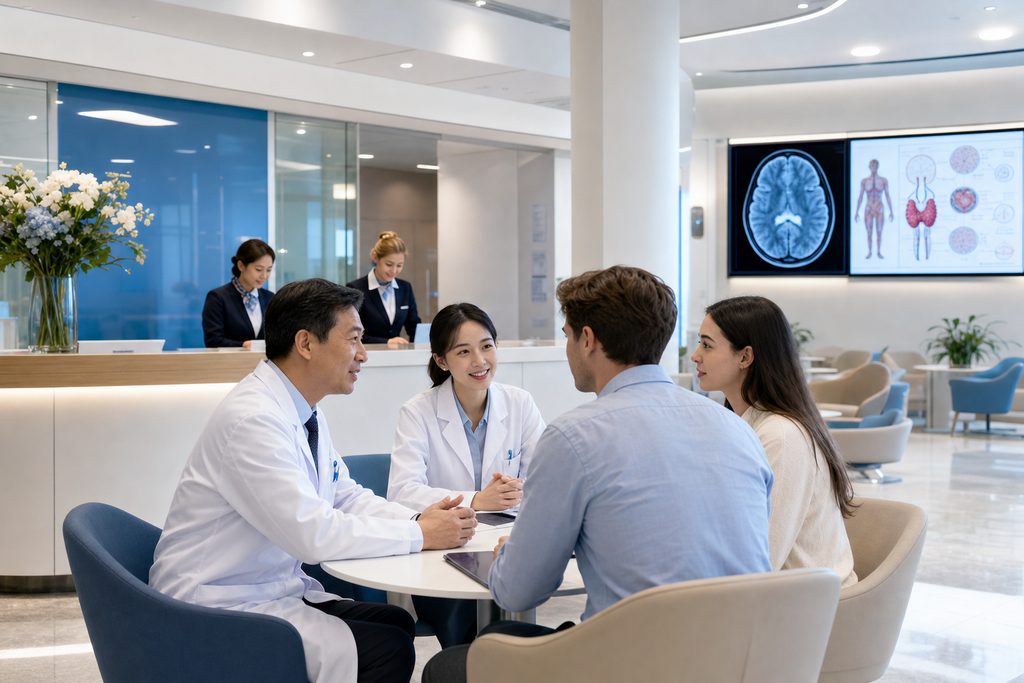
What if the specialist you need is already seeing 100 cases a month in conditions similar to yours?
That volume question matters. Tianjin Medical University General Hospital (TMUGH) treats a staggering number of complex neurological and endocrine cases every year. For international patients weighing the neurology treatment cost China international patient equation, the math often shifts dramatically once you see the case volumes.
Our team has coordinated care for patients from over 20 countries at this institution. We are not doctors. We do not provide medical treatment. We handle the logistics—visa paperwork, hospital registration, language barriers, and post-operative recovery planning—so you can focus on getting better.
Key Takeaways
- TMUGH’s neurology department handles approximately 300,000 outpatient visits annually, with a dedicated neuro-intensive care unit managing complex stroke and brain tumor cases around the clock.
- The hospital’s endocrinology center is a nationally designated key discipline, running specialized thyroid cancer and diabetes complication clinics that draw patients from across Asia.
- Language barriers in Tianjin remain significant—fewer than 5% of nursing staff speak functional English, which means navigating care independently is extremely difficult for overseas visitors.
- International patients cannot simply walk in and book surgery. You need a documented outpatient consultation first, followed by a coordinated admission through the hospital’s International Medical Center.
The Problem: Neurological and Endocrine Conditions Don’t Wait for Bureaucracy
A patient in London waits an average of 18 weeks just to see a neurologist through the NHS. Someone in Toronto might wait 6 months for an endocrinology consultation. These are not outliers. They are the norm in publicly funded systems stretched past capacity.
Neurological diseases do not pause. A pituitary tumor grows. Myasthenia gravis weakens muscles further. Diabetic neuropathy progresses. Every month of waiting carries a cost that no spreadsheet captures.
The financial side is equally brutal for those paying privately. A brain tumor resection in the United States averages $50,000 to $150,000 depending on complexity. Pituitary surgery runs $30,000 to $70,000. Even with insurance, deductibles and out-of-network charges can bankrupt a family.
This is where the structural economics of Chinese academic medical centers change the conversation. TMUGH is a 3,000-bed university hospital affiliated with Tianjin Medical University. It runs one of the largest neurology departments in northern China. Its endocrinology division has been a national clinical research center for over two decades. And the cost structure bears no resemblance to Western hospitals.
Who We Are
We are China Medical Services. We are not a hospital. We do not provide medical treatment or clinical diagnoses. We are your logistical architects—we bridge the gap between you and China’s top-tier medical expertise. Our team handles the entire patient journey: from identifying the right specialist at the right hospital, to securing visa invitation letters, to placing a bilingual medical companion at your side during every appointment, scan, and pharmacy visit. Think of us as the local partner who knows exactly which elevator goes to which department and which form goes to which window. That knowledge saves days.
Why Tianjin Medical University General Hospital Delivers Results for Complex Cases
Clinical Volume That Builds Unmatched Expertise
A neurosurgeon at TMUGH performs more brain tumor resections in a single year than many Western surgeons complete in five. The hospital’s neurology department covers over 300,000 outpatient consultations annually. The stroke unit alone treats thousands of acute ischemic and hemorrhagic cases each year, with a door-to-needle time that consistently meets international benchmarks.
This matters for outcomes. Study after study confirms that higher surgical volumes correlate with lower complication rates and shorter hospital stays. When you are the patient, you want the team that has seen your condition hundreds of times—not the team reading up on it the night before.
The endocrinology department operates on a similar scale. Its thyroid cancer clinic manages one of the largest patient cohorts in the region. The diabetes center runs integrated care programs combining endocrinologists, ophthalmologists, nephrologists, and podiatrists under one roof. For an international patient with a complicated endocrine presentation, this kind of multidisciplinary coordination is hard to find elsewhere at a comparable cost.
Technology Infrastructure That Has Leapt Ahead
TMUGH invested heavily in neurosurgical navigation systems, intraoperative MRI, and neuro-electrophysiological monitoring over the past decade. The hospital’s hybrid operating suites allow surgeons to perform combined open and endovascular procedures in a single session—critical for complex cerebrovascular cases.
The endocrinology labs run high-sensitivity assays for hormone panels, genetic testing for MEN syndromes, and advanced imaging for parathyroid localization. These are not exotic technologies by Western standards. But the speed of access is different. A patient can often complete a full diagnostic workup—blood tests, imaging, specialist consultation—within 2 to 3 days. In many Western systems, that same sequence takes weeks or months scattered across different facilities.
Cost Structures That Reflect Economics, Not Quality Compromises
Let us address the obvious question directly. Lower cost does not mean lower quality. It reflects different underlying economics. Physician salaries in China are a fraction of those in the United States. Hospital construction costs are lower. Administrative overhead is leaner. Malpractice insurance premiums are negligible compared to American levels.
The result: a brain tumor surgery that costs $50,000 to $150,000 in the US might run $15,000 to $35,000 at TMUGH. A comprehensive endocrinology workup—full hormone panel, thyroid ultrasound, fine-needle aspiration biopsy, and specialist consultation—typically costs $800 to $2,500. These are real numbers we have seen across dozens of patient cases. They vary by complexity, length of stay, and whether you access care through the standard inpatient track or the International Medical Center VIP pathway.
The question “what is the price of brain tumor surgery in China” does not have one answer. But the range consistently lands at 20% to 30% of US prices for equivalent or higher-volume care.
What You Need to Know Before Going Alone
We tell every prospective patient the same thing: Tianjin is not Beijing or Shanghai. The international patient infrastructure is thinner. That does not make it worse. It makes preparation more important.
- Language Is the Biggest Barrier: TMUGH is a Chinese-language institution. Signage in English is limited. Fewer than 5% of nursing staff speak functional English. Physicians may read English medical literature but are often hesitant to speak it in clinical settings. Without a bilingual companion, you will struggle with registration forms, pharmacy instructions, discharge paperwork, and even finding the right building on a campus that spans multiple city blocks.
- Payment Is Upfront and Cash-Based: Chinese public hospitals operate on a prepaid deposit system. You deposit funds at admission. The hospital draws down against that balance for tests, medications, and procedures. When the balance runs low, you top it up. International credit cards are not accepted at most hospital payment windows. WeChat Pay and Alipay dominate, and these platforms often reject foreign-issued cards. You need a local payment solution or a service partner who handles deposits on your behalf.
- Medical Records Must Be Translated and Formatted: The hospital requires a documented outpatient consultation before any surgery can be scheduled. You cannot email your MRI and book a procedure date remotely. You need a formal referral letter, translated imaging reports, and a pathology summary in Chinese before a senior specialist will review your case. This is not bureaucracy for its own sake—it is a legal requirement under Chinese medical regulations. But it creates a paperwork burden that solo travelers rarely anticipate.
How We Help You Navigate This
These barriers exist for structural reasons. They are not impossible to solve. They just require local knowledge and boots on the ground.
Before you travel, our team translates and formats your medical records to meet Chinese hospital standards. We coordinate with TMUGH’s International Medical Center to schedule an outpatient consultation with the appropriate specialist—neurology or endocrinology, depending on your primary diagnosis. We secure the visa invitation letter that supports your S2 visa application. The S2 visa is the correct category for medical treatment in China. Do not let anyone tell you to apply for an M visa. That is for commercial visitors and will cause problems at the hospital registration desk.
During your stay, a bilingual medical companion accompanies you to every appointment. This person handles registration queues, pays deposits, translates conversations with your doctor in real time, and explains medication instructions before you leave the pharmacy. They know which building houses the endocrinology lab and which floor has the neurology outpatient clinic. That granular knowledge saves hours of confusion.
After treatment, we coordinate follow-up care. If your neurologist orders a 3-month follow-up MRI, we schedule it before you leave and arrange for the images and report to be sent to your home physician. We manage discharge paperwork, medication refills, and any rehabilitation referrals.
The process is not complicated. It is just detailed. And the details matter when you are recovering from brain surgery or adjusting to a new thyroid medication regimen.
How to Book an Appointment at Tianjin Medical University General Hospital as an International Patient
The most direct path runs through the hospital’s International Medical Center. This is a dedicated unit within TMUGH that handles overseas patients. It offers expedited registration, private consultation rooms, and staff who speak some English—though not fluently. The center can coordinate specialist appointments across neurology and endocrinology departments.
Here is the sequence we follow for every patient:
You send us your medical records. We translate them and submit them to the International Medical Center for specialist review. A senior physician confirms that your case falls within their scope. We then schedule an outpatient consultation date. You apply for your S2 visa using the invitation letter we provide. You arrive in Tianjin. You attend your consultation. The specialist recommends a treatment plan—possibly surgery, medication adjustment, or further diagnostics. If surgery is indicated, the hospital schedules it after the face-to-face consultation, typically within 1 to 2 weeks depending on urgency and operating room availability.
You cannot shortcut the outpatient step. Chinese law requires it. Anyone promising you a direct-to-surgery booking without a prior consultation is either misinformed or misleading you.
Is Neurological Care Safe in China for Overseas Patients?
The short answer: yes, at top-tier academic centers like TMUGH. The longer answer requires context.
Chinese tertiary hospitals operate under a hospital accreditation system that has been tightening standards for two decades. TMUGH holds the highest classification—Grade A, Level 3—and undergoes regular review. Its neurology department participates in international clinical trials. Its neurosurgeons publish in peer-reviewed journals. The infection control protocols, surgical safety checklists, and adverse event reporting systems are modeled on international standards.
What differs is the patient experience. Nursing ratios are lower than in Western hospitals. Family members or hired caregivers are expected to handle bedside tasks like feeding, bathing, and toileting. The food is Chinese hospital food—not tailored to international palates. Privacy standards around medical information are looser than HIPAA requirements. These are real differences. They do not make care unsafe. They make it different, and patients who understand those differences in advance adjust far better than those who arrive expecting a Western hospital transplanted to northern China.
For the question “is neurological care safe in China for overseas patients,” the evidence points to yes—provided you select a top-ranked institution and have language support throughout your stay.
The Best Endocrinology Hospital in Tianjin for Foreigners: What Sets TMUGH Apart
The endocrinology department at TMUGH is not just the best in Tianjin. It ranks among the strongest in northern China. The department runs specialized clinics for thyroid disease, diabetes complications, pituitary disorders, adrenal conditions, and metabolic bone disease. Each clinic is staffed by subspecialists who see nothing but that condition all day, every day.
For international patients, this concentration of expertise matters. A thyroid nodule workup that might involve three separate referrals in a Western system—endocrinology, radiology, interventional radiology for biopsy—happens under one departmental roof at TMUGH. The endocrinologist orders the ultrasound. The cytopathologist reads the FNA sample the same day. The surgeon joins the discussion if thyroidectomy is indicated. The entire sequence can unfold in 48 hours.
The phrase “Tianjin hospital international patient package endocrinology” is something we hear often from prospective patients. The reality is that TMUGH does not offer pre-packaged bundles in the way some private international hospitals do. What it offers is a coordinated pathway through the International Medical Center, with itemized billing for each service. A typical endocrinology workup—consultation, lab panel, ultrasound, biopsy—costs $800 to $2,500 depending on complexity. A thyroidectomy runs $5,000 to $12,000. These figures include hospital fees, surgeon fees, and anesthesia. They do not include travel, accommodation, or our coordination services.
For patients seeking the best endocrinology hospital Tianjin for foreigners, TMUGH is the clear answer. The combination of subspecialist depth, diagnostic speed, and cost efficiency is hard to match elsewhere in the region.
Frequently Asked Questions
Can I email my MRI and get a treatment plan without traveling to Tianjin first?
You can request a written second opinion. Our team submits your translated imaging and reports to a TMUGH specialist, who provides a documented assessment and treatment recommendation. This costs $300 to $500 and serves as a reference—not a prescription. But surgery cannot be scheduled remotely. Chinese law requires an in-person outpatient consultation before any surgical admission. There is no exception to this rule.
What happens if complications arise after I return home?
This is a legitimate concern. Before you leave Tianjin, your attending physician prepares a detailed discharge summary in both Chinese and English. This document includes operative notes, medication lists, lab results, and follow-up instructions. We coordinate with your home physician to ensure continuity of care. If a complication arises, we can arrange a video consultation with your TMUGH specialist for $100 to $300. Any consultation fee paid within 90 days is credited in full toward on-the-ground coordination services should you need to return to China for further treatment.
How do I pay the hospital if my foreign credit card does not work?
We handle deposits on your behalf through local payment channels. You transfer funds to us in advance, and we deposit them into your hospital account. The hospital draws against this balance throughout your stay. Any unused funds are returned to you at discharge, minus a small administrative processing fee. This system works smoothly once set up, but it requires trust and advance planning.
What is the recovery support like after neurosurgery at TMUGH?
The hospital provides standard post-operative nursing care—vital sign monitoring, medication administration, wound care. What it does not provide is the kind of intensive bedside assistance that Western patients may expect. You will need a family member or hired caregiver to help with meals, mobility, bathing, and communication with the nursing station. We can arrange a bilingual caregiver for the duration of your inpatient stay. This is an additional cost—typically from $200 per day—and we recommend budgeting for it in advance.
Is Tianjin a safe city for foreign patients traveling alone?
Yes. Tianjin is a major port city of 15 million people with a long history of international trade and foreign residents. Violent crime is rare. The bigger challenge is navigation—street signs in Chinese, limited English among taxi drivers, and a metro system that requires a local payment app. Our airport transfer service ($200 round-trip) and bilingual companion support solve most of these friction points. Patients who arrive with logistical support consistently report feeling safe and focused on recovery.
Your Next Step
Choosing to travel abroad for neurological or endocrine care is not a small decision. The logistics are real. The language barrier is real. But so is the possibility of accessing high-volume, high-expertise care at a fraction of Western prices—without waiting months for a consultation.
We have walked this path with patients from London, Toronto, Sydney, and Dubai. The process works when you prepare properly. If you are considering TMUGH for neurology or endocrinology treatment, start with a conversation. Tell us about your diagnosis. Send us your records. We will tell you honestly whether this hospital is the right fit for your case—and what the journey would look like from start to finish.
That conversation is free. It carries no obligation. It is simply the most efficient way to get clarity on your options.
Request a free consultation with our patient coordination team — we will review your case and outline a practical path forward within 48 hours.
For more medical information and treatment options in China, visit chinamedservices.com (China Medical Services).
