TCM Treatment in Tianjin China: Your Guide to Acupuncture Excellence & Local Care
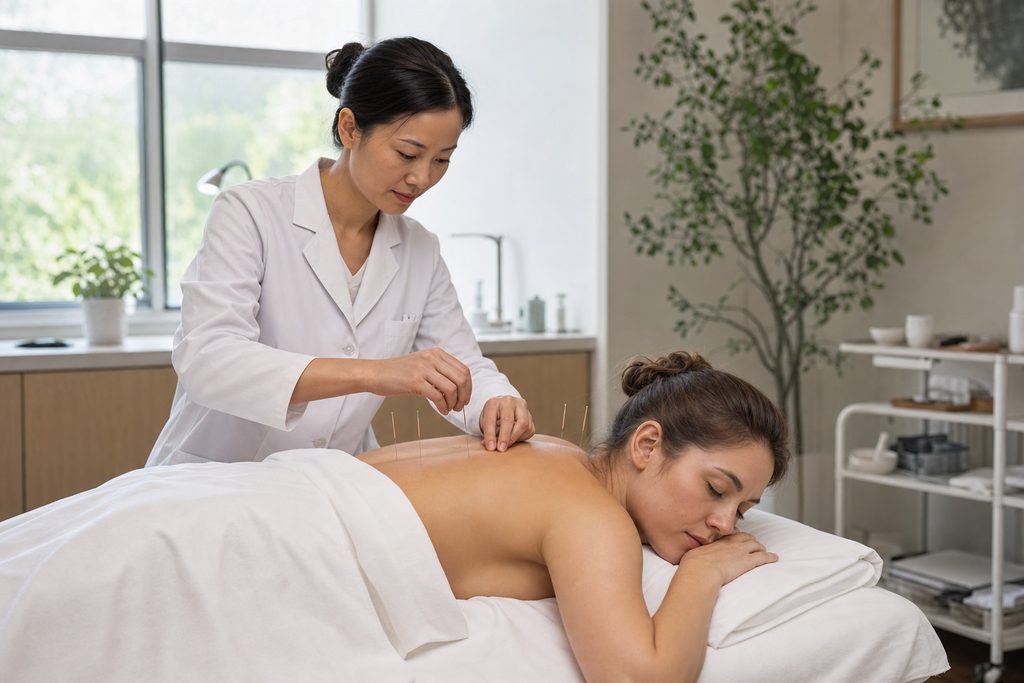
TCM Treatment in Tianjin: The Short Answer
Getting acupuncture or herbal medicine in Tianjin as an international patient is entirely doable. The real question isn’t whether you can. It’s whether you can navigate it without wasting time, money, and patience. The cost of acupuncture treatment in Tianjin typically ranges from $30 to $120 per session at a reputable hospital, with full-service packages that include translation and logistics starting from $300 per day. That’s the headline number.
But here’s the catch. Walk into a public TCM hospital without Mandarin and without a local who knows the system, and you’ll likely spend hours lost in corridors, holding the wrong forms, and never reaching the specialist you read about. The treatment itself is excellent. The pathway to it is where most foreign patients stumble.
Who This Is Right For — and Who It Isn’t
TCM in Tianjin works beautifully for certain people. It’s not for everyone. Let’s be direct about both.
Good candidates typically include people managing chronic pain conditions — lower back pain, knee osteoarthritis, migraines that haven’t responded fully to Western medication. Patients seeking post-stroke rehabilitation often find acupuncture accelerates recovery of motor function. Those with stress-related disorders, insomnia, or digestive issues that conventional medicine hasn’t resolved also tend to respond well. And people who are simply curious about TCM as a complement to their existing care plan — not a replacement for it.
Who should think twice? Anyone with a bleeding disorder or taking anticoagulants needs to discuss acupuncture with their primary physician before booking anything. Patients with active infections or skin conditions at the needle sites should wait until those clear. If you have a pacemaker, electroacupuncture is off the table. And if you’re seeking TCM as an alternative to chemotherapy, surgery, or antibiotics for a serious condition — stop. That’s not what this is. TCM complements evidence-based medicine. It does not substitute for it.
Also worth saying plainly: if you need treatment but can’t tolerate ambiguity, TCM may frustrate you. Diagnosis relies on pulse-taking, tongue examination, and pattern identification — not lab values you can track on a spreadsheet. Some patients find that liberating. Others find it maddening. Know which one you are.
The Options, Compared
Not all TCM experiences in Tianjin are equal. You have three distinct paths, and they differ sharply in cost, convenience, and clinical depth. Here’s how they stack up.
| Option | Session Cost (USD) | English Support | Wait Time | Best For |
|---|---|---|---|---|
| Public TCM Hospital (Standard Outpatient) | $15–40 | Rare — bring your own interpreter | Same-day queue; arrive by 7 AM | Budget-conscious patients with a local guide |
| Public TCM Hospital (International/VIP Department) | $60–120 | Usually available | Appointment booked 3–7 days ahead | Patients wanting clinical depth with language support |
| Private TCM Clinic or Wellness Center | $80–200 | Common | Flexible; often same-week | Comfort-focused patients; shorter treatment courses |
| Full-Service Medical Concierge Package | $300–500/day (coordination + treatment) | Guaranteed bilingual companion | Pre-arranged; minimal on-the-ground waiting | First-time visitors to China; complex cases needing multiple visits |
The public hospital route gives you access to professors who’ve practiced for thirty years and published in journals you’d recognize. But you’ll earn every dollar saved through logistical friction. The VIP department at a hospital like the First Teaching Hospital of Tianjin University of TCM splits the difference — same senior physicians, but with appointment scheduling and someone at the desk who speaks English. Private clinics are smoother still, though the practitioners may be less distinguished academically. The concierge path eliminates the navigation problem entirely. You pay for someone else to absorb the complexity.
How Does TCM Treatment Work in China — the Actual Patient Journey
Western patients often imagine acupuncture as a standalone service: walk in, get needles, leave. That’s not how it works in a proper Chinese TCM hospital. The process is more layered.
Your first visit begins with diagnosis. A TCM physician will take your pulse at three positions on each wrist, examine your tongue’s coating and color, and ask questions that may seem unrelated to your complaint — about sleep, digestion, emotional state, sensitivity to cold or heat. This is pattern differentiation, the core diagnostic method. The practitioner isn’t treating your knee pain in isolation. They’re mapping a systemic imbalance that, in TCM theory, manifests as that knee pain.
Treatment itself typically combines modalities. Acupuncture is the entry point for most foreigners, but a full session often includes moxibustion (burning mugwort near acupoints), cupping, or tuina therapeutic massage. Herbal medicine is frequently prescribed alongside — raw herbs you boil at home, or concentrated granules you dissolve in water. The herbs matter. Many Chinese physicians consider acupuncture the acute intervention and herbal formulas the long-term correction.
A typical course runs 10 to 12 sessions over 4 to 6 weeks, with frequency tapering as symptoms improve. This isn’t a one-and-done proposition. Patients who come for a single session and expect resolution are almost always disappointed. The ones who commit to the full course see results that, in many cases, outlast the treatment window.
One thing that surprises Western patients: follow-up isn’t optional. A good TCM physician adjusts the acupuncture point prescription and herbal formula at each visit based on how your pattern is shifting. The treatment evolves with you. That’s the strength of the system. It’s also why remote TCM consultations are limited — pulse and tongue diagnosis really do require your physical presence.
Is Acupuncture in Tianjin Safe for International Patients?
You can. It’s just harder. Most public hospital international departments accept direct inquiries by email or phone, though response times vary from 24 hours to never. If you’re persistent and patient, you can arrange appointments yourself. What you can’t easily arrange yourself is the on-the-ground navigation — knowing which building to enter, which floor hosts the acupuncture department, which window processes your payment, where the pharmacy dispenses your herbs. That’s where a bilingual medical companion changes the experience from exhausting to manageable. Some patients book TCM treatment Tianjin medical tourism packages specifically to eliminate this friction. Others bring a Chinese-speaking friend and save the coordination fee. Both approaches work. One is just faster.
This happens. Not often, but enough that you should know about it. Some patients experience a temporary flare of symptoms after the first one or two sessions — Chinese medicine calls this a “healing crisis” or, more precisely, the body’s qi adjusting to the intervention. It typically resolves within 24–48 hours. If pain intensifies and stays intensified beyond three days, or if you develop bruising, dizziness, or any sign of infection at a needle site, contact the physician immediately. These are not normal responses and warrant reassessment. A reputable practitioner will give you a direct phone number for exactly this scenario. If they don’t offer one, ask for it.
The difference is depth. In most Western countries, acupuncture is practiced as a standalone modality — needles go in, needles come out, session ends. In China, acupuncture is one branch of a comprehensive medical system. Your treatment may include herbal medicine, moxibustion, cupping, dietary therapy, and lifestyle counseling, all integrated around a single diagnostic framework. The practitioners are typically medical school graduates who studied both Western and Chinese medicine. And the patient volume is staggering — a senior acupuncturist in Tianjin may treat 40–60 patients in a morning. That volume builds a clinical intuition that lower-volume practices simply cannot replicate. The trade-off is less hand-holding. Appointments are shorter. The bedside manner is more direct. Whether that trade-off works for you depends on what you value in a therapeutic relationship.
Your Next Step
TCM treatment in Tianjin offers something genuinely difficult to find elsewhere: access to master-level practitioners working within the system that created this medicine, at costs that remain a fraction of what comparable expertise commands in London, Sydney, or New York. The barrier has never been the quality of care. It’s been the complexity of accessing it.
Our team at China Medical Services exists to remove that barrier. We are not a hospital. We do not diagnose, treat, or prescribe. What we do is connect you with the right TCM department for your condition, coordinate your appointments, and place a bilingual medical companion at your side so you can focus entirely on your treatment — not on deciphering hospital signage. If you’re considering acupuncture or herbal medicine in Tianjin, a free consultation is the logical starting point. We’ll help you understand which hospital fits your case, what a realistic budget looks like, and whether the timing works. No pressure. Just clarity.
Request a free consultation to discuss your TCM treatment options in Tianjin.
Frequently Asked Questions
Yes. The hospitals used for international patients are JCI-accredited and follow the same international safety standards as top hospitals in the US and Europe. Surgical teams perform high volumes of procedures — often more than their Western counterparts — which studies show leads to better outcomes.
Costs vary by procedure and hospital, but international patients typically save 40-80% compared to US prices — even when factoring in travel and accommodation. A consultation with our team will give you an exact, all-inclusive quote with no hidden fees.
Send us your existing medical reports to get started. We handle everything from hospital selection and appointment scheduling to visa assistance and post-operative recovery planning. Your medical records are reviewed by the specialist before you even book a flight.
For more medical information and treatment options in China, visit chinamedservices.com (China Medical Services).
