First Teaching Hospital of Tianjin University of TCM: Acupuncture for International Patients
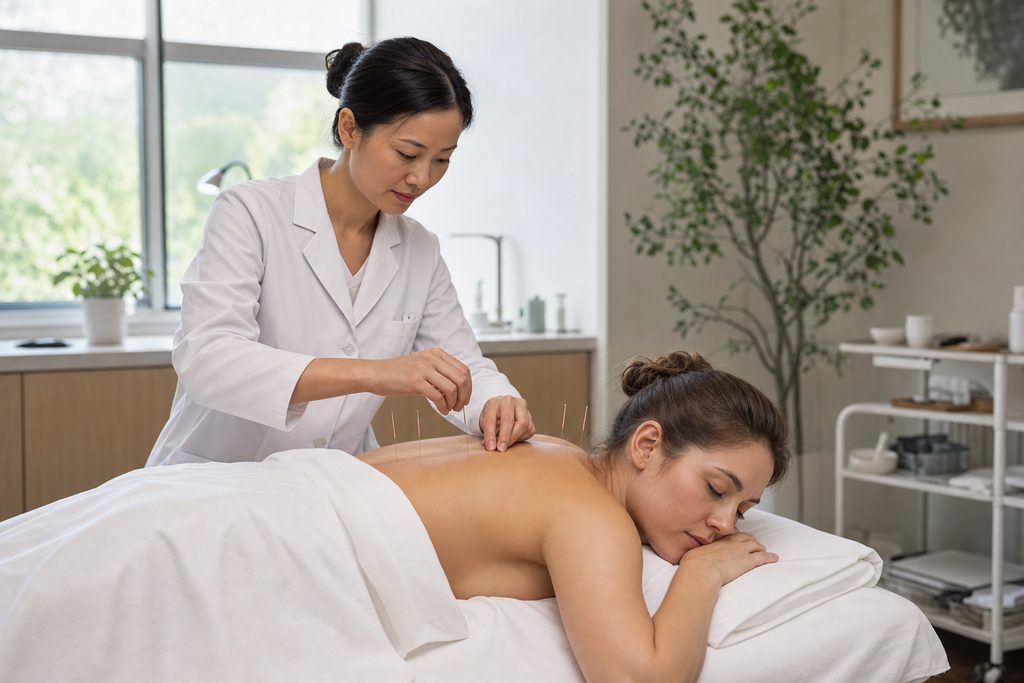
Acupuncture means having very thin, sterile needles placed at specific points on your body to influence how your nervous system, muscles, and organs communicate. At the First Teaching Hospital of Tianjin University of TCM, this is not a spa add-on. It is a full clinical discipline, practiced by physicians who have trained for years in both traditional Chinese medicine theory and modern biomedical science. If you are searching for acupuncture cost Tianjin teaching hospital data, you are probably trying to figure out whether it is worth flying to China for treatment, or whether a local practitioner back home can do the same job. The honest answer depends on what you are treating, how complex your case is, and whether you need the full institutional depth that a university-affiliated hospital provides.
This hospital is one of the most academically serious TCM institutions in northern China. It is the clinical teaching base for Tianjin University of Traditional Chinese Medicine, which means the acupuncture department is staffed by professors, researchers, and senior clinicians who also train the next generation of practitioners. International patients come here for chronic pain, neurological rehabilitation, digestive disorders, and a range of conditions that have not responded well to conventional treatment. Our team at China Medical Services has helped patients coordinate visits to this hospital, and we have seen firsthand what works well — and what surprises Western patients.
How This Actually Works, Step by Step
You cannot just show up at the First Teaching Hospital of Tianjin University of TCM and expect to see a senior acupuncturist that afternoon. Public hospitals in China operate on a same-day registration system for ordinary outpatient clinics, but international patients need a different approach. Here is the sequence we walk our clients through:
Step 1: Send your medical records. You email us your existing diagnosis, imaging reports, medication list, and a short description of what you have tried so far. We translate these into Chinese and prepare a clinical summary. This matters. A professor of acupuncture will not spend 20 minutes reading English-language MRI reports.
Step 2: Remote evaluation. The acupuncture department reviews your records. A senior physician gives a written opinion: whether acupuncture is appropriate for your condition, how many sessions you might need, and what adjunctive therapies (herbal medicine, tuina massage, moxibustion) could help. This written second opinion typically costs $300–500, and it is for reference only — not a prescription.
Step 3: You decide whether to travel. If the remote opinion says acupuncture is unlikely to help your specific condition, you have saved yourself an expensive trip. If it says yes, you now have a realistic treatment plan and a named contact at the hospital.
Step 4: Visa and travel. For medical treatment in China, you apply for an S2 visa with supporting documents from the hospital. Your family members traveling with you also need S2 visas. Processing usually takes one to two weeks, but it can stretch longer depending on your home country’s Chinese embassy or consulate.
Step 5: First in-person visit. You meet the physician, get a full TCM assessment (pulse diagnosis, tongue examination, detailed symptom history), and begin treatment. A typical acupuncture session at this hospital lasts 30 to 45 minutes, and you may have daily or alternate-day sessions depending on your condition.
Acupuncture Cost at Tianjin Teaching Hospital: What to Actually Budget
Let us address the primary question directly. The acupuncture cost Tianjin teaching hospital patients pay depends on which channel you use. The ordinary public outpatient clinic charges roughly $15 to $40 per acupuncture session. That is genuinely inexpensive by Western standards. But here is the catch: ordinary outpatient clinics cannot be pre-booked from overseas, the doctors may not speak English, and you will wait in long queues alongside hundreds of local patients.
The international department or VIP channel is different. You get English-speaking coordination, pre-scheduled appointments with senior physicians, and a quieter environment. Expect to pay $80 to $200 per session through this route. A full two-week course of daily acupuncture — which is what many chronic pain protocols require — would run $1,100 to $2,800 in the international department, plus your travel and accommodation. That is still a fraction of what the same number of sessions would cost in the United States or Western Europe, where a single acupuncture visit commonly runs $75 to $150.
| Channel | Cost per Session (USD) | English Support | Pre-booking from Overseas |
|---|---|---|---|
| Ordinary public outpatient | $15–40 | Rare | No |
| International/VIP department | $80–200 | Yes | Yes |
| Private TCM clinics in Tianjin | $50–120 | Sometimes | Usually |
Costs vary by hospital and case complexity. A senior professor with a national reputation will charge more than a junior attending physician. Herbal medicine prescriptions, if recommended, are billed separately and typically add $30 to $80 per week.
How Does Acupuncture Work in China Compared to the West?
If you have tried acupuncture in London, Toronto, or Los Angeles, you have experienced a particular style of practice. Most Western acupuncturists are trained in what is sometimes called “medical acupuncture” or “dry needling” — a simplified, protocol-driven approach where a limited set of points are needled for a fixed duration. Chinese university hospitals practice something quite different.
At the First Teaching Hospital of Tianjin University of TCM, acupuncture is embedded in a complete diagnostic system. Your physician will assess your pulse at three positions on each wrist, examine your tongue, ask about sleep, digestion, temperature sensitivity, and emotional state. The point selection is individualized and changes from session to session as your presentation shifts. Needle manipulation techniques — lifting, thrusting, rotating, warming — are used actively, not just inserted and left in place. You may also receive moxibustion (burning mugwort near the skin to warm specific points), cupping, or electro-acupuncture where a mild current is passed through the needles. This is how acupuncture works in China: as part of a dynamic, multi-modal treatment system, not a standalone needle insertion.
That depth matters for complex cases. A patient with post-stroke hemiplegia, for instance, may receive scalp acupuncture alongside body acupuncture and rehabilitation exercises. A patient with chronic gastritis may get abdominal points combined with auricular (ear) acupuncture and dietary counseling based on TCM principles. The integration is what you are paying for.
A Realistic Timeline
People underestimate how long the entire process takes. Here is an honest schedule based on cases we have coordinated:
| Stage | Duration | What Happens |
|---|---|---|
| Record collection and translation | 3–7 days | You gather reports; we translate and format them |
| Remote written evaluation | 5–10 days | Hospital department reviews your case and responds |
| Visa application | 1–3 weeks | S2 visa with hospital invitation letter |
| Travel and first visit | 1–2 days after arrival | Registration, assessment, first acupuncture session |
| Treatment course | 2–8 weeks | Daily or alternate-day sessions depending on protocol |
| Follow-up at home | Ongoing | Video consultations or written guidance if needed |
Two things surprise people. First, document translation takes longer than expected. Second, the hospital will not commit to a specific senior physician until your records have been reviewed — and even then, schedules shift. If you need a named professor at a specific time, that requires the international department’s coordination and may not always be possible.
What Can Go Wrong — and What Happens Then
Let us be direct. Things do not always go smoothly, and you should know the failure modes before you book a flight.
The physician you wanted is not available. Senior professors at this hospital travel frequently for academic conferences, teaching commitments, and government advisory work. If your preferred doctor is unavailable, the hospital will offer a colleague from the same department. In our experience, the colleague is usually excellent — but if you have your heart set on one specific person, confirm availability in writing before you travel.
Your condition does not respond as hoped. Acupuncture is not magic. For some patients with chronic pain, the first week brings noticeable relief. For others, three weeks pass with minimal change and the physician recommends adjusting the protocol or adding herbal medicine. If you have traveled a long distance for treatment, this can be emotionally difficult. The hospital’s physicians are generally honest about prognosis — but you should ask directly: “What is a realistic outcome for my specific case, and how will we know if it is not working?”
Language barriers resurface. Even in the international department, not every nurse, pharmacist, or billing clerk speaks fluent English. Our bilingual medical companion service exists precisely because of this. A companion handles registration, payment, pharmacy pickup, and translation during your visits. Without one, you will manage — but it will be slower and more stressful.
Payment surprises. Public hospitals in China require prepayment for treatment. You load money onto a hospital card, and services are deducted as you go. If your card runs low, treatment pauses until you top up. International patients sometimes find this confusing. Budget 20% more than you think you need, and keep your receipts for insurance reimbursement later.
Is Acupuncture Safe for Back Pain in China? What the Evidence Says
Chronic low back pain is one of the most common reasons international patients seek acupuncture in China. The safety question deserves a straight answer.
Acupuncture, when performed by trained physicians using sterile single-use needles, has a very low rate of serious adverse events. A large prospective study published in the British Medical Journal in 2001 tracked over 34,000 acupuncture treatments and found no serious complications. The most common side effects are minor: brief bleeding at the needle site, small bruises, temporary soreness, and occasional dizziness during or after treatment. Serious complications — punctured lung, nerve damage, infection — are extremely rare and almost always associated with improperly trained practitioners or non-sterile needles.
At a university teaching hospital in China, the safety protocols are rigorous. Needles are single-use and disposed of after each session. Physicians are licensed medical professionals, not weekend-certificate holders. The hospital’s acupuncture department treats thousands of patients annually, and its physicians have managed the full range of complications that can arise. So is acupuncture safe for back pain in China? Yes, at a reputable institution, it is about as safe as any minimally invasive medical procedure — and considerably safer than long-term opioid use or repeated corticosteroid injections.
Effectiveness is a separate question. Systematic reviews published in journals like Pain and the Cochrane Database have found that acupuncture provides modest but real relief for chronic low back pain compared to sham acupuncture and no treatment. The effect size is not dramatic — typically a 15 to 25 point improvement on a 100-point pain scale. But for patients who have exhausted other options, that improvement can be meaningful.
For a broader look at how Chinese hospitals rank across specialties, see our guide to top-ranked departments in China.
Best Acupuncture Hospital Tianjin for Foreigners: How to Evaluate Your Options
You may have found multiple hospitals in Tianjin offering acupuncture to foreigners. How do you choose? The First Teaching Hospital of Tianjin University of TCM is not the only option, but it holds a particular position in the landscape.
What distinguishes this hospital is its academic depth. The acupuncture department is not a side service; it is a core clinical and research unit. The university’s acupuncture program is considered one of the strongest in China, with particular expertise in stroke rehabilitation and neurological disorders. If your condition is complex — post-stroke recovery, facial paralysis, multiple sclerosis-related pain, severe migraine — this is the kind of institution where you want to be treated. The physicians see difficult cases daily, and they have the research infrastructure to support evidence-informed practice.
For simpler conditions — mild tension headaches, general wellness, mild knee pain — a private TCM clinic in Tianjin may be perfectly adequate and slightly cheaper. But private clinics vary enormously in quality. Some are excellent; some employ practitioners with minimal training. The advantage of a university teaching hospital is institutional accountability. The hospital’s reputation depends on clinical outcomes, and its physicians are subject to academic peer review.
If you are weighing Tianjin against other Chinese cities, read our overview of TCM hospitals across China for comparison.
Reviews from international patients who have visited this hospital are generally positive on clinical expertise but mixed on logistics. Patients consistently praise the physicians’ knowledge and the thoroughness of assessment. Common complaints include long waits even with appointments, limited English outside the international department, and the bureaucratic friction of hospital registration. Tianjin University TCM hospital international patient reviews on independent platforms reflect this pattern: excellent medical care, occasionally frustrating process. This is exactly why coordination services exist.
Practical Considerations: Records, Visa, Payment, Insurance, Language, Follow-up
Before you book anything, work through this checklist.
Medical records. Bring everything: imaging files (on CD or USB, not just printed reports), blood test results, medication list with generic names, and any previous acupuncture or physical therapy records. Chinese physicians want to see the whole picture. If your records are not in English or Chinese, you will need certified translations.
Visa. The S2 visa is the correct category for short-term medical treatment in China. You will need an invitation letter or medical treatment confirmation from the hospital. Your accompanying family members also need S2 visas. Processing times vary by country; apply at least three weeks before your intended travel date. For treatments exceeding 180 days, the S1 visa applies.
Payment. Public hospitals in China are prepaid. Bring a credit card that works internationally (Visa and Mastercard are widely accepted at hospital payment counters, though not everywhere in the city) and some cash in Chinese yuan for incidentals. The hospital will issue official receipts — keep every one for insurance purposes.
Insurance. Most international health insurance plans do not cover acupuncture performed in China, especially outside their network. Check your policy before you travel. If your plan does cover acupuncture, you will likely need to pay upfront and submit claims for reimbursement. The hospital can provide the necessary documentation.
Language. The international department has English-speaking coordinators, but their availability is not guaranteed at all hours. For anything beyond a simple appointment — pharmacy pickup, billing disputes, scheduling changes — a bilingual companion is worth the cost. Our companion service starts from $300 per day.
Follow-up at home. Acupuncture is rarely a one-and-done treatment. Before you leave, ask the physician for a written summary of your diagnosis, the points used, and recommended follow-up. Bring this to your local acupuncturist back home. Some patients also arrange periodic video consultations with the Tianjin team to adjust their protocol remotely. Video consultations typically cost $100–300 per session.
Frequently Asked Questions
Ordinary outpatient acupuncture costs roughly $15 to $40 per session. The international department charges $80 to $200 per session, which includes English coordination and pre-scheduled appointments. Total costs vary by hospital and case complexity.
Yes, but only through the international department or a coordination service. The ordinary public outpatient clinic cannot be pre-booked from overseas. To book acupuncture treatment Tianjin China, you need to submit your medical records for review, receive a treatment plan, and then schedule appointments through the international channel.
Generally, yes. Chinese university hospitals practice a full TCM diagnostic system — pulse and tongue examination, individualized point selection, active needle manipulation, and often adjunctive therapies like moxibustion, cupping, and herbal medicine. Western acupuncture tends to be more protocol-driven and less individualized.
Your physician should give you a realistic prognosis before treatment begins. If you see no improvement after a reasonable trial — typically two to three weeks of regular sessions — the physician may adjust the protocol, add herbal medicine, or recommend discontinuing acupuncture. Be direct about asking for honest assessment, and be prepared to accept an answer you may not want to hear.
Do I need a visa for medical treatment in China?
Yes. You and any accompanying family members need an S2 visa for short-term medical treatment. The hospital provides supporting documents, but visa approval is at the discretion of the Chinese embassy or consulate in your home country. Apply at
For more medical information and treatment options in China, visit chinamedservices.com (China Medical Services).
