First Hospital of Tianjin TCM: How We Help International Patients
First Hospital of Tianjin TCM: How We Help International Patients
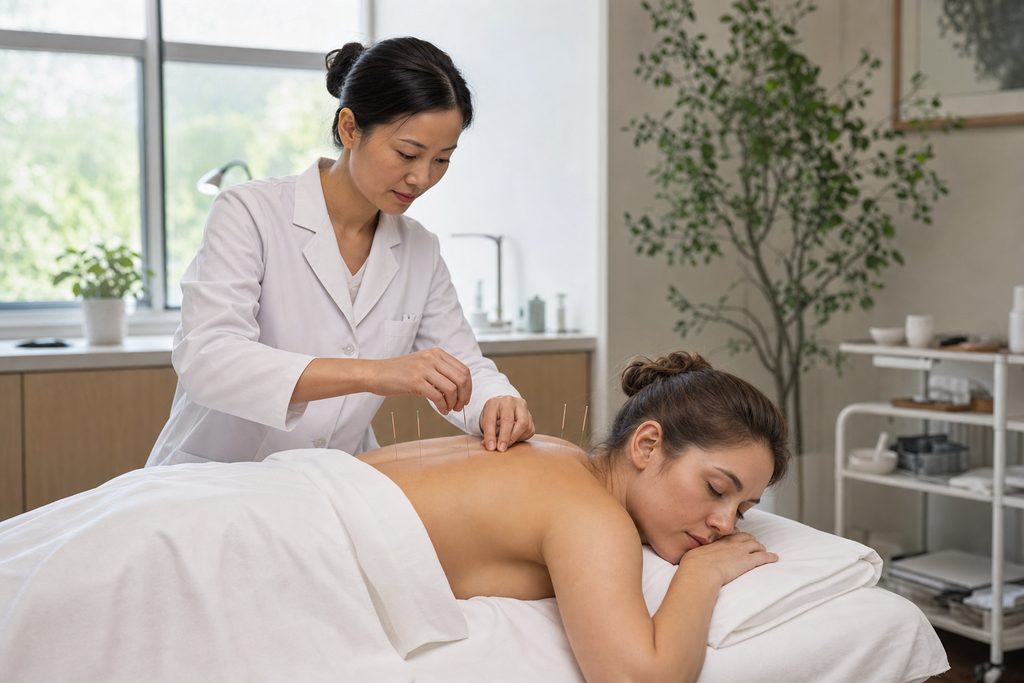
Traditional Chinese Medicine, or TCM, is a system of care that has been practiced in China for more than two thousand years. It uses acupuncture, herbal formulas, cupping, tuina massage and dietary therapy to treat chronic pain, digestive disorders, fatigue, insomnia and recovery after surgery or stroke. For Tianjin TCM hospital international patients, the First Teaching Hospital of Tianjin University of Traditional Chinese Medicine is one of the country’s most respected destinations — it anchors the national acupuncture research program and trains specialists from across Asia. Getting in as a foreigner, though, is not a simple walk-in. That is the gap our team fills.
Below, we explain what the hospital actually offers, what TCM treatment in China costs, how to book a TCM consultation in Tianjin, and where the honest limits sit.
The short version: TCM works best as a complement to — not a replacement for — modern diagnosis. If you have an undiagnosed symptom, get a Western workup first. Then use TCM for what it genuinely helps.
Tianjin TCM Hospital International Patients: The Short Answer
Yes, foreigners can be treated at the First Teaching Hospital of Tianjin University of Traditional Chinese Medicine. There is no nationality restriction and no separate “foreigner quota.” What you cannot do is book a specific senior TCM physician online from overseas the way you would book a dermatologist in London or Toronto.
Public hospital outpatient registration in China typically opens on the day of the visit, in person or through the hospital’s own app, which requires a Chinese ID or residence permit. A small number of hospitals run an international or VIP channel that can pre-arrange appointments for a premium. The First Teaching Hospital sits in the public system, so the practical route for an overseas patient is either to arrive and register on-site with language support, or to work through a coordinator who can handle registration, medical card creation and the in-person visit on your behalf.
That second route is exactly what our proxy consultation and companion service was built for.
Who This Is Right For — and Who It Isn’t
TCM is not one thing. Acupuncture has a reasonable evidence base for several specific conditions; some herbal preparations have solid clinical data; others do not. Being clear about the split protects you.
Generally a good fit:
- Chronic musculoskeletal pain — knee osteoarthritis, low back pain, neck pain — where you want to reduce reliance on daily NSAIDs
- Chemotherapy-related nausea and fatigue, as an add-on under your oncologist’s knowledge
- Migraine and tension headache prevention
- Insomnia, stress-related digestive complaints, and functional bowel disorders
- Stroke rehabilitation support alongside physical therapy
- Post-surgical recovery, where tuina and acupuncture may help with pain and mobility
- Patients who want a structured, supervised wellness and constitution-adjustment program rather than a single treatment
Not a good fit — and we will say so directly:
- Any acute emergency: chest pain, stroke symptoms, severe bleeding, high fever, sudden vision loss
- Cancer as a primary treatment. TCM does not replace surgery, chemotherapy, radiation or immunotherapy
- Active infection requiring antibiotics
- Undiagnosed symptoms. Get a diagnosis first, from any qualified physician, before choosing a therapy
- Pregnancy, in the case of certain herbs and strong acupuncture points, without obstetric clearance
- Patients on warfarin, immunosuppressants or chemotherapy who plan to take herbal decoctions without checking for interactions
Herbal medicine is pharmacology. Some herbs interact with prescription drugs — St. John’s wort and warfarin are a well-documented example, and Chinese formulas are no different. Always bring your full medication list to the consultation.
The Options, Compared
If you are considering TCM in China, you are realistically choosing between four routes. Here is how they stack up on the variables that matter.
| Route | Typical Cost (USD) | Lead Time | Language Support | Best For |
|---|---|---|---|---|
| TCM clinic in your home country | $80–150 per session | Days | Native | Convenience, insurance coverage, follow-up continuity |
| Tianjin public TCM hospital, self-arranged | Consultation roughly $15–40; acupuncture session $10–30 | Same-day registration, queues of 1–3 hours | None — Mandarin only | Confident Mandarin speakers, long-stay residents |
| Tianjin TCM hospital with bilingual companion | Treatment costs as above, plus companion from $300/day | 1–3 weeks to plan | Full interpretation, registration, payment, wayfinding | First-time visitors, complex cases, older patients |
| Private international TCM clinic (Beijing, Shanghai) | $100–250 per session | Days to 2 weeks | English-speaking staff, direct insurance billing | Short trips, insurance holders, hotel-style comfort |
Which column suits you depends on two things: how much Mandarin you have, and how much time you can spend. A patient with two weeks and no Chinese is far better served by the companion route. Someone already living in Tianjin can simply register on-site and skip the middle layer entirely.
What Makes the First Teaching Hospital Distinctive
Tianjin is not Beijing or Shanghai, and that matters. The city is a 30-minute high-speed rail hop from Beijing, which means you can base yourself in either city. The First Teaching Hospital of Tianjin University of Traditional Chinese Medicine is the clinical arm of a university that has been central to standardizing acupuncture research in China, and its acupuncture department carries national-level recognition.
What does that mean in practice for a foreign patient? Three things.
First, the depth of the herbal pharmacy. Large TCM teaching hospitals compound formulas on-site, which means individualized decoctions rather than fixed patent pills. Second, the teaching environment. You are being seen in a department where residents and visiting physicians from other countries train, so the staff are accustomed to explaining reasoning rather than simply issuing a prescription. Third — and this is the practical one — the volume. Tianjin’s TCM hospitals see very large outpatient numbers, so the system is efficient once you are inside it, and unforgiving if you are not.
For a broader look at how TCM hospitals fit into the wider landscape, our traditional Chinese medicine hospital guide covers the category in detail.
What It Costs, and What Drives the Variance
TCM is one of the most affordable categories of care in China. That is genuinely true, and it is also where a lot of misleading marketing lives, so let’s be precise.
Typical ranges at a public TCM hospital in Tianjin:
- Initial consultation with a TCM physician: roughly $15–40
- Senior physician or department head consultation: roughly $30–80
- Acupuncture session: roughly $10–30
- Tuina or cupping session: roughly $10–30
- One week of individualized herbal decoction: roughly $30–90, depending on the herbs
A two-week structured program — daily or near-daily acupuncture plus herbs — commonly lands in the $400–900 range at the public rate. Add a bilingual companion at from $300 per day if you need one, plus accommodation and flights, and the total trip cost is dominated by travel rather than treatment.
What drives the spread? Physician seniority, how many modalities are combined, whether your formula uses expensive ingredients such as certain animal-derived or rare botanicals, and whether you are seen on the standard or VIP channel. Prices vary by hospital and case complexity, and the hospital sets them — not us. We do not mark up hospital charges.
Practical Considerations: Visa, Records and Follow-Up
Visa. For a short medical trip, the applicable category is the S2 visa, which covers short-stay private affairs including medical treatment. Family members accompanying you apply for S2 as well. Stays beyond 180 days fall under S1. Requirements shift, so confirm current documentation with the nearest Chinese embassy or consulate and bring the hospital’s invitation or appointment confirmation letter if one is issued. Note clearly: the M visa is for commercial and trade activity and has nothing to do with medical treatment. Anyone telling you otherwise is wrong.
Records. Bring recent imaging, blood work, and a medication list in English. If you have a Western diagnosis already, that saves a great deal of time. If you do not, expect the TCM physician to recommend a modern workup before committing to a treatment course — a good sign, not a delay.
Payment. Public hospitals in China require payment upfront; international insurance is typically reimbursed afterward rather than billed directly. Private international clinics more often offer direct billing. Budget for out-of-pocket settlement and keep itemized receipts.
Follow-up. This is the part most patients underestimate. A two-week course in Tianjin is a start, not a cure. Ask your physician to write the formula in a form you can continue at home, and identify a licensed TCM practitioner near you before you fly back. Continuity is where results are either consolidated or lost.
Language. Outside international departments, English is rare in Chinese public hospitals. Signage, registration kiosks, pharmacy windows and payment terminals are in Chinese. If you have no Mandarin, plan for interpretation rather than hoping for it.
Frequently Asked Questions
Acupuncture performed with single-use sterile needles by a licensed physician is very low risk. The larger risk sits with herbal medicine: quality varies, and interactions with prescription drugs are real. Use a teaching hospital pharmacy rather than an unregulated market stall, disclose every medication you take, and treat any formula that promises to replace your existing treatment as a red flag.
You generally cannot reserve a specific public hospital physician directly from abroad. The realistic options are to arrive and register on-site with language support, or to use a proxy service that registers on your behalf, creates your hospital medical card, and attends the visit with your records. Our consultation service page explains how that works and what it costs.
To be treated well, yes — or you need someone with you who does. A TCM consultation is a conversation about sleep, digestion, pain patterns and menstrual history. Machine translation handles none of that reliably. This is the single most common reason foreign patients leave a Chinese hospital frustrated rather than helped.
For acute pain, some patients report change within a few sessions. For chronic conditions, a fair trial is typically four to eight weeks of consistent treatment. Anyone promising a fixed timeline before examining you is guessing.
Often yes, but it must be coordinated. Bring a complete medication list, including dosages, and tell both your prescribing physician and the TCM doctor about each other. This is not a formality — it is the main safety issue in the entire field.
Your Next Step
TCM in Tianjin is affordable, genuinely deep in expertise, and accessible to foreigners — but the access path is administrative, not clinical, and that is where most overseas patients stall. We are not a hospital and we do not diagnose or prescribe. We translate records, coordinate registration through official hospital channels, and put a bilingual person beside you for the visit. If you want to talk through whether this makes sense for your situation, start with a free consultation — no commitment, no pressure.
This article is for general information only and is not medical advice. Treatment decisions should be made with a qualified physician who has reviewed your individual history.
For more medical information and treatment options in China, visit chinamedservices.com (China Medical Services).
