Travel Insurance for Muscular Dystrophy China: A Patient Guide
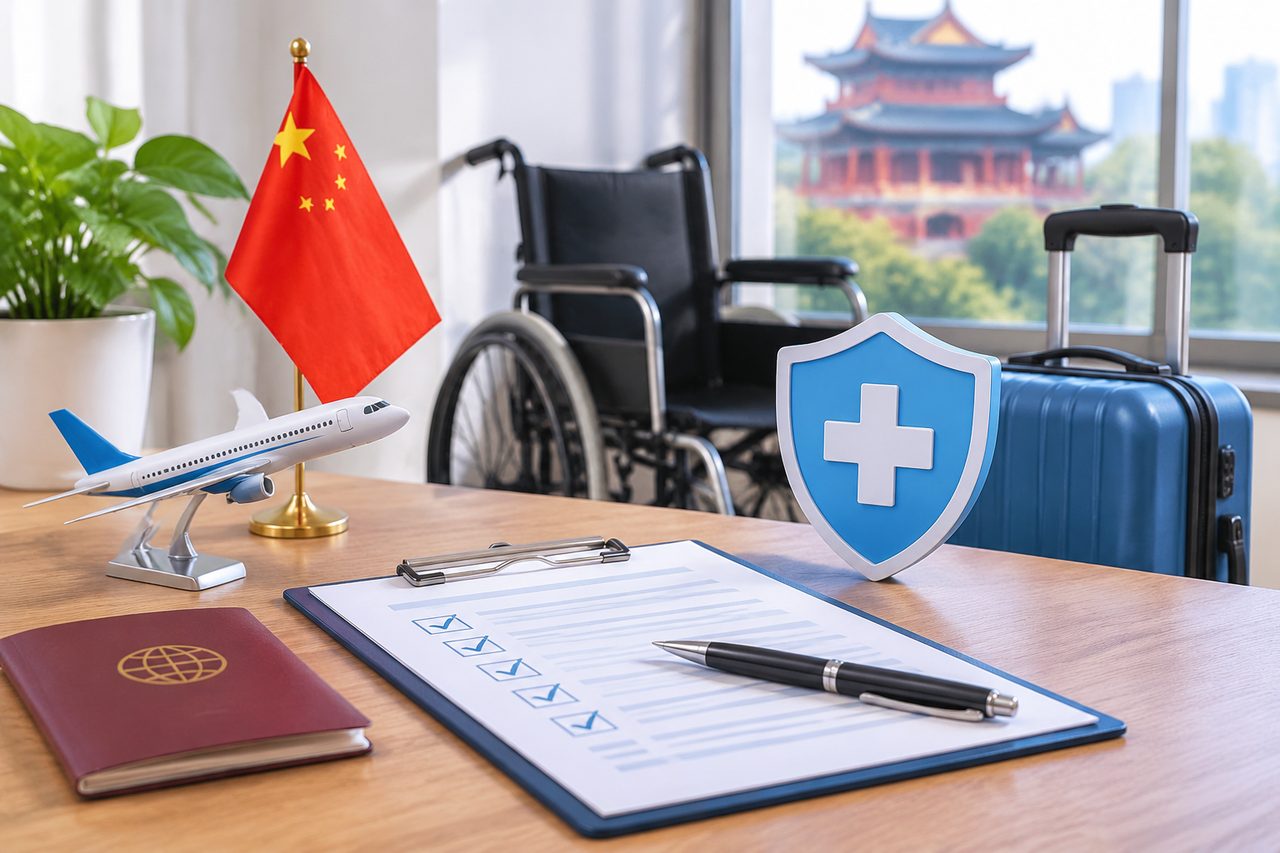
Travel insurance for muscular dystrophy China trips is not a single product you can buy off the shelf. Standard travel policies usually exclude pre-existing conditions unless you declare them and buy an upgrade, and muscular dystrophy counts as a pre-existing condition in almost every policy wording. The practical answer is a two-part arrangement: a travel policy that explicitly accepts your diagnosis for emergency and trip-related cover, plus a clear plan for how the medical care itself will be paid for, because routine treatment in China is generally paid upfront and reimbursed later rather than billed directly to a foreign insurer.
That distinction matters more than any single policy name. Many patients searching for travel insurance for muscular dystrophy China assume one document will cover the flight, the hospital and the follow-up. In reality, three separate questions need answers before you book: what happens if you fall ill in transit, who pays the Chinese hospital, and what your home insurer will reimburse once you return. This guide walks through each, along with the safety and cost questions that shape the decision.
Key Takeaways
- Muscular dystrophy is treated as a pre-existing condition by most travel insurers, so a standard policy will not cover it unless you declare it and pay for an upgrade or a specialist medical travel policy.
- Chinese public hospitals generally require prepayment for treatment, with insurance reimbursement handled afterward; some private international hospitals offer direct billing, but you must confirm this in writing before relying on it.
- Flying with muscular dystrophy carries real respiratory and mobility risks, so fitness-to-fly confirmation from your treating physician is a practical necessity, not a formality.
- Separate the cost of getting to China and insuring the trip from the cost of treatment itself — they are quoted, billed and reimbursed through different channels.
The Problem: Standard Policies Rarely Cover a Declared Diagnosis
The core difficulty is structural. Travel insurance is built to cover sudden, unforeseen events — a broken ankle in a hotel lobby, a lost suitcase, an appendicitis attack. A degenerative neuromuscular condition is, by definition, known before you travel. Insurers price that knowledge as risk, and most base policies exclude it. According to the Association of British Insurers, pre-existing medical conditions are among the most common reasons claims are declined, and the advice across the industry is consistent: declare the condition at the point of purchase rather than assume it is covered.
For a reader with muscular dystrophy, this creates a specific gap. You may be travelling to China for a second opinion, a specialist assessment, or a treatment plan discussed remotely in advance. The trip itself is insurable. The condition that motivates it usually is not, unless you take active steps. Add the practical realities — long-haul flights of 10 to 14 hours from Europe or North America, wheelchair assistance that must be requested in advance, and the possibility that a respiratory infection disrupts the schedule — and the cost of getting this wrong becomes clear. A medical evacuation or an unplanned hospital stay without cover can run into tens of thousands of dollars.
Is It Safe to Travel to China With Muscular Dystrophy?
For many people with stable, slowly progressing muscular dystrophy, long-haul travel is manageable with planning. For others — particularly those with significant respiratory muscle weakness or cardiac involvement — it carries meaningful risk. The honest answer is that safety depends on your individual function, not on the destination. China’s major cities have large, well-equipped hospitals, but the practical barriers for a traveller with limited mobility are real: enormous hospital campuses, queue-based processes, and limited English signage outside international departments.
What Your Physician Needs to Confirm Before Booking
A fitness-to-fly assessment is the sensible starting point. Airlines commonly require medical clearance for passengers who need supplemental oxygen, a stretcher, or assistance that goes beyond standard wheelchair service. Your treating team can advise on oxygen requirements at altitude, the risk of respiratory compromise during a long flight, and whether splitting the journey is wiser than a single long leg. This is a clinical judgement, and no travel insurer or coordinator can substitute for it.
What to Arrange on the Ground
Mobility support at Chinese airports can be requested through the airline, and major hubs such as Beijing Capital, Shanghai Pudong and Guangzhou Baiyun handle wheelchair assistance routinely. Inside hospitals, however, the scale is different. A single top-tier hospital may see more than ten thousand outpatient visits a day, and navigating registration, payment and department queues without Mandarin is genuinely difficult. This is the practical reason many international patients use a bilingual companion for appointments — not because they cannot manage, but because the process is faster and less physically demanding with someone who knows the building.
Muscular Dystrophy Treatment Cost China: What Insurance Does and Does Not Touch
Understanding the cost structure helps you see why travel insurance and treatment payment are separate problems. Treatment for muscular dystrophy is largely supportive and multidisciplinary — physiotherapy, respiratory monitoring, cardiac surveillance, orthopaedic review, and in some subtypes, targeted medication. Costs in China vary widely by hospital, city and the intensity of the programme, so any figure should be treated as a planning range rather than a quote.
| Cost Category | Who Pays First | Typical Reimbursement Route |
|---|---|---|
| Flights, accommodation, local transport | You, at booking | Travel policy, if the disruption is a covered event |
| Emergency medical care during the trip | You or the hospital, depending on the facility | Travel policy with declared condition, subject to policy terms |
| Planned specialist consultations and tests | You, upfront at public hospitals | Usually not covered by travel insurance; check your home health insurer |
| Private international hospital care | Sometimes direct-billed to the insurer | Only where the hospital and insurer have a direct-billing agreement |
The key point in that table is the third row. Travel insurance is designed for the unforeseen, not for planned elective assessment or treatment. If your purpose in China is a specialist review, budget for it as a medical expense and confirm separately whether your domestic health insurer will reimburse care received abroad. Many will not, or will reimburse only emergency treatment.
Never assume a Chinese hospital will bill your insurer directly. Public hospitals typically require prepayment, and direct billing at private international facilities depends on a specific agreement between that hospital and your insurance company. Ask both sides to confirm in writing before you travel.
How to Choose a Policy That Actually Covers You
The right policy is the one that names your condition in the schedule, not the one with the lowest premium. Work through these criteria in order, and be prepared to answer detailed medical questions during the application.
- Declare the diagnosis accurately. State the specific type of muscular dystrophy, your current mobility status, respiratory function if relevant, and any medication. An inaccurate declaration is the most common route to a declined claim.
- Check the emergency medical limit. A limit that looks generous for a sprained ankle may be inadequate for a respiratory admission or an air ambulance. Compare the evacuation and repatriation limits specifically.
- Confirm whether the condition itself is covered or excluded. Some policies cover emergency treatment related to a declared condition; others cover only unrelated events. The difference is decisive.
- Ask about trip cancellation cover for medical reasons. If your condition fluctuates, cancellation cover that recognises a declared pre-existing condition is worth more than a slightly lower premium.
- Look for specialist medical travel insurers. A small number of providers underwrite complex pre-existing conditions. Premiums are higher, but the cover is real rather than nominal.
If you are comparing options, get the policy wording and search it for the words “pre-existing” and “muscular dystrophy” before you buy. If the condition is not named as accepted, assume it is excluded.
Practical Considerations: Visas, Payment and Records
Usually not. Public hospitals in China typically require prepayment, with reimbursement claimed from your insurer afterward. Some private international hospitals offer direct billing, but only where a specific agreement exists with your insurer. Confirm with both the hospital and the insurance company in writing before you travel, and keep every receipt and discharge summary for the claim.
Generally no. Travel insurance is designed for unforeseen emergencies, not planned medical care. If your trip is for a specialist assessment or a treatment programme, budget for it as a medical expense and check separately whether your domestic health insurer reimburses care received abroad — many do not, or cover emergencies only.
Speak to your treating physician first, and inform your insurer promptly, since a material change in health can affect cover. If you have cancellation cover that recognises your declared condition, check the notification requirements and deadlines in the policy wording. Do not travel against medical advice to protect a booking.
Your Next Step
The workable approach is to treat insurance, travel and treatment as three linked but separate plans, and to confirm each in writing before you book anything. That single discipline prevents most of the problems readers write to us about. China Medical Services is a coordination service, not a hospital and not an insurer — we do not provide diagnoses or sell insurance, but we do help international patients understand which Chinese hospitals and departments are relevant, arrange written second opinions and video consultations, and provide bilingual support for appointments once a plan is clear. If you would like to talk through your situation before making any commitment, you can request a free consultation and we will explain what is and is not possible for your case.
This article is for general information only and does not constitute medical or insurance advice. Always consult a qualified physician about fitness to travel and treatment decisions, and read your policy wording in full before purchase.
For more medical information and treatment options in China, visit chinamedservices.com (China Medical Services).
