Treatment in China: A Second Opinion First
Key Takeaways
- A written second opinion from a Chinese specialist typically costs $300–500, and a top-specialist video consultation runs $500–800 — a fraction of the cost of traveling before you know whether treatment is even necessary.
- China’s top 340+ hospitals sit in the top 5% of the country’s 35,000+ hospitals, ranked by the Fudan Hospital Ranking and JCI accreditation, and many have dedicated international departments built for foreign patients.
- The honest barrier: ordinary public hospital outpatient clinics cannot be booked from overseas in advance. You queue on the day, and surgery is only scheduled after an in-person consultation. That is the rule, not a sales pitch.
- Before you book a flight, understand what a second opinion can and cannot tell you — and why the sequence of steps matters more than the destination.
The Problem: A Diagnosis That Leaves You With More Questions Than Answers
Fuwai Hospital in Beijing performs more than 14,000 cardiac surgeries annually — the highest volume of any heart center globally. Zhongshan Hospital Fudan University, Peking Union Medical College Hospital, and West China Hospital in Chengdu handle case loads in the tens of thousands per year. For a patient with a complex cardiac, oncological, or orthopedic question, that concentration of experience is meaningful.
The Fudan Hospital Ranking places only the top 100 general hospitals into five tiers (A++++ down to A), and the specialty reputation rankings name a top 10 for each of 45 specialties. If your question is about liver cancer, you want the hospitals ranked among China’s top 10 for oncology — not a general hospital that happens to have a cancer ward.
Cost Structure That Makes a Second Opinion Realistic
Here is where the numbers get interesting. A written second opinion from a top Chinese hospital specialist typically costs $300–500. A video consultation with a senior specialist runs $500–800. A multidisciplinary team review — the kind used for complex cancer cases — sits at $1,500–2,000.
Compare that to the cost of a single international flight plus hotel plus time off work, and the logic becomes clear. You spend a few hundred dollars to find out whether you need to spend tens of thousands.
International Departments Built for Foreign Patients
Top Chinese public hospitals now operate international or VIP departments with English-speaking staff, dedicated appointment channels, and streamlined intake for foreign patients. Private international hospitals such as United Family, Jiahui, Parkway, and Raffles go further: JCI accreditation, direct insurance billing, and Western-style service norms. These are the facilities most foreign patients actually use for consultations, and they are listed on our private international hospitals page.
How to Get a Second Opinion From Chinese Doctors: The Actual Process
Forget the marketing version. Here is what happens step by step.
Step one — gather your records. You need your imaging in DICOM format (the original files, not photos of a screen), pathology slides or reports if a biopsy was done, discharge summaries, medication lists, and any genetic testing. Chinese specialists will read the original imaging, not a summary letter.
Step two — translation. Reports need to be translated into Chinese for the specialist to review efficiently. This is not a Google Translate job. Pathology and imaging reports use terminology where a single word changes the clinical picture.
Step three — routing. Your case goes to the specialty that matches your diagnosis. A lung nodule goes to thoracic surgery or respiratory medicine. A prostate question goes to urology. If the case is complex, it may go to a multidisciplinary team instead of a single department.
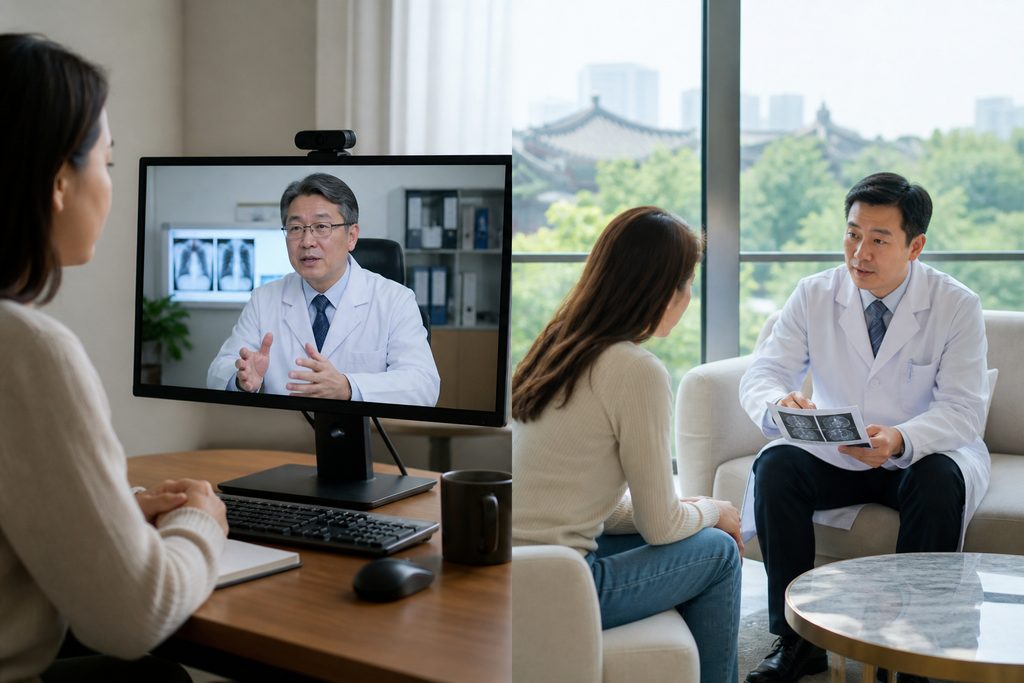
Step four — the review itself. A written opinion arrives with analysis, treatment suggestions, and direction — typically within several business days depending on the hospital. A video consultation adds a live conversation where you can ask questions directly.
Step five — the decision. You now have a documented opinion from a specialist at a hospital you can name. You can take it to your local doctor, sit with it, or use it to plan a trip.
What a Second Opinion Can and Cannot Tell You
A second opinion is powerful. It is not magic.
It can confirm or challenge a diagnosis, suggest a different treatment sequence, identify options your local team did not mention, and give you a realistic cost range for treatment in China if you decide to travel. It cannot examine you physically, cannot replace an in-person workup, and cannot guarantee any outcome. No honest provider will tell you otherwise.
Who is this not suitable for? If you have an acute emergency — a heart attack, a stroke, a bowel obstruction — do not shop for opinions. Go to the nearest emergency department. Second opinions are for stable, complex, or uncertain situations where time allows deliberation.
Also be skeptical of anyone promising a specific surgeon, a specific surgery date, or a specific result before your records have been reviewed. That is not how hospitals work anywhere, including China.
Practical Considerations: Records, Visas, and Payment
Documentation. Start with imaging on physical media or a secure cloud link. Hospitals will not accept phone photos of a monitor. If you have had multiple biopsies, include all of them — the comparison matters.
Visa category. If you later decide to travel for treatment, the applicable short-stay category for medical treatment is the S2 visa, with accompanying family members applying under the same category. Stays beyond 180 days fall under S1. Requirements are set by the latest embassy or consulate guidance and depend on supporting documents from the treating hospital. Note clearly: the M visa is for commercial and trade activity and has nothing to do with medical treatment.
Payment. Chinese public hospitals generally require prepayment, with insurance reimbursement handled afterward in your home country. Private international hospitals often bill insurers directly. International card transactions may carry daily limits depending on your bank — check before you travel.
Language. Top public hospitals in China can see 10,000+ outpatient visits per day. Signage, registration systems, and queue management are in Chinese. Even with a translated opinion in hand, navigating the physical hospital is a separate challenge, and this is where bilingual medical companions are commonly used. Our patient consultation page explains how that coordination works.
Follow-up. If you return home after treatment, you will need your Chinese hospital records translated back into English and shared with your local physician. Request a complete discharge summary and imaging before you leave.
Frequently Asked Questions
Is it safe to get surgery in China?
China’s top-ranked hospitals perform complex surgery at volumes comparable to or exceeding major Western centers, and many hold JCI accreditation. Safety depends heavily on which hospital and department you choose, your specific condition, and the experience of the operating team. A remote second opinion is one way to assess whether a specific hospital is the right fit before committing to travel.
What does a medical second opinion in China actually cost?
Written second opinions from top hospital specialists typically run $300–500. Video consultations range from $100–300 for standard international departments up to $500–800 for top specialists, and multidisciplinary team reviews run $1,500–2,000. Final pricing varies by hospital and case complexity. Any consultation fee is credited in full toward later on-the-ground coordination if you travel within 90 days — a one-time credit applied to the coordination fee only, never to hospital treatment charges.
Can I book a medical second opinion in China without traveling there?
Yes. The entire process — records submission, translation, specialist review, and delivery of a written opinion or video consultation — can be completed remotely. This is the standard first step precisely because it avoids unnecessary early travel. You only consider a trip once a feasible plan has been clarified.
How do I know which Chinese hospital is right for my condition?
Start with the Fudan specialty reputation rankings, which name a top 10 for each of 45 specialties. For cancer, look at oncology rankings; for heart conditions, cardiac surgery. Our specialty department directory organizes hospitals this way, and the top hospitals database groups them by city so you can see what is available in Beijing, Shanghai, Guangzhou, and beyond.
What happens if the second opinion says my local treatment plan is already correct?
Then you have confirmation, which has real value — you can proceed with your local team with more confidence, and you have spent a few hundred dollars instead of tens of thousands on a trip you did not need. A second opinion that agrees with your doctor is not a wasted opinion. It is a resolved question.
Your Next Step
The core message is simple: get the expert read before you book the flight. A few hundred dollars and a folder of records can clarify whether treatment in China makes sense for your case — or whether your current plan is already the right one.
We are China Medical Services, a coordination service, not a hospital. We do not diagnose and we do not treat. We handle records translation, appointment coordination through official international departments, and bilingual accompaniment on the ground. If you would like to understand your options, you can start with a free consultation — no pressure, no obligation, just a conversation about what your records show and what the next sensible step might be.
This article is for general information only and does not constitute medical advice. Treatment decisions should always be made in consultation with qualified physicians who have reviewed your individual case.
For more medical information and treatment options in China, visit chinamedservices.com (China Medical Services).
