Undiagnosed Neurological Disorder Program China: Beijing Tiantan Hospital’s Approach
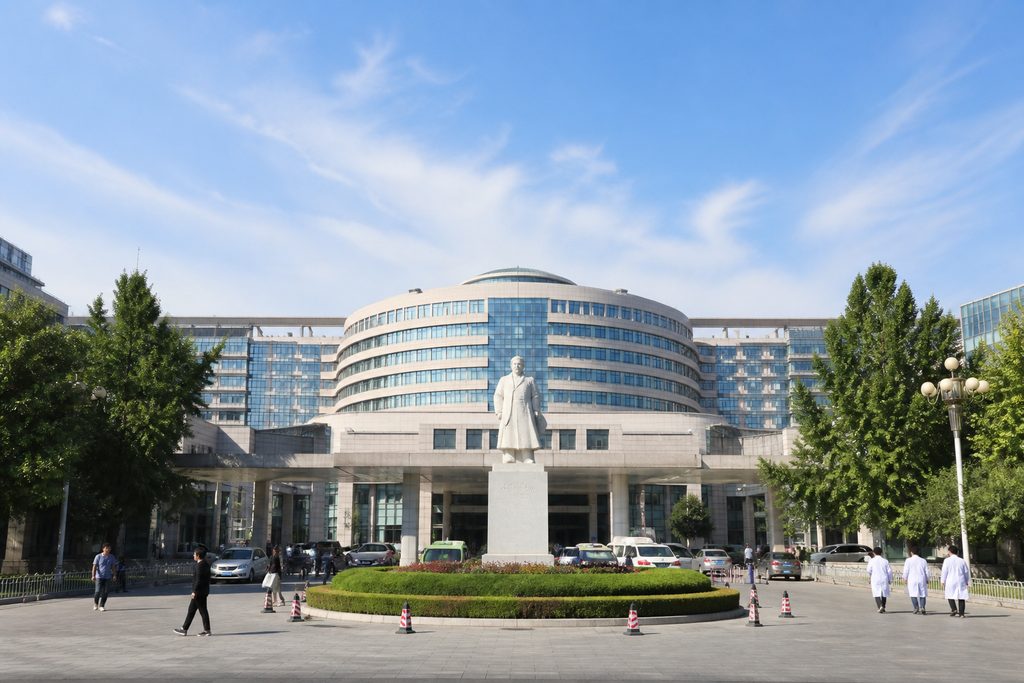
When 34-year-old Lena first noticed the tremor in her left hand, she assumed it was stress. Eighteen months later, she had seen four specialists across two countries, undergone three MRIs, two lumbar punctures, and a battery of genetic tests. The result? A thick file of normal results and a diagnosis that remained stubbornly out of reach: “atypical movement disorder of unknown etiology.” Her neurologist in Munich finally said the words no patient wants to hear: “We have ruled out everything we know how to test for. There is nowhere else to go with this.”
Lena’s story is not unusual. Approximately 1 in 17 people will be affected by a rare disease at some point in their lives. Many of those diseases are neurological. And for a significant portion, the diagnostic odyssey stretches on for five years or more, cycling through the same exhausted differential list.
What happens when the standard diagnostic playbook fails? For a growing number of international patients, the answer lies in a program built on a fundamentally different diagnostic philosophy: the undiagnosed neurological disorder review at Beijing Tiantan Hospital.
Key Takeaways
- Beijing Tiantan Hospital evaluates over 700,000 neurological outpatient cases annually, creating a clinical database of rare presentations that few centers worldwide can match.
- The undiagnosed case review program operates through a structured, multi-departmental panel — not a single consultant’s opinion — drawing on neuroradiology, neuropathology, and neurogenetics simultaneously.
- International patients cannot simply mail records and expect a diagnosis; an in-person evaluation is mandatory, and the full review process typically spans 5 to 10 working days on the ground in Beijing.
- The cost of the program is significantly lower than comparable Western academic center evaluations, but the logistical complexity of navigating a Chinese hospital independently is the real barrier — not the clinical quality.
The Problem: When the Standard Diagnostic Pathway Runs Out of Road
A neurological diagnosis depends on pattern recognition. A clinician matches a patient’s history, exam findings, imaging, and lab results against known disease phenotypes. But what happens when the pattern does not match anything in the textbook? The patient enters a diagnostic limbo that is expensive, emotionally draining, and medically dangerous — treatable conditions progress while the search stalls.
A 2022 study published in the European Journal of Neurology found that patients with undiagnosed neurological conditions had consulted a median of 6 different specialists before receiving a definitive diagnosis. The average time to diagnosis exceeded 4.5 years. During that window, many patients underwent unnecessary procedures, received ineffective empirical treatments, and accumulated medical bills that frequently surpassed $50,000 in the US healthcare system — all without an answer.
The structural problem is not a lack of expertise. It is a lack of concentrated, cross-disciplinary case review at the scale required to catch rare presentations. Most Western academic centers run undiagnosed disease programs. They are excellent. They are also small, heavily oversubscribed, and often limited by the volume of rare cases any single institution sees in a year. Wait times for an undiagnosed disease program evaluation at a major US center can stretch beyond 12 months. For a patient with a progressive neurological condition, that is time they do not have.
Who We Are
We are not a hospital. We do not provide medical treatment, clinical diagnoses, or therapeutic recommendations. Our team functions as your logistical architects — we bridge the gap between you and China’s top-tier medical expertise. Our organization maintains a vetted database of 340+ top-ranked hospitals across 37 cities, and we handle the practical barriers that make accessing Chinese healthcare difficult for international patients: hospital matching, appointment coordination, bilingual medical companion services, visa guidance, and on-the-ground support. We do not practice medicine. We make it possible for you to access those who do.
Why Beijing Tiantan Hospital’s Undiagnosed Neurological Disorder Program Delivers Results
Clinical Volume That Creates a Diagnostic Edge
Beijing Tiantan Hospital is not simply a large neurology department. It is one of the highest-volume neurological centers in the world. The hospital’s neurology and neurosurgery services handle more than 700,000 outpatient visits and over 10,000 inpatient neurological admissions each year. To put that in perspective, a major US neurology center might see 50,000 to 80,000 outpatient visits annually. The sheer volume means Tiantan’s clinicians encounter rare disease presentations with a frequency that builds a different kind of clinical intuition.
This matters for undiagnosed cases in a very specific way. A movement disorder specialist at Tiantan may see more cases of atypical parkinsonism variants in a single month than a colleague in a smaller Western center sees in a year. When a patient arrives with symptoms that do not fit a clean diagnostic box, the breadth of the clinician’s personal case library becomes the most valuable diagnostic tool available. There is no substitute for having seen something before.
A Structured Multi-Departmental Review Process
The question many patients ask is straightforward: how does Beijing Tiantan Hospital diagnose mystery neurological conditions that other centers have missed? The answer lies in the structure of the review, not in any single test or technology.
The undiagnosed case review at Tiantan is not a single consultation. It is a sequential, multi-departmental evaluation that typically unfolds over 5 to 10 working days. The process begins with a comprehensive re-examination by a senior neurologist — not a review of outside records, but a fresh clinical assessment. The patient’s entire history is taken again, from the beginning. Previous imaging is re-read by Tiantan’s neuroradiology team. Often, subtle findings that were dismissed elsewhere are identified and flagged for further investigation.
From there, the case moves to a panel review that draws in subspecialists from neuroradiology, neuropathology, neurogenetics, and the relevant clinical subspecialty — movement disorders, neuromuscular disease, neuroimmunology, or epilepsy, depending on the presentation. The panel does not simply confirm or reject a referring diagnosis. It starts from scratch, testing hypotheses against the full resources of a hospital that runs one of China’s largest neuroimaging centers and an in-house neurogenetics laboratory capable of running expanded gene panels and whole-exome sequencing with a turnaround time measured in weeks, not months.
What distinguishes this review process for undiagnosed neurological disorders in China is the integration of neuropathology. Where many Western centers reserve brain or nerve biopsy as a last resort, Tiantan’s neuropathology service performs a high volume of these procedures. If imaging and genetics do not yield an answer, tissue diagnosis becomes a viable next step rather than a theoretical option.
Cost Advantage Without Quality Compromise
Let us address the obvious question directly: the Beijing Tiantan Hospital undiagnosed neurological disorder program cost is substantially lower than comparable evaluations in the United States or Europe — and that fact makes some patients nervous. Does lower cost mean lower quality?
It does not. The cost difference reflects structural economics, not clinical shortcuts. A comprehensive undiagnosed neurological evaluation at a major US academic center — including advanced imaging, genetic testing, and multi-specialist review — can easily exceed $30,000 to $50,000 for an uninsured or underinsured patient. At Beijing Tiantan Hospital, a similar evaluation, including high-resolution MRI with specialized sequences, CSF analysis, autoimmune panels, and genetic testing, typically falls in the range of $8,000 to $15,000, depending on the complexity of the case and the specific tests required. Hospitalization, if needed for prolonged video-EEG monitoring or biopsy, adds to that figure but remains a fraction of Western costs.
The reasons are straightforward. China’s hospital system operates at enormous scale, which drives down per-unit costs for imaging and lab services. Physician labor costs are lower. Administrative overhead is leaner. None of these factors reduce the quality of the diagnostic work. The same Siemens and GE MRI scanners used in Boston or Berlin are used in Beijing. The same genetic sequencing platforms are deployed. The radiologists and neurologists reading your studies are trained at top Chinese medical schools and many have completed fellowships in Europe or North America.
For patients seeking the best hospital in China for rare neurological diseases, Tiantan consistently appears at or near the top of the Fudan University Hospital Rankings in the neurology and neurosurgery categories — a position it has held for years. The hospital is not a budget option. It is a high-volume, high-expertise center where the economics happen to favor the international patient paying out of pocket.
What You Need to Know Before Going Alone
The clinical opportunity is real. The logistical barriers are equally real. We are direct about this because patients who underestimate the practical challenges often have frustrating experiences that undermine the clinical work. Here is what you face if you attempt to navigate this independently:
- Language and System Navigation: Beijing Tiantan Hospital is a public Chinese hospital. Registration desks, signage, medical records, and consent forms are in Mandarin. The outpatient halls serve thousands of patients daily. Without Chinese language ability, even basic tasks — finding the right building, collecting lab results, understanding which queue to stand in — become nearly impossible. A bilingual medical companion is not a luxury in this environment. It is the difference between a smooth evaluation and a wasted trip.
- Appointment Access: The standard public outpatient clinic at Tiantan cannot be booked from overseas. Patients register on the day of the visit and wait. The specialists who lead the undiagnosed disease review work primarily through the hospital’s international medical center or VIP channel, which requires advance coordination. You cannot simply email the hospital and expect a response. Our team handles this coordination — hospital appointment coordination starts from $300, and we only confirm once the appointment is locked.
- Visa Requirements: Medical treatment in China requires an S2 visa, annotated for medical purposes. The application requires an invitation letter from the treating hospital, which the hospital will only issue after confirming your appointment and treatment plan. Accompanying family members also need S2 visas. The M visa is for commercial business and is not valid for medical treatment. Getting the wrong visa category can result in denied entry. We provide the documentation and guidance to get this right the first time.
- Payment and Insurance: Chinese public hospitals operate on a prepayment model. You deposit funds at admission, and services are deducted from that deposit. International insurance is rarely accepted for direct billing at public hospitals; you pay out of pocket and seek reimbursement from your insurer afterward. Understanding the deposit requirements, payment methods, and documentation needed for insurance claims requires local knowledge.
How We Help You Navigate This
These barriers are not anyone’s fault. They exist because the Chinese hospital system was built to serve a domestic patient population at massive scale, and the international patient pathway was layered on top of that system rather than designed into it from the start. Our role is to make that pathway navigable.
Before you travel, we handle hospital matching and appointment coordination. We confirm that your case is appropriate for Tiantan’s undiagnosed neurological disorder program — not every case is — and if it is not, we recommend alternatives from our database of top-ranked hospitals across China. We arrange the invitation letter needed for your S2 visa application. We translate and organize your medical records into a format that Chinese clinicians can review efficiently.
During your stay in Beijing, a bilingual medical companion accompanies you to every appointment. This person handles registration, payment, queue navigation, and real-time interpretation between you and your doctors. They ensure that your questions are asked and that the answers are understood. They collect your reports, track your test results, and keep your diagnostic process moving forward. Our companion service starts from $200 per day — a cost that, in our experience, pays for itself many times over in avoided delays and miscommunication.
The diagnostic review itself typically unfolds across 5 to 10 working days. Some patients require additional time if specialized testing or biopsy is indicated. We adjust your schedule and logistics as needed, coordinating with the hospital and your accommodation. After you return home, we facilitate follow-up communication with your Tiantan medical team and help arrange any recommended treatment coordination if you decide to return to China for care.
For patients who want to begin with a remote evaluation before committing to travel, we can arrange a neurological second opinion from Beijing Tiantan Hospital through a written second opinion service, with fees ranging from $300 to $500. This provides a preliminary expert review of your records and a written assessment. For a more interactive option, a video consultation with a senior neurologist is available from $500 to $800. Any consultation fee is credited in full toward our on-the-ground coordination service if you choose to proceed with an in-person evaluation within 90 days.
If you are considering the international patient program China neurology rare case evaluation, the most practical first step is to contact us for a free consultation. We will review your situation, explain whether Tiantan’s program is a good fit, and outline a realistic plan with transparent cost estimates. There is no obligation. Our goal is to give you enough information to make a clear decision.
Frequently Asked Questions
Plan for 5 to 10 working days of on-the-ground evaluation in Beijing. This includes the initial comprehensive clinical assessment, advanced imaging, laboratory testing, and the multi-departmental panel review. If a biopsy or prolonged EEG monitoring is indicated, the stay may extend to two weeks or more. We coordinate your schedule and adjust logistics as the diagnostic plan evolves.
A remote records review can provide a preliminary opinion — we facilitate written second opinions from $300 to $500 — but a definitive diagnosis of a complex undiagnosed neurological condition almost always requires an in-person evaluation. The Tiantan team needs to perform their own neurological examination, repeat imaging with their specific protocols, and conduct testing that cannot be done remotely. A remote opinion can tell you whether traveling is worthwhile. It rarely replaces the trip.
This is a realistic possibility that we discuss with every patient before they commit to travel. No diagnostic program, however sophisticated, can guarantee an answer. What Tiantan’s program offers is the highest-probability shot at a diagnosis, given its clinical volume, multi-departmental structure, and access to advanced neuropathology and neurogenetics. If the evaluation does not yield a definitive diagnosis, the team will at minimum narrow the differential, rule out treatable mimics, and provide a detailed summary that can guide your ongoing care at home. We consider that a partial but meaningful win for many patients.
Tiantan is consistently ranked among the top neurology and neurosurgery centers in China by the Fudan University Hospital Rankings. It is particularly strong in movement disorders, cerebrovascular disease, neuro-oncology, and epilepsy. For certain rare neurological presentations, other centers — such as Peking Union Medical College Hospital (PUMCH) for neuroimmunological conditions or West China Hospital for neuromuscular disorders — may be more appropriate. Our matching process evaluates your specific case against the strengths of each center to recommend the best fit. There is no single “best” hospital for all rare neurological diseases.
Your Next Step
An undiagnosed neurological condition is a slow-motion crisis. Every month without a diagnosis is a month of uncertainty, of potential disease progression, of treatments that target symptoms rather than causes. Beijing Tiantan Hospital’s undiagnosed neurological disorder program offers a diagnostic pathway that is structured, high-volume, multi-departmental, and significantly more affordable than comparable Western programs. The barrier is not clinical quality. It is the practical challenge of accessing a Chinese public hospital as an international patient.
That barrier is exactly what we exist to remove. If you are ready to explore whether this program is right for your case, request a free consultation with our team. We will review your history, give you an honest assessment of fit, and outline what a diagnostic trip to Beijing would look like — in terms of timeline, process, and cost. No pressure. Just clarity.
For more medical information and treatment options in China, visit chinamedservices.com (China Medical Services).
