First Hospital Urumqi: Central Asia Cross-Border Care & Real Costs
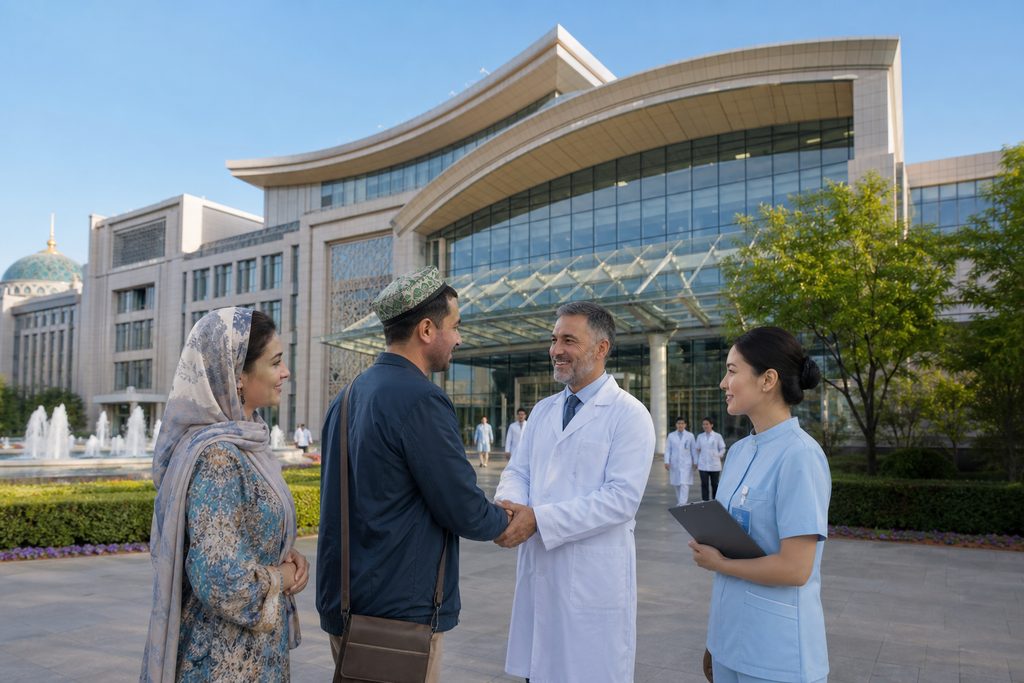
Key Takeaways
- First Affiliated Hospital of Xinjiang Medical University handles over 4.8 million outpatient visits annually, with a dedicated international ward serving Central Asian patients.
- Treatment costs in Urumqi run 60-80% lower than comparable care in Turkey or South Korea, with no clinical compromise on complex procedures like cardiac surgery or oncology.
- Navigating the S2 medical visa and hospital registration without Mandarin fluency remains the single biggest barrier for independent travelers.
- Any international patient considering Urumqi should verify whether their specific procedure requires a pre-arranged VIP channel to avoid weeks of waiting on the ground.
The Problem: Central Asian Patients Face Impossible Choices at Home
Kazakhstan, Uzbekistan, Kyrgyzstan, Tajikistan, and Turkmenistan share a difficult reality. For complex cardiac surgery, advanced oncology treatment, or neurosurgery, domestic options are limited. The alternative is flying to Turkey, South Korea, or India. A cardiac bypass in Istanbul runs $15,000 to $25,000. In Seoul, the same procedure starts around $20,000. For a family in Almaty or Tashkent, that represents several years of income. Many patients simply wait. Some conditions worsen while they search for affordable options. According to the World Health Organization, out-of-pocket medical spending pushes nearly 100 million people into extreme poverty each year. Central Asian families feel that pressure acutely.
There is a closer option. Urumqi sits just 1.5 hours by air from Almaty. The First Affiliated Hospital of Xinjiang Medical University—commonly called First Hospital Urumqi—has been treating international patients from Central Asia for over two decades. Yet most families never consider it. They do not know how to book a consultation. They worry about language barriers. They have no clear picture of what it actually costs. That information gap costs them money and time they do not have.
Who We Are
We are not a hospital. We do not provide medical treatment or clinical diagnoses. Our team functions as the logistical bridge between you and China’s top-tier hospitals. We handle the practical barriers that make cross-border care intimidating: hospital matching based on your specific diagnosis, appointment coordination through official international channels, bilingual medical companions who translate every conversation with your doctor, and visa guidance so you arrive with the correct documentation. We have mapped the international patient pathways at First Hospital Urumqi because we have walked them before. That institutional knowledge is what we bring to every case.
Why First Hospital Urumqi Delivers for Central Asian Patients
Clinical Volume That Rivals Any Global Center
The First Affiliated Hospital of Xinjiang Medical University is not a small regional facility. It operates over 3,000 beds and records more than 4.8 million outpatient visits each year. The cardiac surgery department alone performs over 1,200 open-heart procedures annually. To put that in perspective, the average cardiac surgery center in Kazakhstan might handle 200 to 400 cases per year. Volume matters in surgery. A 2023 analysis published in The Lancet found that hospitals performing more than 500 complex procedures annually had significantly lower mortality rates than lower-volume centers. Surgeons who see a condition every day develop pattern recognition that textbooks cannot teach. The hospital also ranks among China’s top institutions for liver transplantation, minimally invasive neurosurgery, and interventional cardiology. For Central Asian patients who need procedures that are simply unavailable at home, this volume translates into practical expertise.
Built for Cross-Border Care: The International Ward
First Hospital Urumqi maintains a dedicated international patient ward. That is not universal among Chinese public hospitals. The ward staff includes Russian-speaking nurses and coordinators who understand the specific needs of patients arriving from Kazakhstan, Uzbekistan, and neighboring countries. Medical records can be reviewed in Russian before you arrive. Discharge summaries and prescriptions are provided in both Chinese and Russian. The hospital has also established direct referral relationships with clinics in Almaty and Bishkek, so post-operative follow-up can happen closer to home. This is not a hospital that treats international patients as an afterthought. Central Asia is a core part of its mission.
The Cost Reality: What a First Hospital Urumqi International Patient Price List Actually Shows
Let us address the question most families ask first. When you request a First Hospital Urumqi international patient price list, what should you expect? Prices vary by diagnosis, procedure complexity, and whether you go through the standard international outpatient channel or the VIP/specialist coordination track. But here are the realistic ranges based on cases we have coordinated:
| Procedure | First Hospital Urumqi (USD) | Turkey (USD) | South Korea (USD) |
|---|---|---|---|
| Cardiac Bypass Surgery (CABG) | $10,000 – $15,000 | $15,000 – $25,000 | $20,000 – $30,000 |
| Liver Tumor Resection | $8,000 – $14,000 | $14,000 – $22,000 | $18,000 – $28,000 |
| Knee Replacement (Single) | $7,000 – $10,000 | $10,000 – $16,000 | $14,000 – $20,000 |
| Brain Tumor Surgery (Complex) | $12,000 – $20,000 | $20,000 – $35,000 | $25,000 – $40,000 |
| Comprehensive Health Screening | $300 – $800 | $500 – $1,200 | $800 – $1,500 |
These are treatment fees only. They do not include travel, accommodation, or coordination services. They also assume you are accessing the international patient channel rather than the standard domestic outpatient queue. The price gap is structural. China’s hospital labor costs, pharmaceutical pricing, and operational efficiency create a baseline that private hospitals in Turkey or South Korea cannot match. Lower cost does not mean lower quality. The First Hospital’s cardiac surgery outcomes, for example, are benchmarked against national Chinese standards that are comparable to international norms. What you are saving is the premium that other medical tourism destinations build into their pricing for international patients.
What You Need to Know Before Going Alone
We have seen patients try to arrange everything independently. Some succeed. Many hit walls that cost them days or weeks. Here are the barriers that matter most when you are trying to figure out how to get medical treatment in Xinjiang from Central Asia:
- Visa Complexity: Medical treatment in China requires an S2 visa with a specific annotation for medical purposes. This is not the same as a tourist L visa or a business M visa. The hospital must provide an official invitation letter and treatment confirmation before the Chinese embassy will process the S2. Without that document, your application will be rejected. We have seen this happen repeatedly.
- Registration Without Mandarin: The hospital’s international department handles foreign patients, but if you show up at the general outpatient registration counter, you will face a Mandarin-only system. Queues start forming before 7 AM. The average wait time for a specialist appointment through standard channels runs 3 to 10 days, depending on the department. If your time in Urumqi is limited, that window matters.
- Payment and Insurance: Chinese public hospitals, including First Hospital Urumqi, operate on a prepayment model. You deposit funds at admission, and treatment is deducted from that balance. International insurance is rarely accepted for direct billing at public hospitals. You pay first, then seek reimbursement from your insurer. Cash and UnionPay cards work. International credit cards are not reliably accepted at hospital counters.
How We Help You Navigate This
These barriers exist for structural reasons, not because anyone is trying to make things difficult. Our process is designed to dissolve them before they become your problem.
Before you travel, we coordinate directly with the hospital’s international patient center to obtain the official invitation letter required for your S2 visa. We translate your medical records into Chinese, ensuring the receiving specialist reviews your full history before you arrive. We confirm appointment dates and admission timelines so you are not waiting in Urumqi for a consultation that could have been scheduled weeks earlier. During your stay, a bilingual medical companion meets you at the hospital. They handle registration, translate every conversation with your doctor, explain medication instructions, and manage the payment and discharge process. After you return home, we coordinate the transfer of medical records and discharge summaries, and we can arrange follow-up video consultations with your treating specialist through the hospital’s telemedicine platform.
We do not promise to book surgery at First Hospital Urumqi online with a few clicks. That is not how Chinese public hospitals work. Surgery requires an in-person consultation first. The surgeon must examine you, review imaging, and determine the surgical plan. What we do is eliminate the uncertainty and delay around that process. You arrive knowing exactly when and where your consultation will happen, with a translator at your side and your records already reviewed.
Frequently Asked Questions
“Best” depends entirely on your diagnosis. For complex cardiac surgery, liver transplantation, and certain oncology procedures, First Hospital Urumqi ranks among China’s strongest institutions and is geographically the most accessible for Central Asian patients. Reviews from international patients consistently highlight the Russian-speaking staff and the efficiency of the international ward. But for rare pediatric conditions or highly specialized cancer protocols, a hospital in Beijing or Shanghai may be more appropriate. We help you make that determination based on your specific medical records, not a generic ranking.
The S2 medical visa requires an official invitation from the hospital. You cannot apply without it. First Hospital Urumqi’s international patient center issues these invitations once they have reviewed your medical records and confirmed they can treat your condition. Processing takes 5 to 10 business days. Once you have the invitation, you submit it with your visa application at the Chinese embassy or consulate in your home country. The visa itself typically takes another 5 to 7 business days. We handle the hospital invitation coordination so the timeline is predictable.
We do not sell fixed packages because no two cases are identical. What we provide is a transparent cost estimate before you travel: treatment fees quoted by the hospital, our coordination and companion service fees, and estimated travel and accommodation costs. Our coordination fees start from $300 for appointment scheduling and go up based on complexity. Any consultation or coordination fee you pay is credited in full toward on-the-ground services if you proceed with treatment within 90 days. You are never locked into a package that does not fit your actual needs.
This is rare because we require medical records review before issuing any invitation. But if it happens, we have contingency protocols. We can redirect your case to a more appropriate hospital within our network of 340+ top-ranked institutions across 37 cities in China. The coordination fee you have already paid applies to the new hospital. You are not stranded. You are not starting over.
Your Next Step
First Hospital Urumqi has treated thousands of Central Asian patients. The clinical expertise is real. The cost advantage is substantial. The logistical barriers are also real, and they are what keep many families from accessing care that could change their outcomes. Understanding the First Hospital Urumqi international patient price list is a starting point. Turning that information into a scheduled consultation with the right specialist is where we come in.
If you have medical records and a diagnosis, we can review them and provide an honest assessment of whether First Hospital Urumqi is the right fit. There is no charge for that initial conversation. Start with a free consultation and let us help you understand your options.
For more medical information and treatment options in China, visit chinamedservices.com (China Medical Services).
