Vertigo Assessment in China: Booking Made Simple for Patients
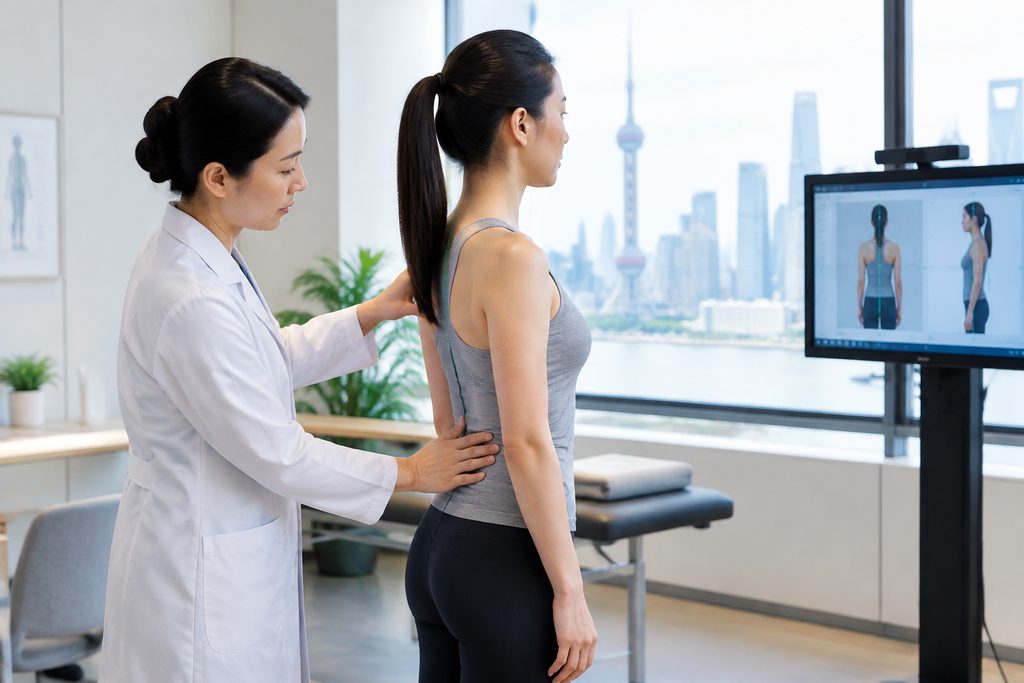
Vertigo Assessment in China: Booking Made Simple
Vertigo is not a disease. It is a symptom — the false sense that you or the room is spinning — and it can come from your inner ear, your brainstem, your neck, or your blood pressure. A proper assessment is the process of finding out which. When patients ask us about vertigo assessment cost China hospitals charge, the honest answer is a range: roughly $150 to $600 for the core diagnostic workup at a top-tier public hospital, and $800 to $2,500 at a private international clinic, depending on how many tests your case actually needs.
That spread sounds unhelpful until you understand what drives it. Vertigo workups are modular. One patient needs a 20-minute positional test and walks out with a diagnosis of BPPV. Another needs MRI, caloric testing, and a neurologist’s review — and the bill reflects that.
Vertigo Assessment Cost in China: The Short Answer
At a major public tertiary hospital, expect the diagnostic phase to land between $150 and $600 in total. That figure covers specialist consultation fees, audiometry, vestibular function testing, and imaging where indicated. At a private international hospital with English-speaking staff and same-week scheduling, the same workup typically runs $800 to $2,500.
For comparison, a vestibular assessment at a US academic center commonly bills $2,000 to $5,000 before insurance, and patients in the UK and Canada often wait weeks or months for a neuro-otology slot. The gap is real. But price alone should not decide where you go — the subspecialty doing the assessment matters more than the building it happens in.
Who This Is Right For — and Who It Isn’t
Chinese hospitals are not the right answer for every dizzy patient. Being clear about that up front saves everyone time.
Usually a good fit:
- You have recurrent or persistent vertigo with no diagnosis after initial workup at home
- You are facing a long wait for neuro-otology or vestibular testing in your home country
- You are already traveling in Asia and symptoms have flared
- You want a second opinion on a diagnosis of Ménière’s disease, vestibular migraine, or BPPV that has not responded to treatment
- Cost is a genuine barrier at home and you can travel safely
Usually not a good fit:
- Acute vertigo with sudden hearing loss, double vision, slurred speech, facial droop, or weakness — that is a possible stroke. Go to the nearest emergency department immediately, wherever you are.
- You cannot tolerate a flight or long journey in your current state
- Your symptoms are already well controlled and you simply want reassurance
- You need a procedure that requires continuous follow-up you cannot arrange locally
The Options, Compared
Here is how the realistic paths stack up for someone searching for vertigo care in China. Prices are in USD and vary by hospital and case complexity.
| Path | Typical assessment cost | Wait time to appointment | English support | Best for |
|---|---|---|---|---|
| Public tertiary hospital, standard outpatient | $150–$600 | Same-day queue, no advance booking from abroad | Limited; interpreter usually needed | Cost-conscious patients with a companion or interpreter |
| Public hospital international / VIP department | $500–$1,500 | Days, bookable in advance | Yes, dedicated staff | Patients who want a senior specialist and predictable scheduling |
| Private international hospital (JCI-accredited) | $800–$2,500 | Often within days | Yes, English-first | Patients prioritizing comfort, direct insurance billing, speed |
| Traditional Chinese Medicine hospital | $100–$400 | Days | Varies | Chronic dizziness, rehabilitation, integrative care |
Which column suits you depends on one question: how much coordination are you willing to do yourself? The public standard route is cheapest and clinically excellent, but it assumes you can navigate a hospital that may see 10,000+ outpatients a day, in Chinese. The international and private routes cost more because someone else absorbs that friction.
Finding the Best Vertigo Clinic in Shanghai — and Elsewhere
Shanghai is the most common entry point for international patients seeking vestibular care, and it has genuine depth. The city hosts 18 hospitals in the Fudan Top 100 ranking, the second-highest concentration in China after Beijing. Neurology, otolaryngology (ENT), and neuro-otology services are available across several of them.
But “best vertigo clinic Shanghai” is the wrong frame if you are not already in Shanghai. Vertigo assessment splits across three departments — ENT for inner-ear causes, neurology for central causes, and sometimes cardiology or geriatrics for blood-pressure-related dizziness. The right hospital is the one with the right department for your likely cause, not the one with the most famous name.
Our hospital database covers 340+ top-ranked hospitals across 37 cities, filtered by specialty. If your symptoms point to BPPV, an ENT-led center with a vestibular testing lab is what you want. If your episodes come with aura or headache, neurology matters more. You can browse specialist rankings on our departments page and city-specific options on the Shanghai hospital guide.
One practical note: outside the international departments, public hospitals in China generally do not allow advance booking from overseas. You register on the day. That is not a flaw in your planning — it is simply how the system works, and it is the single biggest reason patients ask for coordination help.
What the Assessment Actually Involves
A thorough vertigo workup follows a recognizable sequence, and knowing it helps you judge whether a quote is reasonable.
History and examination. The most diagnostic step, and the cheapest. A good clinician asks about duration, triggers, associated hearing loss, and positional components. The Dix-Hallpike and head-impulse tests are done in the room and often identify BPPV or vestibular neuritis on the spot.
Audiometry and tympanometry. Hearing testing distinguishes Ménière’s disease from migraine-associated vertigo. Usually $30–$80 at public hospitals.
Videonystagmography (VNG) or caloric testing. Measures the vestibular system’s response. Typically $100–$250.
Imaging. MRI of the brain and internal auditory canals rules out acoustic neuroma, stroke, and demyelination. A standard MRI runs $300–$700 at public hospitals — often a fraction of Western pricing. CT is cheaper but less useful for most vertigo causes.
Blood work. Thyroid, glucose, vitamin B12, and autoimmune markers where indicated. Usually under $100.
How Much Does Vertigo Assessment Cost Abroad — and What Changes It
Patients comparing international pricing usually want one thing: a number they can plan around. Four variables move it most.
Hospital tier. Public standard versus international department versus private. This alone can triple the bill.
Number of tests ordered. A positional vertigo case may need two tests. A suspected central cause may need six.
Number of specialties involved. Each additional department adds a consultation fee, typically $15–$80 at public hospitals and $150–$400 at private ones.
Whether you need a repeat study. If your home imaging is recent and readable, you skip it.
What is generally not included in quoted assessment figures: travel, accommodation, airport transfers, and interpreter time. If you use a bilingual medical companion, that service starts from $300 per day and covers registration, queuing, payment assistance, wayfinding, and translation — but not a guarantee of booking a specific named specialist. Hospital appointment coordination, including international department bookings and inpatient arrangements, starts from $300, with a full refund if the appointment shown in your order cannot be secured.
For patients who want expert input before traveling at all, a written second opinion from a top-hospital specialist runs $300–$500, and a video consultation with a top specialist runs $500–$800. Any consultation fee is credited in full toward on-the-ground coordination if you come to China within 90 days. That credit applies to the coordination fee only — never to hospital treatment charges.
Is Vertigo Testing Safe in China?
Yes, with reasonable caveats. The diagnostic tests themselves — audiometry, VNG, caloric testing, MRI — are non-invasive and standard worldwide. The equipment at major Chinese tertiary hospitals is current, and imaging volumes are enormous, which means radiologists see a high case load.
The real risk is not test safety. It is communication. If you cannot describe your symptoms precisely, or understand instructions during a caloric test, results suffer. This is why we push patients toward either an international department or a bilingual companion rather than attempting a standard public outpatient visit alone. It is not about ability — it is about a system where the intake conversation happens fast and in Chinese.
Two other practical points. Public hospitals require prepayment, with insurance reimbursement handled afterward in your home country. Many private international hospitals bill insurers directly. And if you are considering traditional Chinese medicine for chronic dizziness or post-episode rehabilitation, acupuncture and herbal approaches are widely used in China for symptom management — as complements to, not replacements for, diagnostic workup.
Practical Considerations: Records, Visa, and Follow-Up
Records. Bring a written symptom diary: when episodes occur, how long they last, what triggers them, what accompanies them. This single document often shortens the diagnostic path more than any test.
Visa. Foreign patients traveling to China for medical treatment typically use the S2 visa, which covers short-stay medical treatment and private affairs, subject to current embassy and consulate requirements and supporting hospital documentation. Accompanying family members apply under the same category. Stays exceeding 180 days fall under S1. Note that the M visa is for commercial and trade activity and is not the medical route. Approval is never guaranteed — requirements change, so verify with your nearest Chinese embassy or consulate before applying.
Payment. Public hospitals: prepay, then claim reimbursement at home. Private international hospitals: often direct billing with major insurers. Confirm your insurer’s network before you travel.
Language. Assume you will need support outside international departments. Budget for it.
Follow-up. Ask your Chinese specialist for a written summary in English before you leave, including test results and recommended next steps. Share it with your physician at home. Vestibular conditions often need months of management, and continuity matters more than the initial diagnosis.
Frequently Asked Questions
At public hospitals, generally no — standard outpatient registration happens on the day, in person. Advance booking is possible through international or VIP departments and private international hospitals. If you need a confirmed appointment before booking flights, plan around those channels rather than the standard outpatient route.
A US academic center commonly bills $2,000–$5,000 for a comparable vestibular workup. China’s public hospitals typically run $150–$600 for the diagnostic phase, and private international hospitals $800–$2,500. These are ranges, not quotes — final cost varies by hospital and case complexity, and travel and accommodation sit outside these figures.
That happens, and it is not a failure of the system. Some vertigo — particularly vestibular migraine and persistent postural-perceptual dizziness — is diagnosed by exclusion and can take time. Ask for a written summary of what was ruled out, not just what was found. That document is often more useful to your home physician than a single label.
Bundled packages exist mainly at private international hospitals for defined conditions such as BPPV repositioning therapy. For undiagnosed vertigo, a package is usually premature — you cannot price treatment before you know the cause. We generally advise patients to complete the assessment first, then discuss treatment options and costs with the hospital directly.
Your Next Step
The core message is simple: vertigo assessment in China is fast, well-equipped, and dramatically cheaper than equivalent care in the US or Europe — but the system rewards preparation, and the cheapest route is not always the smoothest one. Matching your likely cause to the right department matters more than chasing a famous hospital name.
We are China Medical Services, a coordination service, not a hospital. We do not diagnose, and we do not treat. What we do is help you find the right department, prepare your records, arrange appointments through official international channels, and put a bilingual companion beside you when you walk in. If you would like to talk through your situation before committing to anything, start with a free consultation — no pressure, and no obligation to travel.
This article is for general information only and is not medical advice. Vertigo can indicate a serious underlying condition. Always consult a qualified physician about your individual symptoms, and seek emergency care for sudden vertigo accompanied by neurological signs.
For more medical information and treatment options in China, visit chinamedservices.com (China Medical Services).
