First Affiliated Hospital Wenzhou Eye Surgery: A Guide for International Patients
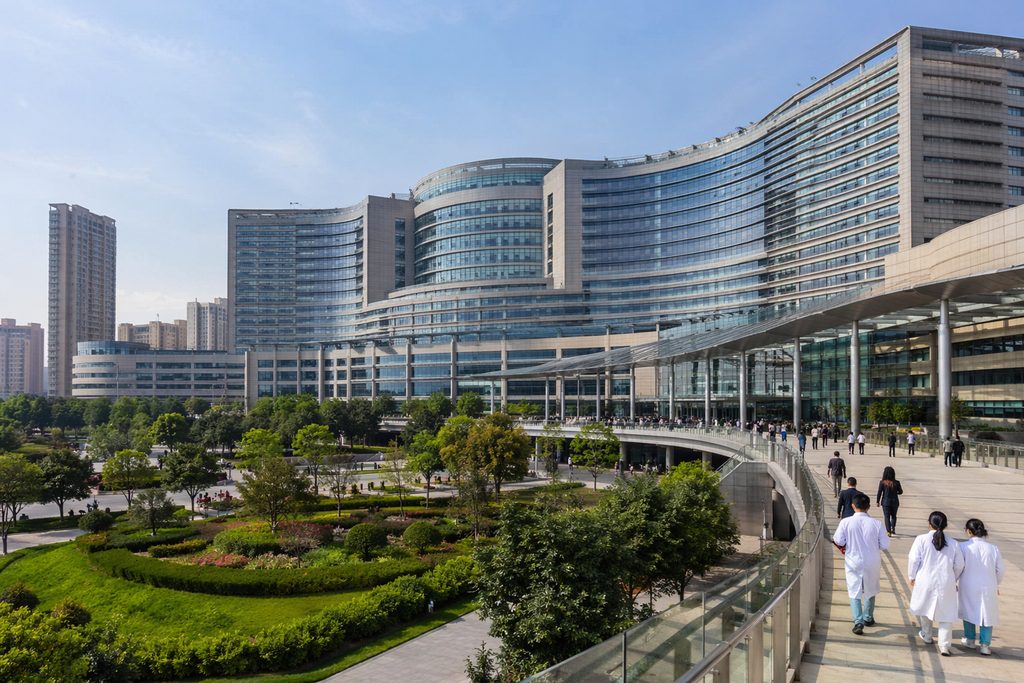
Eye Surgery at First Affiliated Hospital Wenzhou: The Short Answer
The eye surgery cost Wenzhou China typically runs between $1,500 and $6,000 for common procedures like cataract removal with a premium intraocular lens, and $2,500 to $8,000 for refractive procedures. That’s roughly 60% to 80% less than comparable care in the United States or Western Europe. The First Affiliated Hospital of Wenzhou Medical University operates one of the largest ophthalmology departments in eastern China, handling over 400,000 outpatient eye visits annually across its network.
But cost is not the whole story. Accessing this level of care as an international patient requires navigating a system built primarily for domestic demand. You cannot simply book a surgery date from abroad through the standard outpatient channel. The hospital’s public registration system requires in-person queueing on the day of your appointment. For foreigners, the practical route goes through the hospital’s international service desk or a coordination partner who handles documentation, translation, and scheduling before you arrive.
Who This Is Right For — and Who It Isn’t
Wenzhou’s ophthalmology services make sense for a specific profile of patient. Understanding whether you fit helps you avoid wasted trips and false expectations.
Good candidates for eye treatment here include:
- Patients needing cataract surgery who want premium multifocal or toric intraocular lenses at a fraction of Western prices
- Individuals with complex retinal conditions seeking high-volume surgical experience — the department performs over 30,000 eye surgeries per year
- People who value a teaching-hospital environment where specialists routinely handle rare and complicated cases
- Those combining treatment with an extended stay in China, since follow-up visits are easier to manage on the ground
You should think carefully before pursuing treatment here if:
- Your condition requires continuous, long-term monitoring that cannot be handled remotely after you return home
- You have uncontrolled systemic diseases like unstable diabetes or severe hypertension that complicate eye surgery
- You expect Western-style appointment scheduling with guaranteed time slots — the public hospital system operates differently
- You need emergency eye care. For acute vision loss or trauma, seek treatment locally without delay
Best Ophthalmology Hospital in China for Foreigners: The Options, Compared
Wenzhou is not the only destination for eye care in China. Foreign patients often weigh several institutions before committing. Here is how the main options compare for international accessibility, surgical volume, and cost.
| Institution | Annual Eye Surgeries | International Patient Support | Typical Cataract Surgery Cost (USD) | Language Services |
|---|---|---|---|---|
| First Affiliated Hospital of Wenzhou Medical University | 30,000+ | International desk, coordination partner recommended | $1,500–$4,500 | Limited English; interpreter advised |
| Beijing Tongren Hospital | 60,000+ | Established international department | $2,000–$5,000 | English-speaking staff in international wing |
| Zhongshan Ophthalmic Center, Guangzhou | 50,000+ | Dedicated foreign patient office | $1,800–$4,800 | English and Cantonese support |
| Shanghai Eye and ENT Hospital (Fudan) | 40,000+ | International clinic available | $2,200–$5,500 | English interpretation on request |
| Private international hospitals (e.g., United Family) | Varies, lower volume | Full English service, direct insurance billing | $4,000–$9,000 | Native English-speaking staff |
Wenzhou’s strength lies in volume and academic depth at a lower price point. Beijing and Shanghai offer more polished international patient infrastructure but at higher cost and with longer waiting lists for top specialists. If you prioritize a smooth, English-first experience and direct insurance billing, a private international hospital may suit you better. If you want high-volume surgical expertise at the lowest plausible cost, Wenzhou is hard to beat.
First Affiliated Hospital Wenzhou Medical University Eye Department: What Makes It Distinct
The ophthalmology program here traces its roots to the Wenzhou Medical College eye research institute founded in the 1970s. It is now a national clinical research center for ocular diseases, one of only a handful in China. That designation matters because it means the department receives central government funding for clinical trials, equipment, and training that most provincial hospitals never see.
The department runs subspecialty centers covering cataract and refractive surgery, vitreoretinal disease, glaucoma, pediatric ophthalmology, ocular oncology, and corneal disorders. Patients are triaged into these pathways rather than seeing a general ophthalmologist first. For complex cases, this matters. A patient with diabetic retinopathy plus cataract, for example, is managed by a coordinated team rather than bounced between departments.
One practical point for international patients: the hospital’s main campus sits in Lucheng District, central Wenzhou. The ophthalmology building is a separate tower with its own registration, payment, and imaging facilities. That reduces some of the chaos of the main hospital concourse, but signage remains primarily in Chinese. A bilingual companion who knows the building layout saves hours of confusion.
Also worth knowing: the hospital operates satellite clinics and a second campus in the Ouhai District. Confirm which location your specialist actually works from before booking flights and accommodation.
How Safe Is Cataract Surgery in China? The Evidence
Cataract surgery is the most commonly performed surgical procedure in China, with over 4 million operations annually nationwide. Complication rates at major teaching hospitals are comparable to international benchmarks. The Chinese Cataract Surgery Registry, which tracks outcomes across participating institutions, reports posterior capsule rupture rates around 1.5% to 2.5% — within the range published by European and American registries.
At First Affiliated Hospital Wenzhou, the cataract service uses phacoemulsification as standard, the same technique used in Western centers. Premium intraocular lenses — toric, multifocal, and extended depth of focus — are widely available. The hospital stocks lenses from Alcon, Johnson & Johnson Vision, Zeiss, and Bausch + Lomb, among others.
Safety comes down to three factors: surgeon experience, equipment maintenance, and infection control. High-volume centers like Wenzhou perform enough procedures to maintain proficiency. Equipment is modern — the department upgraded its phaco platforms within the last five years. Infection control protocols follow national standards, and endophthalmitis rates are reported at under 0.1% in registry data from top centers.
That said, communication gaps can introduce risk. Misunderstanding pre-operative instructions, medication schedules, or post-operative restrictions is a real hazard when language is a barrier. This is where structured support — a bilingual companion or the hospital’s international coordination desk — directly improves safety, not just convenience.
Eye Surgery Cost Wenzhou China: What You Actually Pay
Let’s break down the numbers. The figures below reflect 2026 pricing at the hospital’s international service tier, which includes English coordination and priority scheduling. Standard public-channel pricing runs about 30% to 40% lower but requires navigating the system in Chinese without guaranteed appointment windows.
| Procedure | Cost Range (USD) | What’s Included | Typical US/EU Price (USD) |
|---|---|---|---|
| Cataract surgery, monofocal IOL | $1,500–$2,500 | Surgeon fee, lens, operating room, 3 follow-up visits | $4,000–$7,000 |
| Cataract surgery, premium multifocal IOL | $3,000–$4,500 | Surgeon fee, premium lens, operating room, 3 follow-up visits | $7,000–$12,000 |
| LASIK / SMILE refractive surgery (both eyes) | $2,500–$4,000 | Pre-op assessment, procedure, 3-month follow-up | $4,500–$8,000 |
| Vitrectomy (retinal surgery) | $4,000–$8,000 | Surgeon fee, hospital stay, surgical consumables | $15,000–$30,000 |
| Corneal cross-linking | $2,000–$3,500 | Procedure, riboflavin, follow-up imaging | $5,000–$9,000 |
These ranges vary by hospital and case complexity. A straightforward cataract in a healthy 60-year-old costs less than the same procedure in a patient with prior trauma or uveitis. The premium lens you choose also swings the price significantly. Always request an itemized quote before committing.
What’s not included: international travel, accommodation, visa fees, and any non-ophthalmic medical care. If your pre-operative workup uncovers a cardiac issue, for example, that consultation and testing bills separately.
Payment is typically required upfront at public hospitals. Most international patients pay by credit card or international bank transfer. Reimbursement from your home insurance depends entirely on your policy — Chinese public hospitals do not bill foreign insurers directly. Private international hospitals in China do offer direct insurance billing, which may justify their higher fees for some patients.
Book Eye Treatment Wenzhou Medical Tourism: The Practical Path
Planning eye treatment in Wenzhou from abroad follows a sequence that differs from what most Western patients expect. Here is the realistic flow.
First, gather your records. You need a recent ophthalmology report — visual acuity, intraocular pressure, slit-lamp findings, and any imaging like OCT or fundus photos. If you have a specific diagnosis, include the relevant specialist’s notes. These documents get translated into Chinese for the reviewing physician.
Second, obtain a preliminary assessment. The hospital’s international service desk can arrange a written second opinion based on your records. This costs $300 to $500 and gives you a realistic picture of whether treatment in Wenzhou is appropriate for your case. It also establishes a relationship with the department before you travel.
Third, schedule your visit. Once the department confirms they can treat you, a coordination partner or the hospital’s international desk arranges your outpatient appointment. Remember: even with coordination, specific surgery dates are confirmed only after the in-person consultation. No reputable provider will guarantee a surgery slot before the surgeon examines you.
Fourth, handle the visa. Foreigners traveling to China for medical treatment apply for an S2 visa, which covers short stays for private affairs including medical care. You’ll need an invitation letter or treatment confirmation from the hospital, plus standard visa documentation. Processing typically takes one to three weeks depending on your home country’s Chinese embassy or consulate. Family members accompanying you also apply for S2 visas. The M visa is for commercial and trade activities only — it is not appropriate for medical travel.
Fifth, arrive and complete your in-person consultation. Expect one to two days of pre-operative testing — blood work, ECG, additional imaging — before surgery is scheduled. Cataract surgery itself is outpatient. You’ll be in and out the same day, with follow-up visits at day one, week one, and month one. Retinal surgery requires a hospital stay of three to seven days.
Sixth, plan for follow-up after returning home. Your Chinese surgeon will provide a discharge summary in English. You’ll need a local ophthalmologist willing to handle post-operative care. Establish this relationship before you travel. Most surgeons in the US and Europe will accept post-op patients who had surgery abroad, but confirm this in advance.
Ophthalmology Package Price Abroad China: What Packages Actually Include
Some international medical tourism agencies market “ophthalmology packages” for China that bundle surgery, accommodation, and logistics into a single price. The ophthalmology package price abroad China typically ranges from $3,000 to $10,000 depending on the procedure and the level of service included.
Read the fine print. A legitimate package should itemize three components: the hospital’s official charges (surgeon, operating room, lens, medications), coordination services (translation, appointment scheduling, hospital navigation), and travel logistics (airport pickup, hotel booking, local transport). If a package price seems too low, it probably excludes the premium lens you actually want or the follow-up visits you’ll need.
At China Medical Services, we do not sell fixed packages. Instead, we provide case management: translating your records, coordinating with the hospital’s international department, arranging bilingual accompaniment during your visit, and handling logistics. Our coordination fees start from $300 for appointment management and scale based on complexity. Any consultation fee you pay is credited in full toward on-the-ground coordination if you proceed within 90 days. Hospital charges are always paid directly to the hospital — we never mark them up.
Frequently Asked Questions
No. The hospital requires an in-person consultation before any surgery is scheduled. You can, however, arrange a remote written assessment or video consultation to confirm you are a suitable candidate before traveling. This reduces the risk of arriving only to discover the surgeon recommends against surgery.
At top teaching hospitals like Wenzhou, cataract surgery safety metrics are comparable to US benchmarks. Complication rates for posterior capsule rupture and endophthalmitis fall within international ranges. The main added risk for foreign patients is communication failure — misunderstanding medication instructions or missing warning signs. Using a bilingual companion mitigates this substantially.
Your local ophthalmologist manages post-operative complications. Chinese surgeons provide detailed discharge documentation, and many are willing to consult remotely with your home physician if needed. But the practical reality is that you need a local doctor willing to take over your care. Establish this relationship before you travel.
It depends entirely on your policy. Some international health insurance plans cover treatment abroad, including in China. Most US-based plans do not. You pay the hospital upfront and seek reimbursement yourself. Request itemized invoices and English-translated medical records to support your claim.
Wenzhou Longwan International Airport (WNZ) has direct flights from several Asian hubs, including Hong Kong, Seoul, and Taipei. From Europe or North America, you’ll typically connect through Shanghai, Beijing, or Guangzhou. High-speed rail from Shanghai takes about three and a half hours. The city is not as internationally connected as Shanghai or Beijing, but it is accessible with one connection from most major Western airports.
Your Next Step
Eye surgery at First Affiliated Hospital of Wenzhou Medical University offers genuine value: high-volume surgical expertise, modern equipment, and prices that undercut Western rates by 60% or more. The tradeoff is a system that requires more preparation and on-the-ground support than most foreign patients expect.
Our team at China Medical Services helps international patients navigate this process — translating records, coordinating with the hospital’s international desk, arranging bilingual accompaniment, and managing logistics. We are not a hospital, we do not provide diagnoses, and we do not guarantee surgical outcomes or specific surgery dates. What we do is reduce the friction between you and the care you’re seeking.
If you’re considering eye treatment in Wenzhou, start with a conversation. Send us your existing ophthalmology records and we’ll help you understand whether this path makes sense for your specific case. Request a free consultation and we’ll respond within one business day. The decision to travel for surgery is significant — you deserve clear information before you commit.
For more medical information and treatment options in China, visit chinamedservices.com (China Medical Services).
