West China Cancer Center Chengdu: A Guide for International Patients
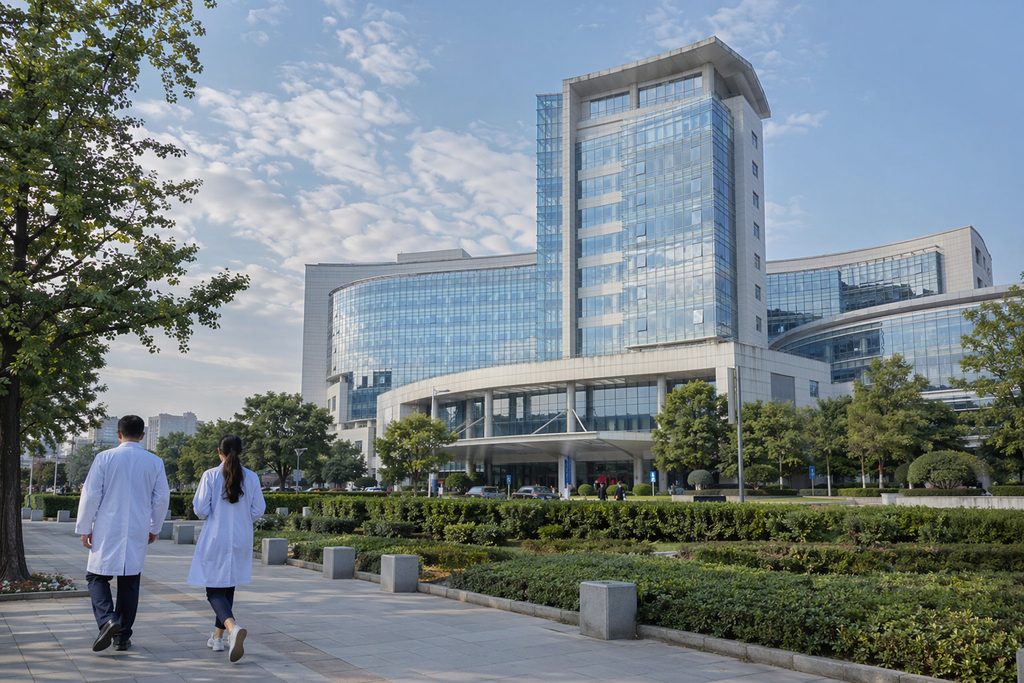
A patient in the United States diagnosed with stage II breast cancer can wait three to six weeks just for a surgical oncology consultation at a major academic center. At West China Hospital in Chengdu, the affiliated cancer center sees oncology outpatients by the thousands each week, and a first specialist appointment can often be arranged within days once records are in hand. That gap — weeks versus days — is the single biggest reason international patients start searching for the West China Cancer Center Chengdu international patients pathway in the first place.
This guide explains what the center actually is, what cancer treatment cost China looks like in practice, how foreign patients get through the door, and where the honest friction points sit. No hype. Just the mechanics.
How This Actually Works, Step by Step
Here is the real sequence, from a patient sitting at home with a pathology report to a treatment plan in Chengdu.
Step one: gather records. You need the pathology report (with immunohistochemistry or molecular markers where relevant), the most recent imaging on disc or as DICOM files, operative notes if surgery already happened, and a current medication list. Scans without a written report are close to useless to a reviewing oncologist.
Step two: get them translated. Chinese specialists at top-tier public hospitals read English reasonably well in academic settings, but the hospital’s formal review process wants Chinese-language summaries. Professional medical translation of a typical oncology file runs two to five business days.
Step three: the specialty reviews and responds. This is a written second opinion or a video consultation. A medical oncologist, surgical oncologist, or radiation oncologist — depending on your disease — reviews the file and returns a written assessment: is the diagnosis consistent, what staging workup is missing, what treatment sequence they would recommend, and whether travel is even warranted.
Step four: decide on travel. Some patients learn their current plan at home is already appropriate. That is a good outcome, not a wasted one.
Step five: appointment and visa. If travel makes sense, the hospital’s international department is contacted for a specialist slot, and you apply for the correct visa with the hospital’s supporting documents in hand.
Step six: arrive, get seen, get a plan. In-person consultation, any missing imaging or biopsy, then a multidisciplinary discussion if the case is complex.
The critical thing to understand: at Chinese public hospitals, you generally cannot book a specialist outpatient slot from overseas the way you would at a US hospital. The workable route for international patients is the hospital’s international or VIP channel, which carries English-speaking staff and shorter queues — at roughly 1.5 to 2 times the standard-channel price.
What West China Hospital Actually Is — and Why It Matters for Oncology
West China Hospital of Sichuan University is one of the largest single-site hospitals on earth. It sits in the top tier of China’s hospital rankings, and its oncology services are consistently listed among the country’s leading programs. The affiliated cancer center handles the full range of solid tumors and hematologic malignancies: medical oncology, surgical oncology, radiation oncology, pathology, and imaging under one institutional roof.
For a foreign patient, that concentration matters. Complex cases get reviewed by multiple specialties without the patient shuttling between buildings across a city. Tumor board discussions happen in-house.
Chengdu itself is a practical base. Direct international flights connect it to Europe, the Middle East, and Southeast Asia. Living costs sit well below Beijing or Shanghai, which stretches a treatment budget further — accommodation near the hospital, meals, and local transport all cost meaningfully less.
If you want to compare this against other options, our ranked directory of China’s top-tier hospitals by city groups programs by specialty strength, and the oncology department rankings show which hospitals sit in the national top ten for cancer care.
A Realistic Timeline
These ranges assume no complications. Complex cases stretch everything.
| Stage | What Happens | Typical Duration |
|---|---|---|
| Record collection | You gather pathology, imaging, notes | 3–10 days |
| Medical translation | Records rendered into Chinese summaries | 2–5 business days |
| Written second opinion | Specialty reviews file, returns written analysis | 3–7 business days |
| Video consultation (optional) | Live discussion with the specialty team | Scheduled within 1–2 weeks |
| Appointment coordination | International department slot confirmed | 1–3 weeks |
| Visa (S2) | Application with hospital invitation documents | 1–3 weeks, varies by consulate |
| Travel and arrival | Flights, accommodation, jet lag recovery | 2–5 days |
| In-person consultation and workup | Exam, any repeat imaging or biopsy, plan | 3–10 days |
| Treatment start | First cycle, surgery date, or radiation planning | Days to 2 weeks after plan |
Realistically, a patient starting today reaches first treatment in Chengdu somewhere between four and ten weeks. Anyone promising faster has not accounted for the visa queue.
What Can Go Wrong — and What Happens Then
Honest failure modes, in order of how often we see them.
The records are incomplete. This is the most common delay. A pathology report without receptor status, or imaging without a radiologist’s read, sends everyone back to square one. Fix: request a full copy of your file from your treating institution before anything else. It is your legal right in most countries.
The recommended plan differs from what you expected. Sometimes the Chinese team agrees with your home oncologist. Sometimes they propose a different sequence or a clinical trial option. This is information, not a verdict. Take it back to your home team and discuss it.
The visa is delayed. Consulates can request additional documents. Apply early, and never book non-refundable flights before the visa is physically in your passport.
Staging changes after arrival. Repeat imaging in Chengdu occasionally shows something the earlier scans missed. The plan adjusts. Budget extra time for this possibility — it happens more often than people expect.
You are deemed not a candidate for the treatment you wanted. This is the hardest outcome. The recourse is a clear explanation of why, and a redirect to what the team does consider appropriate. Ask for it in writing.
No hospital, and no coordinator, can guarantee admission, a specific surgeon, a specific surgery date, or a clinical outcome. Anyone who does is not being straight with you.
Is Cancer Treatment in China Safe? Evaluating the Real Question
“Is cancer treatment in China safe” is the question every family asks, usually late at night. The honest answer has layers.
China’s top-tier public hospitals — the ones in the Fudan rankings’ highest tiers — operate to international clinical standards. Surgical volumes at these institutions are enormous, and high volume correlates with surgical proficiency in oncology procedures. Pathology and imaging equipment at West China is current-generation. Drug regimens follow international guidelines, and many standard chemotherapies and targeted agents are available, including domestic biosimilars that cost substantially less than Western-brand equivalents.
Where the system differs: informed consent conversations can be shorter, nursing ratios are tighter, and the sheer scale of a hospital seeing tens of thousands of outpatients daily is disorienting for anyone used to a Western clinic’s pace. Privacy norms differ too.
The practical safety question is not “is China safe” but “is this specific hospital, this specific department, and this specific physician appropriate for my specific cancer.” That is answerable — through the specialty rankings, through the second-opinion process, and by asking direct questions about case volume for your exact diagnosis.
Understanding Cancer Treatment Cost in China
For most solid tumors, total treatment costs at top Chinese public hospitals run roughly one-fifth to one-tenth of US prices, and often well below Western European private rates. Final numbers depend on the hospital, the regimen, and how complex your case is — get a written estimate after records are reviewed, not before.
At the top-ranked public hospitals, surgical and medical oncology follow international protocols, and case volumes are very high. Safety depends on matching your specific diagnosis to the right department and physician, which is exactly what a second-opinion review is designed to establish.
The S2 visa, annotated for medical treatment, is the applicable short-stay category for patients and accompanying family. Stays over 180 days use S1. Always verify current requirements with your nearest Chinese consulate, since documentation rules change.
Then you have saved the cost of a trip and gained a documented second opinion to bring back to your home oncologist. That is a legitimate outcome, and a common one.
Your Next Step
The takeaway is simple: West China Cancer Center is a genuinely serious oncology program, Chengdu is a workable and affordable base, and the barriers — records, language, visa, appointment access — are all solvable with preparation. What the system does not offer is a shortcut past the queue.
China Medical Services connects international patients with more than 340 top-ranked hospitals across 37 cities, and we handle medical translation, appointment coordination through official hospital international departments, and bilingual accompaniment. We are not a hospital, we do not practice medicine, and we cannot promise a specific doctor, date, or outcome.
If you are weighing options, start with a records review. It costs little, tells you whether travel makes sense, and gives you something concrete to discuss with your own doctors. You can begin at our patient consultation page whenever you are ready.
This article is for general information only and is not medical advice. Treatment decisions should always be made with a qualified physician who has reviewed your individual case.
Frequently Asked Questions
Yes. The hospitals used for international patients are JCI-accredited and follow the same international safety standards as top hospitals in the US and Europe. Surgical teams perform high volumes of procedures — often more than their Western counterparts — which studies show leads to better outcomes.
Costs vary by procedure and hospital, but international patients typically save 40-80% compared to US prices — even when factoring in travel and accommodation. A consultation with our team will give you an exact, all-inclusive quote with no hidden fees.
Send us your existing medical reports to get started. We handle everything from hospital selection and appointment scheduling to visa assistance and post-operative recovery planning. Your medical records are reviewed by the specialist before you even book a flight.
For more medical information and treatment options in China, visit chinamedservices.com (China Medical Services).
