West China Hospital Endocrinology for International Patients: A Complete Guide
According to the International Diabetes Federation, China is home to approximately 141 million adults living with diabetes — the largest diabetic population on earth. That staggering number has a practical consequence: Chinese endocrinologists manage a volume of thyroid, adrenal, pituitary, and metabolic disease that few Western specialists will encounter in a lifetime. For international patients considering West China Hospital endocrinology international patients services, that clinical volume translates into something concrete — diagnostic speed, surgical repetition, and fee structures that routinely run 70–85% below US private-pay rates.
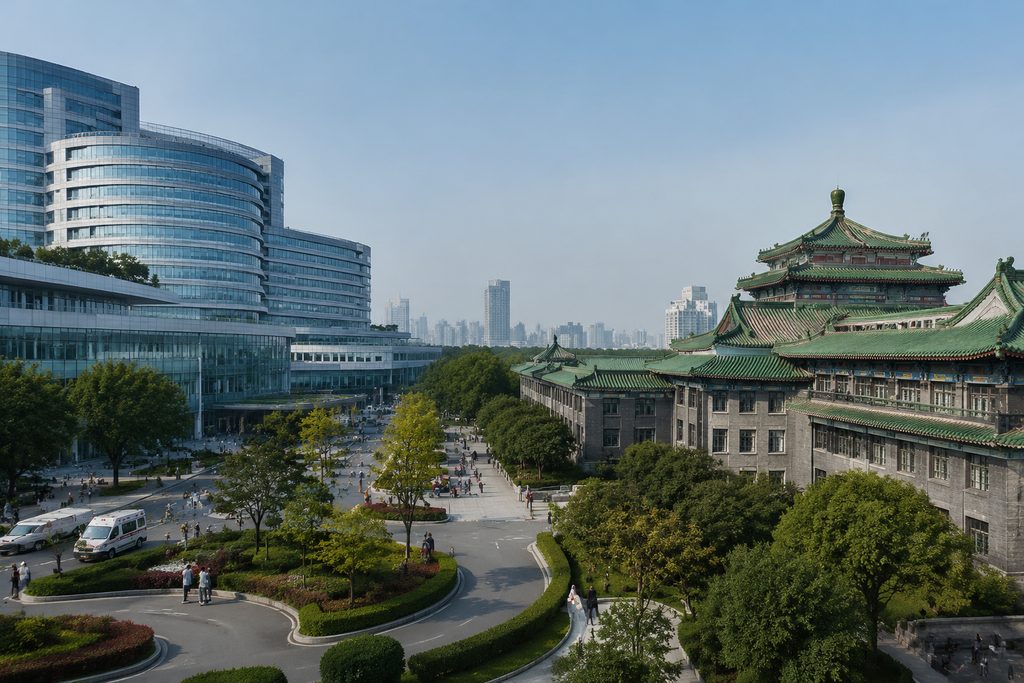
West China Hospital sits in Chengdu, Sichuan. It is one of the largest single-campus hospitals in the world, with over 4,300 beds and a daily outpatient volume that exceeds 20,000 visits. Its endocrinology and metabolism department is consistently ranked among China’s top 10 in the Fudan University specialist reputation rankings. That ranking is not a marketing slogan — it is compiled annually by peer review among Chinese specialists.
But here is the honest part. West China Hospital is a public hospital. Its standard outpatient clinics do not accept remote bookings from overseas patients. Walk-in registration happens the same day, queues form before dawn, and the entire process assumes Mandarin fluency. That is the gap this article addresses directly.
West China Hospital Endocrinology for International Patients: The Short Answer
Yes, West China Hospital accepts international patients for endocrinology care. The realistic route is through the hospital’s international medical center or VIP department, not the standard public queue. Expect to pay roughly 1.5 to 2 times the standard outpatient fee for that access — which, given the baseline, still lands far below Western private pricing. A specialist consultation through the international channel typically runs from $100 to $300. The same consultation at a top US academic center, self-pay, would start around $600 and climb quickly.
The caveat: you cannot simply email the hospital and book a slot. You need Chinese-language documentation, a hospital medical card, and usually an on-the-ground coordinator for the first visit. We handle exactly that. More on that at the end.
Who This Is Right For — and Who It Isn’t
This is not a universal recommendation. Chengdu is a 3-hour flight from Shanghai and a 2.5-hour flight from Beijing. Traveling there for a single blood test makes no sense. Traveling there for a complex endocrine workup, a second opinion on thyroid surgery, or management of an adrenal tumor — that is a different calculation.
Good candidates for West China Hospital endocrinology international patients care typically include:
- Patients with confirmed or suspected thyroid nodules requiring fine-needle aspiration and possible surgery, who want high-volume surgical expertise at a fraction of Western cost
- Patients with adrenal incidentalomas or functional adrenal tumors seeking biochemical workup and surgical planning
- Patients with difficult-to-control diabetes who want a structured inpatient metabolic evaluation — a service that is increasingly rare in Western outpatient-centric systems
- Patients with pituitary disorders who need combined endocrine and neurosurgical assessment
- Patients who already plan to be in China for business or family reasons and want to add a specialist consultation
Who should not pursue this route:
- Patients with acute endocrine emergencies (thyroid storm, adrenal crisis, severe DKA) — stabilize locally first. Do not board a long-haul flight in an unstable state.
- Patients whose primary goal is a specific named professor on a specific date. Chinese public hospitals do not guarantee that, even through VIP channels.
- Patients requiring long-term titration of medications who lack the ability to return for follow-up. Endocrinology is a longitudinal specialty. One visit is rarely enough.
- Patients with rare genetic endocrine syndromes who need access to a specific clinical trial. China’s trial landscape is improving but does not match US or EU registries for every condition.
If you fall into the “should not” list, a written second opinion from a Chinese specialist might serve you better than traveling. That service costs $300–500 and can be done entirely remotely.
The Options, Compared
When international patients ask is West China Hospital good for diabetes treatment, the honest answer is: yes — but the way you access that care matters enormously. Here is the comparison that matters.
| Access Route | Typical Wait for Specialist | Consultation Fee | Language Support | Who It Suits |
|---|---|---|---|---|
| Standard public clinic (walk-in) | Same-day queue, 2–6 hours waiting | $8–20 | Mandarin only | Fluent Chinese speakers, budget-constrained, not time-sensitive |
| International medical center / VIP | 1–5 days with coordination | $100–300 | English available, variable quality | International patients, first-time visitors, complex cases |
| Private international hospital in Chengdu (e.g., Parkway, United Family) | Same-week | $150–400 | English standard | Patients who prioritize Western-style service over academic depth |
| Remote written second opinion from West China specialist | 5–10 business days | $300–500 | Translated report | Patients deciding whether travel is justified at all |
Most international patients we work with choose the second or fourth option. The VIP route gets you in front of the right specialist quickly. The remote second opinion tells you whether that trip is worth taking. Combining both — remote review first, then travel if the specialist confirms a clear treatment pathway — is the most cost-effective sequence we see.
What “Top 10 Endocrinology” Actually Means at West China
The Fudan ranking is the closest thing China has to a US News hospital ranking. It surveys thousands of Chinese specialists and asks them to name the best departments in their field. West China’s endocrinology department has held a top-10 position in that specialist reputation list for years.
What does that mean in practice? Three things.
First, case volume. The department manages thyroid, parathyroid, adrenal, pituitary, gonadal, and metabolic bone disease at a scale that generates pattern recognition. A specialist who sees 40 thyroid nodule patients a week develops a different calibration than one who sees 10.
Second, surgical integration. West China’s endocrine surgeons and endocrinologists work in the same building, often in the same multidisciplinary meetings. For a patient with a suspicious thyroid nodule, the path from ultrasound to FNA to surgical consultation is measured in days, not months.
Third, cost discipline. Chinese public hospitals run on thin margins. That means no unnecessary imaging, no defensive testing, no $400 vitamin D panels. You get the workup the clinical picture demands, nothing more. For self-paying international patients, that restraint is a feature, not a bug.
Thyroid Surgery Cost at West China Hospital: Real Numbers
Let’s talk about the number most patients actually search for: thyroid surgery cost West China Hospital.
A standard thyroid lobectomy or total thyroidectomy at West China Hospital, through the international/VIP channel, typically falls between $4,000 and $8,000 USD. That includes the surgeon’s fee, operating room time, anesthesia, standard pathology, and a 3–5 day hospital stay. The range reflects case complexity — a simple lobectomy sits at the low end; a total thyroidectomy with central neck dissection and frozen section pathology sits at the high end.
Compare that to the United States, where the same procedure runs $20,000 to $40,000 self-pay, or to Singapore and Hong Kong, where $15,000 to $25,000 is typical. Even with international flights and two weeks in Chengdu, the total cost usually lands at 30–50% of the US figure.
What is not included: preoperative fine-needle aspiration ($150–300), advanced molecular testing of the nodule if indicated, postoperative radioactive iodine therapy if required, and any revision surgery. Those are billed separately and vary by hospital and case complexity.
Adrenal Tumor Surgery Price in China: What to Budget
Searches for adrenal tumor surgery price China usually come from patients with a pheochromocytoma, Cushing’s adenoma, or Conn’s syndrome adenoma. These are not routine operations. They require preoperative alpha-blockade, intraoperative hemodynamic management, and a surgical team comfortable with retroperitoneal anatomy.
At West China Hospital, laparoscopic adrenalectomy through the international channel typically runs $6,000 to $12,000 USD. That includes preoperative endocrine workup, imaging review, the procedure itself, and a 4–7 day admission. Open adrenalectomy for larger tumors runs higher, $10,000 to $18,000.
In the US, the same laparoscopic procedure costs $25,000 to $50,000 self-pay. The difference is not a reflection of quality — West China’s urology and endocrine surgery teams perform hundreds of adrenalectomies annually. It reflects the structural cost difference between the two systems.
How to Book an Endocrinology Appointment at West China Hospital for Foreigners
The most common practical question we field: how to book endocrinology appointment West China Hospital for foreigners. The short answer is that you cannot do it directly through a public website. The hospital’s standard registration platform requires a Chinese ID or a physical hospital medical card, and it operates entirely in Mandarin.
The workable path has four steps.
First, prepare your records. This means recent thyroid ultrasound images and reports, hormone panels (TSH, free T4, free T3, thyroid antibodies, calcitonin if relevant), adrenal workup (cortisol, ACTH, aldosterone, renin, metanephrines), or diabetes records (HbA1c, C-peptide, recent glucose logs, current medication list). All documents should be in English or translated into Chinese. We handle the translation as part of our coordination service.
Second, decide between a remote second opinion and an in-person visit. A written second opinion costs $300–500 and gives you a formal assessment from a West China endocrinology specialist. It does not prescribe — it is for reference only. But it tells you whether the specialist believes your case warrants travel. Many patients start here.
Third, if you decide to travel, you need a visa. Foreign nationals seeking medical treatment in China apply for an S2 visa, with the hospital’s invitation letter and treatment confirmation as supporting documents. Family members accompanying you also apply for S2. The M visa is for commercial and trade activities — it is not appropriate for medical travel. Processing typically takes 1–3 weeks depending on your home country’s Chinese embassy or consulate.
Fourth, arrive with a plan for the first 48 hours. You will need a hospital medical card, which requires your passport and a local contact number. You will need to navigate registration, payment, and the physical layout of a hospital campus that is genuinely enormous. A bilingual medical companion — from $300 per day — handles all of this. It is not a luxury. It is the difference between a functional visit and a wasted trip.
Finding the Best Endocrinologist in Chengdu for International Patients
Searches for best endocrinologist Chengdu for international patients often assume there is one name to target. The more useful framing: West China’s endocrinology department has subspecialty teams, and the right specialist depends on your condition.
Thyroid nodule and thyroid cancer patients should be seen by the thyroid surgery and endocrinology integrated team. Adrenal patients need the adrenal hypertension and surgical endocrinology group. Diabetes patients with complications benefit from the metabolic disease and diabetic foot unit. Pituitary patients need the neuroendocrinology group, which coordinates with neurosurgery.
We do not publish individual doctor names or promise specific specialists. Chinese public hospital rules do not allow foreign patients to book a named professor through any legitimate channel. What we do is match your case — based on records review — to the appropriate subspecialty team, then coordinate the appointment through the hospital’s international department.
If you want to understand the broader landscape before committing to a specific hospital, our specialist department rankings page covers all 45 Fudan-ranked specialties, including endocrinology. And our Chengdu city guide explains what to expect on the ground.
Practical Considerations: Records, Payment, and Follow-Up
Three logistical realities matter more than anything else when planning endocrinology care at West China Hospital.
Records. Chinese specialists expect complete, recent data. A thyroid ultrasound from 18 months ago is not actionable. A diabetes consultation without recent HbA1c and glucose logs wastes everyone’s time. Bring digital copies and paper copies. Bring the original imaging files, not just the written reports.
Payment. West China Hospital’s international department accepts major credit cards and international bank transfers. The standard public channels are cash or Chinese mobile payment only. Public hospitals in China operate on a prepayment model — you deposit funds at admission and settle at discharge. Insurance reimbursement is your responsibility; the hospital does not bill international insurers directly. Private international hospitals in China do offer direct billing, which is why some patients choose them for simpler endocrine issues. Our private hospital guide explains that trade-off.
Follow-up. Endocrinology does not end at discharge. Thyroidectomy patients need levothyroxine titration and thyroglobulin monitoring. Adrenalectomy patients need cortisol replacement tapering and surveillance imaging. Diabetes management is lifelong. Before you fly home, get a written follow-up protocol from the treating team, with target lab values and a timeline. Then arrange local follow-up in your home country. The Chinese team can provide records, but they cannot manage your long-term care across borders.
Frequently Asked Questions
For type 2 diabetes management, West China’s endocrinology department offers a structured inpatient metabolic evaluation that has largely disappeared from Western systems. Patients get continuous glucose monitoring, comprehensive complication screening, dietary education, and medication optimization in a single admission. The clinical protocols follow international standards. The main limitation is that long-term follow-up requires a local provider in your home country — the Chinese team can optimize your regimen, but they cannot manage you remotely forever.
No. Chinese public hospital regulations do not permit foreign patients to book a named individual specialist through any legitimate coordination channel. What you can do is specify a subspecialty area — thyroid, adrenal, pituitary, metabolic bone — and the international department will assign a senior specialist from that team. If a specific doctor’s name matters to you more than the clinical outcome, a private international hospital may be a better fit, though you will trade academic depth for service flexibility.
That happens, and it is a good outcome. A written second opinion that says “your current management is appropriate, no travel needed” costs $300–500 and saves you thousands in flights, hotels, and hospital fees. We have seen this multiple times. The remote review is not a sales funnel — it is a genuine decision tool. If the specialist recommends against travel, we tell you that plainly.
A realistic budget for an international patient: written second opinion ($300–500), flights and two weeks in Chengdu ($2,000–4,000 depending on origin), thyroid surgery through the international channel ($4,000–8,000), bilingual companion services ($600–1,200 for key visit days), and miscellaneous hospital fees ($500–1,000). Total: roughly $8,000 to $15,000. The same pathway in the US private-pay system would run $30,000 to $60,000. These figures vary by hospital and case complexity.
Your Next Step
West China Hospital’s endocrinology department is a legitimate top-tier option for international patients — if you access it correctly. The clinical volume is real, the costs are transparent, and the outcomes for common procedures like thyroidectomy and adrenalectomy are comparable to any Western center. The barrier is operational: language, registration, records translation, and navigating a hospital system built for Chinese-speaking locals.
That is what we do at China Medical ServicesFor more medical information and treatment options in China, visit chinamedservices.com (China Medical Services).
