West China Hospital Urology for International Patients: Costs, Booking, and Quality
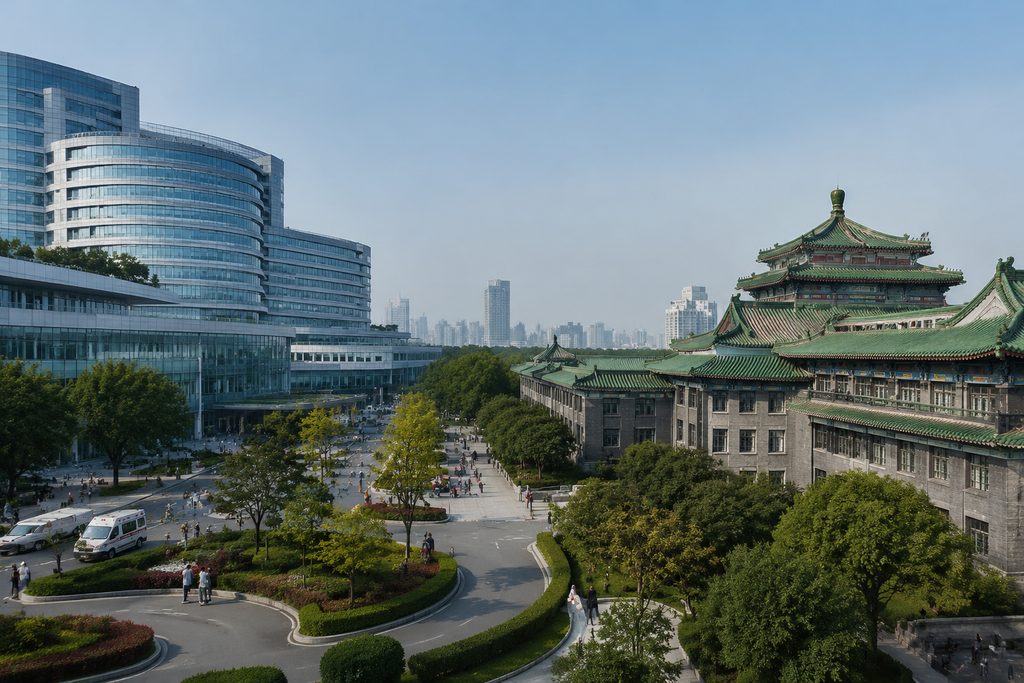
West China Hospital Urology for International Patients: The Short Answer
West China Hospital in Chengdu runs one of China’s highest-volume urology departments, with a national reputation that places it in the top tier for complex stone surgery, prostatectomy, and urologic oncology. For international patients, the department is accessible through the hospital’s International Medical Center, though the pathway requires more planning than most Western patients expect. You cannot simply email the department and book a surgery date. The process starts with a remote evaluation of your existing records, followed by a scheduled in-person consultation — unless you use the hospital’s VIP international channel, which can compress the timeline significantly.
That’s the honest picture. The department’s clinical volume is staggering — over 400 beds dedicated to urology and nephrology combined, with surgeons performing thousands of procedures annually. But volume doesn’t equal convenience. The logistics of getting there, communicating clearly, and navigating a hospital that sees over 20,000 outpatient visits per day across all departments requires either fluent Mandarin or a competent bilingual coordinator. Most international patients arrive with a local guide or a coordination service.
While patients in the United States often wait 4 to 6 weeks for a urologic oncology consultation at a major academic center, West China Hospital’s urology team typically sees new international patients within 5 to 10 business days once records are submitted. The cost differential is equally stark: a radical prostatectomy at a top American hospital averages $35,000 to $60,000, while the same procedure at West China Hospital’s international department typically runs $12,000 to $18,000. These numbers matter. But they only matter if the hospital is genuinely good at the specific procedure you need.
Who This Is Right For — and Who It Isn’t
West China Hospital’s urology department makes the most sense for a specific profile of international patient. Understanding whether you fit that profile before spending money on flights and consultations will save you weeks of frustration.
Typically a good candidate:
- You need a complex stone procedure — percutaneous nephrolithotomy (PCNL), flexible ureteroscopy with laser lithotripsy — and want a team that performs these at extremely high volume
- You have been diagnosed with prostate, bladder, or kidney cancer and want a second opinion from a department that sees rare and advanced presentations regularly
- You are cost-sensitive but unwilling to compromise on clinical infrastructure — West China Hospital is a Fudan-ranked top-tier hospital with modern robotic surgery platforms
- You have family, business, or cultural ties to Chengdu or southwestern China and can combine treatment with an extended stay
- You are comfortable with a staged process: remote records review first, then travel for in-person evaluation, then treatment
Who should think twice:
- Patients needing urgent, same-week intervention — international travel plus evaluation time rarely works for emergencies
- Those with multiple severe comorbidities requiring coordinated care across several specialties — while West China Hospital excels at multidisciplinary care, coordinating that remotely as a foreigner is genuinely harder than at a Western hospital where your primary care physician already knows you
- Patients who cannot tolerate any ambiguity in scheduling — Chinese public hospitals, even top-tier ones, operate differently from Western private systems. Dates shift. Plans change.
- Anyone expecting Western-style bedside manner and extensive physician face-time — Chinese surgeons are excellent but typically direct and brief
If you’re in the first group, the department deserves serious consideration. If you’re in the second, staying closer to home or choosing a private international hospital in China might serve you better.
The Options, Compared
When international patients consider China’s top-ranked hospitals for urology, they’re usually weighing three distinct pathways. Each has different cost structures, speed, and comfort levels.
| Pathway | Typical Cost (USD) | Time to First Consultation | Language Support | Best For |
|---|---|---|---|---|
| West China Hospital — standard international department | $100–300 for video consult; $12,000–18,000 for major surgery | 5–14 business days after records submitted | Basic English at international desk; Mandarin essential elsewhere | Cost-conscious patients needing high-volume surgical expertise |
| West China Hospital — VIP/International Medical Center channel | $500–800 for specialist video consult; surgery 1.5–2x standard rates | 2–5 business days | Dedicated English-speaking coordinators | Patients who want priority scheduling and smoother logistics |
| Private international hospital in China (e.g., United Family, Jiahui) | $300–500 for consult; $25,000–45,000 for major surgery | 1–3 business days | Fluent English throughout, Western-style care | Patients prioritizing comfort, insurance direct billing, and English communication |
The private international route costs more but eliminates most logistical friction. West China Hospital’s standard international department offers the best clinical value but demands more from the patient in terms of patience and coordination. The VIP channel sits between them — a premium on top of public hospital pricing for a significantly smoother experience. Which suits you depends on whether your priority is saving money or saving effort. Most patients who contact us about urology treatment cost China are initially drawn to the standard department pricing, then upgrade to VIP coordination once they understand what navigating a 20,000-visit-per-day hospital actually involves.
Is West China Hospital Good for Urology? What the Data Shows
This is the question behind most searches for is West China Hospital good for urology, and it deserves a direct answer. West China Hospital consistently ranks in the top tier of Chinese urology departments in the Fudan University hospital rankings — the most authoritative hospital evaluation system in China. The department’s urology program is recognized nationally for its stone disease center, which is among the largest in the world by procedure volume. The hospital performs over 3,000 percutaneous nephrolithotomy procedures annually, a figure that dwarfs most Western academic centers.
But let’s be precise about what “good” means. Fudan’s rankings evaluate clinical reputation among Chinese physicians, research output, and specialty development. They do not evaluate patient experience for foreigners. The urology department’s surgical outcomes for prostate cancer, bladder cancer, and complex stones are excellent by any international benchmark — complication rates are published in peer-reviewed journals and align with Western standards. The robotic surgery program uses da Vinci systems and has performed thousands of prostatectomies. For a foreigner, the clinical quality is not the weak point. The weak point is everything around the clinical care: scheduling, communication, follow-up coordination after you return home.
So: is West China Hospital good for urology? Clinically, yes — genuinely among the strongest in China, which means among the strongest in the world by volume. Operationally, for an English-speaking international patient without local support, it ranges from challenging to overwhelming. The clinical excellence is real. The friction is also real. Both statements are true at once.
For patients comparing options, our urology department rankings across China’s top hospitals provide a broader view of where West China Hospital sits relative to other Fudan-ranked programs in Beijing, Shanghai, and Guangzhou.
How to Book Urology Surgery at West China Hospital: The Actual Process
The search query how to book urology surgery at West China Hospital reflects a common misunderstanding: that surgery booking works like hotel reservation. It doesn’t. Chinese public hospitals — including West China Hospital — require in-person specialist evaluation before any surgery is scheduled. No legitimate pathway lets you book a prostatectomy or PCNL from overseas without first having your case reviewed by the treating department.
Here is the realistic sequence:
- Step 1: Submit your existing medical records — imaging (CT/MRI on CD or via secure upload), biopsy reports, lab results, and a summary of your history. These need English-to-Chinese translation for the reviewing physicians.
- Step 2: The urology department reviews your case. This typically takes 3 to 7 business days. They may request additional imaging or clarification.
- Step 3: If the department accepts your case, you schedule either a video consultation with the treating team or an in-person visit. For surgical candidates, an in-person visit is almost always required before final scheduling.
- Step 4: You travel to Chengdu on an S2 visa with a medical treatment annotation. At the hospital, you complete any additional testing the surgeons require — often a repeat CT, blood work, and cardiac clearance.
- Step 5: The surgical date is set. For non-urgent cases, this is typically 1 to 3 weeks after the in-person evaluation, depending on operating room availability and the surgeon’s schedule.
Important: No one can guarantee a specific surgical date before you arrive. The hospital controls operating room allocation, and the surgical team controls their own schedule. Any service promising a locked-in surgery date before in-person evaluation is not being honest with you.
The VIP international channel can shorten this timeline — sometimes to under a week from arrival to surgery — but it cannot eliminate the in-person evaluation requirement. That’s hospital policy, not negotiable.
What It Costs: Urology Treatment Prices at West China Hospital
Cost is the primary reason most Western patients consider China for urologic surgery. The numbers justify the interest. A radical prostatectomy at West China Hospital’s international department typically costs between $12,000 and $18,000, including the surgical fee, hospital stay, and standard post-operative care. The same procedure at a major American hospital averages $35,000 to $60,000 before insurance. A percutaneous nephrolithotomy for a complex kidney stone runs $6,000 to $10,000 at West China Hospital versus $20,000 to $35,000 in the United States.
When patients search prostate surgery price China West China Hospital, they’re usually comparing against these Western figures. The savings are real, but the quote structure matters. Chinese hospitals itemize everything: surgical fee, anesthesia, operating room time, consumables, medications, bed charges, nursing care. A quoted price for surgery typically includes the hospital portion but may not include pre-operative testing, post-discharge medications, or any complications requiring extended stay. Always clarify what a quote includes.
For remote evaluation before travel, expect $100 to $300 for a standard video consultation with the international department, or $500 to $800 for a top-specialist video consultation. Written second opinions from West China Hospital urology specialists typically cost $300 to $500. These fees are for the evaluation itself — they are not deposits toward surgery.
What drives variance? The specific procedure, whether robotic or open surgery is indicated, the complexity of your case, the length of hospital stay, and whether you use the standard international department or the VIP channel. The VIP channel adds a premium of roughly 50% to 100% on top of standard international pricing. For a prostatectomy, that means the $12,000 to $18,000 range becomes $18,000 to $36,000. Still well below American prices, but meaningfully higher than the base rate.
Practical Considerations: Visa, Records, Payment, and Follow-Up
Planning for urology treatment at West China Hospital involves more than choosing a surgeon. The logistics around the medical care determine whether the experience is manageable or miserable.
Visa: Medical travel to China uses the S2 visa, a short-stay category for private affairs that can be annotated for medical treatment. The hospital must provide an official invitation letter or treatment confirmation document, which you submit with your visa application. Family members accompanying you also apply for S2 visas. Processing time varies by consulate — allow 2 to 6 weeks. The S2 visa is not a medical visa in name, but it is the correct category for treatment purposes. Do not apply for an M visa; that’s for commercial and trade activities and is not appropriate for medical travel.
Records and translation: Chinese physicians expect complete, well-organized records. All documents should be translated into Chinese before submission. This includes imaging reports, pathology slides or reports, operative notes from prior surgeries, and a chronological summary of your condition. Incomplete records are the most common reason for delayed case review.
Payment: Chinese public hospitals require pre-payment. You deposit funds at admission, and the hospital deducts charges as they accrue. International patients typically pay via international credit card, wire transfer, or cash. Insurance is almost always reimbursement-based — the hospital does not bill your insurer directly. You pay, then claim. Private international hospitals in China offer direct billing, but West China Hospital’s public structure does not.
Language: The international department has English-speaking staff, but once you’re on the ward, most nurses and junior doctors communicate in Mandarin. A bilingual companion is not a luxury here — it’s the difference between understanding your post-operative instructions and guessing.
Follow-up after returning home: This is the most under-planned aspect of international surgery. Urologic procedures — especially cancer surgery — require structured follow-up: PSA monitoring after prostatectomy, imaging after tumor resection, stent removal after stone surgery. West China Hospital’s urology team will provide discharge instructions and a follow-up plan, but implementing that plan with your home physician requires clear documentation. Request complete operative notes, pathology reports, and a translated discharge summary before you leave.
Practical tip: Before you travel, identify a urologist in your home country who is willing to take over post-operative care. Share West China Hospital’s treatment plan with them in advance. This closes the loop and prevents a gap in care when you return.
Frequently Asked Questions
No. The hospital requires an in-person specialist evaluation before any surgery is scheduled. You can complete a remote records review and video consultation first, which allows the department to confirm they can treat your condition and provide a preliminary treatment plan. But the surgical date itself is only set after you arrive and complete the in-person evaluation. This is standard policy across Chinese public hospitals.
For surgical volume and certain complex procedures — particularly stone disease and urologic oncology — West China Hospital operates at a scale that exceeds most Western centers. The surgeons are highly skilled. But “better” depends on what you value. If you prioritize clinical outcomes for a specific procedure, the department is world-class. If you prioritize communication, convenience, and seamless follow-up, a Western hospital or a Chinese private international hospital will serve you better. The clinical care and the care experience are two different things.
West China Hospital has full intensive care, interventional radiology, and emergency surgical capacity. Complication management within the hospital is excellent. The challenge is what happens after you leave. If a complication arises after you return home, you’ll need a local urologist to manage it. The Chinese surgical team can provide records and remote guidance, but they cannot treat you from across the ocean. This is a real limitation of any international surgical arrangement, not specific to China.
For a major urologic procedure with a 2 to 3 week stay in Chengdu, budget $15,000 to $25,000 for the surgery itself, $2,000 to $4,000 for flights and visas, $1,500 to $3,000 for accommodation and meals, and $1,000 to $3,000 for coordination and translation services if you use them. Total: roughly $20,000 to $35,000. That’s still substantially below the $40,000 to $70,000 you’d pay in the United States for the same procedure, but it’s not pocket change. The savings are real, not magical.
You can manage the international department’s intake process in English. You cannot manage a Chinese public hospital ward in English. Once you’re admitted, the nurses, orderlies, and most junior doctors communicate in Mandarin. Medication instructions, dietary orders, discharge planning — all in Chinese. A bilingual companion who understands hospital workflows will make the difference between a stressful experience and a manageable one.
Your Next Step
West China Hospital’s urology department offers genuinely world-class surgical care at prices that undercut Western hospitals by 60% to 80%. The trade-off is operational complexity: a foreign language, an unfamiliar hospital system, and a process that requires patience and planning. For the right patient, the trade is worth it. For the wrong patient, it’s a frustrating detour.
We help international patients evaluate whether West China Hospital is the right fit for their specific urologic condition. Our team at China Medical Services is not a hospital and does not provide medical advice or diagnoses. What
For more medical information and treatment options in China, visit chinamedservices.com (China Medical Services).
