West China Stomatology Chengdu: International Patient Dental & Oral Surgery Guide
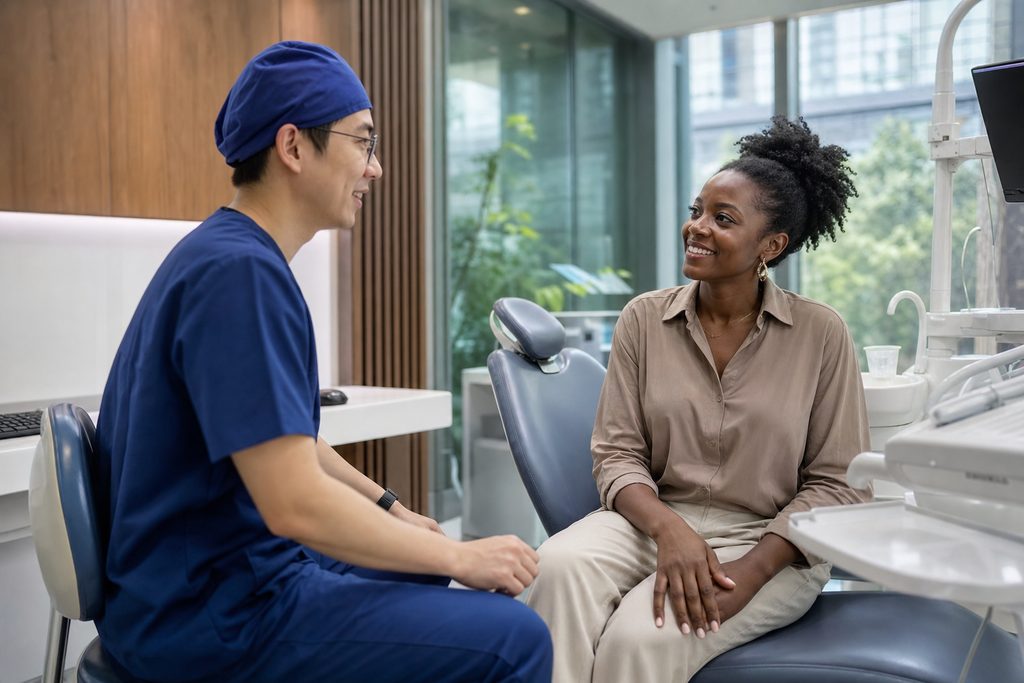
What if the dental quote you received back home—$45,000 for a full-mouth restoration or $5,000 for a single implant—wasn’t your only option? That number keeps many people awake at night. It forces impossible choices between retirement savings and the ability to chew without pain. But the global landscape for complex dental care has shifted. For patients willing to travel, the math changes completely.
We see this calculation every week. A patient in Seattle postpones a necessary bone graft because the out-of-pocket cost is crippling. Another in London waits 14 months for an NHS oral surgery referral while a failing bridge damages adjacent teeth. These aren’t hypotheticals. They are the cases that land in our inbox.
The question isn’t really “is dental tourism possible?” It’s “where can I find outcomes that match or exceed what I’d get at home, at a cost that makes the journey worthwhile?” For a growing number of international patients, the answer points to one institution in Sichuan province.
Key Takeaways
- West China Hospital of Stomatology handles over 600,000 outpatient visits annually, making it one of the highest-volume dental hospitals globally—surgical volume correlates strongly with complication rates in oral surgery.
- International patients access the hospital through the dedicated International Medical Center, not the standard public registration system; pricing is transparent but approximately 1.5-2× standard rates for English-language coordination and senior specialist prioritization.
- Full-mouth implant rehabilitation at this institution typically ranges from $12,000 to $22,000 depending on technique (All-on-4 vs. All-on-6 vs. zygomatic), compared to $35,000-$60,000 in the US or Australia.
- Language is the primary barrier for independent patients. The hospital’s internal systems, consent forms, and postoperative instructions are in Mandarin Chinese. Without a bilingual medical companion, navigating care independently is not realistic.
The Problem: When Dental Costs Break the Budget—And the Wait Makes It Worse
Dental care in high-income countries has become a financial event. Approximately 1 in 4 Americans over 65 has lost all their teeth, according to CDC data. Among those who need implants, fewer than 20% proceed with treatment in the same year they’re diagnosed. The reason is almost always cost.
A single titanium implant with abutment and crown in the United States averages $3,500 to $5,000 per tooth. In Australia, it’s AUD $4,000 to $6,000. In the UK, private implant costs hover around £2,000 to £3,000 per tooth. These are not luxury prices. They reflect the real cost structure of Western dental practices: high labor, high malpractice insurance, high regulatory overhead.
But for the patient, the number on the treatment plan is the only number that matters. And when that number hits $40,000 for a full-arch restoration, the gap between what’s medically necessary and what’s financially possible becomes a chasm. Add waiting lists—12 to 18 months for hospital-based oral surgery in parts of Canada and the UK—and you have a system that fails people at the moment they need it most.
Medical travel for dentistry isn’t new. Thailand, Hungary, and Mexico have built entire industries around it. But there’s a ceiling. When cases get complex—full-mouth rehabilitation, zygomatic implants for severe bone loss, pathology requiring maxillofacial surgery, or patients with comorbidities—the “dental tourism” clinics often refer out. They’re not equipped. That’s where a different category of institution enters the conversation.
Who We Are
We are not a hospital. We do not provide medical treatment, clinical diagnoses, or dental procedures. Our team functions as your logistical infrastructure—we bridge the gap between you and China’s top-tier hospitals. We handle hospital matching, appointment coordination, bilingual medical interpretation, visa guidance, and on-the-ground support throughout your stay. Think of us as the people who make sure you walk into the right department, at the right time, with the right documents, and with someone who speaks both languages standing next to you. Nothing more, nothing less.
Why West China Hospital of Stomatology: Volume, Specialization, and the International Patient Pathway
West China Hospital of Stomatology sits inside Sichuan University’s medical campus in Chengdu. It is not a dental clinic. It is a dedicated stomatological hospital—one of the oldest in China, established in 1917—with 34 clinical departments, over 600 dental chairs, and 200 inpatient beds for oral and maxillofacial surgery. The hospital consistently ranks among China’s top two stomatology institutions in the Fudan University hospital rankings, a peer-reviewed evaluation system that assesses clinical reputation and research output across 45 specialties.
What does that mean for an international patient? It means this is a hospital where dental implantology, orthognathic surgery, oral cancer resection and reconstruction, and complex prosthodontics are not side services—they are the entire mission. The depth of specialization is difficult to overstate.
Surgical Volume Drives Better Outcomes—And This Hospital Has Volume
In oral and maxillofacial surgery, the relationship between case volume and complication rates is well documented. A 2016 study in the Journal of Oral and Maxillofacial Surgery found that surgeons performing more than 100 orthognathic procedures annually had significantly lower rates of nerve injury and nonunion compared to lower-volume peers. West China Stomatology’s oral surgery department performs several thousand major cases per year. This isn’t a clinic doing 20 implants a month. This is a hospital where complex implant cases—zygomatic implants, trans-sinus placements, full-arch immediate-load protocols—are routine daily work.
For the patient, that translates to a surgical team that has seen your exact situation many times before. Severe maxillary atrophy requiring zygomatic anchorage? They’ve done hundreds. Full-mouth clearance with immediate implant placement? Standard protocol. The learning curve has already been climbed.
Technology Infrastructure That Matches—and Sometimes Exceeds—Western Academic Centers
The hospital operates its own dental laboratory on-site with CAD/CAM milling capabilities. Intraoral scanners, cone-beam CT for 3D surgical planning, and computer-guided implant surgery are integrated into the standard workflow. Same-day crown fabrication is available for appropriate cases. The digital workflow—from intraoral scan to milled restoration—reduces the number of visits required, which matters enormously when you’re traveling internationally for care.
One operational detail that surprises many Western patients: the hospital’s sterilization protocols are centralized and tracked. Instruments go through a hospital-level central sterile supply department, not in-office autoclaves. For immunocompromised patients or anyone concerned about infection control, this is a meaningful distinction.
West China Stomatology International Patient Price: The Numbers That Change Decisions
Let’s address the question most readers arrived with. The West China Stomatology international patient price structure differs from the standard public pathway. International patients are routed through the hospital’s International Medical Center, which provides English-language coordination, expedited specialist scheduling, and private consultation rooms. This comes at a premium—typically 1.5 to 2 times the standard rate—but the underlying cost base is still fundamentally different from Western pricing.
| Procedure | West China Stomatology (International Patient) | United States (Average) | Australia (Average) |
|---|---|---|---|
| Single dental implant (titanium, abutment + crown) | $1,200 – $1,800 | $3,500 – $5,000 | AUD $4,000 – $6,000 |
| All-on-4 full-arch restoration (per arch) | $6,000 – $9,000 | $18,000 – $25,000 | AUD $20,000 – $28,000 |
| All-on-6 full-arch restoration (per arch) | $8,000 – $11,000 | $22,000 – $30,000 | AUD $25,000 – $35,000 |
| Zygomatic implant (per implant, complex atrophy cases) | $3,000 – $4,500 | $8,000 – $12,000 | AUD $10,000 – $15,000 |
| Orthognathic surgery (bimaxillary, excluding orthodontics) | $8,000 – $14,000 | $40,000 – $80,000 | AUD $35,000 – $60,000 |
| Full mouth restoration (implants + fixed prosthesis, both arches) | $12,000 – $22,000 | $35,000 – $60,000 | AUD $40,000 – $70,000 |
These ranges are estimates based on cases our team has coordinated. Final pricing varies by implant system (Straumann, Nobel Biocare, and domestic Chinese systems are all available at different price points), bone graft requirements, and the specific specialist assigned. The hospital provides a formal treatment plan with itemized costs after the initial consultation—never before. Any service that promises a fixed price before a doctor has examined you is guessing.
Is this the cheapest dental care in Asia? No. Thailand and Vietnam offer lower price points. But those destinations rarely handle the complex surgical cases that West China Stomatology manages daily. For a straightforward single implant in a healthy patient, the calculus might favor Bangkok. For a full-mouth restoration involving bone grafts, sinus lifts, and immediate-load prosthetics, the depth of specialization in Chengdu becomes the deciding factor.
Is Oral Surgery Safe in Chengdu Hospitals? What the Data Shows
This question deserves a direct answer. Is oral surgery safe in Chengdu hospitals at the level international patients expect? The short answer: at a top-ranked academic stomatology hospital, safety protocols and outcomes are comparable to Western academic medical centers. The longer answer requires unpacking what “safe” means in a surgical context.
Infection rates in Chinese tertiary hospitals have been the subject of extensive study. A 2018 systematic review in The Lancet Infectious Diseases found that surgical site infection rates in Chinese tertiary hospitals were roughly 2-4% for clean-contaminated head and neck surgery—comparable to rates reported in US and European literature. At West China Hospital of Stomatology specifically, the oral and maxillofacial surgery department publishes its own outcome data, with reported implant survival rates above 95% at five years, consistent with international benchmarks.
The hospital’s blood bank, on-site ICU capability, and integration with the broader West China Hospital medical campus (one of China’s largest general hospitals) provide a safety net that standalone dental clinics cannot offer. If a patient with uncontrolled diabetes or cardiovascular disease experiences a complication during a full-mouth procedure, the backup is immediately available—not an ambulance ride away.
That said, safety is not just about the hospital. It’s about communication. A surgical consent form in Mandarin that you cannot read is a safety risk. Postoperative instructions delivered verbally in a language you don’t speak are a safety risk. The hospital’s clinical safety is strong. The communication safety depends entirely on having a competent interpreter in the room. This is not optional.
What You Need to Know Before Attempting This Independently
We’ve seen patients try to arrange treatment at West China Stomatology on their own. Some succeed, after enormous frustration. Most give up. The barriers are structural, not malicious. Here’s what you’re up against.
- Registration and Scheduling: The public registration system is entirely in Chinese and operates through a WeChat mini-program that requires a Chinese phone number and national ID verification. International patients cannot use it. The International Medical Center has a separate booking pathway, but it is not publicly listed online. You need to know who to contact—and that contact information changes periodically.
- Medical Records and Imaging Transfer: The hospital requires your existing panoramic X-rays, CBCT scans, and treatment records before scheduling a consultation. These must be translated into Chinese if they contain clinical notes. The hospital’s imaging department can take new scans on-site, but without prior records, the specialist cannot prepare for your case in advance. Showing up without records means starting from zero.
- Payment Systems: The International Medical Center accepts international credit cards and wire transfers, but the standard hospital cashier does not. If you’re routed through the wrong payment channel, you’ll be directed to a Chinese bank card or WeChat Pay terminal that won’t accept your Visa or Mastercard. The deposit for surgery is typically 50-70% of the estimated total and must be paid before a surgery date is confirmed.
- Postoperative Follow-up Logistics: Full-mouth implant cases require multiple visits: initial consultation, surgery, suture removal (7-10 days post-op), impression-taking (3-6 months post-op), and final prosthesis delivery. That’s a minimum of two trips to Chengdu for most patients, sometimes three. Planning accommodations, visa extensions, and local transportation across multiple trips requires coordination that the hospital does not provide.
How We Help You Navigate the Best Dental Hospital Chengdu for Foreigners
The search for the best dental hospital Chengdu for foreigners ends at West China Stomatology not because it’s the only option—it’s not—but because it’s the institution with the deepest clinical bench for complex cases and a formal international patient pathway. Our role is to make that pathway walkable.
We start with your clinical records. You send us your X-rays, CBCT files, treatment history, and a summary of what you need. Our team translates the relevant clinical notes into Chinese and submits them to the International Medical Center for pre-consultation review. This step alone saves one trip. The specialist reviews your case before you arrive and confirms whether they can treat you—and roughly what the plan will involve.
Once the hospital confirms acceptance, we coordinate your consultation appointment, arrange a bilingual medical companion to be with you throughout the visit, and handle the logistical scaffolding: visa invitation letters, hotel recommendations near the hospital, airport transfers. During the consultation, your companion interprets in real time—not just the words, but the clinical nuance. When the doctor explains why a zygomatic implant is indicated instead of a sinus lift, you understand the reasoning, not just the conclusion.
If surgery is scheduled, we manage the deposit payment, confirm the date, and arrange postoperative follow-up visits. For patients requiring multiple trips—which is most full-mouth restoration cases—we coordinate the entire sequence. You focus on recovery. We handle the calendar.
For those who cannot travel for an initial consultation, we can arrange a remote video consultation with a specialist at the International Medical Center. This costs from $500 to $800 and includes a written summary in English. If you proceed to treatment within 90 days, that fee is credited in full toward our on-the-ground coordination service. It’s a way to get clinical answers before committing to a flight.
Our service does not include the hospital’s treatment charges. We charge separately for coordination and bilingual companionship—from $200 per day for a medical companion and from $300 for appointment coordination. The hospital bills you directly for all clinical services. We never mark up medical fees, and we never accept commissions from hospitals. That independence matters.
Frequently Asked Questions
At West China Stomatology’s International Medical Center, a single titanium implant with abutment and crown typically ranges from $1,200 to $1,800. The implant system you choose drives much of the variation. Premium Swiss systems (Straumann, Nobel Biocare) sit at the higher end. Domestic Chinese implant systems, which have published five-year survival data comparable to international brands, cost less. The hospital’s specialists will present options with clear pricing during your consultation. This question—how much does dental implant cost in China—is the most common one we field, and the honest answer is that you’ll get a precise number only after the surgeon reviews your CBCT scan and bone quality.
Technically, yes. The International Medical Center accepts direct inquiries. In practice, the book appointment West China dental hospital international process requires Mandarin fluency or extreme persistence. The center’s contact information is not published on the English-language sections of the hospital website. Phone calls are answered in Chinese. Email response times vary from two days to never. Our service exists because this gap is real. We maintain direct communication channels with the center’s international patient coordinator and can typically confirm appointment availability within 48 hours.
Full mouth restoration China medical tourism has matured significantly in the last decade. At West China Stomatology, the prosthodontic and implant departments use the same implant systems, the same digital workflow, and the same restorative materials you’d encounter at a university hospital in the US or Europe. The difference is volume. The implant department places thousands of fixtures annually. The prosthodontic lab technicians fabricate full-arch prostheses daily, not occasionally. When a lab technician does something every day, the marginal fit of your final prosthesis tends to be better—and marginal fit is what determines long-term success. The clinical protocols are international. The cost structure is Chinese. That combination is what makes the travel worthwhile.
This is the hardest question, and it deserves a straight answer. If a prosthesis fractures or an implant fails after you’ve returned to your home country, you will need a local dentist to manage the complication. West China Stomatology provides a treatment summary and all imaging files in DICOM format, which your local provider can use. The hospital’s specialists are available for remote consultation with your local dentist if needed. But the physical management of complications falls to a provider near you. This is true of any cross-border medical travel, and it’s a risk you must weigh honestly. For most patients, the cost savings—often $20,000 to $40,000 on a full-mouth case—more than cover any potential local follow-up care. But the risk is not zero. No surgery is.
Your Next Step
You’ve been living with a dental problem long enough to search for solutions outside your home country. That takes a certain kind of resolve. The path forward isn’t complicated, but it requires a first step: getting your clinical records in front of a specialist who can tell you definitively what’s possible and what it will cost.
Send us your panoramic X-ray, CBCT scan if you have one, and a brief description of your situation. We’ll translate the records, submit them to West China Stomatology’s International Medical Center, and get you a clinical answer—either through a remote consultation or an in-person appointment. There’s no obligation and no pressure. Just clarity. Start with a free consultation to discuss your case and options.
Medical disclaimer: This article is for informational purposes only and does not constitute medical advice. Treatment decisions should be made in consultation with a qualified dental professional after a thorough clinical examination. Prices cited are estimates based on cases coordinated through our service and may vary by hospital, specialist, and individual clinical complexity.
For more medical information and treatment options in China, visit chinamedservices.com (China Medical Services).
