Do I Need My Wisdom Teeth Removed? Cost, Safety & Timing Explained
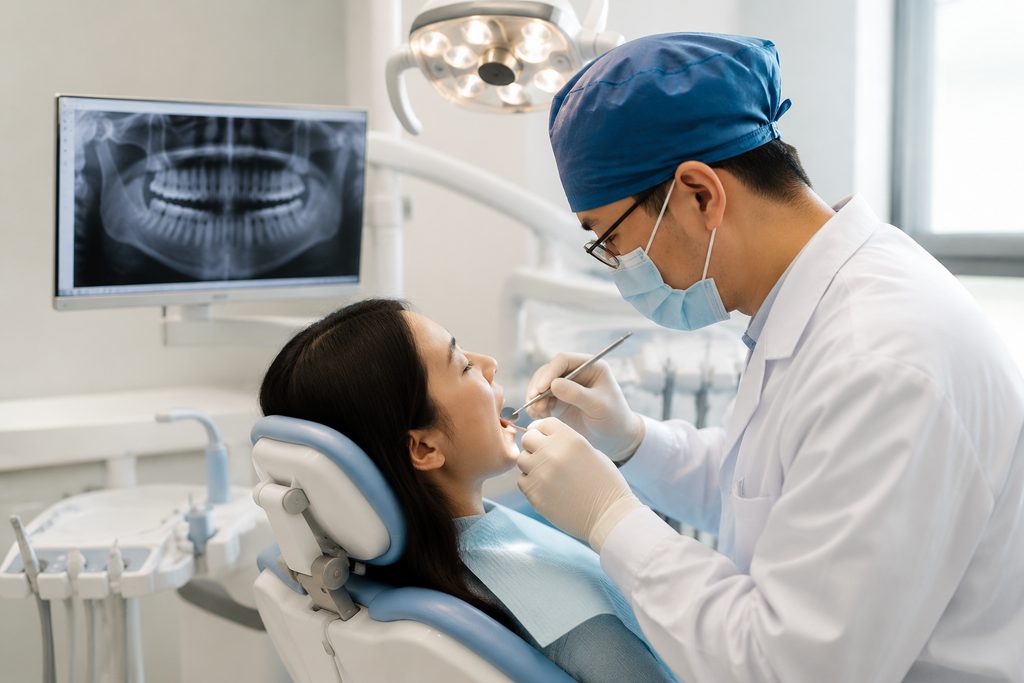
Have you ever felt a dull ache at the back of your jaw and wondered if those third molars are finally making their move? You are not alone. Roughly 85% of people will have at least one impacted wisdom tooth in their lifetime, and the decision to remove them is rarely as straightforward as a simple yes or no. The wisdom teeth removal cost China is a fraction of what Western clinics charge, which is why more international patients are looking east for answers. But cost is only one piece of the puzzle.
This article walks you through the real indicators for extraction, what the procedure involves, what you can expect to pay in different countries, and how to evaluate safety if you are considering treatment abroad. We are not dentists. We coordinate access to China’s top dental hospitals and help you understand the landscape before you commit.
Do I Need My Wisdom Teeth Removed? The Short Answer
Not necessarily. If your wisdom teeth have erupted fully, sit straight, are easy to clean, and do not crowd neighboring teeth, you may never need them removed. But that describes a minority of cases. Most people experience some degree of impaction — the tooth is trapped under gum or bone, or it grows at an angle. That is when problems start.
The clinical reasons for extraction are specific: recurrent infection (pericoronitis), cyst formation, damage to the adjacent molar, severe decay that cannot be restored, or crowding that undoes orthodontic work. Pain alone is not always a reason. Some impacted teeth cause no symptoms for years. But asymptomatic does not mean harmless. A silent cyst can destroy bone before you feel anything. That is why regular panoramic X-rays matter more than how your jaw feels on any given Tuesday.
Who This Is Right For — and Who It Isn’t
Removal is typically recommended when imaging shows a clear problem or a high probability of one. Here is the breakdown.
Good candidates for extraction:
- Patients aged 16–25 whose roots are not fully formed, making removal easier and healing faster
- Anyone with recurring gum infection around a partially erupted tooth
- Patients with orthodontic relapse caused by wisdom tooth pressure
- Those with decay or gum disease on the tooth in front of the wisdom tooth
- Patients planning jaw surgery or certain cancer treatments where infection risk must be minimized
Poor candidates for extraction:
- Healthy, fully erupted, functional wisdom teeth with no pathology
- Patients with uncontrolled bleeding disorders or severe cardiac conditions requiring hospital-level clearance
- Older patients (over 40) with completely asymptomatic, deeply buried teeth where surgical risk outweighs benefit
- Anyone with an active severe infection at the surgical site — antibiotics first, surgery later
Age matters more than most people realize. A 19-year-old with a partially impacted lower third molar heals in days. A 55-year-old with the same tooth faces a denser jawbone, slower healing, and a higher chance of nerve involvement.
The Options, Compared
If you do need extraction, where should you have it done? The table below compares typical all-in costs for a single surgical extraction of a bony impacted lower wisdom tooth.
| Country | Typical Cost (USD) | Wait Time | Notes |
|---|---|---|---|
| United States | $450 – $1,800 | 1–3 weeks | Oral surgeon fee separate; sedation adds $250–$600 |
| United Kingdom (private) | $350 – $1,200 | 2–4 weeks | NHS covers only medically necessary cases; long queues |
| Thailand | $150 – $400 | 3–7 days | Strong dental tourism infrastructure; JCI-accredited hospitals |
| China (top-tier public, international dept.) | $120 – $350 | 2–10 days | High-volume surgical experience; English support varies by hospital |
| China (private international clinic) | $250 – $600 | 1–3 days | English-speaking staff; direct insurance billing at some locations |
Which column fits you? If you have dental insurance that covers oral surgery at home, staying local may be simplest. If you are uninsured or facing a four-figure quote, the wisdom teeth removal abroad price comparison shifts decisively toward Asia. China’s advantage is not just price — it is volume. A single oral surgery department at a major Chinese dental hospital may perform more wisdom tooth extractions in a month than a typical Western clinic does in a year.
Is Wisdom Teeth Surgery Safe in China? What the Data Shows
This is the question every international patient asks, and it deserves a straight answer. Safety depends on where you go, not on the country as a whole. China has two parallel dental care systems. The top tier — university-affiliated dental hospitals and JCI-accredited private clinics — operates at international standards. The bottom tier — small, unregulated storefront clinics — does not. The gap is enormous.
For context, China’s leading dental hospitals handle extraordinarily high surgical volumes. Peking University School of Stomatology, West China School of Stomatology in Chengdu, and Shanghai Ninth People’s Hospital are among the busiest oral surgery centers in the world. High volume correlates with lower complication rates in surgical fields, including third molar extraction. Studies consistently show that surgeons who perform a procedure frequently have fewer instances of nerve injury and dry socket.
So, is wisdom teeth surgery safe in China? At a top-tier institution, yes — with the same caveats you would apply anywhere: verify the surgeon’s credentials, confirm the facility’s accreditation, and ensure you understand the anesthesia protocol. Avoid clinics that cannot show you a panoramic X-ray before quoting a price. That is a red flag in any language.
What It Costs: Breaking Down the Numbers
The wisdom teeth removal cost China ranges from about $120 to $600 depending on hospital tier, tooth position, and anesthesia type. Here is what drives the variance.
A simple, fully erupted upper wisdom tooth can be removed in under 15 minutes. At a top public hospital’s international department, expect to pay $120–$200. A deeply impacted lower tooth requiring bone removal and sectioning is a different procedure entirely. That runs $250–$350 at a public hospital, or $400–$600 at a private international clinic like United Family or Jiahui.
If you are asking how much does wisdom teeth extraction cost in Shanghai specifically, the range is similar to Beijing — roughly $150–$550. Shanghai has more private international dental clinics per capita than any other Chinese city, which means more English-speaking options but also higher average prices than, say, Chengdu or Guangzhou.
What is included? Typically the consultation, panoramic X-ray or CBCT scan, local anesthesia, the extraction itself, and basic post-operative medications. What is not included? IV sedation (add $100–$250), any biopsy if tissue looks abnormal, and follow-up visits if complications arise. Always ask for a written breakdown before you sit in the chair.
Practical Considerations: Records, Visas, and Follow-Up
Planning dental surgery abroad involves logistics that go beyond the procedure itself. Here is what actually matters if you are considering China.
Records. Bring any existing panoramic X-rays, even if they are a year old. If you do not have them, the hospital will take new ones — but prior images help the surgeon see how fast the tooth is moving or whether a cyst has changed size. Digital copies on your phone are acceptable.
Visa. Medical treatment in China falls under the S2 visa category, not the M visa. The S2 covers short-term private affairs including medical treatment, and your hospital appointment confirmation letter serves as supporting documentation. If you are also doing tourism, the same visa covers both. For stays over 180 days, an S1 applies. Requirements change, so verify with the nearest Chinese embassy or consulate before booking flights.
Payment. Public hospitals in China operate on prepayment. You pay a deposit at registration, and the balance is settled after treatment. International credit cards are accepted at international departments and private clinics but rarely at standard public hospital counters. Carry a UnionPay-compatible card or sufficient cash, or arrange payment through a coordination service. Private international clinics like those listed on our private hospital directory typically accept Visa and Mastercard directly and may bill your insurer.
Language. At a public hospital’s standard outpatient clinic, expect Mandarin only. The international department of a major dental hospital will have some English-speaking staff, but do not assume fluency. A bilingual companion who can translate your symptoms, explain the surgeon’s instructions, and handle pharmacy pickup removes the single biggest source of stress for foreign patients.
Follow-up after you fly home. Sutures from a simple extraction dissolve or are removed within 7–10 days. If you leave China before suture removal, any dentist at home can handle it. Dry socket — the most common complication — typically appears 3–5 days post-op. If you are flying long-haul within that window, ask your surgeon for a written post-op protocol to show any dentist you see at home.
Frequently Asked Questions
You cannot know without imaging. A panoramic X-ray shows the tooth’s position, angle, and relationship to the inferior alveolar nerve. Many patients discover asymptomatic impaction only when a dentist takes routine X-rays. If you are over 18 and have never had a panoramic image taken, that is the single most useful diagnostic step.
Some international health insurance plans cover emergency dental treatment abroad, but elective wisdom tooth extraction is usually excluded or requires pre-authorization. US dental insurance typically does not cover treatment outside the country. Private international clinics in China may bill your insurer directly if they have an existing agreement — ask before booking. Otherwise, you pay upfront and submit a claim yourself.
For a simple extraction, 48–72 hours is usually enough before a long flight, provided there is no active bleeding or swelling that suggests infection. For surgical removal of an impacted lower tooth, most surgeons recommend waiting 5–7 days. Cabin pressure changes do not cause dry socket, but the dehydration and fatigue of long travel can slow healing. Plan your return flight accordingly.
Yes, and it is common practice for younger patients under IV sedation. Removing all four in one session means one recovery period instead of two. The trade-off is a more uncomfortable first 48 hours and a slightly higher risk of post-operative bleeding. For patients over 35 or those with medical conditions, surgeons often split the procedure into two sessions, one side of the mouth at a time.
The inferior alveolar nerve runs close to lower wisdom tooth roots. Injury causes numbness in the lip and chin on that side. The incidence is roughly 0.5–1% for routine cases, higher for deeply impacted teeth sitting directly on the nerve canal. Most nerve injuries are temporary and resolve within weeks to months. Permanent numbness is rare — under 0.1% in experienced hands. A CBCT scan before surgery shows the exact nerve position and helps the surgeon plan a safer approach.
Your Next Step
Removing your wisdom teeth is a decision that should be driven by imaging and clinical evidence, not by pain alone or by a dentist’s default recommendation. If your X-rays show a problem, the procedure is routine, safe, and — in China — remarkably affordable. If they show healthy, functional teeth, the right answer is to leave them alone.
We are China Medical Services, a coordination team that connects international patients with top-tier Chinese dental hospitals. We are not a hospital, and we do not diagnose or treat. What we do is help you navigate the system — from finding the right specialty department to arranging appointments and bilingual support. If you want to understand whether treatment in China makes sense for your specific case, start with a conversation. Reach out for a free consultation, and we will help you map out your options.
Your wisdom teeth will not wait forever. But you do not have to rush the decision either. Get the X-rays. Understand the problem. Then choose your path with clear eyes.
For more medical information and treatment options in China, visit chinamedservices.com (China Medical Services).
