West China Hospital ENT for International Patients: A Practical Guide to Access
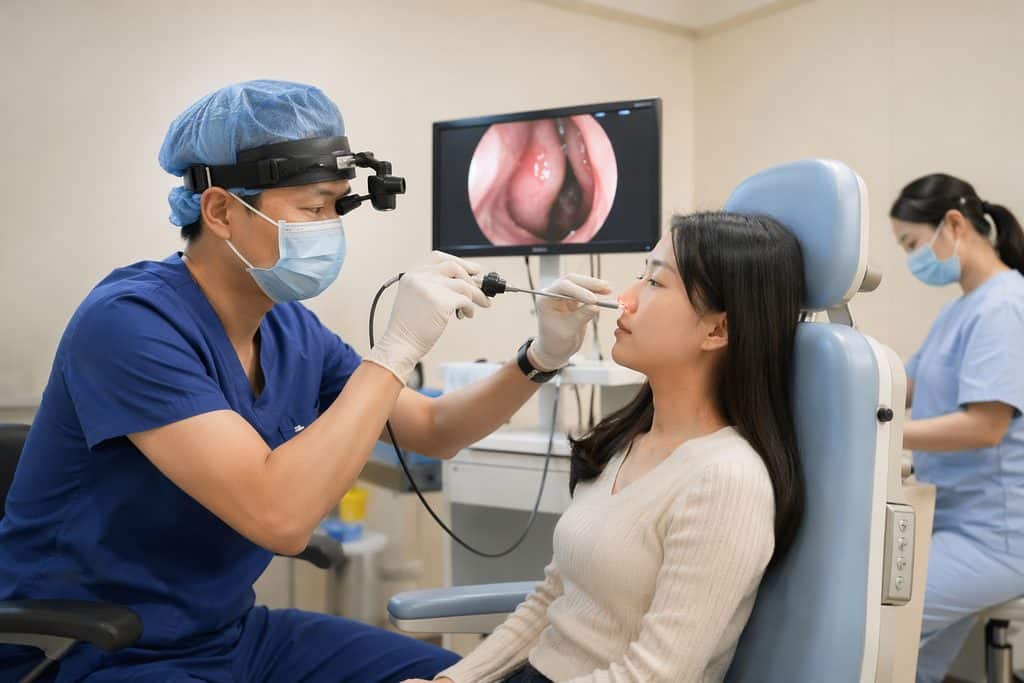
West China Hospital ENT for International Patients: What You Actually Need to Know
Have you ever wondered whether a top-tier Chinese hospital can actually handle your ear, nose, or throat condition without you speaking a word of Mandarin? West China Hospital in Chengdu ranks among China’s most respected medical institutions, and its ENT department handles a staggering volume of complex cases. For international patients, the real question isn’t whether the expertise exists. It’s how to access it without getting lost in a system built for millions of domestic patients. We’ll walk through exactly what West China Hospital ENT international patients should expect, from first contact to post-treatment follow-up.
West China Hospital sits in the top echelon of Chinese healthcare. The Fudan University hospital rankings place it in the highest tier (A++++), a distinction shared by only a handful of institutions nationwide. Its ENT department consistently appears among China’s top 10 for otolaryngology in the Fudan specialty reputation rankings. That’s not marketing language. It’s a measurable signal of peer recognition. But rankings don’t schedule your appointment, translate your records, or navigate the visa process. That’s where the real work begins.
How This Actually Works, Step by Step
You don’t simply email the hospital and get a slot. Chinese public hospitals operate on a system designed for domestic patients who show up in person. For an international patient, the sequence looks different.
Step 1: Gather your existing medical records. This means imaging reports (CT, MRI, audiometry results), surgical history, current medication list, and any biopsy or pathology reports. If your records aren’t in English, they’ll need translation into Chinese. Most international patients underestimate how much this matters. A specialist reviewing incomplete records will either delay a decision or ask you to repeat tests.
Step 2: Get a preliminary review. Before you book a flight, a remote evaluation makes sense. You send your records to a coordination team or directly to the hospital’s international department. A specialist reviews them and tells you whether your case is appropriate for treatment at West China Hospital, what additional tests might be needed, and roughly what the treatment path looks like. Written second opinions from top specialists typically cost $300–500. A video consultation with a specialist runs $500–800. These fees are for the medical review, not a guarantee of admission.
Step 3: Decide on your access route. Public hospital outpatient clinics generally cannot be pre-booked from overseas. You show up, queue, and hope the doctor you want is available. That’s the reality for the standard channel. The international department or VIP channel is different. It allows advance scheduling with senior specialists, provides English-speaking coordination, and shortens the chaos. Expect to pay 1.5 to 2 times standard rates for this route. For most international patients, it’s the only practical option.
Step 4: Apply for your visa. Medical treatment in China falls under the S2 visa category, not the M visa (which is for commercial and trade activities). You’ll need an invitation letter or supporting documents from the hospital. Family members accompanying you also apply for S2 visas. Processing times vary by embassy, but budget three to six weeks. Do not book flights until the visa is in hand.
Step 5: Arrive, attend your appointment, and proceed with treatment. If surgery is recommended, it will be scheduled after your in-person consultation. No reputable hospital will promise a surgery date before the specialist has examined you. Once admitted, you’ll need to pre-pay for hospital services. International insurance is usually reimbursement-based, meaning you pay first and claim later.
What Makes the ENT Department at West China Hospital Different
West China Hospital ENT international patients often arrive with conditions that were either misdiagnosed or deemed inoperable elsewhere. The department handles high volumes of complex head and neck tumors, skull base surgeries, cochlear implantation, and advanced endoscopic sinus procedures. Volume matters in surgery. A department performing thousands of a specific procedure annually develops a level of intraoperative judgment that lower-volume centers simply cannot match.
The hospital itself is enormous. Over 4,300 beds. Daily outpatient visits that can exceed 20,000 people. That scale is both a strength and a challenge. The strength is depth of expertise across every subspecialty. The challenge is navigation. Without Chinese language ability, even finding the right building is difficult. Signage is bilingual in some areas, but the operational reality—queuing, paying, collecting results—remains largely Chinese-only. This is where a bilingual medical companion earns their fee. They handle registration, queue management, payment, and real-time translation during consultations. Rates start around $300 per day.
For foreigners living in Chengdu or traveling specifically for treatment, the question “can international patients see ENT doctor at West China Hospital” has a straightforward answer: yes, through the international department or with on-the-ground coordination. Walk-in access to the standard outpatient clinic is technically possible but impractical without Chinese language skills.
A Realistic Timeline
Here’s what a typical journey looks like, from first inquiry to treatment completion. These are ranges, not promises.
| Stage | What Happens | Typical Duration |
|---|---|---|
| Week 1 | Initial inquiry, records collection, translation of key documents | 3–7 days |
| Week 2–3 | Remote specialist review (written second opinion or video consultation) | 5–14 days after records submitted |
| Week 3–5 | S2 visa application with hospital invitation documents | 2–4 weeks, embassy-dependent |
| Week 5–6 | Travel to Chengdu, in-person consultation with ENT specialist | 1–3 days after arrival |
| Week 6–8 | Additional testing if required (imaging, audiology, biopsy) | 3–10 days |
| Week 8–12 | Surgery or treatment, if indicated | Hospital stay 3–10 days, depending on procedure |
| Month 3–6 | Recovery and follow-up, either in Chengdu or via remote consultation | Ongoing |
People forget the waiting steps. Document translation takes longer than expected. Visa processing doesn’t start until the hospital issues its invitation letter, which itself requires a confirmed appointment. And appointments with the most sought-after specialists can have lead times of two to four weeks even through the international channel. Budget for that.
What Can Go Wrong — and What Happens Then
Records arrive incomplete. The specialist reviews what you sent and says, “I need a recent CT with contrast, not the one from eight months ago.” You either get the test done at home and resubmit, or you arrive early and have it done at West China Hospital. The latter adds a few days but often produces more consistent imaging.
The visa gets delayed. Embassies in some countries process S2 applications faster than others. If your appointment date passes while the visa is pending, the hospital reschedules. That’s standard. It’s also why you shouldn’t book non-refundable flights.
The specialist says surgery isn’t advisable. This happens more often than patients expect. A tumor that looked resectable on a home-country MRI turns out to involve critical structures on a higher-resolution scan. The honest outcome is that you’ve paid for a second opinion and learned something important. You haven’t wasted the trip—you’ve avoided a bad surgery.
The cost comes in higher than the initial estimate. Initial quotes are based on the information available at the time. Once the specialist sees you in person and orders additional tests, the picture sharpens. A procedure initially estimated at $8,000 might end up at $12,000 if the surgical approach changes. Reputable coordination teams flag this risk early. Anyone who guarantees a fixed price before the specialist has examined you is not being honest.
ENT Surgery Cost for Foreign Patients in China: What the Numbers Actually Mean
Let’s talk about ear nose throat specialist China price expectations honestly. Prices vary by hospital tier, procedure complexity, and whether you use the standard or international channel. For a foreign patient at a top-tier public hospital like West China Hospital, here are realistic ranges:
| Procedure | China (Top Public, International Channel) | United States (Average) |
|---|---|---|
| Functional endoscopic sinus surgery (FESS) | $4,000–$8,000 | $25,000–$45,000 |
| Tympanoplasty (eardrum repair) | $3,500–$7,000 | $15,000–$30,000 |
| Cochlear implant (device + surgery) | $25,000–$40,000 | $60,000–$100,000+ |
| Head and neck tumor resection | $8,000–$20,000 | $80,000–$150,000+ |
| Septoplasty | $2,500–$5,000 | $10,000–$20,000 |
These are surgical fees and immediate hospital costs. They do not include travel, accommodation, or coordination services. And they vary significantly by case complexity. A straightforward septoplasty is one thing. A revision skull base procedure after two failed surgeries elsewhere is another. International patients should also budget for the international department surcharge, which typically doubles outpatient consultation fees but includes interpretation and scheduling support.
For patients asking specifically about the best ENT hospital in Chengdu for foreigners, West China Hospital is the clear answer in the public sector. But it’s not the only option. Chengdu also has private international clinics and hospitals with English-speaking ENT specialists. These are more expensive than public hospital international departments but offer Western-style appointment scheduling, direct insurance billing, and shorter wait times. If your condition is routine—chronic sinusitis, a straightforward tonsillectomy, persistent ear infections—a private international hospital in Chengdu might serve you better. If your condition is complex or rare, West China Hospital’s ENT department is where the deep expertise sits.
Practical Considerations: Records, Visa, Payment, and Follow-Up
Records come first. Everything else depends on them. Translate the critical documents—imaging reports, surgical notes, pathology—into Chinese before you submit anything. A coordination service can handle this, or you can use a certified medical translator. Sloppy translation leads to misdiagnosis.
Keep a single PDF containing: your most recent imaging reports, surgical history, current medication list with dosages, allergy information, and your primary question for the specialist. Send this as one package. Fragmented emails slow everything down.
Visa category matters. The S2 visa is the correct one for medical treatment and private affairs. The hospital’s international department will issue an invitation letter once your appointment is confirmed. Family members apply separately but under the same category. The M visa is for commercial and trade activities and is not appropriate for medical travel. Using the wrong visa category can result in denial or complications at the border.
Payment is upfront. Chinese public hospitals require pre-payment for inpatient care. You’ll deposit funds when admitted and settle the balance on discharge. Most international insurance plans are reimbursement-based. You pay the hospital, get itemized receipts and medical records, and file a claim when you’re home. Some private international hospitals in China offer direct billing with major insurers, but public hospital international departments generally do not.
Language is the biggest practical barrier. Even in the international department, the specialist may speak limited English. The consultation itself might be conducted in Chinese with an interpreter present. If you’re using a coordination service, they provide this. If you’re going it alone, arrange your own interpreter. Do not assume English will be spoken.
Follow-up at home is under-discussed. After you leave Chengdu, your home-country ENT specialist needs a clear discharge summary, operative note if surgery was performed, and medication instructions. West China Hospital can provide these in English through the international department, but you need to request them before discharge. Don’t wait until you’re home to ask.
Frequently Asked Questions
Yes. A referral from a home-country physician is helpful but not required. What you do need is a complete set of medical records and, for practical purposes, a confirmed appointment through the international department or a coordination service. Walk-in access to the standard outpatient clinic is technically possible but extremely difficult without Chinese language ability.
You cannot book a standard public clinic appointment from abroad. The international department accepts advance scheduling requests with supporting medical records. A coordination service can handle this for you, including document translation and communication with the department. Expect lead times of two to four weeks for senior specialists.
That’s a real possibility, and it’s often the point of seeking a second opinion. You are not obligated to proceed with any recommended treatment. You pay for the consultation and the medical review, not for a predetermined outcome. If the recommendation differs from your home-country plan, take time to compare the reasoning before deciding.
For complex cases—skull base tumors, revision surgeries, advanced cochlear implantation—the depth of subspecialty expertise at West China Hospital is difficult to match. For routine ENT problems, a private international hospital offers more convenience and English-language support. The right choice depends on your condition’s complexity, not on a universal ranking.
You’ll receive a discharge summary and operative records in English if you request them before leaving. Your home-country ENT specialist can then manage ongoing care. Remote follow-up consultations with the West China Hospital team are possible through video consultation, typically costing $100–300 for a standard international department consultation.
Your Next Step
Getting treated at West China Hospital’s ENT department is achievable for international patients, but it requires planning, patience, and the right documentation. The medical expertise is there. The logistics are the hard part. Our team at China Medical Services helps international patients navigate exactly this process—from records translation and appointment coordination to bilingual on-the-ground support. We don’t practice medicine, and we don’t promise treatment outcomes. We handle the coordination so you can focus on the medical decision itself. If you’re considering ENT treatment in Chengdu, start with a conversation. It costs nothing to understand your options.
You’ve now got a clear picture of what West China Hospital ENT international patients face—the strengths, the costs, the timeline, and the honest risks. The next step is yours. Gather your records, ask the right questions, and make a decision based on information, not assumption.
For more medical information and treatment options in China, visit chinamedservices.com (China Medical Services).
