Wuhan Tongji Hospital Hematology for International Patients: Costs, Process, and What to Expect
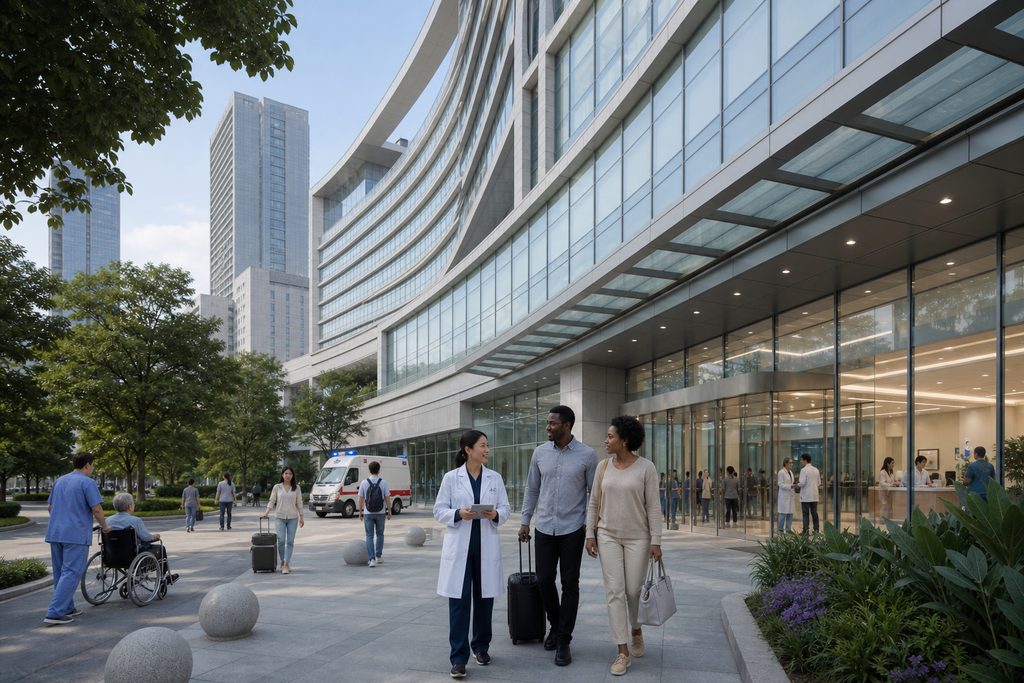
You have probably heard that getting world-class medical treatment in China means either paying Western private-hospital prices or settling for a chaotic public-hospital experience with no language support. The reality at Wuhan Tongji Hospital sits somewhere unexpected: a top-tier academic hematology department with genuine research output, treating complex leukemia and lymphoma cases at a fraction of Western costs — but with an admissions process that can feel opaque if you do not speak Mandarin and do not know how the system works.
This article breaks down what international patients actually face when seeking care at Tongji Hospital’s hematology department. We cover the real Tongji hospital hematology cost for foreigners, how to navigate the appointment system, what the hospital does well, and where the friction points are.
Key Takeaways
- Wuhan Tongji Hospital is affiliated with Huazhong University of Science and Technology and operates one of China’s largest hematology departments, with over 200 dedicated beds across its campuses.
- Hematology treatment costs for international patients typically run 60–80% lower than comparable care in the US or Western Europe, though final figures depend heavily on diagnosis and treatment protocol.
- The biggest barrier for foreigners is not clinical quality — it is the registration and language system, which assumes local patients who can navigate it in Mandarin.
- Written second opinions and video consultations can be arranged before committing to travel, which is the most sensible first step for most international patients.
The Problem: Blood Cancer Care Is Expensive, and Waiting Lists Are Long
Leukemia does not wait. But in many Western healthcare systems, patients do. A 2023 report from the NHS in England showed that only 68% of patients urgently referred for suspected cancer began treatment within 62 days — the worst performance since records began. In Canada, the median wait time from specialist referral to treatment for hematologic cancers stretched to 27 days in 2023, with some provinces reporting far longer delays for bone marrow transplant assessment.
The financial picture is just as grim. In the United States, the total cost of care for acute myeloid leukemia (AML) in the first year after diagnosis averages between $150,000 and $250,000, depending on whether stem cell transplantation is required. For patients without comprehensive insurance — or those whose policies exclude experimental protocols — these numbers are simply impossible.
That forces a difficult question: where else can a patient access rigorous, evidence-based hematology care without waiting months or emptying their savings?
Why Wuhan Tongji Hospital Deserves Serious Consideration
Tongji Hospital is not a boutique international clinic. It is one of China’s largest and most academically productive general hospitals, founded in 1900 by German physician Erich Paulun. Today it operates three campuses in Wuhan, handles over 6 million outpatient visits annually, and consistently ranks in the top tier of Chinese hospitals in the Fudan University hospital rankings. Its hematology department is a National Key Clinical Specialty — a designation reserved for departments that meet stringent national standards for clinical volume, research output, and specialist training.
Clinical Volume and Subspecialty Depth
Volume matters in hematology because rare blood cancers require pattern recognition that only comes from repetition. Tongji’s hematology department manages a full spectrum of conditions: acute and chronic leukemias, lymphomas, multiple myeloma, myelodysplastic syndromes, aplastic anemia, and bleeding disorders. The department runs dedicated subspecialty teams, so a patient with mantle cell lymphoma is seen by clinicians who focus on that disease category rather than generalists rotating through everything.
The department also operates an active hematopoietic stem cell transplant program. While exact annual transplant numbers are not published in English-language sources, the department’s status as a designated transplant center and its participation in national registries indicate substantial experience. For international patients asking bone marrow transplant cost China Tongji, the honest answer is that pricing must be confirmed case by case — but published data on Chinese transplant costs generally show allogeneic transplants running between $40,000 and $80,000, compared with $250,000 to $500,000 in the US.
Research Integration and Protocol Access
One structural advantage of seeking care at a major Chinese academic center is the integration of clinical trials into routine practice. Tongji’s hematology investigators participate in national and international multicenter studies. For patients with relapsed or refractory disease who have exhausted standard lines of therapy, access to investigational agents through registered clinical trials can be a decisive factor. This is not unique to China — but the volume of patients and the speed of trial enrollment at large Chinese centers can be faster than at smaller Western institutions.
Cost Structure Without the “International Markup” Myth
Let us address the obvious question directly: is Tongji hospital hematology cost for foreigners inflated compared to what Chinese patients pay? At most Chinese public hospitals, international patients are routed through the international medical department or VIP clinic, where consultation fees and ward charges run 1.5 to 2 times the standard rate. That is not a scam — it reflects the additional staffing and coordination required. Even at those rates, the total cost of a chemotherapy cycle or transplant workup remains dramatically lower than Western benchmarks because the underlying cost base is different: lower physician salaries, lower facility overhead, and national drug pricing negotiations that have slashed the cost of many oncology medications in China since 2018.
So the question is not whether is Wuhan Tongji hospital good for blood disorders — the clinical evidence says yes, with the caveats we will discuss below. The question is whether the logistical complexity is manageable for a foreign patient. That is what the next sections address.
How to Book an Appointment at Wuhan Tongji Hematology: The Real Process
Searching for how to book appointment at Wuhan Tongji hematology will surface various third-party sites, some legitimate, some not. Here is what actually happens on the ground.
Tongji Hospital’s standard outpatient registration system is designed for Chinese citizens with a national ID number. Walk-in registration happens on the day of the appointment, and the queue for hematology specialists can be long — patients sometimes line up before dawn, especially during peak seasons. For a foreign patient without Chinese language skills or a local mobile payment account, this process is genuinely difficult to navigate alone.
The hospital does maintain an international medical services channel. Foreign patients can contact the hospital’s international department to inquire about scheduling, required documents, and interpreter availability. However, response times vary, and the department’s capacity to handle complex pre-arrival coordination is limited. This is where the international patient department Tongji hospital contact process matters: you need to reach the right office, provide translated medical records, and confirm whether your specific case is suitable for remote evaluation before traveling.
Before contacting the hospital directly, prepare a one-page medical summary in English and Chinese: diagnosis, treatment history, current status, and your specific question. This dramatically speeds up any initial review.
What International Patients Should Know About the Tongji Hematology Experience
Let us be clear about what Tongji Hospital is and is not. It is not a Western-style private hospital with carpeted hallways and concierge nursing. It is a high-volume Chinese public hospital with world-class clinical capability and an environment that can feel overwhelming: crowded corridors, shared wards in the standard sections, and a pace that prioritizes throughput over comfort.
The international/VIP wards are different — they offer private or semi-private rooms, English-speaking nursing support in some sections, and a calmer environment. But they cost more, and availability is limited. Patients who expect the entire hospital to operate like a JCI-accredited international facility will be disappointed. Patients who understand they are trading some comfort for clinical expertise and cost savings will find the trade acceptable.
Language is the single biggest friction point. Even in the international department, not every nurse or technician speaks English. Lab results, consent forms, and pharmacy instructions are in Chinese. A bilingual companion or interpreter is not a luxury here — it is the difference between a smooth experience and a disorienting one.
Practical Considerations: Documents, Visas, and Payment for Tongji Hematology Patients
If you are seriously considering treatment at Tongji’s hematology department, here is what the logistics actually require.
Medical records. You need complete records: pathology reports, cytogenetic and molecular testing results, imaging studies, and a detailed treatment summary. These must be translated into Chinese. Tongji’s specialists will not make treatment decisions based on English-language summaries alone — the hospital requires original documentation and, in many cases, repeat testing on-site to confirm the diagnosis before initiating therapy.
Visa category. Foreign nationals traveling to China for medical treatment generally apply for an S2 visa, which covers short-term private affairs including medical care. Accompanying family members also apply under the S2 category. The hospital must provide supporting documentation — a treatment invitation letter or medical appointment confirmation — which you submit with your visa application. Processing times vary by consulate, so factor in 3 to 6 weeks. Visa approval is never guaranteed, and requirements change; always confirm current rules with the Chinese embassy or consulate in your country.
Payment. Public hospitals in China operate on a prepayment model. You deposit funds at admission, and treatment is drawn against that balance. International credit cards are not universally accepted at hospital payment counters — bring a UnionPay-compatible card or plan to transfer funds in advance. Insurance reimbursement is retrospective: you pay first, then file with your insurer. Some international insurers have direct billing arrangements with specific hospital international departments, but Tongji’s standard process is pay-and-claim.
Follow-up after returning home. Hematology care does not end at discharge. Post-transplant monitoring, immunosuppression management, and relapse surveillance require ongoing coordination with your home physician. Before leaving China, request complete discharge summaries, medication lists with generic names, and a recommended follow-up schedule in English. A written second opinion from Tongji specialists can also be useful for your home team — and our service model includes facilitating exactly this kind of documentation handoff.
Frequently Asked Questions
Technically yes, if you are already in China and can navigate the registration system in Mandarin. Realistically, no — not without preparation. The standard outpatient process requires a local phone number, a hospital-issued medical card, and same-day registration. A coordinated approach through the international department or a service that handles registration and interpretation is far more practical.
There is no honest single number. A standard induction chemotherapy cycle for AML might run $15,000 to $40,000. An allogeneic stem cell transplant could reach $60,000 to $100,000 including hospitalization, conditioning, and early post-transplant care. These figures vary enormously by protocol, complications, and whether you use the standard or international ward. Written estimates require a full case review.
For hematologic malignancies, the evidence supports comparable outcomes at top Chinese centers. Tongji’s department follows the same international treatment guidelines — NCCN, ELN, and Chinese Society of Hematology protocols — and participates in international clinical research. The difference is not the medicine; it is the environment, the language, and the administrative friction. If you can manage those, the clinical care is solid.
That is the most sensible first step for almost every international patient. A written second opinion from Tongji’s hematology specialists costs between $300 and $500, and a video consultation with a top specialist runs $500 to $800. These fees are credited in full toward on-the-ground coordination if you later proceed with treatment in China. You send your records, the team reviews them, and you get a written analysis with treatment recommendations — without leaving home.
Your Next Step
Wuhan Tongji Hospital’s hematology department offers genuine clinical depth at a cost that makes financial sense for many international patients. The barrier is not the medicine — it is the process. If you are weighing this option, start with a remote evaluation. Send your records, get an expert opinion, and decide with real information rather than guesswork. China Medical Services helps international patients navigate exactly this path — from document translation and appointment coordination to bilingual support on the ground. We are not a hospital and we do not provide diagnoses; we connect you with the right specialists and handle the logistics. When you are ready, request a free consultation to discuss your case.
For more medical information and treatment options in China, visit chinamedservices.com (China Medical Services).
