Wuhan Tongji Hospital Oncology for International Patients: Costs, Process, and Realities
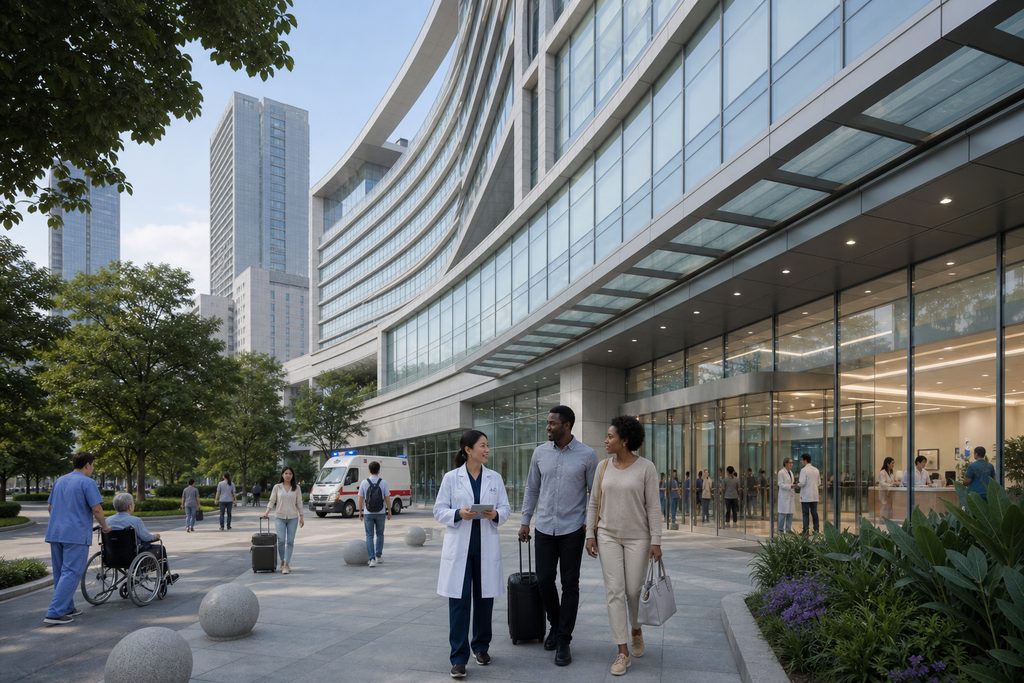
Wuhan Tongji Hospital Oncology for International Patients: A Practical Guide to Costs and Access
Have you ever wondered whether a top-ranked Chinese cancer center could actually treat you — or whether the language barrier, visa process, and opaque pricing would make the whole idea impossible? For many Western patients, Wuhan Tongji Hospital sits on the edge of that question. It is one of China’s most respected oncology institutions, yet it remains far less familiar to international patients than hospitals in Beijing or Shanghai. The Wuhan Tongji Hospital cancer treatment cost for foreigners is a genuine unknown for most people researching overseas care. This guide breaks down what that cost actually looks like, how the booking process works, and whether Tongji is a realistic option for your case.
Tongji Hospital, affiliated with Huazhong University of Science and Technology, consistently ranks among China’s top-tier comprehensive hospitals. Its oncology department appears in the Fudan University specialty reputation rankings — a distinction that places it within the top tier of Chinese cancer care. For international patients, the hospital operates an international medical services division designed to handle foreign cases. But access is not automatic. You need a strategy.
How This Actually Works, Step by Step
The process of seeking cancer treatment at Wuhan Tongji Hospital as a foreigner follows a predictable sequence. Here is what actually happens, from your current position to a treatment plan.
First, you submit your existing medical records. That means pathology reports, imaging studies (CT, MRI, PET-CT), blood work, and any prior treatment summaries. These documents need professional translation into Chinese. Our team handles this — we work with certified medical translators who understand oncology terminology, not generic language services.
Second, the oncology department reviews your file. A senior oncologist examines your records and determines whether your case fits their treatment capabilities. This review typically takes 5 to 10 working days. You receive a written assessment that outlines whether they recommend pursuing treatment at Tongji, and what that treatment would likely involve.
Third, you schedule a video consultation. This is where you speak directly with the oncology team. You describe your symptoms, your treatment history, and your goals. The doctors explain their proposed approach, the expected timeline, and the realistic outcomes. The video consultation costs between $500 and $800 for a top specialist at Tongji’s international division.
Fourth, if both sides agree to proceed, we coordinate your arrival. That includes the S2 visa application with supporting hospital documents, accommodation near the hospital, and a bilingual medical companion who meets you at the airport and stays with you through every appointment.
The key point: nothing happens without the records review first. Tongji does not accept international patients on a walk-in basis for oncology. The remote evaluation is the gate.
What Does Wuhan Tongji Hospital Cancer Treatment Cost for Foreigners Actually Look Like?
The question every patient asks first: how much will this cost me? The honest answer is that no hospital publishes a fixed price list for cancer treatment. Costs depend on diagnosis, stage, treatment protocol, and whether you use the standard public channel or the international VIP channel. But we can give you realistic ranges based on what international patients typically pay at top-tier Chinese oncology centers.
For international patients, Tongji Hospital’s international division charges higher rates than the standard public fees. This is not a markup for foreigners specifically — it reflects the additional services: English-speaking coordination, priority scheduling, private consultation rooms, and dedicated nursing support. Expect to pay roughly 1.5 to 2 times the standard public rate.
| Treatment Type | Estimated Cost at Tongji (International Channel) | Typical US Cost |
|---|---|---|
| Initial oncology consultation with senior specialist | $200–$400 | $500–$1,500 |
| Comprehensive diagnostic workup (CT, MRI, PET-CT, blood panels) | $1,500–$3,500 | $8,000–$15,000 |
| Standard chemotherapy cycle (per cycle, drug-dependent) | $2,000–$6,000 | $10,000–$30,000 |
| Immunotherapy (checkpoint inhibitor, per dose) | $3,000–$8,000 | $15,000–$40,000 |
| Radiation therapy (full course) | $8,000–$20,000 | $40,000–$100,000 |
| Major cancer surgery (e.g., lung resection, gastrectomy) | $15,000–$35,000 | $80,000–$200,000 |
These figures are ranges, not quotes. Your actual cost depends on your specific diagnosis, the drugs prescribed, and whether complications arise. But the pattern holds: cancer treatment in China generally runs at one-fifth to one-tenth of equivalent US prices.
Is Tongji Hospital good for oncology international patients? The institution’s reputation is solid. Its oncology department handles a massive patient volume — Chinese top-tier hospitals see more cancer cases in a month than many Western hospitals see in a year. That volume translates into clinical experience. But “good” depends on your specific cancer type. Tongji excels in certain areas — thoracic oncology, gastrointestinal cancers, and hematological malignancies — while other Chinese centers may be stronger for rare or pediatric cancers.
A Realistic Timeline
People underestimate how long the process takes. Here is a realistic schedule, including the waiting steps most patients forget about.
| Stage | What Happens | Duration |
|---|---|---|
| Week 1 | You gather and submit medical records; we arrange professional translation | 5–7 days |
| Week 2–3 | Oncology department reviews your file; written assessment prepared | 5–10 working days |
| Week 3–4 | Video consultation with Tongji oncology team | 1–2 days scheduling, 1 hour consultation |
| Week 4–6 | S2 visa application with hospital invitation documents | 2–4 weeks (varies by embassy) |
| Week 6–8 | Travel to Wuhan; initial in-person consultation and diagnostic workup | 3–5 days |
| Week 8 onward | Treatment begins (chemotherapy, surgery, radiation, or combination) | Depends on protocol |
The visa step catches people off guard. Chinese embassies require original hospital documents — an invitation letter, a treatment plan summary, and proof of the hospital’s qualification. Processing times vary dramatically by country. Some patients get S2 visas in a week. Others wait a month. Plan for the longer end.
Document translation is another hidden delay. A 50-page oncology file takes professional translators several days. Rushing this step produces errors that slow down the medical review.
What Can Go Wrong — and What Happens Then
Honest failure modes matter. Here are the things that actually derail international oncology cases at Tongji, and what recourse you have.
Your case is declined after review. This happens. Not every patient is a good fit. Maybe your cancer has progressed beyond what Tongji’s protocols can address. Maybe the specific mutation you have is better treated elsewhere. If the oncology team declines your case, you receive their written reasoning. We then help you identify alternative hospitals — perhaps a different Chinese center with a stronger program for your specific cancer type, or a hospital in another country entirely. The consultation fee is not refunded, but the information you receive is valuable regardless.
The treatment plan changes after you arrive. Remote review is based on your existing records. Once you are in Wuhan, Tongji runs its own diagnostic workup. Sometimes that reveals new information — a different staging, additional metastases, or a genetic marker that changes the recommended drugs. This is not a failure of the remote process. It is standard oncology practice. But it means your timeline and budget may shift. Build in a 15–20% financial buffer for this possibility.
Language breakdown despite preparation. Even with a bilingual companion, miscommunication happens. Chinese oncology teams work at high speed. A doctor may explain something in technical Chinese that your companion translates imperfectly. If you ever feel unclear about a recommendation, ask for a written summary in English before proceeding. The international division at Tongji can provide this. Do not accept verbal-only explanations for major treatment decisions.
Insurance refuses to cover treatment. Most Western insurance plans do not cover elective treatment in China. Some do — particularly international health insurance policies. But many patients pay out of pocket. If your insurer denies coverage, you have two options: appeal with the detailed treatment plan and cost breakdown from Tongji, or proceed with self-pay. The cost difference between Chinese and Western care often makes self-pay viable for patients who could not afford it at home.
Can International Patients Get Immunotherapy at Tongji Hospital Wuhan?
Immunotherapy has transformed oncology over the past decade. The question of whether international patients can access it at Tongji is a practical one, not a theoretical one. The answer is yes — with qualifications.
Tongji Hospital offers checkpoint inhibitors (PD-1 and PD-L1 inhibitors) for a range of cancers, including lung cancer, melanoma, gastric cancer, and certain lymphomas. China has approved a broad portfolio of immunotherapy drugs, including domestic products that cost significantly less than Western equivalents. A dose of a Chinese PD-1 inhibitor can cost $1,000–$3,000, compared to $15,000–$40,000 for imported drugs in the US.
But access depends on your specific case. Immunotherapy works best for patients whose tumors express certain biomarkers — PD-L1 expression levels, microsatellite instability, or specific genetic mutations. Tongji’s oncology team will test for these markers if your records do not already include them. If your tumor profile suggests you would benefit from immunotherapy, the hospital can prescribe it. If not, they will not — and you should be wary of any institution that promises immunotherapy regardless of biomarker status.
For international patients, the practical path is this: submit your records, request biomarker testing if needed, and ask directly about immunotherapy options during your video consultation. The oncologists will give you a straight answer about whether it fits your case.
Practical Considerations: Records, Visa, Payment, and Follow-Up
Wuhan Tongji Hospital medical tourism package for cancer does not exist as a fixed product. No reputable Chinese hospital sells a “cancer package” like a vacation deal. What you get instead is a coordinated care pathway — and you need to handle several practical elements yourself or through a service like ours.
Medical records. You need complete, well-organized documentation. That includes pathology slides if available, not just reports. Chinese oncologists often want to re-examine tissue samples. Arrange for your home hospital to release slides and blocks. This takes time — start early.
Visa. The S2 visa is the correct category for medical treatment in China. Your accompanying family members also apply for S2 visas. The hospital provides an invitation letter and treatment confirmation. You apply at the Chinese embassy or consulate in your home country. Processing takes 2 to 4 weeks in most cases. There is no guarantee of approval, but a complete application with hospital documents has a high success rate.
Payment. Chinese public hospitals, including Tongji’s international division, require prepayment. You deposit funds upfront, and treatment costs are deducted as you go. Credit cards are accepted at the international division, but wire transfers may be required for large deposits. Insurance reimbursement is your responsibility — the hospital provides itemized receipts, but does not bill Western insurers directly.
Follow-up at home. After you return, you need ongoing monitoring. Tongji’s oncologists can provide written treatment summaries and recommendations for your home physician. Some patients return to Wuhan periodically for follow-up imaging. Others transition entirely to local care. Discuss this before you leave — do not assume the Chinese team will coordinate with your home doctors without prompting.
Frequently Asked Questions
You cannot book treatment directly. The process starts with submitting your medical records for review by the oncology department. After review, you schedule a video consultation. Only after the consultation does the hospital confirm whether it will accept your case and propose a treatment plan. A service like ours handles the submission, translation, and scheduling on your behalf.
Tongji ranks among China’s top oncology centers, particularly for thoracic and gastrointestinal cancers. But “best” depends on your specific diagnosis. Some Chinese hospitals excel in specific cancer types — for example, certain centers in Beijing and Shanghai have stronger programs for rare cancers. The right choice requires matching your case to the hospital’s demonstrated strengths. Our oncology department rankings can help you compare options.
Treatment at Tongji’s international division typically costs one-fifth to one-tenth of equivalent US prices. A chemotherapy cycle that costs $20,000 in the US might cost $3,000–$6,000 in Wuhan. Major cancer surgery that runs $150,000 in the US might cost $20,000–$35,000. These are ranges, not guarantees — your actual cost depends on your diagnosis and treatment protocol.
Yes, if your tumor profile supports it. Tongji offers PD-1 and PD-L1 inhibitors, including lower-cost Chinese domestic products. The oncology team will test for relevant biomarkers if your records do not already include them. Immunotherapy is prescribed based on clinical evidence, not patient request.
You receive a written explanation from the oncology department. We then help you identify alternative hospitals — either other Chinese centers with stronger programs for your cancer type, or institutions in other countries. The consultation fee is not refunded, but the assessment you receive is medically useful regardless of where you ultimately seek treatment.
Your Next Step
Wuhan Tongji Hospital is a serious option for international oncology patients — not because it is easy, but because it combines genuine clinical expertise with costs that make treatment possible for people who could not afford it at home. The path is not simple. Records, translation, visa, travel, and the treatment itself all take time and coordination.
We are China Medical Services, a team that connects international patients with top-tier Chinese hospitals. We do not practice medicine, and we do not promise outcomes. What we do is handle the logistics — record translation, hospital communication, appointment coordination, bilingual companionship — so you can focus on your treatment. If you are considering Tongji or any other Chinese oncology center, start with a conversation. Tell us your diagnosis and your goals. We will tell you honestly whether this path makes sense for you.
Your next step is simple: reach out through our consultation page. No commitment. Just clarity about what is possible.
For more medical information and treatment options in China, visit chinamedservices.com (China Medical Services).
