Medical Treatment in Wuxi China: Jiangsu Medical Tourism Between Suzhou and Shanghai with Local Guide
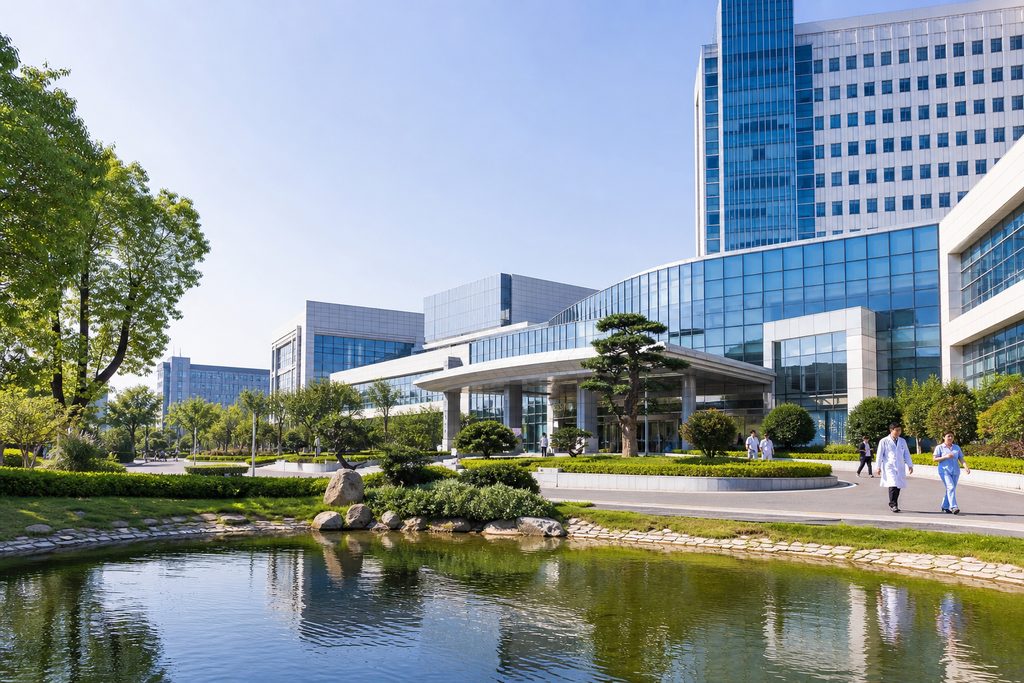
What if the biggest barrier to your medical care wasn’t the diagnosis, but the geography and the bill? For many Western patients facing long wait times or staggering quotes for procedures, the search for solutions now stretches across the Pacific. The conversation often starts with Shanghai. But a quieter, more navigable option sits just 130 kilometers northwest. Patients who look deeper are discovering the value proposition of medical treatment in Wuxi, China—a city that offers a compelling blend of clinical excellence, significantly lower costs, and a less frenetic environment than its famous neighbor.
Key Takeaways
- Wuxi’s top-tier hospitals deliver clinical outcomes comparable to Shanghai’s best, often at a 20-40% lower price point for major procedures.
- The city’s strategic location in the Yangtze River Delta means you are never more than a 30-minute high-speed train ride from the mega-hospital resources of Shanghai or Suzhou if needed.
- Navigating a Chinese public hospital without Mandarin fluency and local know-how remains the single biggest risk factor for international patients—this is not a DIY-friendly environment.
- A local medical guide transforms the experience from a logistical gamble into a structured, efficient medical journey, handling everything from registration to translation.
The Problem: The Crushing Weight of Medical Costs and Waiting Lists
A hip replacement in the United States now carries a sticker price that often exceeds $40,000. A cardiac bypass can easily cross the $120,000 threshold. Even for insured patients, the out-of-pocket maximums and deductibles can wipe out years of savings. For the uninsured or underinsured, the situation is simply catastrophic. And then there’s the clock. In Canada or the UK, waiting 12 to 18 months for a non-emergency orthopedic surgery is not an anomaly; it is the reported standard for a significant percentage of patients.
This dual pressure—financial toxicity and clinical delay—forces a difficult question. Do you drain your retirement fund and wait in pain, or do you look for an alternative? Medical tourism is that alternative. But the default destination, often Bangkok or Seoul, is no longer the only answer. China’s Jiangsu province, particularly the corridor between Suzhou and Shanghai, has quietly built a healthcare infrastructure that is attracting attention. Wuxi sits right in the middle of it.
Who We Are
We are not a hospital. We do not provide medical treatment or clinical diagnoses. Our team functions as your logistical architects in China’s complex medical landscape. We bridge the gap between you and a network of 340+ top-ranked hospitals across 37 cities. Think of us as your bilingual, medically-informed local guide. We handle the opaque parts—identifying the right specialist for your condition, coordinating appointments, securing your S2 medical visa invitation, and placing a medical companion by your side from the moment you land. We are the reason you can walk into a 10,000-patient-per-day hospital in a foreign country and feel oriented, not overwhelmed.
Why Wuxi Delivers a High-Value Medical Experience
The Yangtze River Delta is China’s economic engine, and its healthcare system reflects that. Shanghai gets the global headlines, but the talent and technology pool spills over into Jiangsu. Wuxi has absorbed this spillover and built a clinical environment that is often more accessible and more calm for international patients. The search for affordable medical treatment Wuxi Jiangsu cost leads here because the structural economics of the city simply make sense.
Clinical Volume That Sharpens Surgical Skill
A surgeon’s skill is not a static credential. It is a living thing, honed by repetition. Chinese hospitals operate at a scale that is hard to visualize. A top thoracic surgeon in Wuxi might perform more lung nodule resections in a month than a Western counterpart does in a year. This volume is not just a statistic. Research published in the New England Journal of Medicine has shown a clear inverse relationship between surgical volume and patient mortality for complex procedures. When you choose a major Wuxi hospital, you are often choosing a team that has seen your condition thousands of times.
This isn’t about cheap labor. It’s about deep, focused expertise. A specialist here isn’t dividing their time across a dozen different procedures. They are often hyper-focused. This is the hidden value behind the Wuxi hospital price comparison with Shanghai. You aren’t paying for a less experienced doctor. You are paying a different regional rate for a doctor who may have double the case volume.
Technology Deployment at a Different Speed
Walk into the radiology department of a Wuxi People’s Hospital and you’ll find the same Siemens and GE imaging machines you’d see in a top-tier US academic center. But they are often newer. China’s hospital building boom over the last decade means the infrastructure is not retrofitted; it is state-of-the-art. Robotic surgery systems like the Da Vinci Xi are no longer a Shanghai monopoly. Wuxi hospitals have integrated them for urological and colorectal procedures.
And the speed is different. Because outpatient and inpatient services are often housed in massive, vertically integrated campuses, the cycle from MRI to diagnosis to treatment plan can collapse into hours, not weeks. This efficiency is a structural advantage, not a marketing gimmick.
Structural Cost Advantages Without Cutting Clinical Corners
Let’s address the elephant in the room. Does lower cost mean lower quality? Not here. The cost differential is driven by economics, not by a compromise on supplies or protocols. Physician salaries are lower. Hospital administrative overhead is a fraction of what it is in the US. Malpractice insurance is not a six-figure annual burden per surgeon. The cost of a titanium hip implant is globally set, but the cost of the surgeon, the anesthesiologist, and the 3-day private room is where the savings accumulate.
When patients ask about how to find a local medical guide in Jiangsu China, they quickly discover that even with the added cost of a bilingual companion and a VIP coordination fee, the total package price for a major surgery in Wuxi can still be 70-80% less than the US cash price. This is the reality that makes the math work.
| Procedure | Average US Cash Price | Shanghai Intl. Dept. | Wuxi Top-Tier Hospital |
|---|---|---|---|
| Total Hip Replacement | $40,000+ | $18,000 – $24,000 | $14,000 – $18,000 |
| Cardiac Bypass (CABG) | $120,000+ | $22,000 – $28,000 | $16,000 – $22,000 |
| Lung Nodule Resection (VATS) | $35,000+ | $12,000 – $16,000 | $9,000 – $13,000 |
| Full Body PET-CT Scan | $4,000 – $6,000 | $800 – $1,100 | $600 – $900 |
Note: Prices are estimates in USD and vary by hospital, case complexity, implant choice, and length of stay. These figures do not include our coordination or companion fees.
Is Medical Treatment in Wuxi Safe for Foreigners? The Reality Check
The question “is medical treatment in Wuxi safe for foreigners” is the right one to ask. The answer is nuanced. The clinical safety at a top-tier Wuxi hospital is high. Infection control protocols in their international wings are rigorous. Blood bank supplies are screened to international standards. The clinical danger is low. The logistical danger of navigating it alone, however, is real and significant.
A hospital with 3,000 beds is a small city. Signage is primarily in Chinese. The registration process is a multi-step gauntlet of digital kiosks and physical windows that can break a non-speaker in minutes. The safety risk for a foreigner isn’t the surgeon’s scalpel. It’s the risk of a missed appointment, a misunderstood pre-operative instruction, or a medication error due to a language barrier. That is precisely the risk a competent local guide neutralizes.
What You Need to Know Before Going Alone
We have seen patients try to do this independently. Some succeed. Many call us after day one, exhausted. If you are considering the solo route, here is what you will face head-on.
- The S2 Visa Is Not a Tourist Visa: You cannot legally enter China for surgery on a tourist (L) visa. The S2 visa, specifically endorsed for medical treatment, requires an invitation letter from the hospital. Obtaining this letter as a foreign individual without a local contact inside the hospital’s international department is a bureaucratic loop that often takes weeks to close.
- Payment Is Prepaid and Local: Forget your Visa card for the hospital deposit. Chinese public hospitals operate on a real-time prepaid balance system via a patient card. You must load this card with cash or a Chinese UnionPay bank card. International credit card terminals are rare, and daily transaction limits on foreign cards can block you from depositing the $10,000+ required for a surgery.
- The Diagnostic Maze: A specialist’s clinic is not a quiet office. It is a room packed with patients. You get minutes. Without a translator who understands medical terminology, you won’t be able to articulate your history or understand the nuances of the proposed surgical approach. You will leave with a prescription and a deep sense of uncertainty.
How We Help You Navigate This
These barriers exist for structural reasons. They are not designed to exclude foreigners, but they do. Our process is designed to systematically dismantle each one. It starts with a free consultation. You tell us your diagnosis and what you need. We don’t just pick a hospital from a list. We match your condition to the specific department and specialist whose case volume and outcomes align with your needs.
We then handle the hospital liaison. We obtain that official invitation letter for your S2 visa. Before you even pack, your medical records are translated into clinical Chinese by our team, ensuring the surgeon reviews a complete, accurate history. When you land, a bilingual medical companion is with you. They don’t just translate words. They translate the system. They hold your place in the queue, manage your patient card balance, sit with you during the consultation to ensure every question is asked and answered, and guide you through the pre-operative checks.
This is not a luxury concierge service that books five-star hotels. It is a clinical logistics operation. Our pricing reflects this. A bilingual medical companion starts from $200 per day. A full hospital appointment coordination starts from $300. For patients wanting complete peace of mind, our VIP end-to-end coordination ranges from $5,000 to $8,000, covering every step from visa to post-operative recovery. And if you start with a remote video consultation with a Wuxi specialist for $100 to $300, that entire fee is credited back if you move forward with on-the-ground treatment within 90 days.
For those specifically looking to book medical tourism package Wuxi China, our model is different. We don’t sell fixed packages because a one-size-fits-all package is dangerous in medicine. We build a custom care pathway. You pay for the hospital costs directly to the hospital. You pay us for the coordination, translation, and companionship that make the journey possible.
Frequently Asked Questions
You can, and in some cases, that is the right call. Shanghai has a higher concentration of JCI-accredited private international hospitals with English-speaking staff. But they come with Shanghai prices. Wuxi’s advantage is the public hospital system’s top tier—the Fudan-ranked departments. You get the same level of clinical expertise as a top Shanghai public hospital, often with shorter surgery wait times and a 20-40% lower price for the room and surgical fees. The trade-off is that you absolutely need a guide, as these are not English-first environments.
This is the hardest and most important question. Top-tier Chinese hospitals have fully equipped ICUs and rapid response protocols that mirror Western standards. The surgical teams at Fudan-ranked departments are highly experienced. However, the communication during a crisis is where the system strains for a foreign family. This is why our companion service includes an advocacy component. If a complication arises, your companion is your family’s voice, ensuring you get real-time translation from the medical team and that your family back home is updated immediately. We don’t leave you alone in the system.
You pay the hospital directly. We help you navigate the prepaid deposit system, which usually requires a wire transfer to the hospital’s account or a large cash deposit we help you set up. Most Western insurance plans are out-of-network in China. You pay upfront and we provide you with fully translated, detailed invoices and medical records to submit for reimbursement. We do not do direct billing for public hospitals, as that system simply does not exist there.
It is an excellent place for recovery. The city is famous for Taihu Lake and its garden parks. It is far quieter and less congested than Shanghai. The air quality is generally better. For a patient who needs a calm, low-stress environment for post-operative healing before a long flight home, Wuxi provides a serene backdrop. We can arrange for comfortable long-stay serviced apartments near the hospital at a fraction of the cost of Shanghai, making the recovery phase not just medically sound, but genuinely pleasant.
Your Next Step
The decision to travel for surgery is never just a financial one. It is a decision about trust, safety, and outcomes. Wuxi represents a specific, intelligent choice within China’s medical landscape—a place where you can access world-class procedural volume and technology at a cost that makes care accessible again. But the value is only unlocked when the logistical chaos is managed. You don’t need to know how to navigate a Chinese hospital. You need someone who already does. If you are ready to explore whether a specific Wuxi department is right for your case, our team is here to provide a clear, no-pressure consultation. Let’s look at your options together.
Medical Disclaimer: This article is for informational purposes only and does not constitute medical advice. Always consult with a qualified healthcare professional before making any decisions about your medical care. Prices and hospital information are subject to change.
For more medical information and treatment options in China, visit chinamedservices.com (China Medical Services).
