Xinjiang Medical University First Hospital Oncology: A Guide for International Patients
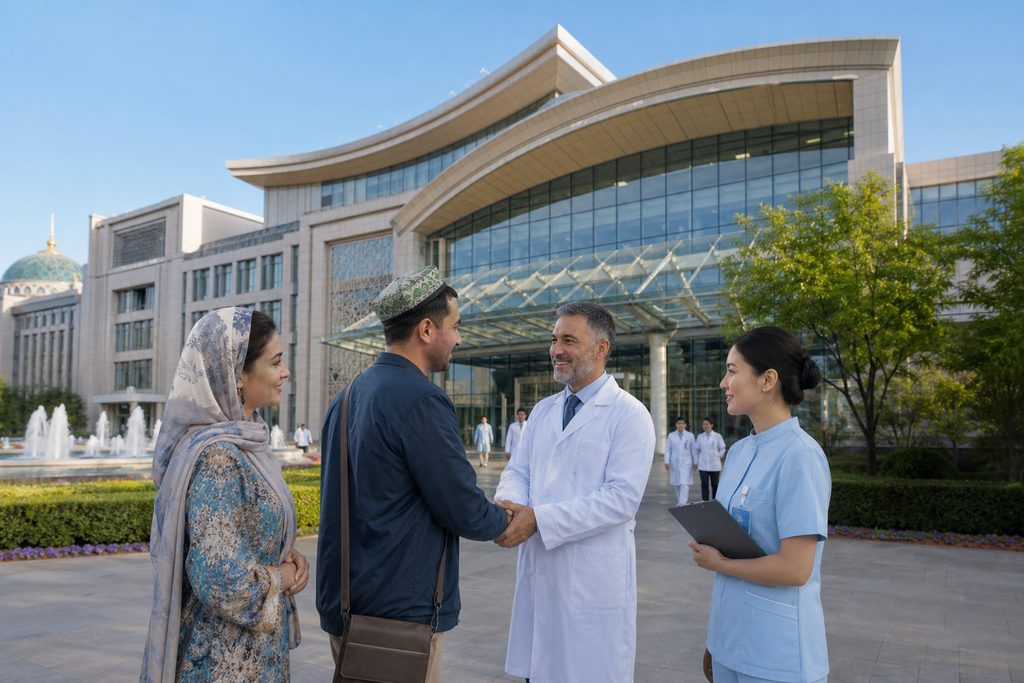
Xinjiang Medical University First Hospital Oncology for International Patients: What You Need to Know Before You Travel
The search for affordable cancer care pushes many Western patients to look beyond their borders. The oncology treatment cost China presents is often 70–80% lower than comparable care in the United States or Western Europe. That is not marketing language. It is the arithmetic that drives roughly 100,000 international patients to Chinese hospitals every year, according to data from China’s National Health Commission. Xinjiang Medical University First Hospital sits on that list of destinations — though not for the reasons most patients initially assume.
We coordinate care for foreign patients at public and private hospitals across China. We have walked through the doors of Xinjiang Medical University First Hospital with patients from Kazakhstan, Russia, Pakistan, and occasionally from further afield. This article explains what the hospital actually offers for oncology patients, what it does not, and how to decide whether it fits your situation.
Key Takeaways
- Xinjiang Medical University First Hospital is a Grade-A tertiary hospital with a dedicated oncology department, but it is not ranked among China’s top 10 oncology centers by Fudan University’s specialty reputation list.
- Cancer treatment costs in China typically run 60–80% below US prices; at a regional public hospital like this one, the savings can be even steeper for certain procedures.
- The hospital’s international patient pathway is less developed than Beijing or Shanghai counterparts — expect a heavier reliance on bilingual coordination, especially for Uyghur, Russian, or Kazakh language support.
- Remote consultation before travel is the single most valuable step you can take. It costs between $100 and $800 and can prevent an expensive, unnecessary trip.
The Problem: Cancer Care Costs Are Breaking Patients
A single course of immunotherapy in the United States can exceed $150,000. Radiation therapy adds another $50,000 to $100,000 depending on the protocol. Even with insurance, out-of-pocket maximums routinely hit $8,700 per year for ACA-compliant plans — and that assumes your insurer approves every treatment your oncologist recommends. Many patients face a darker reality: denials, delays, and appeals that stretch for months while a tumor grows.
According to a 2022 study published in JAMA Oncology, approximately 42% of newly diagnosed cancer patients in the US deplete their entire life savings within two years of diagnosis. The financial toxicity of cancer is no longer a side effect. It is a primary outcome. Patients are skipping doses, delaying scans, and in some cases refusing treatment altogether because the math does not work.
This is the context in which medical travel to China has grown. Not as a luxury. As a survival strategy.
Why China Delivers Results for Oncology Treatment Cost
Clinical Volume Drives Competence
Chinese oncologists see patient volumes that would be unthinkable in most Western clinics. A senior oncologist at a large Chinese tertiary hospital may manage 50 to 80 patients per day in outpatient clinics. Over a decade, that translates into tens of thousands of cases seen. The oncology departments at China’s top-ranked hospitals publish extensively in international journals and participate in global clinical trials for drugs that are still in phase II or III testing in the West.
Does that volume guarantee better outcomes? No. But it does mean that Chinese specialists have encountered rare presentations, unusual side effects, and treatment-resistant cases at frequencies that build pattern recognition no textbook can teach.
Technology Without the Wait
Wait times tell the story. In Canada, the median wait from specialist referral to first radiation treatment for breast cancer is approximately 6 weeks, and in some provinces longer. In the UK, the NHS target of 62 days from urgent referral to first treatment is missed for roughly one-third of patients. In China, a patient who has been evaluated remotely and arrives with a confirmed treatment plan can often begin therapy within one to two weeks.
That speed matters. For aggressive cancers — small cell lung cancer, high-grade lymphomas, triple-negative breast cancer — a delay of even four to six weeks can change the staging and the prognosis.
Cost Advantage Without Quality Compromise
The structural reasons for China’s lower oncology treatment cost China offers are straightforward. Labor costs for nurses, technicians, and even senior physicians are a fraction of Western salaries. Hospital infrastructure was built at lower capital cost. Pharmaceutical pricing is negotiated nationally by the government, which drives down drug costs significantly — particularly for generic chemotherapies and domestically produced targeted therapies.
None of this implies lower quality. The top 5% of China’s 35,000+ hospitals — those ranked by Fudan University or accredited by JCI — operate at standards comparable to good Western academic medical centers. The difference is structural efficiency, not clinical compromise.
Xinjiang Medical University First Hospital International Patients: What the Hospital Actually Offers
The hospital, located in Ürümqi, is the largest tertiary care center in China’s Xinjiang Uyghur Autonomous Region. It operates more than 3,000 beds and serves a catchment area that stretches across Central Asia. Its oncology department treats the full spectrum of solid tumors and hematologic malignancies, with particular experience in esophageal cancer, gastric cancer, and liver cancer — diseases with higher incidence in this region than in coastal China.
For Xinjiang Medical University First Hospital international patients, the practical reality is nuanced. The hospital has an international medical department, but its capacity and English-language staffing are more limited than what you would find at top-ranked hospitals in Beijing or Shanghai. Most international patients who come here are from neighboring countries — Kazakhstan, Kyrgyzstan, Uzbekistan, Russia — and the hospital’s language support reflects that. Russian and Uyghur interpretation is often more readily available than English.
The cost advantage is real, though. A PET-CT scan that might cost $2,500 to $5,000 in the US can run $500 to $800 here. A cycle of standard chemotherapy that costs $10,000 to $20,000 in an American outpatient clinic might cost $1,500 to $3,000 at this hospital. For patients paying out of pocket, those numbers change the calculus entirely.
How to Book Cancer Treatment in China: The Step-by-Step Reality
Every week we hear some version of the same question: “Can I just email the hospital and book a surgery date?” The answer is no. Chinese public hospitals do not operate that way. Here is how how to book cancer treatment in China actually works.
First, you need a confirmed diagnosis and complete medical records. That means pathology reports, imaging studies (CT, MRI, PET-CT), surgical notes if applicable, and a detailed treatment history. These documents must be translated into Chinese. Machine translation is not acceptable for medical records — errors in a pathology report can change a treatment plan.
Second, you submit those records for a written second opinion or a video consultation. At Xinjiang Medical University First Hospital, this typically costs between $100 and $300 for a standard consultation, or $500 to $800 if you want a senior specialist. The written opinion will tell you whether the hospital can treat your condition, what protocol they recommend, and an estimated cost range.
Third, if you proceed, you apply for an S2 visa. This is the short-stay visa category used for private affairs, including medical treatment. Your hospital must provide an invitation letter and treatment confirmation documents. The S2 visa typically allows stays of up to 180 days. Family members accompanying you apply for the same visa category. Do not apply for an M visa — that is for commercial and trade activities, and using it for medical treatment can create serious problems at the border.
Fourth, you arrive, register at the hospital, and begin treatment. This is where bilingual support becomes essential. Public hospital registration systems, payment counters, and pharmacy queues operate entirely in Chinese. Without an interpreter, a simple blood draw can take three hours.
Is Cancer Care in China Safe for International Patients? The Honest Answer
We get this question constantly. Is cancer care in China safe for international patients? The honest answer is yes — with conditions.
At accredited tertiary hospitals, clinical safety standards are comparable to international norms. Infection control, surgical protocols, and chemotherapy preparation follow established guidelines. Many top Chinese oncology departments participate in multinational clinical trials, which requires adherence to international good clinical practice standards.
But safety is not just about clinical quality. It is also about communication, coordination, and continuity of care. A treatment plan is only as safe as the information it is built on. If your medical history is mistranslated, if your drug allergies are not properly communicated, if your follow-up instructions are unclear — those are safety risks that have nothing to do with physician competence and everything to do with systems and language.
A practical caution: Regional hospitals like Xinjiang Medical University First Hospital have less experience with English-speaking international patients than Beijing or Shanghai centers. If you do not speak Chinese, Russian, or Uyghur, factor in the cost of a bilingual medical companion — typically from $300 per day — as a non-negotiable part of your budget.
Medical Tourism Packages for Oncology China: What They Include and What They Do Not
Some agencies market medical tourism packages for oncology China as all-inclusive deals — flights, hotel, hospital fees, and treatment bundled into one price. We advise caution with any package that promises a fixed price for cancer treatment before a physician has reviewed your records. Cancer care is not a fixed-price commodity. The cost depends on staging, biomarkers, treatment response, and complications that cannot be predicted in advance.
What a legitimate coordination service can do is handle the logistics: hospital matching, record translation, appointment scheduling, visa documentation support, airport pickup, accommodation recommendations, and daily interpretation during treatment. Our own model is case management, not package selling. We charge a coordination fee that covers our work, while hospital fees are paid directly to the hospital. That keeps the financial relationship transparent.
| Cost Item | United States (USD) | China — Top Tier (USD) | China — Regional Public (USD) |
|---|---|---|---|
| PET-CT scan | $2,500–5,000 | $600–1,200 | $500–800 |
| Standard chemotherapy cycle (outpatient) | $10,000–20,000 | $2,500–5,000 | $1,500–3,000 |
| Radiation therapy (full course) | $50,000–100,000 | $8,000–15,000 | $5,000–10,000 |
| Immunotherapy (per dose, PD-1 inhibitor) | $12,000–15,000 | $1,500–3,000 (domestic) | $1,200–2,500 (domestic) |
| Bilingual medical companion (per day) | N/A | $300–500 | $300–400 |
All figures are approximate ranges as of 2026 and vary by hospital, drug pricing, and case complexity. Always confirm current pricing with the specific hospital before making decisions.
Practical Considerations: Documents, Visas, Payments, and Follow-Up
Before you book a flight, assemble the following: complete medical records with English translations, a summary letter from your current oncologist, imaging studies in DICOM format on a CD or USB drive, and a list of all current medications. Chinese hospitals will want to re-stage your cancer themselves, which means repeating scans and blood work. That is standard practice. Budget for it.
For the visa, the S2 category is what you need. Processing times vary by country, but plan for two to four weeks. Your hospital must issue an official invitation letter with their seal. Without that document, the visa application will fail. We have seen patients arrive with tourist visas (L category) and be turned away from hospital registration because their visa did not match their stated purpose. Do not make that mistake.
Payment is another hurdle. Chinese public hospitals require prepayment for inpatient care. You will deposit a lump sum at admission and replenish it as treatment progresses. International credit cards are not always accepted at hospital cashiers. Bring a debit card that works on the UnionPay network, or arrange for local currency through your bank before departure. Some international departments accept wire transfers, but confirm this before you travel.
After you return home, follow-up is your responsibility. Chinese hospitals will provide discharge summaries and treatment records, but they will not proactively coordinate with your home oncologist. You need to bridge that gap. Request complete documentation in English before you leave — not after, when you are back home and the hospital’s international office is harder to reach.
We have written more about how our coordination service works for patients considering this route.
Frequently Asked Questions
It depends on what you mean by “best.” If you mean the highest-ranked oncology program with the most English-speaking staff, the answer is no — hospitals like Fudan University Shanghai Cancer Center or Peking Union Medical College Hospital hold those positions. If you mean the most cost-effective option for certain cancers, particularly for patients from Central Asia or Russia who can navigate the language environment, then Xinjiang Medical University First Hospital deserves serious consideration. The best cancer hospital in China for foreigners is the one that matches your clinical needs, budget, and language capabilities — not the one with the most famous name.
You can get a written second opinion based on your existing records. That opinion will tell you whether the hospital’s oncology team believes they can treat your condition and what approach they recommend. It is not a guarantee of admission, and it is not a binding treatment plan. Final decisions happen after in-person evaluation. But a thorough written opinion — which costs $300 to $500 at most hospitals — can tell you with reasonable confidence whether traveling is worthwhile.
You will be treated at the hospital where you are registered. Chinese tertiary hospitals have intensive care units, emergency departments, and the full range of supportive care services. The challenge is not medical capability — it is communication during an emergency. This is why we insist that international patients have a bilingual companion available around the clock during inpatient treatment. In a crisis, you cannot wait for a translator to be paged.
Most Western insurance plans do not cover elective treatment at Chinese public hospitals. Some international health insurance policies — those designed for expatriates or global citizens — do include China coverage. You will need to pay out of pocket and then seek reimbursement if your policy allows it. Chinese public hospitals do not bill Western insurers directly. Private international hospitals in China do offer direct billing, but they are significantly more expensive than public hospitals.
For a course of radiation therapy, expect six to eight weeks. For surgery, plan for two to four weeks including pre-operative evaluation and initial recovery. For chemotherapy, the timeline depends entirely on your protocol — some patients complete cycles over three months, others stay longer. The S2 visa allows up to 180 days, which covers most treatment courses. If you need longer, you can apply for an extension or an S1 visa for stays exceeding 180 days.
Your Next Step
The decision to pursue cancer treatment abroad is never easy. It is made under pressure, often with incomplete information, and always with fear in the room. We understand that. Our role at China Medical Services is to give you accurate information and practical coordination — we are not a hospital, we do not diagnose, and we do not promise outcomes. What we do is help you understand whether a Chinese hospital like Xinjiang Medical University First Hospital is a realistic option for your specific situation, and if it is, we handle the logistics. If you want to explore this further, start with a free consultation. Bring your records and your questions. We will give you an honest assessment — even if the answer is that you should stay home.
For more medical information and treatment options in China, visit chinamedservices.com (China Medical Services).
