Xuanwu Hospital Neurosurgery for International Patients: Costs, Booking, and What to Expect
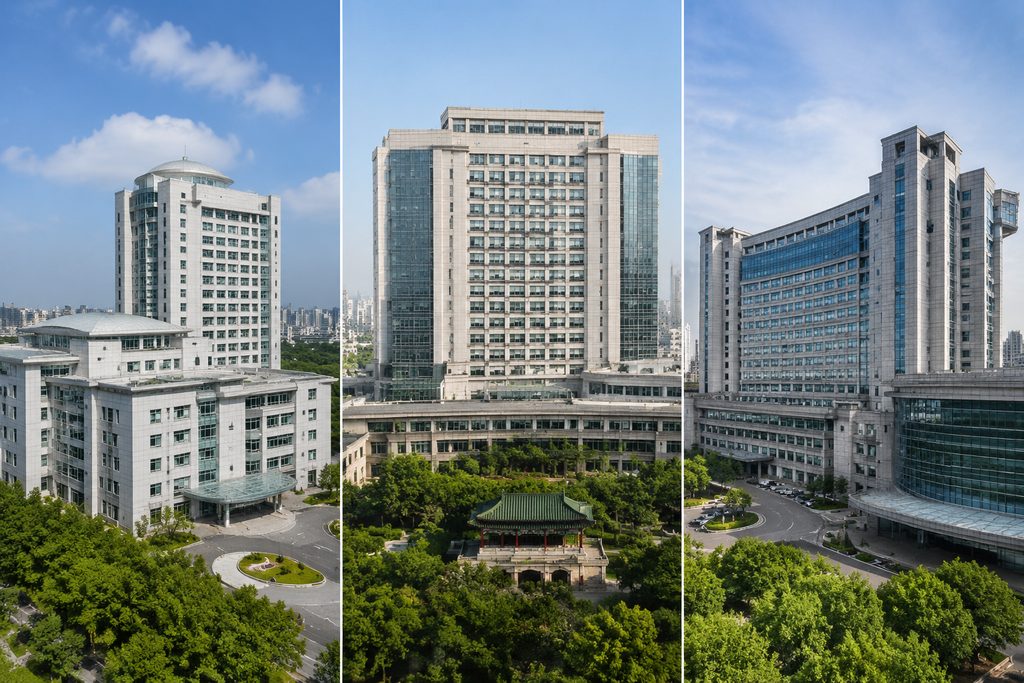
Xuanwu Hospital Neurosurgery for International Patients: A Practical Guide to Costs, Quality, and Booking
If you are researching Xuanwu Hospital neurosurgery price for foreigners, you are likely facing a serious diagnosis and weighing options across borders. Xuanwu Hospital, formally known as Xuanwu Hospital Capital Medical University, sits in Beijing and runs one of China’s most established neurosurgery departments. International patients often ask us two things: is it actually good, and what will it cost. We will answer both directly.
Key Takeaways
- Xuanwu Hospital’s neurosurgery department handles over 10,000 surgical procedures annually, placing it among China’s highest-volume centers.
- Brain tumor surgery at Xuanwu typically costs $15,000–$35,000 for international patients, compared to $80,000–$150,000 in the United States.
- Public hospital rules mean you cannot simply book a surgery online from abroad — you need a structured pathway through the hospital’s international department.
- Language, registration, and payment logistics are the biggest practical barriers; planning for them in advance saves weeks of frustration.
The Problem: Brain Surgery Costs and Wait Times Are Crushing Patients in Western Systems
According to a 2023 analysis by the Kaiser Family Foundation, the average cost of a craniotomy for brain tumor resection in the United States now exceeds $100,000 before insurance adjustments. Even insured patients face out-of-pocket maximums that routinely hit $8,000–$15,000. And that assumes you can get scheduled quickly.
Wait times compound the stress. In Canada, the median wait between specialist referral and neurosurgical consultation stretches to 11 weeks, with surgery adding another 8–12 weeks depending on urgency. The UK’s NHS reports similar pressures, with some non-emergency neurosurgical procedures delayed by months. For a patient with a growing lesion, that is not an abstract inconvenience. It is a clinical risk.
Then there are the uninsured and underinsured. Roughly 1 in 4 Americans with a serious neurological condition delays care because of cost, according to Gallup survey data. That is the real landscape: excellent medicine, often inaccessible.
Why Xuanwu Hospital Neurosurgery Deserves Serious Consideration
Xuanwu is not a random name. The hospital is a major teaching affiliate of Capital Medical University and operates one of the largest neurosurgical departments in northern China. It consistently appears in the Fudan University hospital rankings for neurosurgery, which places it among the top neurosurgery departments in China.
Clinical Volume That Translates to Experience
Volume matters in neurosurgery. A surgeon who performs 200 glioma resections a year sees complications, anatomical variations, and edge cases that a lower-volume surgeon encounters once a decade. Xuanwu’s neurosurgery team performs over 10,000 procedures annually across subspecialties including cerebrovascular surgery, skull base tumors, functional neurosurgery, and pediatric neurosurgery. For comparison, a busy academic neurosurgery department in the US might log 3,000–5,000 cases per year.
But volume alone is not quality. The department’s reputation rests on specific strengths: cerebrovascular malformations, deep-seated tumors, and endoscopic skull base approaches. If your case falls into one of these categories, Xuanwu is a legitimate contender.
Technology and Infrastructure at Scale
Xuanwu operates hybrid operating suites with intraoperative MRI, neuronavigation, and 5-ALA fluorescence-guided tumor resection. These are the same technologies you would find at Mayo Clinic or Charité in Berlin. The difference is throughput. The hospital runs multiple neurosurgical theaters daily, which means scheduling flexibility that Western systems often cannot match.
That operational density also means the surgical team sees complex cases constantly. For an international patient, this translates to a system built for high acuity, not one that occasionally handles it.
Cost Advantage Without Cutting Corners
The Xuanwu Hospital neurosurgery price for foreigners runs significantly below Western benchmarks. A craniotomy for tumor resection typically lands between $15,000 and $35,000 depending on complexity. Spine surgery ranges from $12,000 to $28,000. Deep brain stimulation for Parkinson’s disease, which costs $60,000–$100,000 in the US, runs $25,000–$45,000 at Xuanwu.
Why the gap? Chinese labor costs for nurses, technicians, and support staff are lower. Hospital construction and equipment amortization are cheaper. And the sheer patient volume spreads fixed costs across more cases. None of these factors reduce clinical quality. The surgeons train for the same duration, publish in the same journals, and follow international protocols. The economics are structural, not a reflection of skill.
If you are evaluating other top hospitals in Beijing, you will find similar patterns at institutions like Peking Union Medical College Hospital and Tiantan Hospital. Xuanwu is one of several strong options, not the only one.
How to Book Neurosurgery at Xuanwu Hospital Beijing: The Actual Process
Here is where most international patients hit a wall. Public hospitals in China, including Xuanwu, do not allow overseas patients to book surgery online. You cannot email the department and get a surgical date. The system works differently.
The standard route runs through Xuanwu’s International Medical Department. You submit your existing records — MRI, CT, pathology reports, prior surgical notes — for a preliminary review. A neurosurgeon evaluates whether your case is suitable for treatment at Xuanwu. If yes, you schedule either a written second opinion or a video consultation. Only after that step can a surgical plan and admission date be discussed.
Some patients attempt to book neurosurgery at Xuanwu Hospital Beijing by showing up in person. It works, but inefficiently. You would queue for registration, see a specialist in a crowded outpatient clinic, and then wait for a surgical slot. Without Chinese language skills, this process is extremely difficult. The international department exists precisely to route patients like you through a structured pathway.
Important: No legitimate service can guarantee a specific surgeon or a specific surgery date at a Chinese public hospital. Anyone promising that is not being honest. What a coordination service does is handle records translation, department communication, and appointment logistics — the things that actually move your case forward.
Is Xuanwu Hospital Good for Brain Tumor Surgery? What the Data Shows
This is the question behind the search: is Xuanwu Hospital good for brain tumor surgery? The honest answer is yes for specific tumor types, and you should understand which ones.
Xuanwu’s neurosurgery department has particular depth in skull base tumors, including acoustic neuromas, meningiomas, and pituitary adenomas. The hospital’s neurosurgeons also handle gliomas and metastatic brain tumors. Published outcomes data from the department show gross total resection rates for vestibular schwannomas above 90%, with facial nerve preservation rates comparable to major Western centers.
But not every tumor type is a Xuanwu specialty. If you need complex pediatric neuro-oncology or certain rare tumor surgeries, another center might be better. This is why a written second opinion matters. It tells you whether Xuanwu is actually the right place for your specific case, not just a famous name.
For patients comparing options, the question of best neurosurgery hospital in China for international patients has no single answer. Tiantan Hospital, also in Beijing, is often cited for cerebrovascular surgery. Huashan Hospital in Shanghai excels in functional neurosurgery. Xuanwu’s sweet spot is skull base and cerebrovascular work. The right choice depends on your diagnosis.
Xuanwu Hospital Medical Tourism Package Neurosurgery: What You Actually Get
Some agencies market a Xuanwu Hospital medical tourism package neurosurgery as if it were a hotel booking. It is not. A package typically bundles several discrete services: records review, appointment coordination, bilingual accompaniment, airport transfer, and accommodation assistance. The hospital charges its own fees separately for surgery, imaging, and hospitalization.
Here is a realistic cost breakdown for an international patient undergoing brain tumor surgery at Xuanwu:
| Item | Typical Cost (USD) | Notes |
|---|---|---|
| Written second opinion | $300–$500 | For reference only, not a prescription |
| Video consultation with specialist | $500–$800 | Top-specialist tier |
| Craniotomy for tumor resection | $15,000–$35,000 | Varies by tumor location and complexity |
| Hospital stay (7–14 days) | $3,000–$8,000 | Ward vs. private room |
| Post-op imaging and lab work | $1,500–$3,000 | MRI, CT, pathology |
| Bilingual medical companion | from $300/day | 8-hour day, includes translation and logistics |
| Airport transfer (round trip) | $200 | Beijing Capital International Airport |
Total all-in cost for a typical brain tumor surgery at Xuanwu: roughly $25,000–$50,000. Compare that to $80,000–$150,000 in the US, and the arithmetic speaks for itself. But the cost question — how much does brain surgery cost at Xuanwu Hospital — always depends on your specific case. Tumor location, surgical approach, length of stay, and whether you need ICU care all move the number.
One structural note: Chinese public hospitals require prepayment. You pay a deposit before admission, and the hospital draws down from it as services are provided. Insurance reimbursement happens afterward, through your insurer. If your policy covers treatment abroad, you will need itemized invoices and translated records, which the international department provides.
Practical Considerations: Visas, Records, and Follow-Up for Neurosurgery Patients
Planning neurosurgery abroad is not just about the surgery. The logistics around it can make or break the experience.
Visa: You will need an S2 visa for medical treatment in China. The S2 is a short-stay visa for private affairs, and medical treatment falls under this category when supported by hospital documentation. Your accompanying family members also apply for S2 visas. The hospital’s international department issues an invitation letter and treatment confirmation, which you submit with your visa application. Processing typically takes 1–2 weeks at your nearest Chinese embassy or consulate. If your treatment and recovery will exceed 180 days, an S1 visa applies instead. Requirements change, so check with the embassy before applying.
Medical records: Bring everything. Original imaging on CD or USB, not just printed films. Pathology slides if a biopsy was done. Complete surgical history, medication list, and any genetic testing results. Chinese neurosurgeons will want to review primary data, not summaries. If your records are not in English or Chinese, get certified translations before you travel.
Payment: Xuanwu accepts major credit cards and international bank transfers at the international department. Cash is possible but impractical for large amounts. Confirm the payment method before you arrive. Some international patients use a medical payment service to handle the transfer and currency conversion.
Language: Xuanwu’s international department has English-speaking coordinators, but the surgical team, nurses, and ward staff primarily speak Chinese. A bilingual medical companion bridges this gap during consultations, pre-op preparation, and daily ward rounds. Without one, you will struggle to understand medication instructions, discharge planning, and follow-up requirements.
Follow-up after returning home: Your surgeon will provide a discharge summary and a follow-up plan. Most patients do a video follow-up at 3 and 6 months post-op. Imaging done in your home country can be sent for review. The relationship does not end when you leave Beijing, but it requires proactive coordination.
Frequently Asked Questions
No. Xuanwu, like all Chinese public hospitals, requires a formal evaluation before scheduling surgery. You submit your records through the International Medical Department, receive a preliminary assessment, and then proceed to a written second opinion or video consultation. Only after that can a surgical plan be made. This process protects you from traveling to China for a surgery that is not actually indicated or feasible.
For the subspecialties Xuanwu is known for — skull base tumors, cerebrovascular surgery, and certain functional procedures — yes. The department publishes in international peer-reviewed journals, uses the same surgical technologies as major Western centers, and operates at a volume that most Western departments cannot match. That said, no hospital is best at everything. A written second opinion will tell you whether Xuanwu is the right fit for your specific diagnosis.
This is a fair question, and the answer matters. Xuanwu has neurosurgical ICU capacity and handles complications internally. For international patients, the practical concern is usually what happens after discharge. You need a clear follow-up plan, translated discharge records, and a direct line to the surgical team for questions. Medical liability in China works differently than in Western countries, so understand your insurance coverage before you commit. A coordination service can help you think through these scenarios, but it cannot eliminate risk. No one can.
Yes, Chinese public hospitals operate on a prepayment model. You deposit funds before admission, and the hospital deducts charges as they accrue. If the deposit runs low, you top it up. Any unused balance is refunded at discharge. This is standard practice across all public hospitals in China, not a Xuanwu-specific policy.
Your Next Step
Xuanwu Hospital offers serious neurosurgical expertise at a fraction of Western costs, but the path to treatment requires careful navigation. At China Medical Services, we help international patients connect with top-ranked hospitals like Xuanwu, manage records and appointments, and arrange bilingual support on the ground. We are not a hospital and do not provide medical advice. If you are ready to explore whether Xuanwu is right for your case, start with a free consultation to discuss your diagnosis and options. No pressure — just a clear next step.
For more medical information and treatment options in China, visit chinamedservices.com (China Medical Services).
