One Year After China Surgery: Your Long-Term Follow-Up Plan
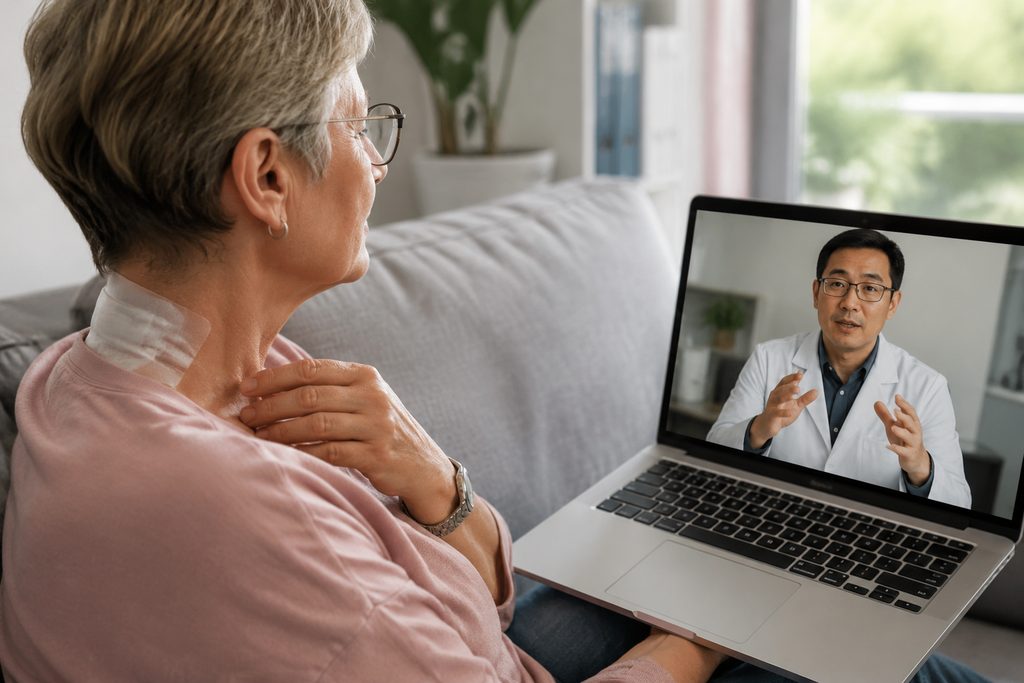
You have probably heard that traveling abroad for surgery means you are on your own once you fly home. The assumption is that the surgeon who operated on you disappears, and your local doctor is left piecing together someone else’s work. That can happen. But it is not the reality for patients who build a structured long term follow up after surgery in China cost plan before they ever book a flight. The Chinese hospitals our team works with expect international patients to need continuity. They design protocols for it. The gap is not the willingness of the medical team. It is that most patients do not know how to ask for the right structure at the right time.
One Year After China Surgery: The Short Answer
A one-year post-operative follow-up at a top Chinese hospital typically involves a review of imaging, blood panels, and a physical assessment. The long term follow up after surgery in China cost for this milestone visit ranges from $300 to $800 for the hospital charges alone, depending on the specialty and the scans required. That number covers the medical side. It does not include coordination, translation, or logistics. The real question is not whether the checkup is affordable. It is whether you can get it scheduled without landing in China and starting from zero.
Most public hospital departments in China do not offer a mechanism for international patients to book a follow-up appointment remotely through a standard registration window. The system is built for in-person, same-day queuing. That is the friction point. The solution is not to skip the one-year check. It is to route the booking through the hospital’s international department or a coordination service that has an established relationship with that department.
Who This Is Right For — and Who It Is Not
A structured one-year follow-up in China makes the most sense for a specific type of patient. You had a complex procedure where the surgeon’s direct knowledge of your intraoperative findings matters for long-term decisions. Orthopedic reconstructions with custom implants. Cardiac valve repairs where echo interpretation benefits from the original surgical team. Oncologic resections where the one-year scan is the first major milestone for recurrence surveillance. If your surgery involved nuanced intraoperative judgment that a local physician cannot fully reconstruct from an operative note, returning to the original team has genuine clinical value.
It is not the right move for everyone. If your procedure was a straightforward laparoscopic cholecystectomy with an uneventful recovery, the travel cost outweighs the clinical benefit. If you have a trusted specialist at home who already received a detailed handoff from your Chinese surgeon, a remote second opinion may suffice. And if your recovery has been complicated by new symptoms that suggest a different underlying problem, your priority should be a local workup first — not a flight back to Shanghai.
Be honest about which bucket you fall into. The logistics are significant enough that you should not pursue this for peace of mind alone.
The Options, Compared
Patients approaching the one-year mark after surgery in China have three practical paths. Each has a different cost structure, timeline, and level of diagnostic depth. The table below lays them out without glossing over the tradeoffs.
| Follow-Up Method | What It Includes | Typical Cost | Best For |
|---|---|---|---|
| Remote Written Second Opinion | Review of recent scans, labs, and symptom report by original surgical team; written analysis and recommendations | $300–500 | Stable patients with normal or near-normal interim findings who primarily need reassurance and a plan for the next interval |
| Video Consultation with Original Team | Live discussion with the surgeon or department specialist; review of uploaded imaging; verbal recommendations | $100–300 (standard specialist) to $500–800 (top specialist) | Patients with borderline imaging findings or new mild symptoms where a conversation is needed to decide if travel is warranted |
| In-Person One-Year Checkup | Physical examination, on-site imaging (CT, MRI, ultrasound, X-ray), blood work, face-to-face surgical follow-up | $300–800 (hospital charges) plus coordination, travel, accommodation | Complex cases where the surgeon needs to physically assess range of motion, wound integrity, or perform an ultrasound personally |
Most patients start with the remote written second opinion. If the surgical team sees something that concerns them on the scans, they escalate to a video call. Only a fraction end up needing to travel. That staged approach keeps the long term follow up after surgery in China cost proportionate to the actual clinical need, rather than defaulting to the most expensive option.
What a One-Year Post-Op Checkup Actually Examines
The one-year mark is not an arbitrary anniversary. It is the point where many surgical outcomes declare themselves. Implants that are going to fail due to subtle malalignment usually show radiographic evidence by twelve months. Cardiac repairs that are holding well at one year have a dramatically different long-term trajectory than those showing early structural changes. In oncology, the one-year scan is often the first clean data point that separates patients who need adjuvant intervention from those who can move to a lighter surveillance schedule.
The specific tests depend on the procedure. A patient one year after a total knee arthroplasty at a Shanghai hospital will get weight-bearing X-rays, a clinical examination of range of motion and stability, and a review of any persistent pain patterns. Someone one year after a laparoscopic liver resection will get a contrast-enhanced CT or MRI, liver function panels, and tumor markers. The hospital does not run a generic battery of tests. The protocol is tied to the original operation and the known failure modes of that specific procedure.
This is why returning to the original team matters. A radiologist who has never seen your prior films may flag post-surgical changes as suspicious. Your surgeon knows what the operative field looked like and can distinguish normal remodeling from early pathology. That distinction can prevent an unnecessary biopsy — or catch a recurrence six months earlier than a less familiar reader would.
What a One-Year Follow-Up Costs — and What Drives the Variance
The hospital charges for a one-year post-op checkup at a top-tier Chinese public hospital range from $300 to $800. That is the amount the hospital bills for the consultation, imaging, and lab work. It does not include coordination fees, translation, or any of the logistics around the visit. Here is what moves the number within that range.
Imaging is the biggest variable. A simple chest X-ray costs under $50. A contrast-enhanced MRI of the brain or spine can push past $300 by itself. If your protocol requires both CT and MRI, you will land at the high end. Lab panels are the second driver. Basic CBC and metabolic panels are inexpensive. Specialized tumor markers or immunosuppressant drug level monitoring add cost per assay.
The hospital tier matters. A follow-up at a Fuwai Hospital or Peking Union Medical College Hospital will cost more than the same tests at a strong provincial center. The difference is usually 20 to 30 percent. The specialist’s consultation fee itself is modest — often $30 to $80 — but the prestige institutions charge more for imaging and facility fees.
Coordination is separate. If you need a bilingual companion to navigate registration, escort you to the correct departments, and translate the consultation in real time, that service starts from $200 per day. A one-year checkup that requires multiple departments — imaging in one building, labs in another, surgical consultation in a third — can easily consume a full day. Budget accordingly.
Practical Considerations: Records, Visas, and Timing
You cannot walk into a Chinese hospital for a one-year follow-up without the right documents. The surgical team needs your complete prior records before they will schedule the appointment. That means your original operative note, discharge summary, pathology report, and all interim imaging and lab results since you returned home. If any of these were issued in a language other than English or Chinese, they need certified translation. Our team handles this as part of coordination, but you should expect to gather the originals yourself.
The visa situation is straightforward but specific. For a short follow-up visit, you apply for an S2 visa with an invitation letter from the hospital. The hospital’s international department issues this letter once your appointment is confirmed. Processing time at your local Chinese embassy or consulate varies by country, but plan for two to four weeks. Do not book flights until the visa is in your passport.
Payment at the hospital is almost always upfront. Public hospitals in China do not bill international insurance directly. You pay at the registration counter or cashier, receive an official receipt and detailed invoice, and submit the claim to your insurer yourself. Private international hospitals like United Family or Jiahui handle direct billing, but your original surgeon likely practices at a public institution. Confirm this before you travel so there are no surprises at the cashier window.
Timing the visit is trickier than it sounds. You cannot simply pick a date and expect the surgeon to be available. Top specialists have clinical, surgical, and academic schedules that fill weeks in advance. The international department can reserve a window, but flexibility on your side helps. If you have a narrow window for travel, start the coordination process at least six to eight weeks before your intended visit.
Staying Connected Between Now and Your Next Milestone
The one-year checkup is not the end of the follow-up timeline. Many surgical protocols require surveillance at 18 months, 2 years, and 5 years. The most valuable thing you can do at your one-year visit is establish a direct communication channel with the surgical team for the intervals ahead. Ask whether the department offers a WeChat-based follow-up group for international patients. Some do. Ask for the specific imaging protocol they want at the next milestone so your local provider can perform the scans to the correct specification. Get a written surveillance schedule in English before you leave.
This is also the moment to discuss what symptoms between now and the next scheduled checkup should trigger an earlier contact. Every procedure has its own red-flag list. The surgeon can give you a concrete set of criteria — specific pain patterns, functional changes, or lab thresholds — that warrant uploading new scans for remote review. Having that list in writing turns vague anxiety into an actionable plan.
Frequently Asked Questions
In many cases, yes — and that may be the right choice. If your procedure was straightforward and your local specialist has the full operative record, a local follow-up with the results forwarded to your Chinese surgeon for remote review is a practical path. The question is whether the imaging interpretation requires familiarity with the specific surgical technique used. Some Chinese hospitals use approaches or implant systems that are less common in Western practice. If your local radiologist has never seen that particular hardware configuration, they may misinterpret normal findings. Ask your Chinese surgeon directly: “Is there anything about my imaging that a radiologist unfamiliar with your technique might misread?” The answer will tell you whether travel is necessary.
Not on the spot. If the follow-up reveals a complication that requires intervention, the hospital will need to schedule that procedure separately. You cannot convert a diagnostic visit into a surgical admission on the same day. The surgical schedule is booked in advance, and the hospital needs time for pre-operative clearance. You may need to extend your stay or return later. This is why we recommend patients budget for flexibility in their return ticket. A fully changeable fare costs more upfront but saves thousands if you need to stay an extra week or two for a staged workup.
You have two options. One is to contact the hospital’s international department directly by email, provide your original medical record number, and request a follow-up appointment. Some hospitals respond within days. Others take weeks or never reply — their international desks are understaffed relative to demand. The second option is to work with a coordination service like China Medical Services that has existing relationships with the international departments at major hospitals. We handle the scheduling, document translation, and on-the-ground logistics. The hospital charges the same either way. The coordination fee covers the labor of making the system respond.
It depends entirely on what the package includes. Some agencies bundle airport transfers, hotel bookings, and a companion into a fixed-price package with a markup. Others simply resell the hospital’s own international patient services at a premium without adding meaningful value. Read the fine print. A legitimate package should include a detailed clinical coordination component — document review, appointment scheduling with the specific surgeon who operated on you, and a bilingual medical professional (not just a general interpreter) who can accurately translate clinical terminology during the consultation. If the package is mostly logistics with no clinical coordination, you are paying for a travel agent, not a medical facilitator.
At a top Shanghai hospital like Zhongshan or Ruijin, the one year post op check up Shanghai hospital price typically covers the specialist consultation fee, the specific imaging ordered for your protocol, and the relevant lab panels. For a cardiac surgery patient, that might mean an echocardiogram, ECG, and cardiac biomarker labs. For an orthopedic patient, it means X-rays and a physical exam. The price does not include any unexpected additional tests the surgeon orders based on findings during the visit. If the echo shows something that warrants a CT, that CT is billed separately. Budget for a 20 to 30 percent buffer above the quoted hospital estimate for contingencies.
Your Next Step
The one-year follow-up is not just a box to check. It is the visit that sets the trajectory for the next several years of your surveillance plan. Getting it right means having the right imaging, the right interpreter, and the right access to the surgeon who knows your case. Getting it wrong means spending money to travel and leaving with ambiguous results that your local doctor cannot interpret.
We are not a hospital. We do not diagnose, treat, or make clinical recommendations. What we do is handle the coordination that makes a one-year follow-up feasible — scheduling through the international department, translating your records, providing a bilingual medical companion on the day, and ensuring you leave with clear written recommendations in English. If you are approaching your one-year mark and want to understand your options before committing to travel, reach out for a free consultation. We will walk you through what your specific procedure requires, what it will cost, and whether a remote review might serve you just as well.
For more medical information and treatment options in China, visit chinamedservices.com (China Medical Services).
