Dr Zhang Liwei Neurosurgeon China: Expert Brainstem Tumor Surgery at Beijing Tiantan
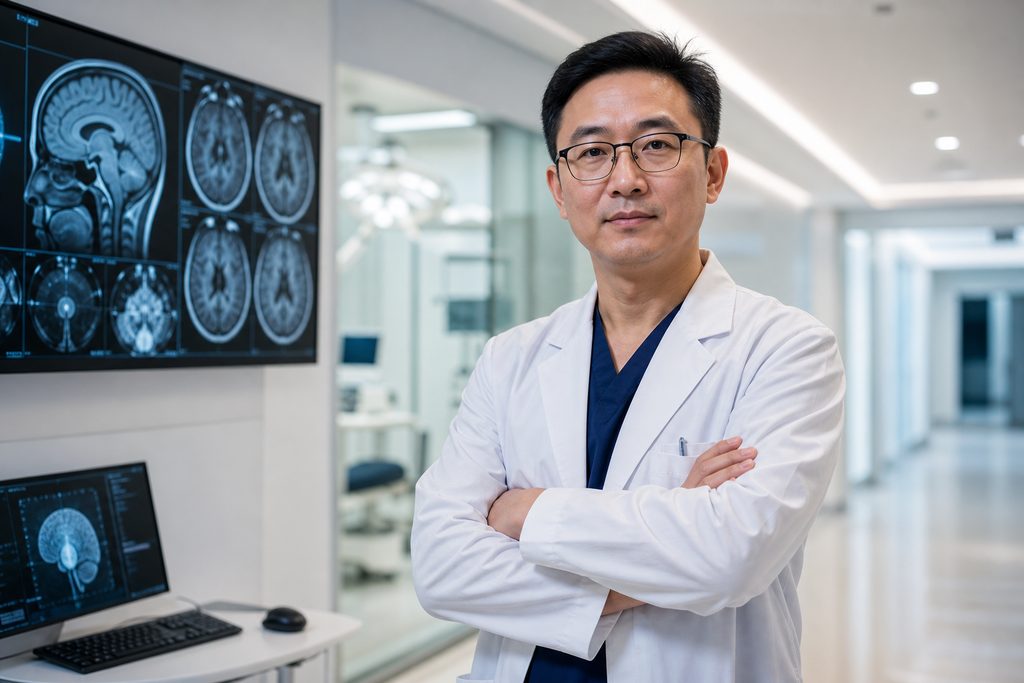
Dr Zhang Liwei Neurosurgeon Review: Brainstem and Skull Base Surgery at Beijing Tiantan Hospital
Finding a surgeon willing to operate on a brainstem tumor is hard enough. Finding one who does it routinely—with volume that breeds genuine expertise—can feel impossible. A Dr Zhang Liwei neurosurgeon review search often starts with a terrifying diagnosis and a local surgeon who offers limited options. Beijing Tiantan Hospital, where Dr. Zhang practices, performs over 15,000 neurosurgical procedures annually. That is more than any other neurosurgical center on the planet. For lesions tucked deep in the pons or wrapped around the basilar artery, volume is not a marketing metric. It is the difference between a surgeon who has seen your tumor variant dozens of times and one who is consulting a textbook.
Key Takeaways
- Beijing Tiantan Hospital performs more than 15,000 neurosurgical procedures each year—the highest surgical volume of any neurosurgical center worldwide—giving its brainstem tumor team unmatched intraoperative experience with rare pathologies.
- Total costs for complex skull base tumor surgery at Tiantan’s International Medical Center typically range from $35,000 to $65,000 USD, roughly one-fifth to one-third of comparable surgery in the United States.
- Directly booking a consultation with a specific surgeon like Dr. Zhang Liwei through public hospital channels is not possible for overseas patients—access requires navigating the hospital’s International Medical Center or VIP pathway.
- Intraoperative neuromonitoring, diffusion tensor imaging (DTI)-guided navigation, and a dedicated neuroanesthesia team for awake craniotomies are standard at Tiantan—not special requests—and directly impact brainstem surgery safety.
The Problem: When the Tumor’s Location Dictates Your Options
Brainstem gliomas represent approximately 10–20% of all pediatric brain tumors and 2–4% of adult primary brain tumors. That rarity creates a brutal reality: most neurosurgeons in community hospitals, and even many at academic centers, might resect two or three brainstem lesions in a career. The learning curve for safe entry zones through the floor of the fourth ventricle or the lateral mesencephalic sulcus is measured in dozens of cases, not a handful. A 2023 study published in Neurosurgery found that hospitals performing fewer than 10 glioma resections annually had complication rates nearly double those of high-volume centers. For brainstem surgery, the stakes are magnified. A millimeter too far in any direction can mean locked-in syndrome, permanent ventilator dependence, or worse. Patients in Europe or North America often face a grim choice: accept a biopsy-only approach with radiation and chemotherapy, or gamble on a surgeon who lacks deep experience with the specific anatomical corridor their tumor requires. The wait for a surgical slot at a top Western center can stretch past six weeks. For a high-grade lesion, that time matters.
Who We Are
We are not a hospital. We do not provide medical treatment, clinical diagnoses, or surgical opinions. Our team serves as the logistical bridge between international patients and China’s top-tier medical institutions—including Beijing Tiantan Hospital. We handle the structural barriers that stop most overseas patients before they ever speak to a surgeon: visa documentation, hospital registration through the correct international channel, medical record translation that Chinese specialists can actually use, and bilingual accompaniment during every clinical encounter. Think of us as your operational architects. You focus on your health decisions. We make sure the system does not block you from making them.
Why Beijing Tiantan Hospital Delivers Results for Brainstem and Skull Base Tumors
Surgical Volume That Reshapes the Learning Curve
Tiantan’s neurosurgery department is not large by Western standards—it is enormous by any standard. The hospital houses over 1,200 neurosurgical beds across multiple dedicated wards. Its skull base and brainstem tumor team operates five days a week, often handling cases referred after other centers declined to operate. This is the environment where a best brainstem tumor surgeon Beijing Tiantan Hospital search leads. Why? Because surgeons here accumulate case volumes that simply are not possible elsewhere. A senior attending on the brainstem team may resect 80–120 brainstem and complex skull base lesions per year. Compare that to a busy academic neurosurgeon in the US who might do 15–25. The difference is not just numbers. It is pattern recognition. It is having seen a pontine cavernoma in three different presentations in the past month and knowing exactly how the tissue plane will behave when you dissect it. The hospital’s own published data, appearing in World Neurosurgery and other peer-reviewed journals, reports gross total resection rates for selected brainstem gliomas exceeding 85% with permanent morbidity rates under 8%—outcomes that hold up against any center in the world.
Technology Built Into the Standard Workflow
Western hospitals market their technology. At Tiantan, the technology is just the baseline. Intraoperative MRI is available. Diffusion tensor imaging tractography is fused with navigation for every brainstem case, mapping the corticospinal tracts and medial lemniscus in real-time as the resection proceeds. Neurophysiological monitoring—somatosensory evoked potentials, motor evoked potentials, brainstem auditory evoked potentials, and free-running electromyography—is staffed by a dedicated team that does nothing but monitor cranial nerve and pathway function during skull base surgery. For tumors involving the cerebellopontine angle or jugular foramen, this is not optional. It is the standard of care that prevents facial nerve paralysis or hearing loss. The neuroanesthesia team runs awake craniotomies for lesions near eloquent cortex as a matter of routine, not a special protocol. All of this matters when you are researching how to consult Dr Zhang Liwei brainstem surgery. The surgeon’s skill is the core variable. But the supporting infrastructure—the monitoring, the imaging, the anesthesia—is what lets that skill be applied safely.
Cost Structure That Changes the Calculation
Let us address the elephant in the room directly. The cost of skull base tumor surgery in China is substantially lower than in the United States or Western Europe. At Tiantan’s International Medical Center—the channel through which overseas patients access care—a complex brainstem tumor resection typically ranges from $35,000 to $65,000 USD all-inclusive. That covers the surgeon’s fee, anesthesiology, intraoperative monitoring, ICU stay, ward bed, and basic rehabilitation during admission. The same procedure at a major US academic center routinely exceeds $150,000 and can reach $250,000 or more depending on length of stay and complications. The price gap exists for structural reasons: lower physician labor costs, higher patient throughput, and a hospital financing model that does not carry the administrative overhead of the American insurance system. Quality does not track with price here. Tiantan’s infection rates, mortality statistics, and functional outcome data are published and scrutinized. The hospital holds JCI accreditation and its neurosurgery program is ranked in the highest tier (A++++) by the Fudan University Hospital Ranking, China’s most authoritative hospital evaluation system. If you are looking at a brainstem glioma surgery China price 2025 estimate, the number will be a fraction of what you fear. But it is still a significant sum. We tell every patient: get a detailed quote for your specific case. Prices vary by tumor location, surgical approach, and anticipated ICU days.
What You Need to Know Before Going Alone
We have watched patients try to navigate this system independently. Some succeed. Many waste weeks and give up. The barriers are real and they are structural, not personal. Here is what you will face if you attempt to arrange care at Tiantan without local support:
- Public Registration Channels Do Not Accept Overseas Appointments: The standard outpatient registration system—whether online or via the hospital app—requires a Chinese national ID number and a local phone number. You cannot book a consultation with Dr. Zhang through the public platform from outside China. The public queue for a senior specialist can also be months long. The only reliable route for international patients is through the hospital’s International Medical Center, which operates on a different scheduling system entirely.
- Medical Records Must Be Translated Professionally—Not Casually: A Chinese neurosurgeon reviewing your case needs imaging reports, pathology slides, and clinical summaries in Mandarin. Google Translate will not cut it for a radiology report describing the signal characteristics of a brainstem lesion on T2-weighted FLAIR sequences. Inaccurate translation of prior surgical notes or radiation fields can lead to a flawed surgical plan. We use medical translators who understand neurosurgical terminology.
- Payment and Insurance Operate on a Pre-Payment Model: Tiantan’s International Medical Center requires a deposit before admission, typically a significant percentage of the estimated total. Most international insurance plans will reimburse after the fact, but the hospital does not bill them directly. You need the cash flow to front the deposit. We help patients negotiate the deposit amount and structure payment timelines, but the pre-payment requirement is non-negotiable at virtually all Chinese public hospitals.
How We Help You Navigate This
These barriers exist for a reason. China’s public hospital system was built to serve a domestic population of 1.4 billion people. It was never designed with an international patient workflow in mind. The International Medical Center at Tiantan is the designated bridge, but crossing it still requires someone who speaks both languages and understands both medical systems.
We start with your existing records. You send us your MRI (DICOM files preferred), your pathology report, your clinical history, and any prior surgical notes. Our medical translation team converts everything into a format that a Chinese neurosurgeon can read and act on within minutes—not hours of deciphering. We then submit your case through the International Medical Center’s formal consultation channel. A Tiantan Hospital neurosurgery international patient package is not a fixed product you can purchase online. It is a case-by-case arrangement that depends on your tumor type, your surgical history, and the surgeon’s assessment of resectability. We coordinate that assessment. If Dr. Zhang or a colleague on the brainstem team determines that surgery is indicated, we move to scheduling. The timeline from case acceptance to surgery date typically runs 2–4 weeks, depending on bed availability and the surgeon’s schedule. During those weeks, we handle your S2 visa documentation—the correct visa category for medical treatment in China. We arrange airport pickup, local accommodation near the hospital, and a bilingual medical companion who stays with you through every step: registration, pre-operative testing, the surgical consent discussion, the day of surgery, and the post-operative recovery period. Your companion translates the surgeon’s post-op instructions in real time and ensures that your pain management needs, dietary restrictions, and rehabilitation questions are communicated clearly to the nursing staff.
After discharge, we coordinate follow-up imaging and video consultations so you can return home without losing continuity of care. The goal is not to keep you in Beijing. The goal is to get you safely through surgery and back to your life with a clean MRI and a clear recovery plan.
Frequently Asked Questions
No. Like virtually all senior surgeons at Chinese public hospitals, Dr. Zhang does not accept direct patient inquiries from overseas. His clinical schedule is managed through the hospital’s department administration. The International Medical Center is the designated entry point for foreign patients. We submit cases through that channel on your behalf, ensuring your records are reviewed by the appropriate skull base specialist for your specific tumor type.
This happens. Some brainstem tumors—particularly diffuse intrinsic pontine gliomas (DIPG) in children or highly infiltrative adult gliomas—carry surgical risks that outweigh any potential benefit. If the Tiantan team determines that surgery is not indicated, they will explain why in writing. We then help you explore alternatives: a second opinion from another Chinese center, a referral back to a Western institution for clinical trial enrollment, or a discussion about radiation and medical management options. We do not pressure surgeons to operate, and we do not pressure patients to accept a surgical plan they are uncomfortable with. Our role is to facilitate honest clinical communication, not to sell surgery.
The risks are real and they are disclosed upfront. Even in the best hands, brainstem surgery carries a risk of permanent neurological deficit—cranial nerve palsy, motor weakness, sensory loss, or coordination problems. Tiantan’s published permanent morbidity rate for brainstem tumor surgery is under 8%, but that still means roughly one in twelve patients has a lasting complication. Temporary deficits, particularly double vision or facial weakness, are more common and often resolve over weeks to months. The surgeon will walk you through the specific risks for your tumor’s location during the pre-operative consent process. Our medical companion translates that discussion in full, ensuring you understand exactly what is at stake before you sign.
No. The cost difference reflects structural economic factors, not clinical shortcuts. A neurosurgeon’s salary in China is a fraction of what an American neurosurgeon earns. The hospital’s administrative overhead is lower. Malpractice insurance costs are dramatically lower. The implants, microscopes, navigation systems, and intraoperative monitoring equipment are the same brands—Zeiss, Medtronic, Brainlab, Natus—used in Western operating rooms. Tiantan’s neurosurgical outcomes have been published in international peer-reviewed journals and withstand scrutiny. Lower cost here is a market inefficiency, not a quality signal.
Plan for a minimum of four weeks, and ideally six. The typical timeline: you arrive, complete pre-operative testing over 2–3 days, undergo surgery, spend 2–5 days in the neurosurgical ICU, then transfer to a ward bed for 10–14 days of monitoring and early rehabilitation. After discharge, you remain in Beijing for at least another week for wound checks, a post-operative MRI, and a final consultation before flying home. Some patients stay longer if they need additional rehabilitation or if a post-operative complication requires extended monitoring. We help arrange visa extensions if recovery takes longer than expected.
Your Next Step
A brainstem tumor diagnosis narrows your options fast. You need a surgeon who has done your procedure many times, in an operating room equipped for the specific monitoring and navigation your tumor demands, at a cost that does not bankrupt your family. Beijing Tiantan Hospital and surgeons like Dr. Zhang Liwei represent exactly that combination. The path to accessing that care is not obvious from outside China, but it is navigable with the right support. If you are ready to find out whether surgery at Tiantan is a viable option for your case, we are here to help you get an honest clinical answer—not a sales pitch. Request a free consultation with our team to discuss your diagnosis and next steps.
Medical disclaimer: This article is for informational purposes only and does not constitute medical advice, diagnosis, or treatment recommendation. All surgical decisions should be made in consultation with a qualified neurosurgeon after a thorough review of your individual case. Outcomes vary by patient and tumor characteristics. No guarantee of surgical results is implied or should be inferred.
For more medical information and treatment options in China, visit chinamedservices.com (China Medical Services).
