Is That Video Doctor Actually Licensed? Verifying Credentials Before You Pay
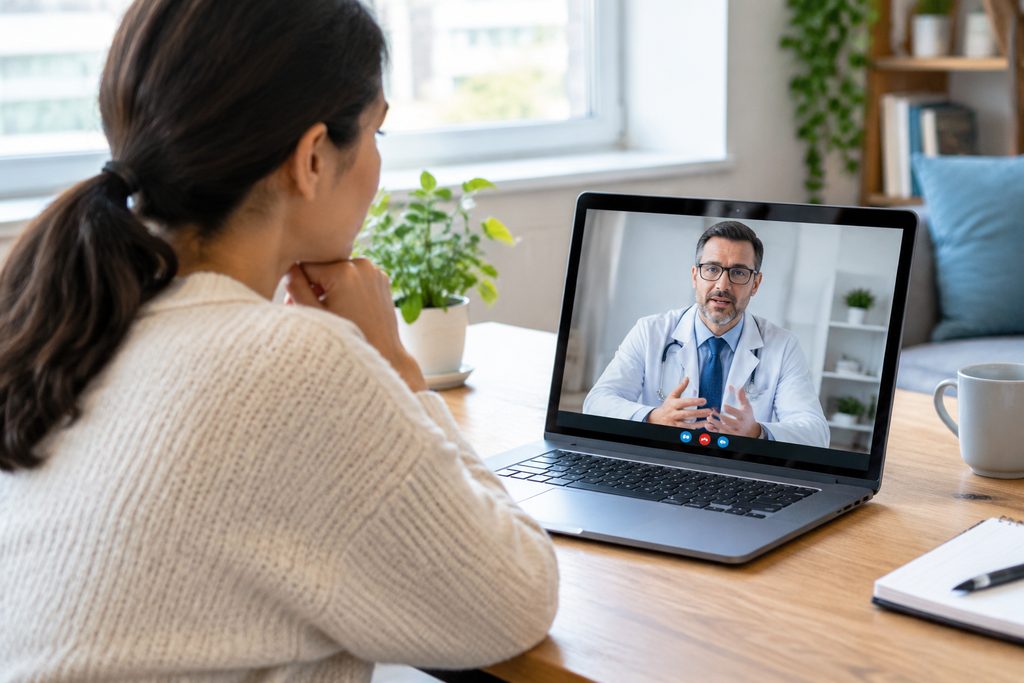
You have probably heard that a video consultation is a low-risk way to explore treatment in China. The reality is more complicated. A screen and a white coat prove nothing. Is that video doctor actually licensed? The short answer: in China, licensing is real, verifiable, and public — but only if you know where to look. A doctor practicing medicine in China must hold a valid Medical Practitioner Qualification Certificate and be registered with the National Health Commission. The problem is that many online platforms do not show you those documents. They show you a profile photo, a hospital logo, and a list of specialties. That is not verification. That is marketing.
This article explains how to check a Chinese physician’s license before you pay for a video consultation, what red flags to watch for, and how our team at China Medical Services approaches credential verification differently.
Is That Video Doctor Actually Licensed? The Short Answer
Yes, if the doctor appears on the official registration database maintained by China’s National Health Commission. No, if the platform refuses to give you the doctor’s full name in Chinese characters and their license number. The verification process takes about ten minutes once you have those two pieces of information. Without them, you are guessing.
Here is the catch. Many international telemedicine platforms employ “consultants” or “health advisors” who are not licensed physicians. They may be medical graduates without a license, nurses, or sales staff. Their titles sound impressive in English. Their legal authority to practice medicine does not exist. Asking the direct question — “is that video doctor actually licensed?” — is not rude. It is the minimum due diligence.
Who Should Verify a Video Doctor’s License — and Who Can Skip It
Not every conversation with a Chinese medical professional requires a license check. Here is who should absolutely verify.
- You are paying $100 or more for a clinical opinion about a specific diagnosis or treatment plan.
- The doctor will review your imaging, pathology, or lab results and make recommendations.
- You are considering traveling to China for surgery or hospitalization based on the video consultation.
- The platform markets the doctor as a “top specialist” or “professor” at a well-known hospital.
You can reasonably skip the deep verification if the call is purely logistical — for example, a hospital international department staff member explaining admission procedures or visa paperwork. Those staff are coordinators, not clinicians, and they do not claim to be.
But if someone gives you medical advice, they must be licensed. No exceptions.
The Options for Verifying a Chinese Doctor’s License
There are three practical routes. None of them require Chinese language skills if you use the right tools, but all of them require the doctor’s real name in Chinese characters.
| Method | What You Get | Time Required | Limitations |
|---|---|---|---|
| National Health Commission database (official website) | License status, registration number, primary practice institution | 10–15 minutes | Chinese-language interface; requires exact Chinese name |
| Hospital official website or WeChat account | Department roster with doctor photos and titles | 5–10 minutes | Not all hospitals keep updated English pages; smaller hospitals may lack rosters |
| Third-party medical concierge or case manager | Pre-verified credentials, hospital appointment coordination, bilingual support | 1–2 business days | Costs from $300 for coordination; not a substitute for your own due diligence |
The first method is the gold standard. The National Health Commission maintains a public query system where anyone can enter a physician’s name and registration details. The challenge is practical: the site is in Chinese, and you need the doctor’s exact Chinese name. If the platform gives you only an English transliteration like “Dr. Li Wei,” that is insufficient. Multiple doctors share that name. You need the characters, not the pinyin.
The second method works well for famous hospitals. If the doctor claims affiliation with Peking Union Medical College Hospital or Fuwai Hospital, check the hospital’s official website. Most top-tier institutions publish department directories with photos. If the doctor’s face and title do not appear there, ask why.
The third method is what we do. We verify the doctor’s license and hospital affiliation before arranging any paid consultation. We also coordinate the appointment through the hospital’s official international department channel. That means the doctor knows the consultation is happening, the hospital has a record of it, and you are not sending money to a stranger on a messaging app.
Red Flags That Scream “Unlicensed” — Even Before You Check
Some warning signs appear long before you run a database search. You do not need to be a medical insider to spot them.
The doctor refuses to provide a license number. A licensed physician has nothing to hide. If the answer is “trust me” or “our platform verifies everyone,” walk away. Verification claims without evidence are worthless.
The consultation happens over WhatsApp or WeChat only. Legitimate hospital telemedicine services use the hospital’s own platform or a formal video system. A doctor who insists on an informal messaging app may be moonlighting without institutional oversight — or may not be a doctor at all.
The price is suspiciously low. A “top specialist” at a major Chinese hospital does not offer private video consultations for $30. The real cost of a video consultation with a senior specialist at a public hospital’s international department typically ranges from $100 to $300. A written second opinion from a top-tier expert runs $300 to $500. If someone offers you a “professor” for $50, something is wrong.
The doctor promises outcomes. No licensed physician guarantees a cure, a specific surgical result, or a recovery timeline. Promises are a sales tactic, not a medical practice.
And here is the uncomfortable truth: some “doctors” on international platforms are real physicians who are not licensed to practice where you live. That does not make them fake. But it does mean their advice may not be legally recognized in your home country, and your local doctor may not accept it. Licensing is jurisdictional. A Chinese license is valid in China. It is not automatically valid in Germany, Canada, or the United States.
What a Real Video Consultation Costs — and What You Are Actually Paying For
Let us talk numbers. The price of a video consultation with a licensed Chinese physician varies by hospital tier and specialist seniority.
- Standard video consultation with a physician at a public hospital’s international department: $100–$300
- Video consultation with a top-tier specialist (department chair level): $500–$800
- Written second opinion from a top-ranked hospital expert: $300–$500
- Multidisciplinary team (MDT) video consultation: $1,500–$2,000
These figures are ranges, not fixed prices. They vary by hospital and case complexity. What are you paying for? The doctor’s time, the hospital’s administrative overhead, and — if you use a service like ours — the coordination work: translating your records into Chinese, scheduling the appointment through official channels, and providing a bilingual moderator during the call.
One thing you are not paying for: a guarantee of treatment success. No legitimate service sells that. If someone does, that is another red flag.
Also worth knowing: our consultation fees are credited in full toward on-the-ground coordination if you later travel to China for treatment within 90 days. That means the $300 you spend on a video consultation is not lost — it reduces the cost of the next step. The credit applies to coordination fees only, never to hospital treatment charges.
Practical Considerations: Getting the Doctor’s Real Name, Records, and a Clean Handoff
Verification is step one. Even with a licensed doctor, the consultation has practical requirements you should prepare for.
You need your medical records in order. The doctor will ask for imaging reports, lab results, pathology slides, and a summary of your current treatment. Send these before the call. A video consultation without records is a chat, not a medical evaluation. We translate records into Chinese as part of our coordination service — a step that prevents miscommunication and saves the doctor’s time.
You need to know the visa reality if you plan to travel later. Foreign patients coming to China for medical treatment use an S2 visa, not an M visa. The M visa is for commercial and trade activities. The S2 is the short-stay category used for medical treatment and private affairs, subject to the latest embassy or consulate requirements and supporting hospital documents. We provide guidance on this, but we never guarantee approval. Every case is different.
You need a clear handoff to your home doctor. The Chinese physician’s advice should be shared with your local medical team. A good video consultation ends with a written summary you can take to your own doctor. If the platform cannot provide that, the consultation has limited value.
And a practical note on payment: public hospitals in China generally require prepayment for services, with insurance reimbursement handled afterward. Private international hospitals may bill your insurer directly. Know which model applies before you pay. If a “doctor” asks for payment via personal PayPal or Western Union, stop. That is not how hospital billing works.
Frequently Asked Questions
Go to the National Health Commission’s physician registration query system. Enter the doctor’s full Chinese name and, if you have it, their license number. The system will show whether the license is active and which institution the doctor is registered with. The interface is in Chinese, so use a browser translator. If the platform refuses to give you the Chinese name, you cannot complete the check — and that itself is an answer.
Then the doctor is legally practicing in China, but their advice carries no legal weight in your home jurisdiction. Your local physician may decline to act on it. This does not mean the advice is bad. It means you should treat it as a second opinion to discuss with your own doctor, not as a prescription. For patients planning to travel to China for treatment, the Chinese license is what matters for the care you receive there.
If you booked through a hospital’s official international department, the hospital will reschedule or refund. If you booked through a random website and the doctor vanished, your options are limited. This is why we coordinate video consultations through official hospital channels — there is a record, a contact person, and accountability. A doctor who is not affiliated with any verifiable institution is a risk you should not take with your health or your money.
Your Next Step
Verifying a video doctor’s license is not optional. It is the difference between a real medical opinion and an expensive conversation with a stranger. We are not a hospital, and we do not diagnose or treat anyone. What we do is connect international patients with licensed physicians at China’s top-ranked hospitals — and we verify every credential before a single dollar changes hands. If you are considering a video consultation with a Chinese specialist, start with a free consultation at our patient services page. Tell us what you need. We will tell you honestly whether we can help.
For more medical information and treatment options in China, visit chinamedservices.com (China Medical Services).
