First Affiliated Hospital Zhejiang University Endocrinology: A Guide for International Patients
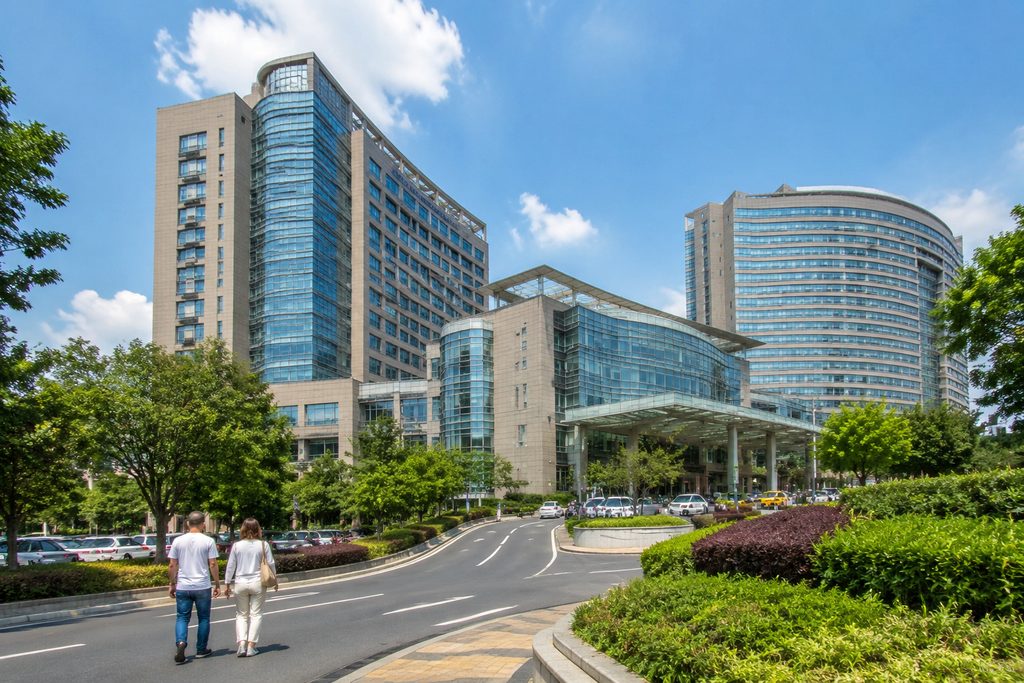
Have you been diagnosed with a thyroid nodule, struggling with diabetes management, or dealing with a complex adrenal issue — and now you’re wondering if one of China’s most respected endocrinology departments is actually accessible to you as a foreigner? The short answer is yes, but the path looks different from what you might expect. The First Affiliated Hospital of Zhejiang University (FAHZU) runs one of the strongest endocrinology programs in eastern China, and international patients do receive care there. The real question is how to navigate the system without wasting weeks or misunderstanding the costs.
Let’s talk about the Zhejiang University endocrinology international patient price structure first, because that’s usually what people search for before anything else. A standard outpatient specialist consultation through the hospital’s international or VIP channel typically runs from $150 to $400 USD depending on the seniority of the physician. A written second opinion from a senior endocrinologist falls in the $300–500 range. If you need a thyroid fine-needle aspiration biopsy, expect $300–600. A full endocrine workup — thyroid panel, antibodies, ultrasound, and specialist interpretation — lands between $500 and $900. These figures vary by hospital and case complexity, but they give you a realistic baseline.
How This Actually Works, Step by Step
You don’t just show up at the hospital gates. The process starts remotely, and that’s a good thing. Here’s the sequence we walk patients through every week:
First, you send your existing medical records — lab results, imaging reports, pathology slides if you have them, current medication list. We translate these into Chinese and route them to the endocrinology department’s international coordination desk. A senior specialist reviews the file. That review produces one of two outcomes: a written analysis with treatment direction, or a recommendation for a video consultation to clarify your case before you commit to travel.
If the specialist confirms your case fits their expertise, we coordinate an appointment. You’ll need an S2 visa for medical treatment purposes. Processing takes one to three weeks depending on your home country and the consulate’s current load. Meanwhile, we schedule your consultation date, arrange interpretation, and map out which tests you’ll need on arrival.
On the day of your visit, a bilingual medical companion meets you at the hospital entrance. They handle registration, queue numbers, payment windows, and sit with you during the consultation to translate everything in real time. After the visit, you receive translated summaries of every recommendation and prescription.
Is Zhejiang University Hospital Good for Diabetes Treatment?
The short answer: yes, and the volume data backs it up. FAHZU’s endocrinology department sees an enormous patient load — the hospital itself handles over 20,000 outpatient visits daily across all specialties. That scale creates something valuable: clinicians who have seen unusual presentations repeatedly, not just read about them in journals.
For diabetes specifically, the department runs structured programs covering type 1, type 2, gestational diabetes, and the harder-to-manage cases involving insulin resistance or secondary diabetes from pancreatic or endocrine disorders. They use continuous glucose monitoring systems, insulin pump therapy, and multidisciplinary rounds that pull in ophthalmology, nephrology, and vascular surgery when complications exist.
But here’s what we tell every patient honestly: diabetes is a chronic condition. A single consultation won’t fix it. What FAHZU offers is a comprehensive baseline evaluation — HbA1c, C-peptide, autoantibody panels, complication screening — followed by a medication and lifestyle plan you can execute at home. For patients who want a structured diabetes treatment package in Hangzhou for overseas patients, the hospital’s international department can arrange a 3-to-5-day evaluation bundle including all labs, imaging, and specialist reviews. Expect $1,500–3,000 for that scope of work.
First Affiliated Hospital Zhejiang University Thyroid Surgery Cost
Thyroid surgery is one of the most common reasons international patients contact us about this hospital. The First Affiliated Hospital Zhejiang University thyroid surgery cost breaks down like this: a standard thyroid lobectomy runs $6,000–10,000 USD. A total thyroidectomy with lymph node dissection for confirmed malignancy ranges $9,000–15,000. These figures include surgeon fees, anesthesia, operating room time, standard hospital stay, and basic pathology — but they vary by hospital and case complexity, and any complications or extended stays add to the bill.
Compare that to the United States, where a thyroidectomy without complications typically costs $25,000–40,000, and the arithmetic becomes clear. Even with international travel and accommodation in Hangzhou, most patients come out ahead. The surgical volume matters too: FAHZU’s thyroid surgeons perform thousands of procedures annually, which correlates with lower complication rates for recurrent laryngeal nerve injury and hypocalcemia.
One important note: surgery requires an in-person consultation first. No reputable Chinese public hospital will schedule an operation purely from remote records. You’ll need to fly to Hangzhou, meet the surgeon, complete pre-operative testing, and then book the procedure. That usually means two trips or one extended stay of two to three weeks.
A Realistic Timeline
| Stage | What Happens | Realistic Duration |
|---|---|---|
| Week 1 | You submit records; we translate and route to FAHZU endocrinology | 5–7 business days |
| Week 2–3 | Specialist reviews your file; written opinion or video consult scheduled | 7–14 days |
| Week 3–5 | S2 visa application with hospital invitation letter | 1–3 weeks |
| Week 5–6 | Travel to Hangzhou; in-person consultation and testing | 3–5 days on the ground |
| Week 6–10 | If surgery is needed: pre-op clearance, procedure, initial recovery | 2–4 weeks |
| Month 3+ | Follow-up at home via video; medication adjustments | Ongoing |
People forget the document translation step. It eats a week. They also underestimate visa processing variability — some consulates move fast, others don’t. Plan for the long end of every range and you won’t be disappointed.
What Can Go Wrong — and What Happens Then
Let’s be direct about the failure modes, because pretending they don’t exist helps no one.
Your preferred specialist might decline the case. It happens. Some senior endocrinologists are booked out for months or focus on research. When that occurs, the department proposes an alternative physician with equivalent seniority. You’re never forced into a doctor you don’t trust.
The diagnosis might differ from your home country’s finding. Chinese endocrinologists sometimes interpret thyroid nodule ultrasound classifications differently — the TI-RADS scoring system has regional variations. If there’s a discrepancy, request a joint review or a second pathology opinion. The hospital can arrange this, though it adds time and cost.
Insurance reimbursement gets messy. Public hospitals in China operate on a pre-payment model. You pay upfront, then claim from your insurer afterward. If your policy requires direct billing, you’ll need to use a private international hospital instead — which changes the cost equation entirely. We flag this before you commit to anything.
And language barriers persist even in the international department. Not every nurse or technician speaks English. Your companion bridges that gap, but expect moments of friction.
How to Book Endocrinology Appointment Zhejiang University International
The booking process for international patients is not the same as walking up to a registration window. The how to book endocrinology appointment Zhejiang University international question deserves a precise answer.
You have two routes. The first: contact the hospital’s international medical center directly by email or phone. They’ll ask for your passport copy, medical summary, and preferred dates. Response times vary from two days to two weeks. The second route: work through a coordination service like ours, which handles the back-and-forth, translation, and scheduling on your behalf. We charge a hospital appointment coordination fee from $300, and if we can’t secure the appointment shown on your order, that fee is refunded in full.
What you cannot do is call the general outpatient line and book a senior endocrinologist for next Tuesday. The public registration system requires a Chinese ID or verified account, same-day queueing, and Mandarin fluency. The international channel bypasses that — at a higher price point, which is exactly what the Zhejiang University endocrinology international patient price reflects.
Practical Considerations: Records, Visa, Payment, and Follow-Up
Bring everything. Every blood test, every ultrasound image, every biopsy report. Chinese specialists want primary data, not summaries. If your records aren’t in English, get them translated professionally before departing — hospital translators handle Chinese-English, not necessarily your home language.
Your visa is an S2, not an M. The M visa is for commercial and trade activities and has nothing to do with medical treatment. The S2 covers short-term private affairs including medical care. The hospital issues an invitation letter that supports your application. Approval is never guaranteed — consulates decide based on their own criteria, and we don’t promise otherwise.
Payment happens at the hospital cashier. Bring a credit card that works internationally, or arrange a wire transfer ahead of time. Cash in large amounts is impractical and risky.
After you return home, follow-up happens through video consultations. The same specialist who treated you can review your post-treatment labs and adjust medications remotely. A video consultation with a top specialist costs $500–800, and that fee is credited in full toward on-the-ground coordination if you return to China within 90 days. The credit applies to coordination fees only, never to hospital treatment charges.
For patients weighing the best endocrinology hospital China for foreigners, FAHZU belongs in the conversation alongside the bigger Beijing and Shanghai names. Its endocrinology program ranks among China’s top 10 in the Fudan specialty reputation rankings — a meaningful signal when you’re comparing options. The hospital sits in Hangzhou, a city that’s more relaxed and less expensive than Beijing or Shanghai, with excellent high-speed rail connections if you need to visit other specialists elsewhere. We maintain detailed profiles on our top-ranked hospital database and department-specific rankings to help you compare before committing.
Frequently Asked Questions
No. Chinese regulations prohibit prescribing medication without an in-person consultation. A written second opinion can recommend medication changes, but the actual prescription requires a hospital visit. Your home physician would need to write the prescription based on the specialist’s written guidance.
Some patients split the trip: first visit for consultation and pre-operative testing, second visit for surgery and initial recovery. That means two rounds of flights and visas, but it works for people with job or family constraints. The hospital’s international department can coordinate the scheduling so the second visit is as short as possible — typically 10 to 14 days for an uncomplicated lobectomy.
The adult endocrinology department focuses on patients 14 and older. Younger children with endocrine disorders are typically referred to the hospital’s pediatric endocrinology unit, which operates separately. If your child needs care, specify that from the start so records get routed correctly.
Yes. The international and VIP channels run roughly 1.5 to 2 times the standard public outpatient price. You’re paying for English-speaking coordination, shorter queues, longer consultation times, and scheduling flexibility. The standard public clinic is cheaper but effectively inaccessible without Mandarin fluency and a Chinese ID.
That’s exactly what a remote evaluation answers. Send your records first. If the specialist says your case is routine and well-managed at home, you’ve spent a few hundred dollars to avoid a multi-thousand-dollar trip. If they identify something your local team missed, you’ve just justified the journey. Either way, the remote step de-risks the decision.
Your Next Step
The First Affiliated Hospital of Zhejiang University offers genuinely strong endocrinology care, and international patients can access it — but the logistics require planning, translation, and someone who knows the system. That’s what China Medical Services does: we connect you with the right specialist, coordinate appointments, and provide bilingual support on the ground. We don’t practice medicine, and we don’t promise outcomes. We handle the friction so you can focus on the medical decision itself.
If you’re considering endocrinology care in Hangzhou, start with a conversation. Tell us your diagnosis, send your records, and we’ll tell you honestly whether this hospital fits your situation. Get a free consultation and we’ll map out what a realistic plan looks like — costs, timeline, and next steps included.
For more medical information and treatment options in China, visit chinamedservices.com (China Medical Services).
