Zhengzhou Hospital International Patient Services: How We Help You
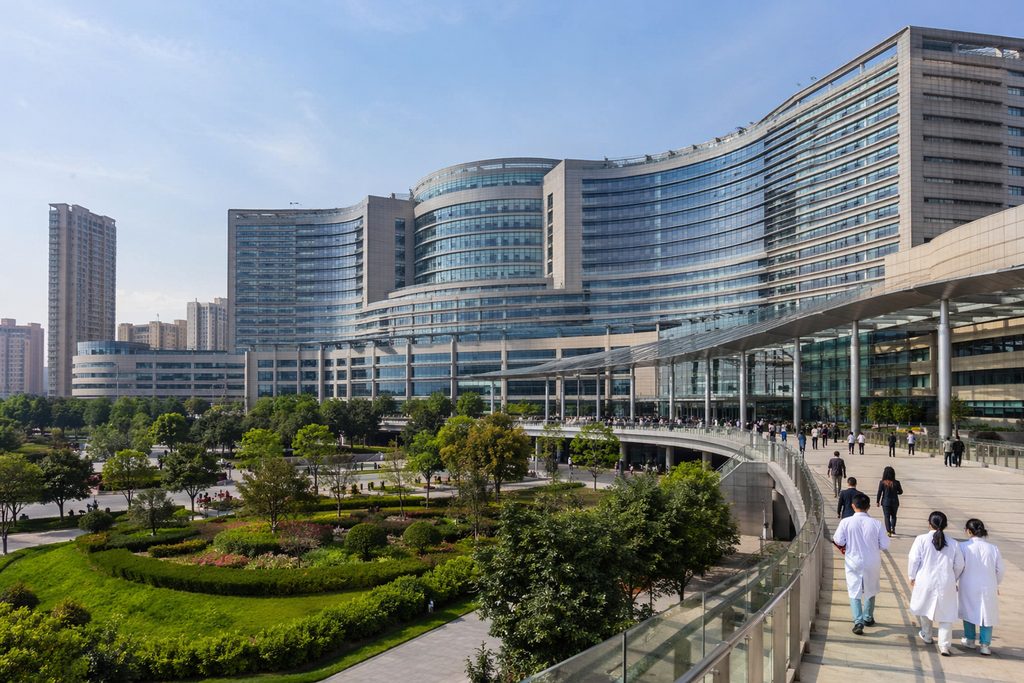
What Zhengzhou Hospital International Patient Services Actually Means
Zhengzhou hospital international patient services are the bridge between a foreign patient sitting at home with a folder of medical reports and a Chinese specialist who can actually read them, form an opinion, and — if surgery or treatment is warranted — schedule it. That is the plain-language definition. No mystery, no magic.
Zhengzhou is the capital of Henan Province, and it sits at the center of one of China’s most densely populated regions. Henan has roughly 100 million residents. The hospitals here treat enormous volumes, which is exactly why the surgical teams are experienced — and exactly why walking in off the street as a non-Chinese speaker is difficult.
Here is the reality we want you to understand before anything else. China’s top public hospitals do not accept overseas appointment bookings through their ordinary outpatient channels. You cannot email a department and reserve a Tuesday slot. Registration happens on the day, in person, in a queue, in Chinese. Surgery is only scheduled after an in-person consultation. That rule applies in Zhengzhou just as it does in Beijing or Shanghai.
The key distinction: ordinary outpatient registration cannot be pre-booked from abroad. Pre-arranged specialist appointments and surgical scheduling run through a hospital’s International Department or VIP/Preferred channel — senior doctors, English-capable staff, and pricing roughly 1.5 to 2 times the standard channel.
So when people search for zhengzhou hospital international patient services, what they are usually really asking is: how do I get in front of the right specialist without flying 7,000 miles on a guess? That is the question this article answers.
How This Actually Works, Step by Step
The sequence below is the one we run every week. It is deliberately front-loaded — most of the work happens before anyone buys a plane ticket.
Step one: you send what you already have. Existing imaging (DICOM files or the radiology discs), pathology reports, lab results, discharge summaries, medication lists. Scans matter more than prose. If your reports are in English, we handle translation into Chinese for the reviewing physician. If they are in Arabic, Russian, or Spanish, same process.
Step two: a Chinese specialty reviews the file. Not a general practitioner — the relevant department. A cardiac case goes to cardiac surgery. A thyroid nodule goes to endocrinology or head-and-neck surgery. You receive a written second opinion: what the imaging shows, what treatment options exist, what the realistic range of outcomes looks like, and whether traveling to China is even sensible for your case.
Step three: you speak with the team directly. A video consultation lets you ask the questions a written report cannot answer. How many of these procedures does your unit perform each year? What is the recovery timeline? What would you do differently if this were your family member?
Step four: a plan and a cost range. If treatment in China makes sense, you get a proposed pathway and an estimated cost band. Bands, not single numbers — final pricing depends on the hospital, the surgeon, implant or device choices, and complications.
Step five: visa, logistics, arrival. Medical travel to China uses the S2 visa, annotated for medical treatment purposes. Stays beyond 180 days fall under S1. Accompanying family members apply for S2 as well. Note carefully: the M visa is a commercial and trade visa and has nothing to do with medical care. Anyone telling you otherwise is wrong.
Step six: on-the-ground coordination. Registration, medical card creation, queue management, payment, pharmacy runs, translation during ward rounds. This is where a bilingual medical companion earns their fee — a 5,000-bed hospital with tens of thousands of daily outpatient visits is not navigable without Chinese.
What Treatments Does Zhengzhou Hospital Offer Foreigners?
The S2 visa is the applicable short-stay category for medical treatment and private affairs, subject to current embassy and consulate requirements and supporting hospital documents. Accompanying family members apply for S2 as well. Stays beyond 180 days fall under S1. The M visa is for commercial and trade activities and is not a medical visa.
If the appointment described in your order cannot be secured, the coordination fee is refunded in full. We do not promise a specific named specialist or a fixed surgical date — only that we will coordinate the appointment in good faith.
Is Zhengzhou a good choice compared with Beijing or Shanghai?
Frequently Asked Questions
Yes. The hospitals used for international patients are JCI-accredited and follow the same international safety standards as top hospitals in the US and Europe. Surgical teams perform high volumes of procedures — often more than their Western counterparts — which studies show leads to better outcomes.
Costs vary by procedure and hospital, but international patients typically save 40-80% compared to US prices — even when factoring in travel and accommodation. A consultation with our team will give you an exact, all-inclusive quote with no hidden fees.
Send us your existing medical reports to get started. We handle everything from hospital selection and appointment scheduling to visa assistance and post-operative recovery planning. Your medical records are reviewed by the specialist before you even book a flight.
For more medical information and treatment options in China, visit chinamedservices.com (China Medical Services).
