Zhongnan Hospital of Wuhan University Cardiology: A Guide for International Patients
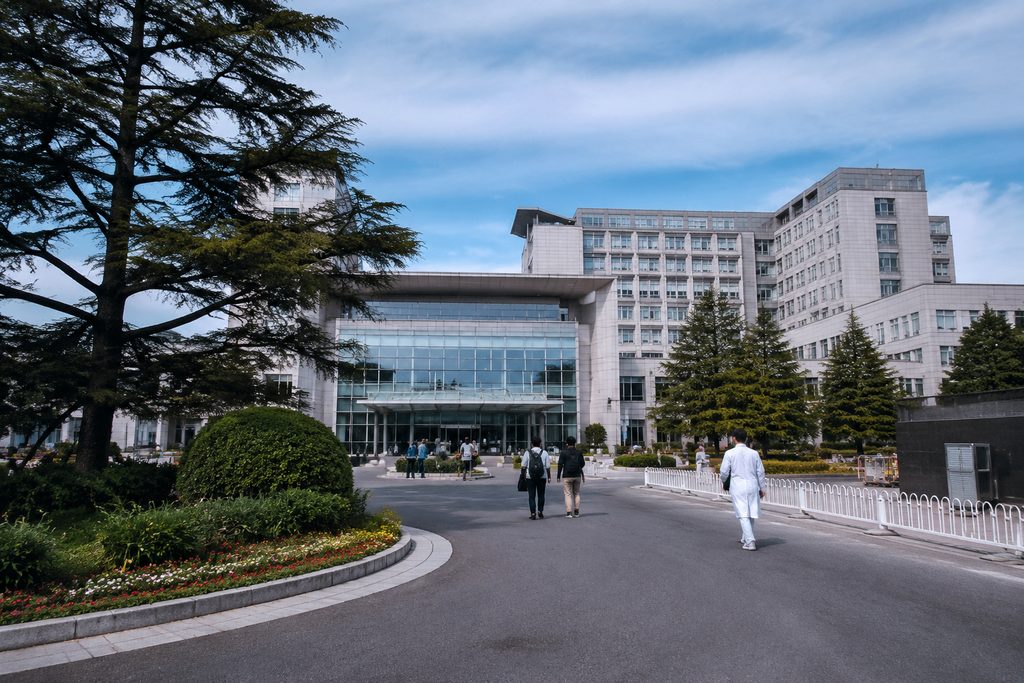
When 42-year-old Michael from Manchester first heard the diagnosis—severe aortic stenosis requiring valve replacement—he had no idea where to start looking for treatment. The NHS wait time stretched past nine months. Private care in the UK would cost upwards of £35,000. A colleague mentioned China. Michael laughed. Then he started researching. What he found surprised him: a top-tier Chinese cardiac center performing complex valve procedures at a fraction of Western prices, with outcomes tracking international benchmarks. This article is for patients like Michael—people asking whether Zhongnan Hospital of Wuhan University cardiology for international patients is a realistic, safe, and financially sound option.
Key Takeaways
- Zhongnan Hospital of Wuhan University performs over 3,000 cardiac interventions annually and ranks among the top cardiac centers in central China.
- Cardiology treatment cost in China at a top public hospital typically runs 70–90% lower than equivalent care in the United States or Western Europe.
- International patients cannot self-book public hospital outpatient appointments online; preparation through the hospital’s international coordination channel is the practical entry point.
- Language barriers and unfamiliar hospital workflows are the biggest operational hurdles—plan for interpretation support before you arrive.
The Problem: Cardiac Care Costs Are Crushing Western Patients
Cardiovascular disease remains the leading cause of death globally, claiming approximately 17.9 million lives each year according to the World Health Organization. In the United States, a single coronary artery bypass graft (CABG) surgery averages $123,000. An angioplasty with stent placement runs between $28,000 and $45,000. Even insured patients face deductibles and coinsurance that can reach five figures.
In the United Kingdom, the situation is different but no less painful. The NHS reports that over 390,000 patients were waiting for cardiac surgery or intervention as of mid-2024, with some waiting more than a year for valve procedures. Canada tells a similar story: the Canadian Institute for Health Information documents median wait times of 13 weeks for bypass surgery, with 10% of patients waiting over 26 weeks. For a patient with unstable angina or severe stenosis, that is not an inconvenience. That is a clinical risk.
Private care within Western systems solves the wait time problem but creates a financial one. Self-pay cardiac surgery in London, New York, or Sydney routinely exceeds $50,000 for even standard procedures. Complex valve replacements can top $150,000. The math does not work for most people.
Why China Delivers Comparable Cardiac Outcomes at a Fraction of the Price
The cardiology treatment cost China offers is not lower because the care is inferior. It is lower because of structural economics: lower physician salaries relative to the US, high patient volumes that spread fixed costs across more procedures, and hospital systems built for throughput. The clinical question—is heart surgery safe in China—deserves a direct answer. At Fuwai Hospital in Beijing, the world’s highest-volume cardiac center, over 14,000 cardiac surgeries are performed annually with outcomes published in peer-reviewed journals that track international registries. Zhongnan Hospital of Wuhan University operates in the same public hospital ecosystem, subject to the same national quality reporting standards.
Clinical Volume Drives Procedural Competence
Surgeons who perform a procedure hundreds of times per year simply encounter fewer surprises. The average US cardiac surgeon performs roughly 100–150 open-heart procedures annually. At major Chinese cardiac centers, individual senior surgeons routinely complete 300–500 cases per year. That repetition matters. Studies published in Circulation and The Annals of Thoracic Surgery have repeatedly linked higher institutional and surgeon volume to lower mortality rates for CABG, valve replacement, and complex aortic procedures.
Zhongnan Hospital’s cardiovascular department handles more than 3,000 interventional procedures and over 1,000 open-heart surgeries each year. These are not small numbers. The hospital is a designated national clinical research center for cardiovascular disease, which means its data feeds into national registries used to set treatment standards across the country.
Technology Without the Wait
Chinese public hospitals adopted minimally invasive cardiac techniques quickly. Transcatheter aortic valve replacement (TAVR), once a niche procedure available only at a handful of Western centers, is now performed routinely at major Chinese hospitals. Zhongnan Hospital has offered TAVR since 2017 and performs the procedure on patients in their 70s and 80s who would be considered high-risk for open surgery. The hospital also runs a 24/7 chest pain center with a door-to-balloon time—the interval from emergency arrival to artery opening—that averages under 90 minutes, meeting international guidelines for acute myocardial infarction care.
Cost Advantage Without Quality Compromise
How much does angioplasty cost abroad? In the United States, $28,000–$45,000. In the UK privately, £12,000–£18,000. At a top Chinese public hospital, an angioplasty with one drug-eluting stent typically costs $8,000–$15,000 including hospital stay, physician fees, and the device itself. A CABG that costs $123,000 in the US runs $15,000–$25,000 in China. Valve replacement surgery: $120,000–$180,000 in the US versus $20,000–$35,000 at a leading Chinese center.
These are not secret prices. They are published in hospital price lists and confirmed by international patient coordinators. The lower cost reflects lower labor costs, not lower standards. Chinese cardiac surgeons train in the same international fellowship programs as their Western counterparts. The hospitals use the same device manufacturers—Medtronic, Abbott, Boston Scientific, Edwards Lifesciences. The operating rooms meet international sterilization and safety standards.
Zhongnan Hospital of Wuhan University International Patient Price: What to Expect
Zhongnan Hospital of Wuhan University does not publish a standalone international price list. But the hospital’s international medical services department provides written quotes once a patient submits medical records for review. Based on current public hospital pricing in Wuhan and typical international patient coordination fees, here is a realistic picture of what to budget.
| Procedure | Zhongnan Hospital (Wuhan) Estimated Range | US Average | UK Private Average |
|---|---|---|---|
| Coronary Angiography | $1,500–$3,000 | $8,000–$15,000 | £3,500–£6,000 |
| Angioplasty + 1 Stent | $8,000–$15,000 | $28,000–$45,000 | £12,000–£18,000 |
| Coronary Bypass (CABG) | $15,000–$25,000 | $85,000–$123,000 | £25,000–£35,000 |
| Aortic Valve Replacement | $20,000–$35,000 | $120,000–$180,000 | £30,000–£45,000 |
| TAVR (Minimally Invasive Valve) | $35,000–$50,000 | $150,000–$200,000 | £45,000–£60,000 |
These figures vary by hospital and case complexity. Device choice matters—a premium valve costs more than a standard one. Length of ICU stay, pre-existing conditions, and whether complications arise all shift the final bill. But even the upper end of the Chinese range sits far below the lower end of the Western range.
Is Zhongnan Hospital the Best Heart Hospital Wuhan for Foreigners?
Wuhan has three major cardiac centers: Zhongnan Hospital of Wuhan University, Union Hospital (Tongji Medical College), and Tongji Hospital. All three are large public teaching hospitals with strong cardiology departments. Zhongnan distinguishes itself in several ways that matter to international patients.
The hospital’s cardiovascular surgery department was among the first in central China to perform heart transplantation and complex aortic dissection repair. Its cardiology department runs one of the largest chest pain centers in Hubei province. The hospital is also a designated national center for hypertension management and heart failure treatment.
For foreign patients specifically, Zhongnan Hospital operates an international medical services office that handles appointment scheduling, medical record translation, and inpatient coordination. The hospital is located near Wuhan University’s main campus, in a district with multiple international hotels and easy access to Wuhan Tianhe International Airport via metro line 2. That logistical convenience matters when you are recovering from heart surgery in an unfamiliar city.
But the honest answer to “best heart hospital Wuhan for foreigners” is that it depends on your specific condition. A patient needing complex valve surgery might prefer a surgeon at Union Hospital. A patient needing arrhythmia ablation might find the electrophysiology team at Tongji more experienced. Zhongnan is a strong, defensible choice for most cardiac procedures—and it is one of the more accessible options for international patients because of its dedicated international coordination channel.
How to Book Cardiology Appointment Zhongnan Hospital International: The Real Process
Here is the part most overseas patients get wrong. Chinese public hospitals do not operate like Western private clinics. You cannot simply email the cardiology department and ask for an appointment next Tuesday. The system works differently.
Public hospital outpatient clinics in China are walk-in based. Patients register on the day of their visit, often through the hospital’s WeChat mini-program or at on-site kiosks, then queue to see a doctor. For foreign patients without Chinese language skills or a Chinese phone number, this process is nearly impossible to navigate alone.
The practical route for international patients is through the hospital’s international medical services department or a third-party coordination service. The process looks like this:
First, you submit your existing medical records—ECG reports, echocardiograms, angiograms, blood work, current medication list. These get translated into Chinese and reviewed by the relevant cardiology department. A preliminary opinion follows, usually within 5–10 working days. If the department agrees your case is appropriate for treatment at Zhongnan, the international office then coordinates a specific appointment with a named specialist.
This is not a guarantee of immediate admission. It is a triage step. The hospital wants to confirm it can actually help you before you fly to Wuhan. That protects you too—you avoid spending thousands on flights and hotels only to discover the hospital cannot offer a better option than what you already have at home.
For patients who want to move faster, a video consultation with a Zhongnan cardiologist is available. This costs between $100 and $300 for a standard international department consultation, or $500–$800 for a top-specialist video consultation. Any consultation fee is credited in full toward the on-the-ground coordination service if you proceed to treatment in China within 90 days.
Practical Considerations: Visas, Payment, and What Happens After You Fly Home
Foreign patients traveling to China for medical treatment apply for an S2 visa, which covers short-term private affairs including medical treatment. Family members accompanying you also apply for S2 visas. The hospital’s international office provides an invitation letter and treatment confirmation document that you submit with your visa application. Processing typically takes 1–3 weeks depending on your home country’s Chinese embassy or consulate.
Payment at Chinese public hospitals is prepaid. You deposit funds at admission, and the hospital deducts charges as they accrue. Bring a credit card that works internationally—Visa and Mastercard are accepted at major hospital payment counters, though daily transaction limits may apply. Some international patients choose to wire funds in advance. Cash is accepted but impractical for large amounts.
Insurance is the other piece. Chinese public hospitals do not bill Western insurers directly. You pay first, then submit itemized receipts to your insurer for reimbursement. If your policy includes international treatment coverage, request pre-authorization before you travel. Some insurers require a written second opinion from the treating hospital before approving out-of-country care.
Follow-up after returning home is your responsibility. Zhongnan Hospital provides discharge summaries and imaging files in English upon request. Your home cardiologist manages ongoing medication, monitoring, and rehabilitation. For the first 30 days after major cardiac surgery, you should have a local cardiologist identified before you leave Wuhan. Complications after heart surgery are rare but real, and you do not want to be scrambling for a local provider while recovering.
Frequently Asked Questions
At top-ranked public hospitals like Zhongnan, yes. These hospitals perform thousands of cardiac procedures annually, follow national quality standards, and publish outcomes in peer-reviewed journals. The key is choosing the right hospital—not all Chinese hospitals are equal. The top 5% of China’s 35,000+ hospitals, ranked by the Fudan University hospital rankings and JCI accreditation, deliver care comparable to good Western centers.
In the United States, angioplasty with one stent averages $28,000–$45,000. In the UK privately, £12,000–£18,000. At Zhongnan Hospital and similar top Chinese public hospitals, the same procedure costs $8,000–$15,000 including hospital stay and physician fees. The device itself—the stent—is the same brand you would receive in a Western hospital.
Chinese public hospitals have ICU capacity, emergency surgical backup, and complication management protocols. Zhongnan Hospital’s cardiac surgery department has an in-house ICU staffed 24/7. If a complication occurs, you are treated at the same hospital—there is no transfer to another facility. The realistic risk is not clinical negligence; it is communication gaps. That is why having bilingual support during your stay matters more than most patients expect.
Yes, through the hospital’s international medical services channel. You submit your records, the cardiology department reviews them, and a specific appointment is arranged. This is not the same as booking online yourself—public hospital outpatient registration is walk-in based and designed for local patients. The international coordination route is the practical way to secure a confirmed appointment before you board a plane.
No, but you will need interpretation support. The hospital’s international office provides some English-language coordination, but ward nurses, technicians, and administrative staff generally speak Chinese. A bilingual medical companion—someone who handles registration, queues, payment, and translation during consultations—costs from $300 per day and removes most of the friction international patients experience.
Your Next Step
If you are weighing cardiac treatment options and want to understand whether Zhongnan Hospital of Wuhan University is the right fit for your specific condition, the most useful thing you can do is submit your records for a preliminary review. China Medical Services maintains a database of 340+ top-ranked hospitals across 37 Chinese cities and helps international patients navigate the process from first inquiry to post-operative follow-up. We are not a hospital and do not provide diagnoses—we connect you with the right specialists and handle the logistics that make medical travel overwhelming. Start with a free consultation to discuss your case and see whether treatment in China makes sense for you.
Cardiac care in China is not a compromise. It is a calculated decision based on volume, technology, and cost. The patients who benefit most are those who do their homework, ask hard questions, and plan the logistics before they travel. That is exactly what this guide is for.
For more medical information and treatment options in China, visit chinamedservices.com (China Medical Services).
