Jiangxi Cancer Hospital: How We Help You Navigate Care in China
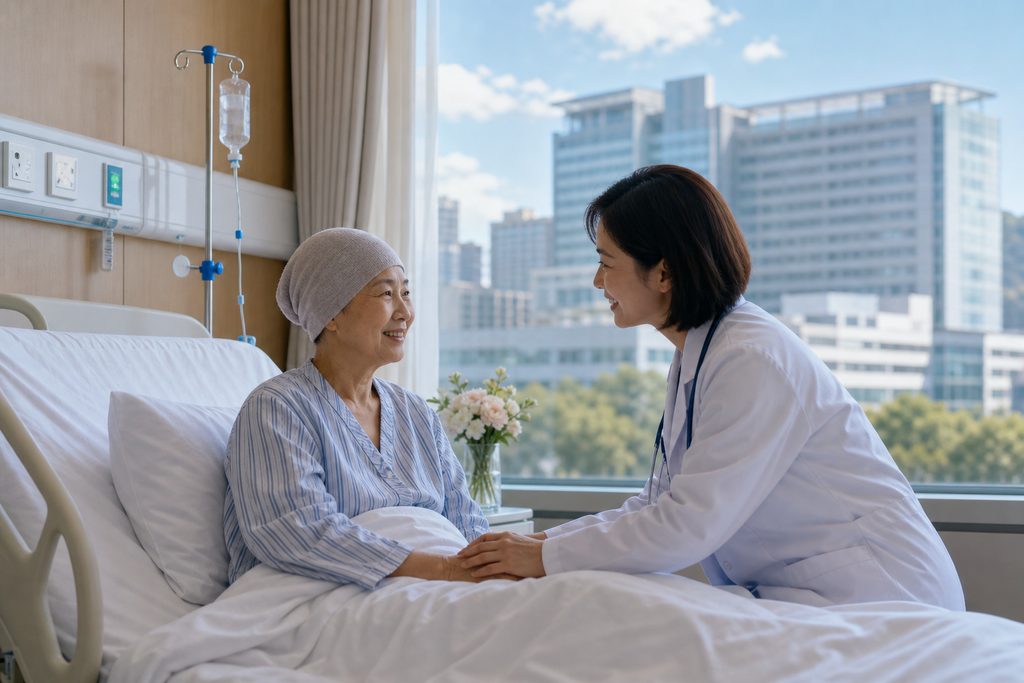
Jiangxi Cancer Hospital: How We Help You Navigate Care in China
What if the biggest barrier to cancer care isn’t the medicine — it’s figuring out where to go, what it costs, and who will speak your language when you get there? For international patients weighing cancer treatment cost China against options at home, that question is often the one that keeps them up at night.
Jiangxi Cancer Hospital is a specialized oncology center in Nanchang, the capital of Jiangxi Province. It is a real, functioning institution serving a province of roughly 45 million people. But here’s the honest part most websites won’t tell you: it is not among the elite handful of Chinese cancer centers that international patients typically fly across the world for. Understanding where it fits — and where it doesn’t — is exactly the kind of clarity you deserve before you book a flight.
Cancer Treatment Cost China: The Short Answer
Cancer treatment in China generally runs 50% to 80% below comparable care in the United States, and often well below Western Europe. A course of chemotherapy that might cost $80,000 to $200,000 in America can frequently be delivered for a fraction of that at a major Chinese public hospital. Surgery, radiation, and targeted therapy follow similar patterns.
But cost is only half the story. The variation between hospitals is enormous. A provincial cancer center and a top-ranked national oncology hub can differ by several multiples in price — and in subspecialty depth. Which one is right for you depends entirely on your diagnosis, your stage, and what you’re hoping to achieve.
The key takeaway: China offers genuine cost advantages in oncology, but the hospital you choose matters more than the country you choose. Matching your specific cancer type to the right facility is the single most important decision you’ll make.
Who This Is Right For — and Who It Isn’t
We work with patients every week who are trying to decide whether traveling to China makes sense. Some clearly benefit. Others would be better served staying closer to home, and we tell them so.
Patients who often find a good fit:
- Those facing long wait times in their home country for surgery, radiation, or a specific diagnostic procedure
- Patients seeking a second opinion on a treatment plan already proposed elsewhere
- People whose insurance or personal finances make Western pricing genuinely unworkable
- Families already in Asia — from Southeast Asia, the Middle East, or the Russian-speaking regions — for whom China is a reasonable flight
- Those interested in combining conventional treatment with Traditional Chinese Medicine supportive care, which is available at dedicated TCM hospitals
Patients who should think carefully before pursuing this:
- Anyone with a rare pediatric cancer or a highly specialized subtype where global centers of excellence are concentrated elsewhere
- Patients in acute crisis who cannot tolerate a long flight or a multi-day intake process
- Those who require a guaranteed appointment date with a named specialist — Chinese public hospitals generally do not work that way
- People whose cancer is already well-managed at home, where disrupting continuity of care carries real risk
We would rather lose a potential client than send someone on a journey that doesn’t serve them. That’s not marketing — it’s the only way this work stays honest.
The Options, Compared
Here’s how the landscape actually breaks down. Prices are approximate ranges in USD and vary significantly by hospital, city, and case complexity.
| Option | Typical Cost Range | Wait Time | English Support | Best For |
|---|---|---|---|---|
| Provincial cancer center (e.g., Jiangxi Cancer Hospital) | $3,000–$25,000 per treatment phase | Days to weeks | Limited; interpreter often needed | Cost-sensitive patients with common cancers |
| Top-ranked national oncology hub (Beijing, Shanghai, Guangzhou) | $8,000–$60,000+ per phase | Weeks; longer for famous specialists | International department available | Complex cases, rare subtypes, second opinions |
| Private international hospital in China | $15,000–$100,000+ | Days | Full English service, insurance billing | Patients prioritizing comfort and speed |
| United States (for comparison) | $80,000–$300,000+ | Varies widely | Native | Those with comprehensive insurance |
Which column suits you? If your cancer is a common type — lung, breast, colorectal, gastric — and cost is your primary constraint, a provincial center like Jiangxi can deliver solid, guideline-based care. If your case is complex, unusual, or you want the deepest subspecialty expertise China offers, you’ll want to look at the national hubs. Our oncology department rankings break down which hospitals lead in each cancer type.
Where Jiangxi Cancer Hospital Fits — and Where It Doesn’t
Let’s be specific, because vague praise helps no one.
Jiangxi Cancer Hospital is a tertiary specialized hospital. It handles the full range of common malignancies: lung, breast, gastric, liver, colorectal, cervical, and hematologic cancers. It offers surgery, chemotherapy, radiotherapy, and increasingly, targeted and immunotherapy protocols aligned with national treatment guidelines. For a patient with, say, stage II breast cancer who needs surgery plus adjuvant chemotherapy, it can provide competent care at a price that is genuinely hard to beat.
What it is not: a destination for proton therapy, CAR-T clinical trials, or the kind of ultra-specialized multidisciplinary work you’d find at a top-five national center. It does not have a large, English-speaking international patient department in the way that, for example, some Beijing and Shanghai hospitals do. That’s not a criticism — it’s a description. Most Chinese hospitals, including excellent ones, were built to serve domestic patients first.
So when patients ask us about Jiangxi Cancer Hospital international patient reviews, the honest answer is that public review data from foreign patients is thin. This isn’t a red flag; it simply reflects that few international patients have historically routed through Nanchang. If you’re considering it, you’d be somewhat of a pioneer — which has real advantages (less crowding, lower prices) and real trade-offs (less established infrastructure for foreign visitors).
How to Get Cancer Treatment in China as a Foreigner
This is the part where most people get stuck, so let’s walk through it plainly.
First, understand a structural reality: Chinese public hospitals do not allow you to book a specialist appointment from overseas in advance. Outpatient registration happens on the day, in person, through a queue. Surgery cannot be scheduled until a doctor has examined you face to face. This is true at Jiangxi Cancer Hospital and at essentially every public hospital in the country.
The workaround — and it’s a legitimate one — is the hospital’s international or VIP channel, where a senior specialist sees you and English-language support is available. Expect to pay roughly 1.5 to 2 times the standard fee for that access. That premium buys you scheduling predictability and communication, not better medicine.
Here’s how the process typically unfolds:
- Records first. You send your pathology reports, imaging, and treatment history. A Chinese oncology team reviews them and gives you a written assessment of whether coming makes sense.
- Remote consultation. If the records suggest a path forward, you speak with the medical team by video to discuss options and goals.
- Visa. Medical travel to China uses the S2 visa, with a notation for medical treatment. Family members accompanying you apply for S2 as well. Stays beyond 180 days require the S1 category. Requirements shift, so confirm current rules with your nearest Chinese embassy or consulate.
- Arrival and in-person consultation. You register at the hospital, meet the specialist, and confirm the plan.
- Treatment. Admission and scheduling follow hospital rules — no service can guarantee a specific date or outcome.
If you want to understand whether your case is a fit for a provincial center or a national hub, our guide to China’s top-ranked hospitals by city is a useful starting point.
Is Cancer Treatment in China Safe for Foreigners?
This is the question underneath all the others, and it deserves a straight answer.
China’s major public hospitals perform enormous volumes of cancer surgery and chemotherapy — far more than most Western centers. High volume correlates with experienced hands. The clinical standards at tertiary hospitals follow national guidelines that are broadly aligned with international protocols. Infection control, anesthesia safety, and surgical outcomes at top-tier facilities are comparable to good hospitals anywhere.
The genuine risks for foreign patients are less about medicine and more about systems. Language barriers can lead to misunderstandings about your history. The registration and payment processes are unfamiliar. Public hospitals require prepayment, with insurance reimbursement handled afterward — unlike private international hospitals, which often bill insurers directly. And follow-up after you return home requires you to carry complete records with you.
None of these are reasons to avoid China. They are reasons to arrive prepared, and to have someone in your corner who knows how the system works.
Practical tip: Request certified English translations of all pathology and imaging reports before you travel. Chinese oncologists will want to see the original slides or imaging where possible, and clear translations prevent delays.
Practical Considerations Before You Commit
Documentation matters more than most patients expect. Bring pathology slides, not just reports. Bring imaging on disc. Bring a chronological summary of every treatment you’ve received, with dates and drug names.
On payment: public hospitals want funds upfront. International credit cards may or may not be accepted depending on the facility, so plan for a wire transfer or a local payment arrangement. Private international hospitals are more flexible and often bill insurance directly.
On language: at a provincial center like Jiangxi Cancer Hospital, assume you will need an interpreter for everything — registration, consultations, pharmacy, discharge instructions. This is not optional. A misread instruction on a chemotherapy schedule is not a small thing.
On follow-up: before you leave, get your full treatment record, imaging, and a written summary in English. Your oncologist at home will need all of it.
Frequently Asked Questions
No — not directly. Chinese public hospitals require an in-person outpatient consultation before surgery or admission can be scheduled. What you can do in advance is have your records reviewed remotely and, if appropriate, arrange a video consultation with the medical team. That clarifies whether traveling makes sense before you commit to flights.
It varies enormously by cancer type, stage, hospital tier, and treatment modality. Common surgical procedures at provincial centers may fall in the $3,000–$25,000 range per phase. Complex care at top national hubs can exceed $60,000. Private international hospitals cost more. Always request a written estimate after your records have been reviewed — verbal ranges are unreliable.
No responsible service can promise an outcome. Cancer treatment carries risk everywhere. What you can control is preparation: choosing a hospital with adequate volume and subspecialty depth for your cancer type, ensuring clear communication through an interpreter, and having a documented plan for follow-up at home. We help with coordination and communication — not with clinical decisions, which belong to you and your doctors.
Medical travel uses the S2 visa with a notation for treatment; stays over 180 days use S1. Accompanying family members apply for S2 as well. Requirements change, so verify current details with the Chinese embassy or consulate in your country and prepare supporting documents from the hospital.
Your Next Step
The core message is simple: China can be a genuinely good option for cancer care, but only when the hospital matches your specific diagnosis and your specific circumstances. Jiangxi Cancer Hospital serves a real need for cost-conscious patients with common cancers. For complex cases, other centers may serve you better — and we’ll say so.
We are China Medical Services, a coordination service, not a hospital. We don’t diagnose, and we don’t treat. What we do is help you understand your options, connect you with the right facility, and handle the logistics that make a foreign hospital navigable — from record translation to appointment coordination to bilingual accompaniment. Learn more about how we support international patients in China, or start with a free consultation through our patient services page. No pressure, no obligation — just a conversation about whether this path is right for you.
For more medical information and treatment options in China, visit chinamedservices.com (China Medical Services).
