Zhongshan Hospital Xiamen Neurosurgery: Costs, Safety, and Booking for International Patients
Key Takeaways
- Neurosurgery at Zhongshan Hospital Xiamen typically costs 70–85% less than comparable procedures in the United States, with brain tumor resections often ranging from $18,000–$35,000 versus $120,000+ in America.
- The hospital’s neurosurgery department is a Fujian Province clinical key specialty, handling complex cranial and spinal cases with modern microsurgical and neuro-navigation equipment.
- Public hospital registration cannot be completed entirely from overseas — you need a bilingual coordinator or in-person proxy to navigate the system before you arrive.
- Safety questions deserve straight answers: China’s top-tier neurosurgery centers report infection and complication rates broadly comparable to Western academic hospitals, but language barriers and post-discharge follow-up logistics require advance planning.
The Problem: Brain Surgery Costs Are Crushing Western Patients
Neurosurgery is a craft specialty. The surgeon who performs 150 glioma resections per year has encountered anatomical variations, intraoperative surprises, and complications that a surgeon performing 30 per year will rarely see. Chinese tertiary hospitals operate at volumes that dwarf most Western centers. A single neurosurgery ward at a hospital like Zhongshan Xiamen may manage 80–120 inpatients at any given time, with multiple operating rooms running daily. That throughput translates into operative experience that is hard to replicate in lower-volume systems.
Research supports the volume-outcome relationship in neurosurgery. A 2019 analysis in The Lancet Neurology found that hospitals performing more than 50 glioma surgeries annually had significantly lower 30-day mortality rates than lower-volume centers. Chinese top-tier neurosurgery departments comfortably exceed that threshold many times over.
Modern Equipment, Not “Good Enough” Equipment
Zhongshan Hospital Xiamen’s neurosurgery department operates with intraoperative MRI-compatible navigation, high-resolution surgical microscopes, neuro-endoscopy systems, and intraoperative neurophysiological monitoring. These are the same equipment categories found at major US academic medical centers. The difference is capital cost recovery: a Chinese public hospital amortizes a $3 million intraoperative imaging suite across thousands of procedures per year, not hundreds. That is one reason the neurosurgery cost Zhongshan Hospital Xiamen stays low without compromising on technology.
Cost Advantage Without Quality Compromise
Skepticism about low-cost surgery is reasonable. But the math here is structural, not magical. Chinese neurosurgeons earn a fraction of US salaries — a senior attending neurosurgeon in Xiamen might earn $60,000–$90,000 annually versus $600,000–$900,000 in the US. Hospital construction costs, nursing labor, and administrative overhead are all lower. Malpractice insurance premiums are a small fraction of American rates. None of these factors affect the quality of a dural closure or the precision of a tumor resection.
Infection rates at Chinese Grade-A tertiary hospitals have improved dramatically over the past decade. The Chinese Ministry of Health’s national nosocomial infection surveillance system reports surgical site infection rates for clean neurosurgical procedures of approximately 1.5–3%, broadly in line with US CDC benchmarks of 1–3% for craniotomy. These are averages across the entire hospital tier — top centers like Zhongshan Xiamen typically sit at the lower end.
Is Neurosurgery Safe in China: What the Data Actually Shows
The honest answer is: at top-tier academic centers, yes — with caveats. The question “is neurosurgery safe in China” deserves more than a reflexive yes or no.
China’s healthcare system is bifurcated. The top 5% of hospitals — roughly 1,800 institutions, including the 340+ in our database — operate at international standards. These are Fudan-ranked, JCI-accredited, or government-designated national clinical key specialty centers. The remaining 95% range from adequate to concerning. The gap matters enormously for neurosurgery, where margins for error are measured in millimeters.
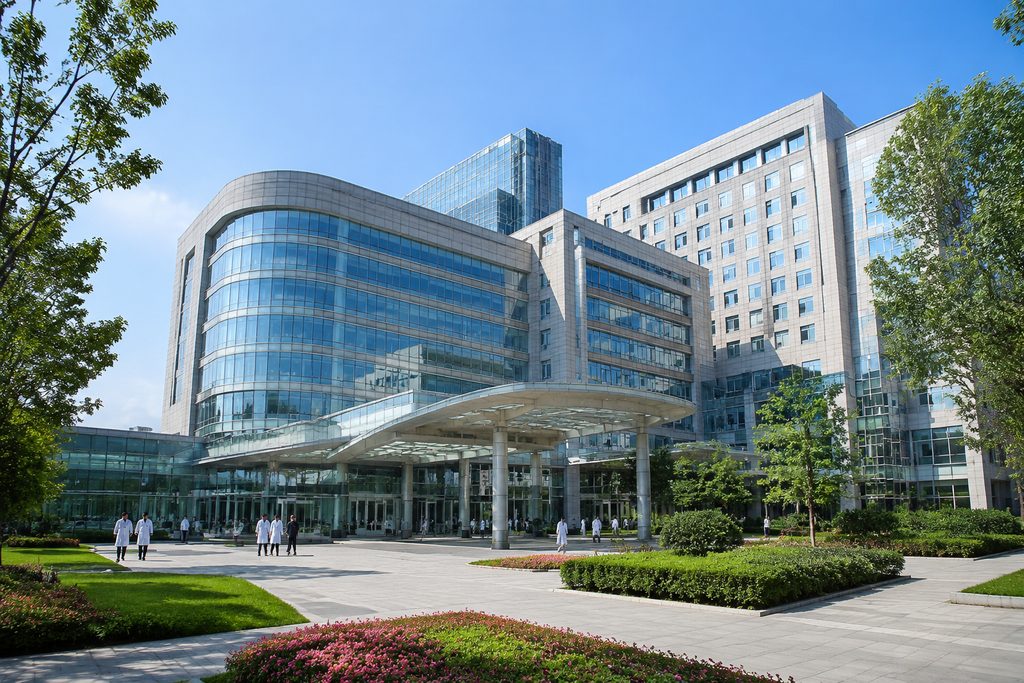
Zhongshan Hospital Xiamen University sits firmly in the top tier. It is a Fudan-ranked hospital, a distinction held by only the top 100 general hospitals in China. Its neurosurgery department performs the full spectrum of cranial and spinal procedures: glioma and meningioma resection, pituitary tumor surgery via transsphenoidal approach, cerebral aneurysm clipping and coiling, microvascular decompression for trigeminal neuralgia, and complex spinal fusion.
What about the risks that worry international patients most? Blood safety is a common concern. China implemented mandatory nucleic acid testing for all blood donations in 2015, and the residual risk of HIV or hepatitis C transmission through transfusion is now estimated at less than 1 in 1 million — comparable to Western blood banks. Antibiotic stewardship has improved since 2011, when China launched a national campaign against antimicrobial overuse in hospitals. The remaining gaps are operational, not clinical: communication, coordination, and continuity of care after discharge.
How to Book Brain Tumor Surgery in Xiamen: The Real Pathway
Here is what nobody tells you clearly: how to book brain tumor surgery in Xiamen is not a simple online appointment. Chinese public hospitals do not allow overseas patients to directly reserve a surgical slot by email or website form. The system works like this:
You need a confirmed diagnosis with imaging (MRI/CT) and pathology if available. You send these records to the hospital’s international patient department or a coordinating service that works with them. A Chinese neurosurgeon reviews the case and issues a preliminary treatment opinion — this is the written second opinion stage, typically costing $300–$500. If the surgeon agrees the case is operable, the hospital schedules an in-person consultation.
You travel to Xiamen on an S2 visa, which is the correct category for short-term medical treatment in China. Your coordinator arranges the outpatient registration, imaging review, and face-to-face consultation with the neurosurgery team. Only after that in-person evaluation does the hospital schedule surgery. This is a universal rule at Chinese public hospitals: no surgery without a prior outpatient consultation. The timeline from record submission to actual surgery date typically runs 2–6 weeks, depending on case urgency and the department’s operating schedule.
Important: The M visa is for commercial and trade activities only. Do not apply for an M visa for medical treatment. International patients seeking neurosurgery in China should apply for an S2 visa, citing medical treatment purposes and supported by hospital invitation documents. Visa approval is never guaranteed and depends on the latest consulate requirements.
Gamma Knife Price China: Radiosurgery as an Alternative
Not every brain lesion requires open surgery. For small tumors, arteriovenous malformations, and certain functional disorders, stereotactic radiosurgery — commonly known by the brand name Gamma Knife — offers a non-invasive alternative. The gamma knife price China for a single-session treatment typically ranges from $4,000 to $8,000 at top-tier centers. Compare that to $30,000–$60,000 in the United States.
Zhongshan Hospital Xiamen offers stereotactic radiosurgery capabilities within its neurosurgery and radiation oncology departments. The decision between open resection and radiosurgery depends on tumor size, location, histology, and patient age — a determination that requires review of your complete imaging by a qualified neurosurgeon. This is exactly the kind of decision a written second opinion can clarify before you commit to international travel.
Zhongshan Hospital Xiamen International Patient Department: What to Expect
The Zhongshan Hospital Xiamen international patient department exists to serve foreign patients, but it operates differently from Western international hospitals. Expect English-speaking staff in the international department, priority scheduling for consultations, and assistance with registration and billing. Expect the clinical wards to be shared with Chinese patients — private rooms are available but limited.
The international department charges a premium over standard public pricing, typically 1.5–2 times the standard rate. For neurosurgery, that means the neurosurgery cost Zhongshan Hospital Xiamen through the international pathway might run $25,000–$45,000 for a complex resection. Still dramatically cheaper than Western prices, but worth knowing upfront.
Payment is pre-paid. Chinese public hospitals require deposits before admission, and international patients typically pay the full estimated surgical fee before the procedure. Insurance reimbursement is retrospective — you pay first, then claim from your insurer. Some international insurance providers have direct billing arrangements with Chinese hospitals, but this is more common at private international facilities like United Family or Jiahui than at public hospital international departments.
Practical Considerations: Records, Visas, and Follow-Up After Brain Surgery
Your medical records are the foundation of everything. Chinese neurosurgeons will not schedule surgery without complete imaging. Bring DICOM-format MRI and CT files on a CD or USB drive, plus written radiology reports translated into Chinese or English. If you have had a biopsy, bring the pathology slides and report. Translation matters — a professional medical translator should handle your records, not a generalist.
The S2 visa application requires an invitation letter from the hospital or a coordinating entity with established hospital relationships. Processing times vary by consulate, but budget 2–4 weeks. Your accompanying family members also apply for S2 visas. Plan for a minimum stay of 3–4 weeks for brain surgery: 1 week pre-operative evaluation, 1 week hospitalization, and 1–2 weeks of local recovery before flying home.
Follow-up after returning home is the most overlooked challenge. Chinese hospitals provide discharge summaries and imaging, but your home neurologist or neurosurgeon will need to manage long-term care. Some international patients arrange telemedicine follow-ups with their Chinese surgical team — a video consultation costs $100–$300 and keeps the operative team connected to your recovery. You should also confirm that your home country’s physicians will accept post-operative imaging from a Chinese hospital; most will, but it is worth asking before you travel.
Practical tip: Before committing to travel, request a written second opinion from the neurosurgery team. For $300–$500, you get a formal assessment of whether your case is operable, what procedure is recommended, and whether the hospital’s capabilities match your needs. This is the lowest-cost way to validate the entire plan before buying flights.
Frequently Asked Questions
How much does brain tumor surgery cost at Zhongshan Hospital Xiamen?
The neurosurgery cost Zhongshan Hospital Xiamen for a standard brain tumor resection ranges from $18,000 to $35,000 through the standard pathway, and $25,000 to $45,000 through the international VIP pathway. Final pricing depends on tumor location, surgical complexity, ICU days, and whether intraoperative MRI is required. This compares to $100,000–$180,000 for the same procedure in the United States.
Is it safe to have brain surgery in China as a foreigner?
At top-tier academic hospitals like Zhongshan Hospital Xiamen University, surgical safety metrics are broadly comparable to Western academic centers. The key is choosing the right hospital — the top 5% of Chinese hospitals, not the average. Surgical site infection rates for clean craniotomies at Grade-A tertiary hospitals run approximately 1.5–3%, similar to US CDC benchmarks. The greater risks are logistical: language barriers, coordination failures, and post-discharge follow-up gaps.
What if something goes wrong during or after surgery?
Chinese medical malpractice law allows foreign patients to pursue compensation through Chinese courts, though the process is slower and awards are smaller than in Western jurisdictions. More practically, top hospitals have internal patient safety committees and will typically address complications through revised treatment plans at reduced or waived additional cost. You should carry comprehensive medical travel insurance that covers complications, extended hospitalization, and medical evacuation if needed.
Can I book surgery directly with the hospital from overseas?
No. Chinese public hospitals do not accept direct surgical bookings from overseas patients. You need either a local coordinator or a medical concierge service to submit your records, obtain the preliminary surgical opinion, and arrange the in-person consultation. The in-person consultation is mandatory before any surgery is scheduled. This is not a bureaucratic obstacle — it is the hospital’s way of ensuring the surgeon has fully evaluated your case before committing to an operation.
Which visa do I need for neurosurgery in Xiamen?
You need an S2 visa, which covers short-term private affairs including medical treatment. Your accompanying family members also apply for S2 visas. The M visa is for commercial and trade activities and is not appropriate for medical travel. Hospital invitation documents strengthen your application, but visa approval is at the consulate’s discretion.
Your Next Step
Choosing where to have brain surgery is one of the most consequential decisions a patient can make. The cost gap between Western and Chinese top-tier neurosurgery is real, but it only matters if the clinical fit is right for your specific case. Our team at China Medical Services helps international patients evaluate Chinese hospital options, obtain written second opinions from neurosurgery teams, and coordinate the S2 visa and on-the-ground logistics. We are not a hospital and we do not provide diagnoses or medical advice. If you are weighing your options, start with a conversation — our consultation is free, and you can learn more about how we support international patients on our patient services page.
For more medical information and treatment options in China, visit chinamedservices.com (China Medical Services).
