Zhongshan Hospital Xiamen Oncology: A Guide for International Patients
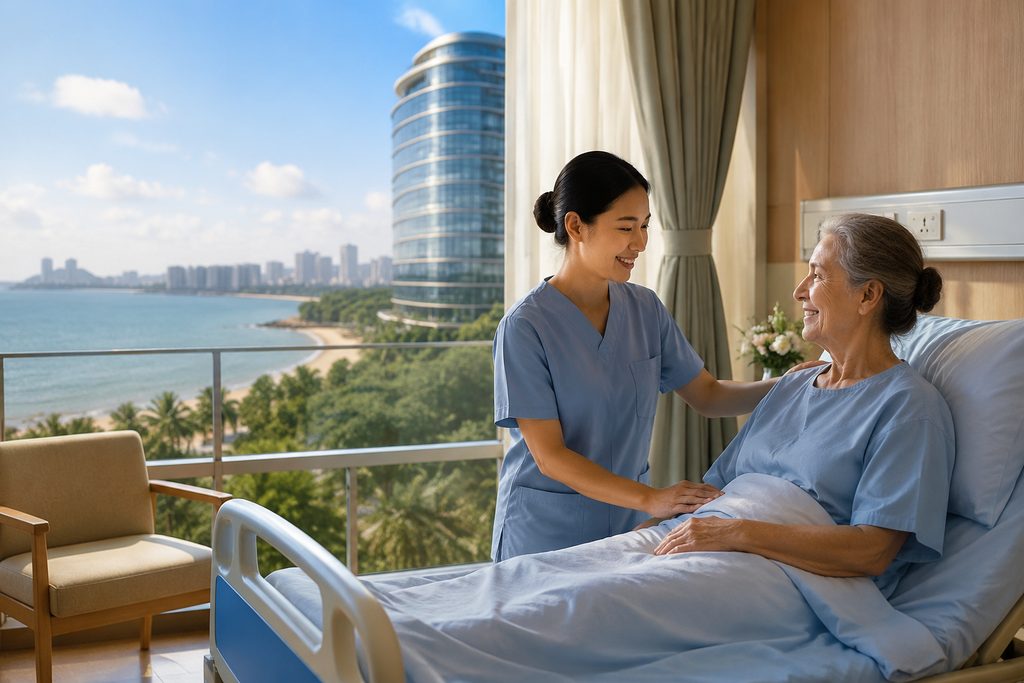
When 42-year-old Michael from Manchester first heard the word “colorectal carcinoma,” his world shrank to a single question: where do I go now? His NHS oncologist outlined a treatment plan, but the surgical wait time stretched past nine weeks. A colleague who had done business in Fujian province mentioned a hospital in Xiamen. Michael had never considered China for cancer surgery. Six months later, after a successful resection and adjuvant chemotherapy, he was back at work. His total out-of-pocket cost, including travel and a bilingual companion for five days, came to just under $28,000 — roughly a fifth of what a comparable private-pay pathway in the UK or US would have run. This guide unpacks what international patients actually need to know about seeking oncology care at Zhongshan Hospital Xiamen University, from the real Zhongshan Hospital Xiamen cancer treatment cost to the step-by-step process of getting there.
How This Actually Works, Step by Step
You don’t just book a flight and show up. Chinese public hospitals operate on a system that rewards preparation. Here’s the sequence we walk patients through every week.
First, you gather every relevant medical record: pathology reports, imaging CDs (CT, MRI, PET-CT), surgical notes if any, current medication list, and a concise treatment summary from your home oncologist. These need English-to-Chinese professional translation. Not Google Translate. A hospital’s oncology department reviews hundreds of cases weekly; poorly translated records slow everything down.
Second, you submit these records for a remote written evaluation. The oncology team at Zhongshan Hospital Xiamen reviews your file and provides a written assessment: whether they can treat you, what approach they’d recommend, and whether they need additional imaging or biopsy slides. This typically takes 5 to 10 working days. The fee for this written second opinion typically runs from $300 to $500, depending on the specialist’s seniority and case complexity.
Third, if the hospital accepts your case, you move to scheduling. Here’s the reality: you cannot book a surgery date from abroad through the standard public outpatient channel. You need either the hospital’s international/VIP department or a coordination service that works through official channels. That’s not a loophole — it’s how Chinese hospitals structure care for overseas patients.
Fourth, you apply for your S2 visa. This is the short-stay visa category used for private affairs, including medical treatment. You’ll need an invitation letter or treatment confirmation from the hospital, your passport, a completed application form, and proof of funds. Processing time ranges from 4 to 15 working days depending on your consulate. Family members accompanying you apply for S2 as well.
Finally, you arrive, complete in-person consultations and any additional tests the oncology team requires, and then proceed to surgery or treatment. The gap between landing in Xiamen and your first surgical consultation is usually 2 to 5 days. The gap between that consultation and an actual surgery date depends on the department’s schedule, your case urgency, and whether you’re going through the standard or international channel.
Zhongshan Hospital Xiamen Oncology: What the Data Actually Shows
Zhongshan Hospital Xiamen University is not a small regional clinic. It’s a Grade 3 Class A (三级甲等) comprehensive hospital — the highest tier in China’s hospital classification system — affiliated with Xiamen University’s medical school. The oncology department sits within a hospital that handles over 3 million outpatient visits annually. That volume matters for one reason: repetition breeds competence in surgical oncology.
Is Xiamen hospital good for cancer surgery? The honest answer depends on what you’re comparing it to. Within Fujian province, Zhongshan Hospital Xiamen consistently ranks among the top two or three institutions for cancer care. It holds national-level clinical key specialty designations in multiple fields, including oncology-adjacent departments like general surgery and gastroenterology. The hospital performs a high volume of minimally invasive cancer resections — laparoscopic and robotic-assisted procedures for colorectal, gastric, and hepatobiliary cancers.
For international patients evaluating whether this is the best oncology hospital in China for foreigners, context helps. China’s top-tier cancer centers — Fudan University Shanghai Cancer Center, Peking University Cancer Hospital, Sun Yat-sen University Cancer Center — sit at the very top of the specialty rankings. Zhongshan Hospital Xiamen doesn’t claim that tier. What it offers is a strong regional academic center with modern equipment, experienced surgical teams, and significantly lower costs than Shanghai or Beijing. For patients who don’t need the absolute pinnacle of Chinese oncology but want solid, high-volume care at a fraction of Western prices, Xiamen is a legitimate option.
Our database of top-ranked hospitals across China includes detailed profiles that help you compare institutions like this one against alternatives in Shanghai, Guangzhou, and beyond.
A Realistic Timeline
People underestimate how long the pre-arrival phase takes. Here’s what a typical colorectal or gastric cancer patient should expect, from first inquiry to surgery.
| Stage | What Happens | Realistic Duration |
|---|---|---|
| Week 1 | Gather and translate medical records; submit for written evaluation | 3–7 days |
| Week 2–3 | Hospital oncology team reviews records; written second opinion issued | 5–10 working days |
| Week 3–4 | Case accepted; treatment plan drafted; cost estimate provided | 3–5 days |
| Week 4–6 | S2 visa application and processing | 4–15 working days |
| Week 6–7 | Travel to Xiamen; in-person consultation and additional imaging | 2–5 days |
| Week 7–9 | Surgery scheduled and performed (varies by department capacity) | 1–3 weeks after arrival |
| Month 2–3 | Post-operative recovery in Xiamen; adjuvant therapy planning if needed | 2–6 weeks |
The waiting steps people forget: document translation takes longer than you think. Apostille or notarization of medical records may be required by some consulates. And the hospital’s oncology department may request fresh imaging — a CT or MRI done within 30 days of your consultation — which adds another 2 to 3 days in Xiamen before any treatment decision finalizes.
What Can Go Wrong — and What Happens Then
Let’s be direct about failure modes, because patients deserve to know them before they commit money and hope.
The hospital declines your case. This happens. Chinese oncology departments decline cases when the cancer is too advanced for meaningful intervention, when prior treatment lines have been exhausted, or when the patient’s performance status makes travel unsafe. If Zhongshan Hospital Xiamen declines, you have options: request a second evaluation from a different hospital, ask what specific factors drove the decision, or shift focus to palliative or supportive care closer to home. A written second opinion that says “we cannot help” is still valuable — it prevents a wasted trip.
The surgery date slips. Public hospital schedules shift. An emergency case bumps your slot. A senior surgeon gets called away. You’ve already flown to Xiamen. This is where the international/VIP channel earns its premium: those departments have more scheduling control and more incentive to honor commitments to overseas patients. If you went through the standard public channel, a 1 to 2 week delay is possible and there’s no recourse beyond waiting.
Complications arise during or after surgery. Chinese hospitals are equipped to manage surgical complications. Zhongshan Hospital Xiamen has full ICU capacity, interventional radiology for post-operative bleeding, and infectious disease specialists. But your travel insurance or medical coverage needs to account for extended stays. A planned 10-day admission can become 25 days if a wound infection or anastomotic leak occurs. Budget for that possibility.
Language breaks down at the worst moment. You’re prepped for surgery. The anesthesiologist needs your consent. Your translator stepped out for lunch. This is precisely why a bilingual medical companion — not just a translator, but someone who understands hospital workflows — matters. They stay through the critical moments. The cost, from $300 per day, is small relative to the risk of a misunderstood consent form.
No legitimate hospital or coordination service can guarantee a specific surgery date before you arrive. Anyone promising that is not being honest about how Chinese public hospitals operate.
How to Book Cancer Treatment at Zhongshan Hospital Xiamen — Without Getting Burned
Knowing how to book cancer treatment at Zhongshan Hospital Xiamen means understanding what you’re actually paying for at each step. There are three realistic pathways.
Pathway 1: Direct contact with the hospital’s international department. Zhongshan Hospital Xiamen maintains an international medical service for overseas patients. You email records, they review, they quote. You handle your own visa, travel, accommodation, and in-hospital navigation. This works if you speak Mandarin or have someone on the ground. Most Western patients don’t.
Pathway 2: A coordination service (like ours). We handle record translation, submission through official hospital channels, appointment scheduling, visa documentation support, airport pickup, and a bilingual companion during consultations, admission, and surgery day. The coordination fee for hospital appointments starts from $300, with VIP end-to-end coordination ranging from $5,000 to $8,000 for complex multi-department cases. These are coordination fees — they do not include hospital treatment charges, which you pay directly to the hospital.
Pathway 3: A medical tourism agency in your home country. Some Western agencies partner with Chinese hospitals. They bundle everything into one package price. Convenience is high. Transparency varies. Ask for an itemized breakdown before signing anything.
Any remote consultation fee you pay — whether for a written second opinion ($300–$500) or a video consultation with a specialist ($500–$800) — should be credited toward your on-the-ground coordination service if you proceed to treatment within 90 days. Ask about this before you pay. It’s standard practice among reputable coordinators.
What does international patient cancer care Xiamen price actually look like in total? For a colorectal cancer resection with a 7 to 10 day hospital stay, the hospital bill typically runs between $18,000 and $30,000 through the international department. Add $2,000 to $4,000 for travel and accommodation. Add $1,500 to $3,000 for coordination and companion services. Total: $22,000 to $37,000. Compare that to $80,000 to $150,000 for the same private-pay surgery in the US or UK. The math is compelling, but it’s only compelling if the care quality matches. That’s why the written second opinion step matters — it’s your due diligence.
Practical Considerations: Records, Visa, Payment, Insurance, Language, Follow-Up
Records first. Chinese oncology teams want complete pathology, not summaries. Bring the actual slides or blocks if your home hospital will release them. Bring DICOM files of all imaging, not just printed films. Bring a list of every chemotherapy agent, dose, and cycle you’ve received. Missing records cause delays or, worse, suboptimal treatment decisions.
Visa category is S2. Not M — that’s for commercial and trade activities. The S2 application requires a hospital-issued treatment confirmation or invitation letter. Processing times vary by consulate. Apply early. Family members need their own S2 applications with proof of relationship.
Payment is prepaid. Chinese public hospitals require a deposit before admission, typically 50% to 100% of the estimated treatment cost. International credit cards are accepted at the international department counter but carry processing fees. Wire transfers are common for large deposits. Private international hospitals in China offer direct insurance billing; public hospitals generally do not. You pay, then seek reimbursement from your insurer.
Insurance is a minefield. Most Western insurers will reimburse treatment at Chinese public hospitals if the hospital is accredited and the treatment is medically necessary. But pre-authorization is your responsibility. Get written confirmation from your insurer before you fly. Some policies exclude treatment outside your home country’s approved provider network. Read the fine print.
Language support is non-negotiable unless you speak Mandarin. The hospital’s international department has English-speaking staff, but their availability is limited outside that specific unit. Radiology, pharmacy, billing — those departments operate in Chinese. A bilingual companion who knows the hospital’s layout and processes saves hours of confusion daily.
Follow-up care after you return home is the piece everyone forgets. Your Chinese oncology team will provide a detailed discharge summary and treatment plan. Your home oncologist needs to accept and continue that plan. Some Western oncologists are skeptical of treatment received in China. Bring your records, imaging, and the Chinese team’s contact information. Request a video follow-up consultation with your Xiamen oncologist at the 3-month mark if needed. It costs $100 to $300 and keeps continuity of care intact.
Frequently Asked Questions
For a typical cancer resection with hospital stay, expect $18,000 to $30,000 in hospital charges through the international department, plus $2,000 to $4,000 for travel and accommodation. The Zhongshan Hospital Xiamen cancer treatment cost varies significantly by cancer type, stage, surgical complexity, and whether you use the standard or international channel. Chemotherapy and radiation add additional costs per cycle or session.
It’s a strong regional academic center, not a top-five national cancer hospital. For common cancers — colorectal, gastric, liver, breast, thyroid — the surgical volume and outcomes are solid. For rare or extremely complex cancers, a top-tier center like Fudan University Shanghai Cancer Center or Peking University Cancer Hospital may be worth the higher cost and greater travel distance. The right answer depends on your specific diagnosis.
No legitimate pathway guarantees a specific surgery date before you arrive and complete in-person consultation. You can get a treatment plan, a cost estimate, and a tentative window. The actual date is confirmed after the oncology team evaluates you in person and reviews any additional imaging they require. Anyone promising a locked-in date before arrival is not being truthful.
Zhongshan Hospital Xiamen oncology reviews from international patients are scattered across expat forums, medical tourism review sites, and patient communities. Structured, verified review platforms for Chinese public hospitals are limited. The most reliable approach: request a video consultation with the treating department, ask direct questions about their experience with overseas patients, and request anonymized outcome data for your specific procedure. A written second opinion also gives you a direct line to the team before you commit.
Chinese public hospitals carry medical liability insurance and have internal patient complaint mechanisms. Practically, your recourse is to escalate through the hospital’s international department or your coordination service. Serious medical negligence claims in China are handled through the courts and can be slow. This is why choosing a hospital with strong internal quality controls — and having a bilingual advocate present during key decisions — matters more than any after-the-fact legal remedy.
Your Next Step
You now have a clear picture of what oncology care at Zhongshan Hospital Xiamen involves: the real costs, the timeline, the risks, and the specific steps to move forward. Our team at China Medical Services helps international patients navigate exactly this process — we translate and submit records, coordinate through official hospital channels, arrange bilingual companions, and support visa documentation. We don’t practice medicine, and we don’t promise outcomes. What we do is remove the logistical barriers so you can focus on the treatment decision itself. If you’re weighing Xiamen against other options, start with a written second opinion. It costs a few hundred dollars and gives you a concrete answer: can this hospital treat you, and what would they recommend? That’s the first real step.
For more medical information and treatment options in China, visit chinamedservices.com (China Medical Services).
