ZJU Second Hospital Hangzhou Neurosurgery: Brain Tumor and Cerebrovascular Surgery
Key Takeaways
- ZJU Second Hospital performs over 2,000 complex neurosurgical procedures annually, with a dedicated hybrid operating suite for cerebrovascular cases.
- The total brain tumor surgery cost in China at a top-tier public hospital typically ranges from $18,000 to $35,000, compared to $100,000–$250,000 in the United States.
- Navigating the public hospital system without Mandarin fluency and local know-how is the single biggest barrier to access—not the quality of care.
- You cannot simply book brain tumor surgery at ZJU hospital online. You must first secure an in-person specialist consultation, a process that requires on-the-ground coordination.
The Problem: A Diagnosis You Cannot Afford to Wait For
What would you do if a scan revealed a meningioma the size of a golf ball pressing on your optic nerve? For roughly 1 in 4 people diagnosed with a primary brain tumor in Western health systems, the wait between diagnosis and definitive surgery stretches past the four-week mark. Some benign tumors are watched for months. That timeline feels like an eternity when every morning brings a new headache or a flicker in your vision. The anxiety compounds when the financial reality hits. In the US, the sticker price for a craniotomy with tumor resection frequently lands between $100,000 and $250,000. Even with solid insurance, out-of-pocket exposure can devastate a family’s finances.
This is not a rare edge case. The American Brain Tumor Association reports that nearly 90,000 people are diagnosed with a primary brain tumor in the United States each year. Cerebrovascular conditions like aneurysms and arteriovenous malformations (AVMs) add tens of thousands more cases to the global surgical queue. The search for alternatives is not about cutting corners. It is about finding a system where surgical volume, technology, and cost structures align to deliver timely, high-quality care without financial ruin. That search increasingly leads patients to Hangzhou, China.
Who We Are
We are not a hospital. We do not provide medical treatment, clinical diagnoses, or surgical opinions. China Medical Services is a medical concierge team based in China. We act as your logistical architects—we bridge the gap between you and the country’s top-tier hospitals, including the neurosurgery department at the Second Affiliated Hospital of Zhejiang University School of Medicine (ZJU Second Hospital). Our team handles hospital matching, appointment coordination, bilingual medical companion services, and visa guidance. We are here to make sure you never walk into a 10,000-patient-per-day hospital campus alone, without language support, unsure of where to go. You can explore our full hospital database at our top-ranked hospitals directory.
Why ZJU Second Hospital Hangzhou Neurosurgery Delivers Results
The neurosurgery department at ZJU Second Hospital is not a small, niche unit. It is a high-volume, high-acuity center embedded in one of China’s most respected university hospitals. The hospital consistently ranks among the top-tier institutions in the Fudan Hospital Rankings, and its neurosurgery program is a regional referral center for complex brain tumor and cerebrovascular cases across eastern China.
Clinical Volume Drives Better Outcomes
In neurosurgery, experience is not a soft metric. Multiple studies, including a widely cited 2017 analysis in The Lancet, have demonstrated a strong inverse relationship between hospital surgical volume and post-operative mortality for complex cranial procedures. A hospital that does 50 aneurysm clippings a year simply operates differently than one that does 15. ZJU Second Hospital’s neurosurgery team performs well over 2,000 major procedures annually. That volume encompasses everything from awake craniotomies for gliomas in eloquent brain regions to delicate microsurgical clipping of middle cerebral artery bifurcation aneurysms. For a patient researching the best neurosurgeon for tumor removal in China, this institutional volume signals a team that has seen—and managed—the full spectrum of intraoperative challenges.
What does this mean in practical terms? A surgeon who resects 100 pituitary adenomas a year via a transsphenoidal approach has an intuitive, tactile understanding of the anatomy that no textbook can replicate. The complication rates drop. The extent of resection improves. The recovery accelerates. This is the structural advantage that high-volume Chinese neurosurgical centers offer.
Technology and Efficiency at Scale
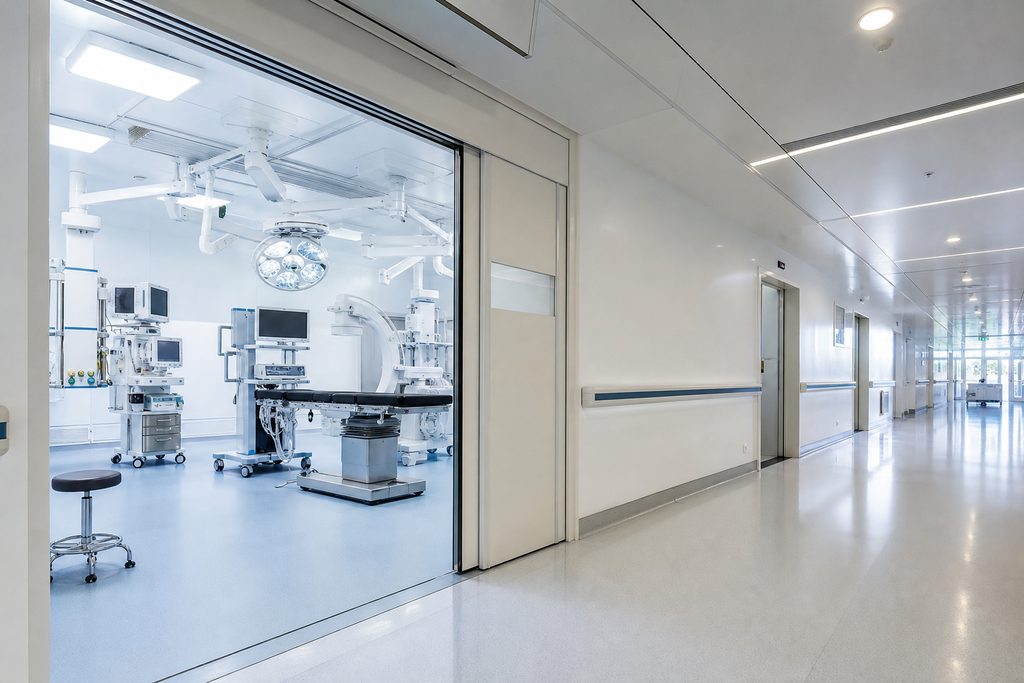
Walk into the neurosurgery wing at ZJU Second Hospital and you will see a fully integrated digital workflow. The hospital operates a hybrid operating suite that combines intraoperative MRI (iMRI) with advanced neuronavigation and fluorescence-guided tumor resection. For cerebrovascular cases, biplane digital subtraction angiography (DSA) sits in the same room as the operating table. A surgeon can clip an aneurysm, perform an intraoperative angiogram to confirm complete obliteration and preserved distal flow, and close—all without moving the patient. This is not futuristic technology. It is standard operating procedure here.
The hospital also utilizes intraoperative neurophysiological monitoring (IONM) as a routine adjunct for tumor surgeries near motor cortex or cranial nerve nuclei. This reduces the risk of post-operative deficits. For patients asking how safe is brain surgery in Hangzhou, the answer lies partly in this technological infrastructure. Safety is not just about the surgeon’s hands. It is about the system’s ability to provide real-time feedback during the most critical moments of an operation.
Cost Advantage Without Quality Compromise
Here is the structural reality that makes the brain tumor surgery cost in China so different from Western benchmarks. A craniotomy for tumor resection at ZJU Second Hospital typically costs between $18,000 and $35,000, inclusive of hospital stay, surgeon fees, and operating theater charges. A comparable procedure in the United States often exceeds $100,000 and can reach $250,000 depending on the hospital and length of stay. The cerebrovascular surgery price abroad—specifically for aneurysm clipping or AVM resection—follows a similar ratio, often landing between $22,000 and $40,000 in China.
These numbers are not a reflection of lower quality. They reflect fundamentally different cost structures. Chinese public hospitals operate on high patient volume with streamlined administrative overhead. Physician salaries, while competitive domestically, do not carry the same weight as in the US private healthcare system. The cost of implants, surgical consumables, and ICU beds is lower. The result is a price point that makes life-saving brain surgery accessible to international patients who would otherwise face medical bankruptcy or prolonged waiting.
What You Need to Know Before Going Alone
We believe in radical transparency. The clinical quality at ZJU Second Hospital is world-class. The logistical barriers to accessing that quality as a foreign patient are real and significant. Here is what you will face if you try to navigate this alone.
- Visa Requirements: Medical treatment in China requires an S2 visa, specifically endorsed for medical purposes. You cannot enter on a tourist visa and simply walk into a hospital for a scheduled craniotomy. The S2 application requires an official invitation letter from the hospital, a detailed treatment plan, and proof of financial means. Obtaining that hospital invitation letter from overseas, without a local contact, is extremely difficult. Family members accompanying you also need S2 visas. An M visa is for business and is not valid for medical treatment.
- Payment Systems: Chinese public hospitals operate on a pre-payment model. You deposit funds upfront, and the hospital draws down against that balance. International credit cards are not reliably accepted at hospital cashier counters. You will need a Chinese bank account or a local payment solution like WeChat Pay or Alipay, which are nearly impossible for a foreigner to set up remotely. Expect to make a deposit of $10,000–$20,000 before surgery is scheduled.
- Language and Navigation: ZJU Second Hospital sees tens of thousands of outpatients daily. The campus is vast, the signage is primarily in Chinese, and the registration system for specialist consultations is complex. Even finding the neurosurgery clinic requires navigating crowded hallways, digital queuing kiosks, and multiple payment windows. A single missed step—forgetting to stamp a form at one window before proceeding to the next—can cost you hours. In a pre-operative context, that kind of stress is the last thing you need.
How We Help You Navigate This
These barriers exist for structural reasons, not because the system is designed to exclude foreigners. Chinese public hospitals are built to serve a domestic population of 1.4 billion people. Efficiency is achieved through standardized, high-volume workflows that assume local language fluency and familiarity with the process. Our role is to insert a human bridge into that workflow.
When you contact us, we start with a detailed consultation about your diagnosis. We review your imaging, your pathology reports, and your clinical history. We do not give medical advice. We translate your case into a format that the hospital’s international department can review, and we present it to the neurosurgery team for a preliminary assessment. If the team confirms that your case is appropriate for treatment, we move to coordination. We handle the hospital invitation letter for your S2 visa application. Our bilingual medical companion meets you at the airport, accompanies you to every appointment, translates every conversation with your surgeon, and stays with you through the admission and discharge process. You can learn more about this on our patient coordination page.
We also manage the practicalities that no one thinks about until they are standing in a hospital lobby feeling overwhelmed. We handle registration, queue management, payment deposits, prescription pickups, and discharge paperwork. If your surgeon orders a follow-up MRI six weeks post-operatively, we coordinate that too. Our goal is to let you focus entirely on your recovery while we absorb the logistical friction.
Frequently Asked Questions
Safety in neurosurgery is a function of three things: surgeon experience, institutional volume, and intraoperative technology. ZJU Second Hospital scores highly on all three. The neurosurgery department performs over 2,000 major procedures annually, uses intraoperative MRI and neurophysiological monitoring as standard, and employs full-time dedicated neuro-anesthesiologists. Infection rates and complication rates are tracked and benchmarked. While no surgery is without risk, the safety profile at this institution is comparable to high-volume academic medical centers in the United States or Europe. The question is not whether the surgery is safe. The question is whether you can access it efficiently.
No. This is the single most important thing to understand about the Chinese public hospital system. You cannot book surgery remotely. You cannot email the hospital and reserve a surgical slot. The process requires an in-person specialist consultation first. The neurosurgeon must see you, review your imaging personally, and agree to take your case. Only then can a surgical date be scheduled. Our role is to arrange that initial consultation with the appropriate senior surgeon, ensure all your records are translated and reviewed beforehand, and then manage the entire scheduling process on the ground. We cannot guarantee a specific surgeon or a specific date, but we can ensure your case is presented properly and followed up on diligently.
We strongly recommend a remote second opinion as a first step. Our team can arrange a written second opinion from a ZJU Second Hospital neurosurgeon for $300–$500, or a video consultation for $500–$800. The surgeon will review your imaging and reports, and provide a preliminary assessment of surgical feasibility, approach, and expected outcomes. This step gives you confidence that traveling to Hangzhou is the right decision before you commit to the logistics. Also, any second opinion fee is credited in full toward our on-the-ground coordination service if you proceed with treatment within 90 days. This is a one-time credit applied to coordination fees only, never to hospital treatment charges.
When we quote a range of $18,000–$35,000 for a craniotomy and tumor resection at ZJU Second Hospital, this typically includes the surgeon’s fee, anesthesiologist’s fee, operating theater charges, implantable materials, post-operative ICU stay, and a standard ward bed for the recovery period. It does not include pre-operative imaging if new scans are required, extended ICU stays beyond the typical window, or treatment of unexpected complications. The final cost varies by tumor type, surgical complexity, and length of stay. We provide a detailed cost estimate after the surgeon has reviewed your case, and we update you if anything changes during treatment. There are no surprise bills at the end—the pre-payment system means you always know your balance.
Your Next Step
A brain tumor diagnosis forces decisions under pressure. The two variables you can control are time and information. The clinical resources exist at ZJU Second Hospital in Hangzhou to deliver outstanding neurosurgical outcomes. The challenge is access. That is the problem we solve. If you are weighing your options, start with a conversation. No commitment, no pressure. Just a clear-eyed assessment of whether this path makes sense for your specific case.
For more medical information and treatment options in China, visit chinamedservices.com (China Medical Services).
