Same-Day MRI and CT Scans in China: Fast Diagnosis Service
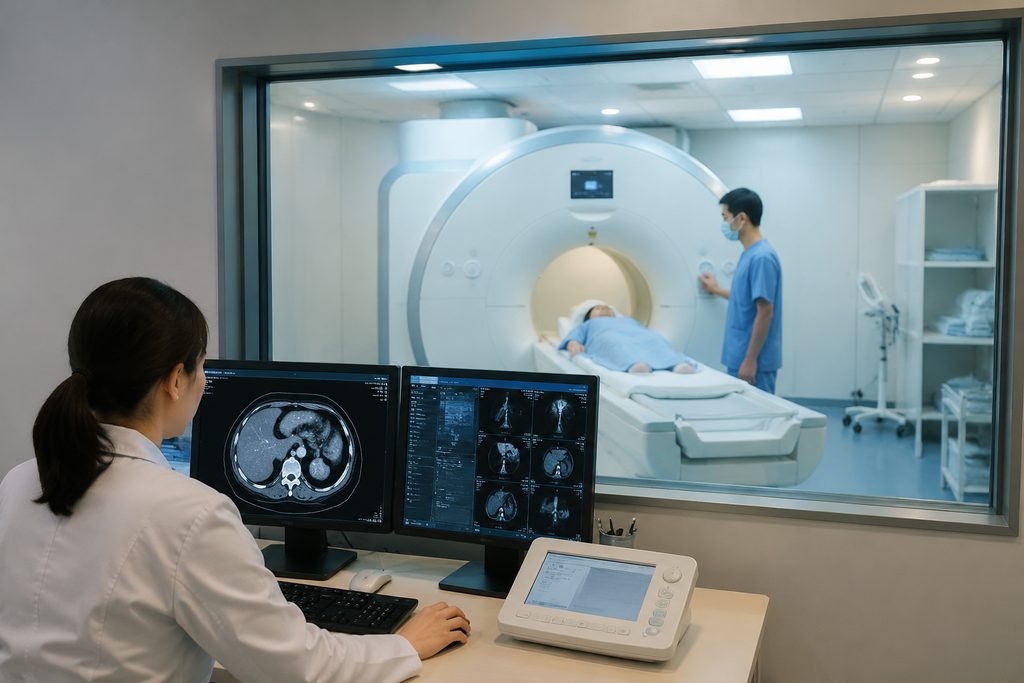
Key Takeaways
- Private imaging centers in Beijing and Shanghai routinely complete MRI and CT scans on the same day, with radiologist reports delivered within 2 to 24 hours.
- A same-day MRI and CT scan package in China typically costs $150 to $450, compared to $2,500 to $5,000 for equivalent private imaging in the United States.
- Public hospital imaging departments in China often require in-person registration and can have multi-day queues, especially at top-tier institutions without a coordination service.
- International patients should confirm whether their referral documents, contrast agent needs, and insurance reimbursement requirements are aligned before booking any scan.
While patients in Canada wait a median of 50 to 82 days for an MRI, private imaging centers in Shanghai routinely complete a scan and deliver the radiologist’s report within four hours. A same day MRI CT scan China cost comparison shows why: a full diagnostic workup that runs $3,000 in a US outpatient facility often costs under $400 in a Chinese private hospital. The gap is not about quality. It is about how the two systems are structured.
The Problem: Diagnostic Waiting Times Are a Clinical Risk
Waiting for imaging is not just inconvenient. It changes outcomes. The Canadian Institute for Health Information reported in 2023 that only 42% of patients received an MRI within the recommended benchmark timeframe. For CT scans, the figure was 56%. The rest waited weeks or months. During that window, a suspected tumor can grow, a neurological condition can progress, and a patient’s anxiety compounds daily.
In the United Kingdom, NHS England data from early 2024 showed over 1.5 million patients waiting for diagnostic imaging, with roughly 23% waiting more than six weeks. The situation in some US markets is better for insured patients but brutal for the uninsured or underinsured, who face out-of-pocket private rates that routinely exceed $1,200 for a single MRI without contrast.
Now consider what happens when a patient from London, Toronto, or Riyadh lands in Shanghai and walks into a private imaging department. Registration takes ten minutes. The scan happens within the hour. The report arrives by email the same evening.
That contrast is not marketing. It is operational reality.
Why Fast Diagnosis Medical Imaging Shanghai Works Differently
Volume Creates Speed
Chinese hospitals process imaging at a scale that most Western systems never see. A single large public hospital in Shanghai may perform over 3,000 CT scans per day across its outpatient and emergency departments. Private international hospitals handle far lower volume but operate dedicated imaging suites with same-day scheduling built into their service model.
This high throughput means radiologists read scans constantly, not in scheduled batches. A radiologist at a busy Shanghai imaging center may interpret 60 to 100 studies per shift. That repetition sharpens pattern recognition. Studies from the Chinese Journal of Radiology have noted that high-volume readers demonstrate measurably faster detection times for common pathologies without sacrificing diagnostic accuracy.
Private MRI Scan Beijing Price Reflects Structural Economics
The private MRI scan Beijing price point — typically $120 to $250 for a single region without contrast — reflects lower labor costs, not lower standards. Radiologist salaries in China are a fraction of US equivalents. Facility overhead is lower. Equipment is the same: Siemens, GE, and Philips scanners dominate Chinese private imaging centers, often newer than machines in Western public hospitals.
That means a patient paying $200 in Beijing is often scanned on a 3-Tesla Siemens Magnetom that would cost $1,800 per scan in a US outpatient center. The machine is identical. The operating cost is not.
Can I get MRI and CT same day in China? Yes — this is standard practice at private international hospitals and many public hospital VIP departments. The workflow is designed for it.
Same-Day Scheduling Is the Default, Not an Upgrade
In most Western systems, getting an MRI and CT on the same day requires coordination across departments, pre-authorization from insurers, and often separate visits. In Chinese private facilities, a physician referral is typically reviewed on arrival, and both scans are booked back-to-back. A patient can arrive at 9 a.m., complete both studies by 11 a.m., and have preliminary findings discussed by noon.
This is not an expedited service. It is the standard operating procedure.
How Fast Are MRI Results in Chinese Hospitals: The Actual Timeline
The answer depends on where you go. At a private international hospital in Shanghai or Beijing, the standard turnaround for a written radiology report is 2 to 4 hours for CT and 4 to 24 hours for MRI, depending on complexity and whether contrast was used. At a public hospital’s regular outpatient imaging department, results may take 24 to 72 hours.
Here is a realistic timeline for a same-day MRI and CT package at a private facility:
| Time | Step | Notes |
|---|---|---|
| 8:30 AM | Registration and referral review | Bring passport, prior imaging, and referral letter if available |
| 9:00 AM | CT scan (with or without contrast) | 15-30 minutes including preparation |
| 9:45 AM | MRI scan | 30-60 minutes depending on region and sequences |
| 11:00 AM | Radiologist preliminary verbal summary | Available on request at private facilities |
| 2:00 PM | Written CT report delivered | Email or patient portal |
| 6:00 PM | Written MRI report delivered | Complex cases may extend to next morning |
Public hospital timelines are slower because imaging departments serve massive outpatient volumes. A patient at a top-tier public hospital without VIP access might wait 3 to 7 days just to schedule an MRI, then another 2 to 3 days for the report. This is why international patients seeking speed typically choose private hospitals or public hospital international departments.
For context on where these facilities are located, our guide to top-ranked hospitals across 37 Chinese cities maps the landscape of both public and private options.
Same Day MRI CT Scan China Cost: A Transparent Breakdown
Patients researching how to book urgent CT scan China medical tourism should understand the real price ranges before committing. Here is what current market rates look like across facility types:
| Imaging Service | Public Hospital (Standard) | Public Hospital (International/VIP) | Private International Hospital |
|---|---|---|---|
| CT scan, single region, no contrast | $40-80 | $100-180 | $150-300 |
| MRI, single region, no contrast | $80-150 | $180-350 | $250-500 |
| MRI with contrast | $120-200 | $250-450 | $350-650 |
| Combined same-day MRI + CT package | Not typically offered same-day | $300-500 | $400-800 |
| Radiologist written report | Included | Included | Included |
These figures are indicative ranges based on 2024-2025 pricing at major facilities in Beijing, Shanghai, and Guangzhou. Actual charges vary by hospital and case complexity. Contrast agents, additional sequences, and specialist over-reads add incremental fees.
Compare this to the United States, where a private-pay brain MRI averages $1,200 to $3,000 and a CT of the abdomen runs $800 to $2,500. Even with international flights factored in, patients needing multiple imaging studies often find the total cost in China is 60% to 80% lower.
For patients considering broader diagnostic workups, our overview of specialty departments with top-ranked imaging and clinical teams provides useful context on which hospitals excel in specific disease areas.
Book Urgent CT Scan China Medical Tourism: What You Need Before You Arrive
Arriving in China for imaging without preparation wastes time and money. Here is what actually matters:
Referral documentation. Chinese private hospitals generally accept self-referred patients for imaging, but a referral letter from your home physician helps the radiologist prioritize the right sequences. If you have prior scans, bring the images on CD or upload them to a shared drive before your appointment. Comparison studies are essential for oncology and neurology cases.
Contrast considerations. If your scan requires gadolinium or iodine-based contrast, you will need recent kidney function tests (creatinine and eGFR) — typically within 30 days. Private facilities in China can run these on-site in under an hour for approximately $20 to $40.
Insurance and payment. Private international hospitals in China often accept direct billing from major insurers like Cigna, Aetna, and Allianz. Public hospital international departments typically require upfront payment with a detailed invoice for later reimbursement. Confirm which model applies before booking.
Language barrier reality: Radiologists at public Chinese hospitals write reports in Chinese. Private international hospitals provide English-language reports as standard. If you choose a public hospital, factor in professional medical translation — otherwise your home physician cannot interpret the findings.
For patients weighing public versus private options, our comparison of JCI-accredited private international hospitals explains the trade-offs in service, language support, and insurance handling.
Who Should Not Rely on Same-Day Imaging in China
Same-day imaging works brilliantly for many patients, but it is not for everyone.
If your condition requires urgent surgical intervention within days, you need a hospital admission pathway, not just a scan. Imaging alone does not solve the clinical problem. A patient with a suspected acute condition should be under the care of a treating physician who can act on the results immediately.
If you are mid-way through a diagnostic workup at home with a specialist who knows your case, flying to China for imaging may fragment your care. The images are portable — the clinical context is not. Discuss the decision with your existing physician first.
If you have complex insurance pre-authorization requirements, confirm that your insurer will reimburse imaging performed abroad. Some policies exclude international diagnostics unless pre-approved. Get written confirmation before you travel.
Frequently Asked Questions
Yes, at most private international hospitals and many public hospital VIP departments, self-referred imaging is accepted. You will typically complete a brief intake questionnaire and may have a short consultation with a physician who reviews the clinical indication for the scan. This protects you from unnecessary radiation exposure and ensures the radiologist protocols the correct sequences.
For genuinely urgent cases — suspected stroke, acute neurological symptoms, suspected malignancy requiring rapid staging — private facilities can deliver a preliminary verbal read within 60 to 90 minutes and a written report within 2 to 4 hours. Standard cases follow the 4 to 24 hour timeline. Public hospital emergency departments also read scans immediately, but written reports for non-emergency outpatient studies take longer.
In most cases, yes — provided the report is in English and includes the radiologist’s credentials, the scanner specifications, and the full imaging dataset on CD or via secure digital transfer. Private international hospitals in China routinely provide all three. If you use a public hospital, arrange professional medical translation before sending the report to your physician.
The radiologist’s report will flag any significant findings, and the facility will typically recommend follow-up with an appropriate specialist. At private international hospitals, an on-site physician can discuss the findings with you the same day and help arrange a specialist consultation — often within 24 to 48 hours. This is one of the structural advantages of the Chinese system: imaging and specialist care are co-located, so the transition from diagnosis to treatment is faster than in systems where imaging is a standalone service.
Your Next Step
Same-day MRI and CT scanning in China is a practical option for patients facing long diagnostic waits or prohibitive imaging costs at home. The facilities are modern, the radiologists are experienced, and the price difference is substantial.
Our team at China Medical Services helps international patients navigate imaging appointments, hospital selection, and the logistics of medical travel in China. We are not a hospital and we do not provide diagnoses — we connect you with accredited facilities and make sure the process runs smoothly. If you are weighing whether this makes sense for your situation, a conversation is the easiest way to find out.
For more medical information and treatment options in China, visit chinamedservices.com (China Medical Services).
