Cross-Border Medical Review: Verify Your Diagnosis Before Treatment
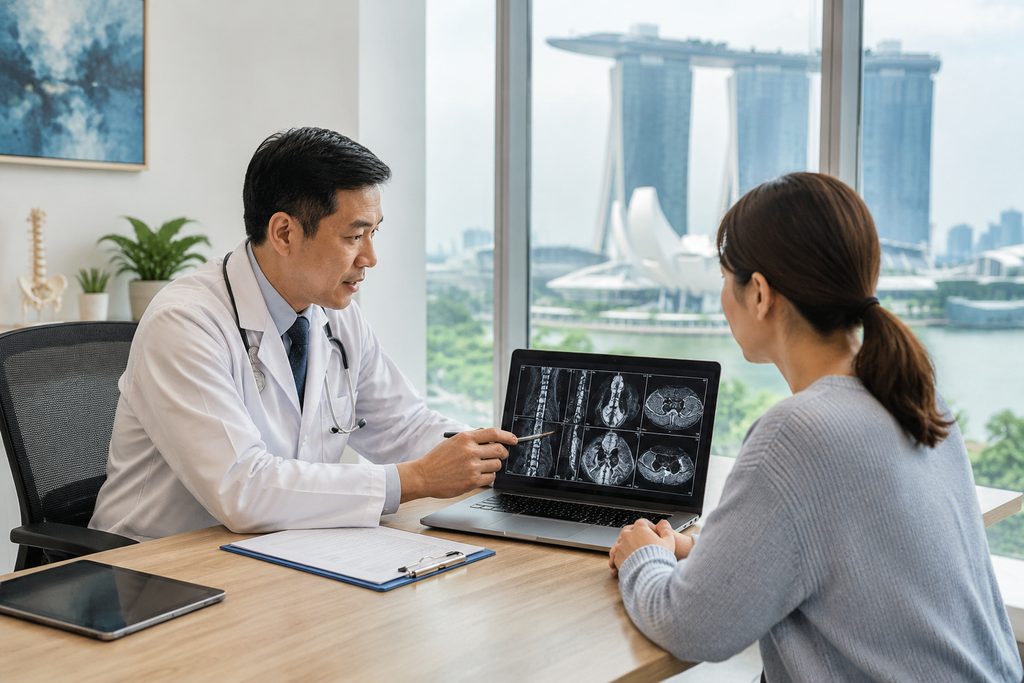
Cross-Border Medical Review: Verify Your Diagnosis Before Treatment
Key Takeaways
- A written second opinion from a top-tier Chinese hospital typically costs $300–500, a fraction of the $2,000–5,000 commonly charged in the US for comparable academic-center reviews.
- China’s top oncology centers handle case volumes that dwarf most Western institutions — Fudan-ranked hospitals see thousands of rare and complex cancer presentations annually.
- Remote pathology review requires sending glass slides or digital scans, not just written reports — incomplete materials are the most common reason reviews are delayed or inconclusive.
- You cannot book a same-week video consult with a named top specialist through public hospital channels; international departments and proxy coordination are the realistic pathways.
The Problem: A Cancer Diagnosis You Can’t Afford to Get Wrong
When 42-year-old Michael first heard the diagnosis — stage III colorectal cancer — he had no idea where to start looking for treatment. His local oncologist recommended immediate surgery followed by six months of chemotherapy. The plan felt rushed. Michael wanted a second opinion, but his insurance network offered only one other hospital, 40 miles away, with a six-week wait. The quoted cost for an out-of-network academic review? $4,800.
Michael’s situation is not unusual. Approximately 1 in 5 cancer diagnoses involves a meaningful discrepancy when independently reviewed — different stage, different subtype, or a different recommended treatment pathway. A 2015 study from Johns Hopkins Hospital published in The BMJ found that among patients referred for pathology review, 21% had a clinically significant diagnosis change. Half of those changes altered treatment. That is not a rounding error. That is the difference between unnecessary surgery and targeted therapy.
The problem compounds when you look at cost and access. In the United States, a comprehensive second opinion from a major cancer center — pathology review, imaging re-read, and oncology consultation — typically ranges from $2,000 to $5,000 without insurance. In the UK, NHS patients wait an average of 62 days from urgent GP referral to first treatment, and private second opinions add cost and logistics on top. For patients in smaller countries or those with rare cancers, the local pool of expertise may simply not exist.
So people wait. And waiting is its own risk.
Why China’s Top Hospitals Deliver Verifiable Diagnostic Reviews
The question patients ask us most often: is cancer diagnosis accurate in Shanghai compared to Western centers? The honest answer is that diagnostic accuracy depends on the institution, not the country. Shanghai’s top-ranked oncology hospitals — Zhongshan Hospital, Fudan University Shanghai Cancer Center, Ruijin Hospital — operate at a scale that forces diagnostic rigor. When a pathology department processes over 100,000 specimens annually, rare variants stop being rare. That exposure translates into pattern recognition no textbook can teach.
Clinical Volume Creates Diagnostic Confidence
Fudan University Shanghai Cancer Center handles roughly 15,000 new cancer cases per year. Fuwai Hospital in Beijing performs over 14,000 cardiac surgeries annually — the highest single-center volume globally. This matters for diagnosis because pathologists and radiologists at these institutions see the full spectrum of presentations. A pathologist who reviews 50 cholangiocarcinoma cases a year will recognize subtle features that a generalist seeing five cases a year might miss.
Compare that to the average US community hospital pathologist, who might encounter rare cancer subtypes a handful of times in an entire career. Volume is not a marketing slogan. It is a structural advantage.
Technology and Workflow at Scale
China’s top hospitals adopted digital pathology early. Whole-slide imaging is standard at Fudan-ranked institutions, which means a slide prepared in Houston can be digitized in Shanghai and reviewed by multiple specialists within 48–72 hours. Immunohistochemistry panels and molecular testing — EGFR, ALK, PD-L1, HER2, NGS panels — are run in-house, not outsourced. That shortens turnaround and keeps quality control internal.
But the workflow has friction. Slides must be physically shipped or scanned at a partner facility. Reports and clinical history need translation — not just language translation, but formatting into the structure Chinese pathologists expect. This is where our bilingual medical coordination team handles the administrative layer: requesting slides from your original hospital, arranging courier logistics, translating records, and submitting them through the correct international department channel.
Cost Advantage Without Quality Compromise
The second opinion oncology China cost is structurally lower for reasons unrelated to quality. Chinese academic hospitals operate with lower labor costs, higher patient throughput, and government-subsidized infrastructure. A written second opinion from a top-tier specialist costs $300–500. A video consultation with a senior oncologist runs $500–800. A multidisciplinary team review costs $1,500–2,000. The same MDT review at a US academic center would run $5,000–10,000.
Lower cost does not mean lower rigor. The Fudan ranking system — which evaluates hospitals on clinical reputation, research output, and outcomes — is publicly available and methodologically transparent. The hospitals we reference are the top 5% of China’s 35,000+ hospitals. They are not discount providers. They are the institutions Chinese patients themselves fight to access.
How Remote Pathology Review Works: The 5-Step Process
If you are searching for how to verify diagnosis abroad, the mechanics matter. A remote pathology review China hospital program follows a consistent sequence. There is no shortcut around steps two and three.
Step 1: Gather everything. This means the original pathology report, all immunohistochemistry reports, molecular test results, imaging reports (CT, MRI, PET), the imaging files themselves on disc, and your clinical summary. Missing pieces cause delays. One missing IHC stain can make the difference between a definitive review and an inconclusive one.
Step 2: Obtain your slides. Hospitals keep pathology slides and paraffin blocks for years. You have a legal right to request them. The process requires a signed release form, and the hospital will typically send slides directly to the reviewing institution — not to you. Budget 1–2 weeks for this step in the US, longer in some European systems.
Step 3: Translation and submission. Chinese pathology departments review cases in Chinese. Your records need professional medical translation, not Google Translate. A mistranslated margin status or lymph node count can change everything. Our team handles this as part of the coordination service.
Step 4: The review itself. A senior pathologist — often the department deputy director or a subspecialty lead — examines the slides and all materials. Turnaround for written second opinions is typically 5–10 working days. Video consultations are scheduled after the written review is complete, so the specialist has already studied your case.
Step 5: You receive a written report. The report states whether the original diagnosis is confirmed, amended, or rejected, with reasoning. It is a professional medical document — for reference only, not a prescription. You take it to your treating physician and discuss next steps.
Practical tip: Request digital slide scanning from your original hospital if available. Some US hospitals now offer whole-slide imaging for external review, which eliminates international courier delays entirely.
What a Cross-Border Review Actually Costs: Real Numbers
The medical second opinion China price varies by hospital tier and review type. Here is what you should budget for, based on current international department pricing:
| Service | Typical Cost (USD) | Turnaround | What You Get |
|---|---|---|---|
| Written second opinion — top specialist | $300–500 | 5–10 working days | Written analysis of diagnosis and treatment direction |
| Video consultation — general international dept. | $100–300 | 3–7 working days to schedule | Live discussion with a specialist |
| Top-specialist video consultation | $500–800 | 5–10 working days to schedule | Live discussion with a named senior specialist |
| Multidisciplinary team (MDT) review | $1,500–2,000 | 7–14 working days | Coordinated review by oncology, pathology, radiology, surgery |
| In-person top-specialist consultation coordination | $800–1,200 | Depends on specialist availability | Coordination of an in-person visit, not the consultation fee itself |
All figures are reference ranges and vary by hospital and case complexity. One thing worth knowing: any consultation fee you pay through our coordination service is credited in full toward on-the-ground coordination if you later travel to China for treatment within 90 days. The credit applies to the coordination fee only, never to hospital treatment charges.
If you are wondering how to book international diagnosis confirmation China, the answer is that you cannot do it through a hospital’s public registration app. Public channels are for in-person, same-day registration. International departments handle overseas cases, and they typically require a coordinator or direct contact with the international office. That is the structural reality — and it is why patients use services like ours rather than navigating it alone.
Who Should Not Rely on Remote Review Alone
A remote pathology review is powerful, but it has limits. It cannot replace a physical examination. It cannot assess surgical candidacy without seeing the patient. It cannot account for comorbidities that require in-person evaluation.
If your case involves a rare sarcoma where the diagnosis hinges on molecular testing not yet performed, a remote review is only as good as the available data. If the original biopsy was technically poor — insufficient tissue, crush artifact, poor fixation — no reviewer anywhere can fix that. You may need a repeat biopsy before any meaningful second opinion.
Patients with rapidly progressing disease should not spend three weeks waiting for a written review before starting treatment. The smart move is to start locally indicated therapy while the review runs in parallel. A second opinion should inform treatment, not delay it dangerously.
And be honest about your own expectations. A remote review will not give you a treatment plan you can execute in China without an in-person visit. It gives you diagnostic clarity and treatment direction. Surgery, radiation, and inpatient chemotherapy still require on-site evaluation under Chinese hospital rules.
Practical Considerations: Documents, Visas, and Payment
If you are serious about pursuing a cross-border review, the logistics are manageable but specific. Start with records. You need: the full pathology report (not a summary), all IHC and molecular results, the operative report if surgery was done, discharge summaries, and the imaging discs. Request these from your hospital’s medical records department — you have a legal right to them in the US, UK, EU, Australia, and most other jurisdictions.
For patients who later decide to travel to China for treatment, the visa category is S2 — a short-stay visa for private affairs, including medical treatment. There is no such thing as an M visa for medical purposes; M is for commercial and trade activities. Your accompanying family members also apply for S2. The hospital’s international department will provide an invitation letter and treatment confirmation, which you submit with your visa application. Processing times vary by embassy, so plan 3–6 weeks ahead.
Payment for remote reviews is typically by international wire transfer or credit card through the hospital’s international department. Chinese public hospitals do not bill Western insurance directly — you pay upfront and seek reimbursement from your insurer afterward. Private international hospitals in China, like United Family or Jiahui, often do accept direct insurance billing, but their remote review services are less established than those at the top academic centers.
Language is the final friction point. Chinese hospital reports are issued in Chinese. If you cannot read the report, it has limited value. Our team translates the final report into English as part of the coordination service, so you receive something you can actually take to your local oncologist.
Frequently Asked Questions
Typically 5–10 working days after the hospital receives complete materials. Incomplete submissions — missing slides, untranslated reports, absent IHC results — are the most common cause of delays. Budget 2–3 weeks total when you include the time needed to obtain and ship slides from your original hospital.
Some international insurance plans reimburse second opinions, but many US and European plans do not cover non-network overseas providers. You pay upfront and submit a claim. The written report and itemized invoice from the hospital are your documentation. Check with your insurer before committing — reimbursement is never guaranteed.
That is the point of the exercise. If the review disagrees, you receive a written report explaining the reasoning — what was seen, what was missed, what the evidence supports. You take that report to your treating physician. In some cases, the Chinese hospital will recommend additional testing — a specific molecular panel, a repeat biopsy, a different imaging study — that can resolve the discrepancy. You are not obligated to change your treatment plan based on one review. You are obligated to make an informed decision.
No. Chinese public hospitals require an in-person outpatient consultation before any surgery can be scheduled. That is a universal rule, not a policy we can waive. The remote review clarifies your diagnosis and treatment direction. If you then decide to travel, the in-person visit becomes more efficient because the specialist already knows your case.
At Fudan-ranked institutions, yes. These hospitals process enormous case volumes, run in-house molecular labs, and participate in international quality assurance programs. The Fudan ranking methodology — which evaluates clinical reputation and research output — is publicly documented. But quality varies across institutions, just as it does anywhere. The hospital matters more than the country.
Your Next Step
A diagnosis is the foundation of every treatment decision that follows. Verifying it across borders is not paranoia — it is due diligence, especially when the stakes are measured in years of life. We are China Medical Services, a coordination team that connects international patients with top-tier Chinese hospitals for written second opinions, video consultations, and in-person treatment journeys. We are not a hospital, and we do not provide diagnoses. What we do is handle the logistics — records, translation, submission, scheduling — so you can focus on the medical decision, not the paperwork.
If you want to understand your options for a cross-border diagnostic review, start with a conversation. Request a free consultation and tell us about your case. No pressure, no obligation — just clarity on what is possible.
For more medical information and treatment options in China, visit chinamedservices.com (China Medical Services).
