Head and Neck Tumor Treatment Worth It: Eye and ENT Hospital Options
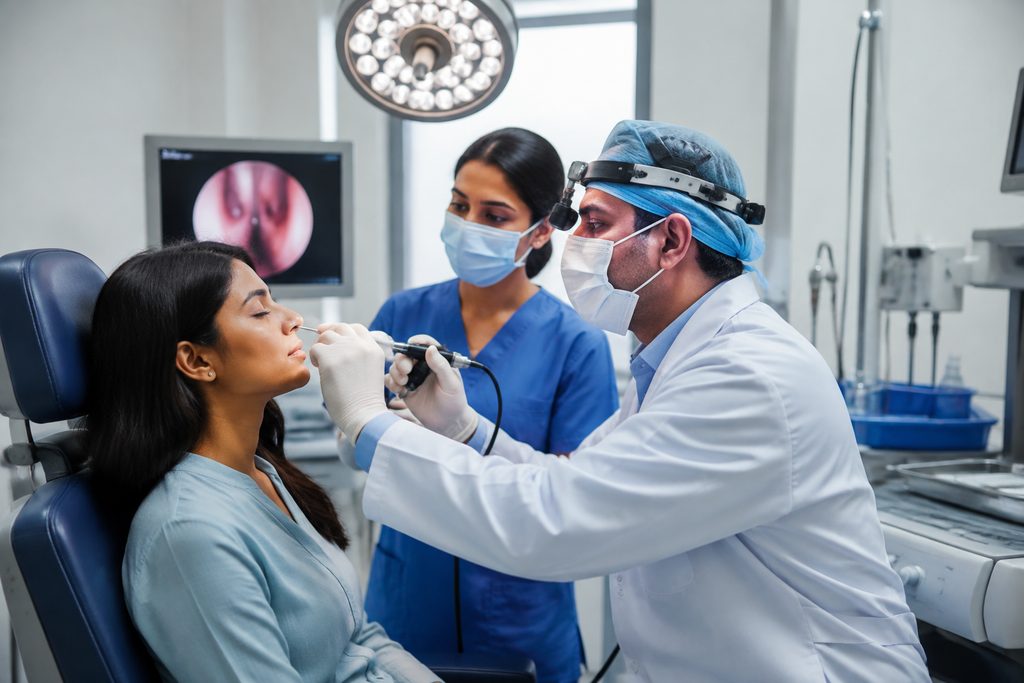
In the United States, a complex head and neck tumor resection with reconstruction routinely exceeds $150,000. At the Eye and ENT Hospital of Fudan University in Shanghai, a facility performing over 200,000 ENT surgeries annually, comparable procedures are typically billed at one-fifth to one-tenth of that figure. The math is stark. The decision is not.
Head and neck tumors — whether benign growths like acoustic neuromas and parotid masses or malignant squamous cell carcinomas — demand surgical precision near the brain, major vessels, and critical nerves. Getting it wrong means facial paralysis, voice loss, or incomplete resection. So the question isn’t just what surgery costs. It’s whether the savings justify trusting a foreign system with your face, your voice, your swallowing.
Our team has spent years helping international patients navigate exactly this decision. We don’t perform surgery. We don’t promise outcomes. What we do is connect you with the right department, translate your records, coordinate your visit, and stand beside you in the hospital so the language barrier doesn’t become a medical risk. Here’s what you need to know before you book a flight.
Head and Neck Tumor Surgery Cost China: What the Numbers Actually Show
The head and neck tumor surgery cost China varies by tumor type, hospital tier, and whether you use the public channel or the international VIP pathway. But the range is remarkably consistent across top-tier institutions.
A straightforward parotidectomy (removal of a parotid gland tumor) at a public Grade A tertiary hospital runs between $4,000 and $8,000. At the international department of the same hospital, expect $8,000 to $15,000. In the U.S., that same procedure averages $25,000 to $45,000. In the UK, private-pay patients face £15,000 to £30,000.
Complex resections — think laryngectomy, mandibulectomy with free flap reconstruction, or skull base tumor removal — land between $15,000 and $35,000 in China’s top public hospitals. The international VIP channel pushes that to $30,000 to $60,000. American hospitals bill $120,000 to $300,000 for the same operations. Even at the high end, the arithmetic favors China by a factor of three to five.
| Procedure | China Public (USD) | China International/VIP (USD) | USA (USD) |
|---|---|---|---|
| Parotidectomy | $4,000–$8,000 | $8,000–$15,000 | $25,000–$45,000 |
| Thyroidectomy with neck dissection | $5,000–$10,000 | $10,000–$18,000 | $35,000–$60,000 |
| Laryngectomy | $10,000–$20,000 | $18,000–$35,000 | $80,000–$150,000 |
| Skull base tumor resection | $15,000–$30,000 | $30,000–$55,000 | $150,000–$300,000 |
| Mandibulectomy with free flap | $12,000–$25,000 | $25,000–$45,000 | $120,000–$250,000 |
These figures reflect hospital charges only. They exclude flights, accommodation, and our coordination services. But even adding $5,000 to $8,000 for travel and logistics, most patients save 60% to 80% versus Western private care. And those savings hold whether you’re paying out of pocket or seeking reimbursement from an insurer that recognizes Chinese hospital documentation.
What drives the gap? Not lower surgical skill. Chinese otolaryngology departments operate at extraordinary volume. A surgeon at a top Shanghai ENT center may perform 300 parotidectomies a year. Their American counterpart might do 40. Volume breeds competence — and it also spreads fixed costs across more patients. Labor costs, facility fees, and malpractice premiums are all structurally lower in China. The result is a price point that Western systems simply cannot match.
Is Head and Neck Tumor Treatment Safe in China?
Safety is the question every patient asks, usually after the cost question. And it deserves a straight answer.
At China’s top-tier hospitals — the 340+ institutions in our database, representing the top 5% of the country’s 35,000+ hospitals as ranked by Fudan University’s hospital rankings and JCI accreditation — safety standards are genuinely rigorous. These are not back-alley clinics. They are massive academic medical centers with dedicated head and neck tumor boards, frozen-section pathology during surgery, intraoperative nerve monitoring, and postoperative ICU protocols that mirror Western practice.
The Eye and ENT Hospital of Fudan University, for instance, is one of China’s premier otolaryngology centers. Its head and neck surgery department handles thousands of tumor cases annually, including complex skull base lesions that require multidisciplinary collaboration with neurosurgery. The hospital maintains international patient pathways with English-speaking coordinators and documentation standards accepted by insurers worldwide.
So is head and neck tumor treatment safe in China? At the right hospital, with the right preparation, yes — comparable to Western academic centers. The key qualifier is “at the right hospital.” China’s healthcare system has enormous variance. A county-level hospital is not the same as a Fudan-affiliated center. That’s precisely why hospital selection matters more than country selection. You can browse our ranked hospital database by city and specialty to see which institutions meet the Fudan Top 100 threshold.
But be honest about the friction. Public hospital outpatient clinics are crowded, chaotic, and almost entirely Chinese-language. You cannot simply walk in and expect an English-speaking intake. That’s where the international department or a coordination service becomes essential. The medical care is safe. The navigation is not — unless someone handles it for you.
Best ENT Hospital Shanghai for Tumor: Where Patients Actually Go
Shanghai dominates Chinese otolaryngology. Three institutions consistently appear in the Fudan specialty reputation rankings for ENT, and each has a distinct profile for head and neck tumor work.
The Eye and ENT Hospital of Fudan University is the flagship. It’s a dedicated specialty hospital — meaning every bed, every operating room, every pathologist is focused on eyes, ears, nose, and throat. For tumor patients, that concentration translates into deep subspecialty expertise: skull base surgery, laryngeal preservation, free flap reconstruction. The hospital’s international department handles foreign patients through a separate registration and billing channel, with markedly shorter wait times than the public queue.
Zhongshan Hospital Fudan University, a comprehensive top-tier hospital also in Shanghai, runs a strong ENT department with particular strength in thyroid and parathyroid surgery. Its advantage is integration — if your tumor workup reveals cardiac or endocrine comorbidities, the relevant specialists are one corridor away. For complex cases requiring multi-organ coordination, that matters.
Ruijin Hospital, affiliated with Shanghai Jiao Tong University, is the third major option. Its head and neck program is known for minimally invasive approaches, including endoscopic and robotic-assisted resections that reduce scarring and recovery time. For patients concerned about visible neck incisions, Ruijin’s techniques are worth investigating.
Choosing the best ENT hospital Shanghai for tumor treatment depends on your specific diagnosis. A parotid tumor patient might prioritize the Eye and ENT Hospital’s facial nerve monitoring expertise. A thyroid cancer patient with lymph node involvement might lean toward Zhongshan’s endocrine surgery volume. A young patient worried about scarring might prefer Ruijin’s minimally invasive options. Our specialty rankings page shows how these institutions compare across the 45 Fudan-ranked specialties.
How This Actually Works, Step by Step
The path from “considering China” to “recovering at home” follows a predictable sequence. Here’s what it looks like in practice.
You send us your existing medical records — imaging reports, biopsy results, surgical history, current medication list. We translate them into Chinese and submit them to the appropriate department at your target hospital. A specialist reviews the materials and provides a written assessment: whether your case is operable, what approach they’d recommend, and whether they’d accept you as a patient. This written second opinion costs $300 to $500 and typically takes 5 to 10 business days.
If the assessment is positive, we move to a video consultation with the treating team. You speak directly with the surgeon or their senior associate, ask your questions, and hear their recommendation. This runs $500 to $800 for top-specialist access. Any consultation fees are credited in full toward on-the-ground coordination if you proceed to treatment within 90 days.
Once you decide to proceed, we coordinate your S2 visa application — the short-stay visa category used for medical treatment and private affairs in China. You’ll need a hospital invitation letter, which the international department provides. Processing takes 1 to 4 weeks depending on your home country’s Chinese embassy or consulate.
You arrive. We meet you at the airport, handle your hospital registration, and accompany you through every appointment. The surgeon examines you in person, confirms the surgical plan, and schedules the procedure. For international department patients, surgery is typically scheduled within 1 to 3 weeks of the in-person consultation. Public channel patients may wait longer.
Surgery happens. You recover in the hospital — typically 3 to 10 days for most head and neck procedures, longer for complex reconstructions. Then you either fly home or stay locally for follow-up. Most patients return home within 2 to 4 weeks of arrival, depending on the procedure and recovery trajectory.
A Realistic Timeline
Not exactly. Chinese public hospitals do not sell pre-packaged surgical bundles to foreign patients. You can book a consultation, a second opinion, and a video assessment remotely. But surgery is only scheduled after the surgeon examines you in person and confirms the surgical plan. Any service offering a fixed-price “surgery package” before an in-person consultation is misrepresenting how Chinese hospitals operate.
Most patients pay out of pocket and seek reimbursement afterward. Chinese hospitals provide itemized billing and medical documentation in English through their international departments. Some international insurers recognize Chinese top-tier hospitals as covered providers. Check with your insurer before committing. If they require pre-authorization, start that process early — it can add 2 to 4 weeks to your timeline.
That depends on the tumor type, location, and your surgical priorities. The Eye and ENT Hospital of Fudan University is the dedicated specialty center with the deepest otolaryngology bench. Zhongshan offers integrated multi-organ care. Ruijin leads in minimally invasive approaches. A written second opinion from the department most relevant to your diagnosis is the most efficient way to get a grounded recommendation.
Your Chinese surgical team will provide a discharge summary in English, including operative details, pathology results, and follow-up instructions. Your local physician can manage most postoperative issues using this documentation. For complex questions, a video consultation with your Chinese team costs $100 to $300 and provides direct access to the surgeon who operated on you.
Your Next Step
The decision to travel abroad for head and neck tumor surgery is never purely financial. It’s about access, expertise, and trust. China’s top ENT centers offer genuine surgical excellence at a fraction of Western prices — but only if you choose the right hospital and navigate the system correctly.
We’re China Medical Services, and our job is to make that navigation straightforward. We don
Frequently Asked Questions
Yes. The hospitals used for international patients are JCI-accredited and follow the same international safety standards as top hospitals in the US and Europe. Surgical teams perform high volumes of procedures — often more than their Western counterparts — which studies show leads to better outcomes.
Costs vary by procedure and hospital, but international patients typically save 40-80% compared to US prices — even when factoring in travel and accommodation. A consultation with our team will give you an exact, all-inclusive quote with no hidden fees.
Send us your existing medical reports to get started. We handle everything from hospital selection and appointment scheduling to visa assistance and post-operative recovery planning. Your medical records are reviewed by the specialist before you even book a flight.
For more medical information and treatment options in China, visit chinamedservices.com (China Medical Services).
