Complex Fracture Treatment Worth It: Shanghai Sixth Hospital Costs & Recovery
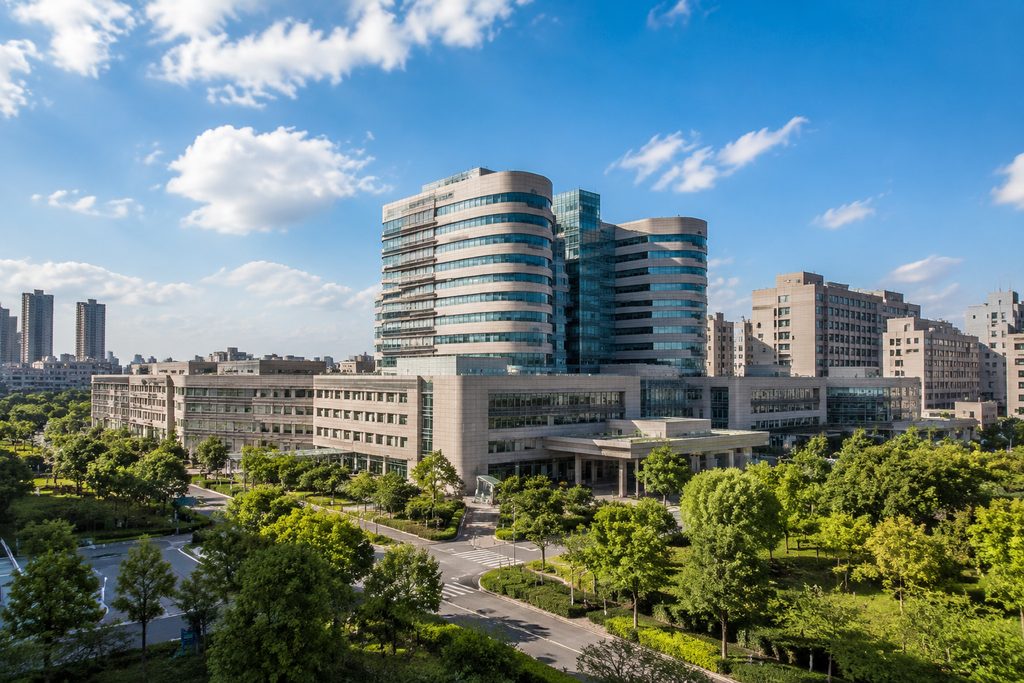
When 47-year-old Daniel from Manchester fell from a ladder while renovating his cottage, the local NHS surgeon described his tibial plateau fracture as “one of the worst I’ve seen this year.” The proposed timeline for a specialist referral stretched to six weeks. Daniel started searching for alternatives and landed on a phrase he’d never typed before: “complex fracture treatment abroad.” That search led him to Shanghai Sixth People’s Hospital. The question he kept circling back to was simple: is it actually worth it?
For a growing number of Western patients, the answer hinges on three things: surgical volume, cost, and the gap between injury and definitive fixation. Shanghai Sixth People’s Hospital performs over 20,000 orthopedic surgeries annually, with the trauma division handling a disproportionate share of high-energy, multi-fragment, and revision cases. The Shanghai Sixth Hospital complex fracture cost typically runs between $8,000 and $18,000 for procedures that regularly exceed $60,000 in the United States. But numbers alone don’t answer the worth-it question. Timing, technique, and post-operative coordination do.
Our team at China Medical Services has walked dozens of patients through this exact decision. This article lays out what we tell them in the first consultation — the clinical reality, the honest costs, the timeline, and the things that go wrong.
How This Actually Works, Step by Step
The process for an international patient seeking complex fracture treatment at Shanghai Sixth Hospital is not the same as booking a private clinic in Bangkok or Istanbul. It follows the structure of China’s public hospital system, which means remote pre-booking for ordinary outpatient clinics is not possible.
Here is the real sequence:
Step 1 — Send your imaging and records. You will need your DICOM files from CT and MRI scans, the operative report if a previous surgery failed, and a concise medical summary. Our team translates these into Chinese and submits them to the orthopedic trauma department for preliminary review.
Step 2 — Written or video consultation. A specialist from the trauma division reviews your case. This costs between $300 and $500 for a written second opinion, or $500 to $800 for a top-specialist video consultation. The doctor will tell you whether your fracture pattern is one they can manage better than your local option — and sometimes the honest answer is no.
Step 3 — Decision on the channel. If surgery is indicated, you choose between the standard public pathway (cheaper, but you must arrive, register, and wait for an outpatient appointment before any surgical scheduling) or the hospital’s international/VIP channel. The international channel allows pre-arranged consultations and roughly 1.5 to 2 times the standard pricing. This is the route most foreign patients use.
Step 4 — Travel and admission. You fly to Shanghai on an S2 visa with a medical treatment annotation. Once admitted, pre-operative workup takes 2 to 4 days. Surgery follows. Inpatient stay for complex fracture fixation typically runs 7 to 14 days.
Step 5 — Rehabilitation and discharge. The hospital provides early mobilization protocols. Many patients transfer to a rehabilitation facility or return home with a detailed physiotherapy plan. Follow-up imaging at 6 weeks, 3 months, and 6 months is standard.
Shanghai Sixth Hospital Complex Fracture Cost: What the Numbers Actually Show
Let’s get specific. The Shanghai Sixth Hospital complex fracture cost varies by fracture type, implant choice, and whether you go through the standard or international pathway. A distal femur fracture with locking plate fixation runs $9,000 to $14,000. A complex pilon fracture requiring staged external fixation followed by definitive internal fixation can reach $15,000 to $20,000. Revision of a failed fixation with bone grafting adds $2,000 to $5,000.
Compare that to the US, where a complex tibial plateau fracture with dual plating often bills between $45,000 and $80,000 before insurance negotiation. Even with good insurance, a high-deductible plan can leave an American patient with $15,000 in out-of-pocket costs. For uninsured or underinsured patients, the math is stark.
But cost is only one variable. The more important question patients ask us is the second one: is Shanghai Sixth Hospital good for fracture surgery? The answer, based on volume and published outcomes, is yes — with qualifications.
The hospital’s orthopedic trauma division is consistently ranked among China’s top 10 for orthopedics in the Fudan University hospital rankings. That matters because Fudan’s methodology weights clinical reputation and research output heavily. Shanghai Sixth is not just a high-volume center; it is a teaching hospital where complex fracture patterns are the daily norm, not the exception.
A Realistic Timeline
Patients consistently underestimate the time between “I want to go” and “I’m on the operating table.” Here is what the calendar actually looks like for international patients:
| Stage | What Happens | Realistic Duration |
|---|---|---|
| Days 1–3 | You send imaging and records; our team translates and submits them | 2–3 days |
| Days 4–10 | Specialist reviews your case; written opinion or video consultation scheduled | 5–7 days |
| Days 11–20 | You decide on the pathway; hospital confirms acceptance; cost estimate issued | 7–10 days |
| Days 21–35 | S2 visa application with hospital invitation letter; flight booking | 10–15 days |
| Days 36–40 | Arrival in Shanghai; outpatient consultation or direct admission via international channel | 2–4 days |
| Days 41–44 | Pre-operative workup: blood tests, ECG, anesthesia clearance, updated imaging | 2–3 days |
| Days 45–50 | Surgery | 1 day (procedure) |
| Days 51–65 | Inpatient recovery, wound checks, early mobilization | 7–14 days |
| Weeks 6–12 | Weight-bearing progression, physiotherapy at home or in Shanghai | 6–12 weeks |
| Months 3–6 | Radiographic union assessment; return to normal activity | 3–6 months |
The step people forget is document translation. If your records are in English, German, or Arabic, they need professional medical translation before any Chinese specialist can meaningfully review them. That adds 48 to 72 hours at the front end. And visa processing times vary by consulate — some issue S2 visas in a week, others take three.
So, how long is recovery after complex fracture surgery Shanghai? The surgical fixation itself is one day. But the honest answer for a high-energy tibial plateau or pilon fracture is: 3 months to partial weight-bearing, 6 months to walking without aids, and 12 months to maximum recovery. Anyone promising faster is not being straight with you.
What Can Go Wrong — and What Happens Then
We tell every patient the same thing: this is not a concierge hotel experience. Shanghai Sixth People’s Hospital is a massive public institution. The outpatient hall handles over 10,000 visits daily. Without Chinese language ability, you will be lost — literally and administratively. That is why bilingual medical companions exist, and why they cost from $300 per day.
Specific failure modes we have seen:
The records are inadequate. You arrive with a CD of images but no written report, or the report is in a language no one can read. The specialist cannot proceed. The fix: our team requests a complete imaging package before you book a flight. We do not let patients travel with incomplete files.
The fracture pattern is worse than the initial scan suggested. Sometimes the pre-operative CT reveals additional comminution or a missed fragment. The surgical plan changes. The cost increases. The surgeon explains the revision before proceeding. You are never locked into a fixed price for a procedure that has not been fully assessed.
Post-operative complications. Infection, deep vein thrombosis, nerve injury, non-union. These occur at every hospital on earth. Shanghai Sixth’s infection rates are comparable to Western tertiary centers, but no one can guarantee zero risk. If a complication arises, the hospital manages it — and your cost estimate needs to account for that possibility.
You cannot get the specific surgeon you researched. The international channel increases the likelihood of being treated by a senior specialist, but no legitimate service can promise a specific named surgeon on a specific date. Anyone who does is selling something other than medical coordination.
How to Evaluate Whether This Is the Right Choice for You
The phrase best hospital for complex fracture abroad gets searched a lot. But “best” is not a universal ranking. It depends on your fracture type, your insurance situation, and your tolerance for travel during recovery.
Here is the decision framework we use with patients:
You are a strong candidate for Shanghai Sixth if: your fracture is high-energy or multi-fragment; you have a failed fixation that needs revision; your local wait time exceeds 4 weeks; you are uninsured or facing a high deductible; or you specifically want a surgeon whose practice is dominated by trauma cases.
You are a weaker candidate if: your fracture is simple and your local surgeon can fix it within 2 weeks; you have unstable medical comorbidities that make long-haul travel risky; you need ongoing psychiatric or social support that travel would disrupt; or you expect a Western-style private hospital experience.
The complex fracture treatment price China advantage is real, but it is not the only reason to go. Surgical volume and timing matter more for long-term outcomes. A well-fixed fracture at week 2 heals better than a well-fixed fracture at week 8. Delay causes stiffness, muscle atrophy, and sometimes malunion. If Shanghai gets you to surgery 4 to 6 weeks earlier than your local system, that alone can justify the trip.
But you must also plan for follow-up. Complex fracture care does not end at discharge. You need radiographic follow-up at 6 weeks, 3 months, and 6 months. If you return home, your local orthopedist must be willing to take over surveillance. Some are happy to; others see a Chinese operative report and refuse. Before you book anything, confirm that your home physician will manage post-operative care. If not, you may need to stay in Shanghai longer or return for follow-up visits.
Practical Considerations: Records, Visa, Payment, and Language
Let’s cover the logistics that actually determine whether this works.
Medical records. You need: original imaging in DICOM format, all written reports translated into English or Chinese, a list of current medications, and any prior operative notes if this is a revision case. Incomplete records are the number one cause of delayed consultations.
Visa. You will apply for an S2 visa with a medical treatment annotation. The hospital’s international department issues an invitation letter confirming your scheduled consultation or admission. Family members accompanying you also apply for S2 visas. Processing times vary from 5 to 15 business days depending on your home consulate. Do not book flights until the visa is in your passport.
Payment. Public hospitals in China require pre-payment. You deposit an estimated amount at admission, and the hospital deducts charges daily. Any surplus is refunded at discharge. International insurance is typically reimbursement-based, meaning you pay upfront and claim later. Some private international hospitals offer direct billing, but Shanghai Sixth’s public pathway does not.
Language. The international department has some English-speaking staff, but ward nurses, radiology technicians, and physiotherapists generally do not. A bilingual medical companion handles registration, queueing, payment, translation during consultations, and communication with nursing staff. This costs from $300 per day and is, in our experience, the single most valuable non-medical expense.
Follow-up at home. Before you leave, the surgical team provides a discharge summary in Chinese and English. You take that to your local orthopedist. If your local doctor has questions, a video follow-up with the Shanghai team can be arranged for $100 to $300.
Frequently Asked Questions
For complex, high-energy, and revision trauma cases, yes. The orthopedic trauma division ranks among China’s top 10 in the Fudan University specialty rankings and performs thousands of fracture fixations annually. The trade-off is a public hospital environment with limited English support and less personalized nursing care than a Western private hospital.
For the surgery alone, expect $8,000 to $18,000 depending on fracture complexity and pathway. Add $1,500 to $3,000 for flights and visa, $800 to $2,000 for a 10- to 14-day hotel or serviced apartment stay, and $300 to $500 per day for a bilingual companion if you use one. A realistic all-in budget is $15,000 to $28,000. That is still one-third to one-half of typical US charges for comparable procedures.
Not through the ordinary public pathway. You can, however, send your records for preliminary review and, if accepted, use the international/VIP channel to pre-arrange consultations and coordinate admission timing. This costs roughly 1.5 to 2 times the standard rate but eliminates the uncertainty of arriving without a confirmed plan. No legitimate service can guarantee a specific surgical date before the specialist has seen you in person.
Inpatient stay is typically 7 to 14 days. Partial weight-bearing begins around 6 to 12 weeks depending on the fracture pattern and fixation method. Full weight-bearing without aids usually takes 3 to 6 months. Maximum recovery, including return to sport or heavy labor, often takes 12 months or more. These are ranges, not promises.
Your local orthopedist takes over routine follow-up. If complications arise — infection, delayed union, hardware failure — you can arrange a video consultation with the Shanghai team to review imaging and advise on management. In some cases, a return trip for revision surgery is necessary. That risk exists with any surgical care, domestic or international.
Your Next Step
The decision to travel for complex fracture surgery is not one to make on a spreadsheet alone. It requires an honest assessment of your fracture, your local options, and your tolerance for navigating a foreign healthcare system. Our team at China Medical Services handles the coordination — record translation, specialist review, appointment scheduling, bilingual accompaniment — but we do not make clinical decisions or promise outcomes. If you are weighing Shanghai Sixth Hospital complex fracture cost against your local quote, start by sending us your imaging. A written second opinion costs between $300 and $500 and gives you a specialist’s view before you commit to anything larger. That is the lowest-risk first step available. Request a free consultation to discuss your case.
Daniel flew to Shanghai seven weeks after his fall. His surgery took four hours. He walked without crutches at five months. The total bill, including flights, accommodation, and companion services, came to $22,000 — less than his NHS trust would have spent on the hardware alone. Worth it? For him, yes. The answer for you depends on the details only your imaging can show.
For more medical information and treatment options in China, visit chinamedservices.com (China Medical Services).
