PLA General Hospital Neurosurgery: A Guide for International Patients
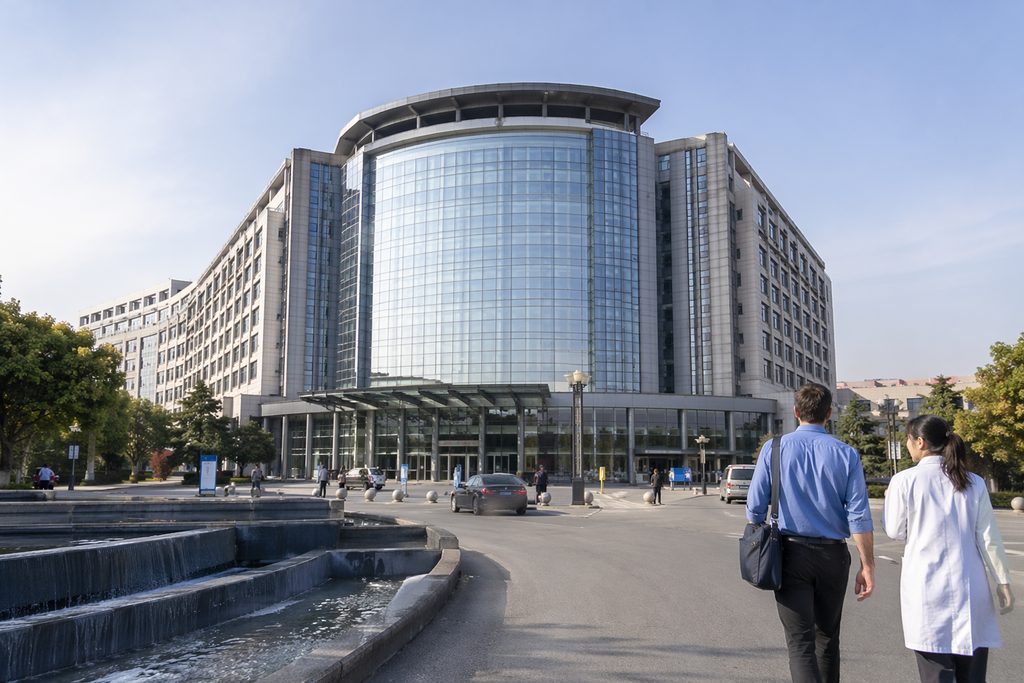
According to China’s National Health Commission, over 300,000 international patients sought medical treatment in Chinese hospitals in 2024. A growing share of those patients traveled for neurosurgical care. The PLA General Hospital neurosurgery cost typically runs between $25,000 and $60,000 for complex brain tumor resections — roughly one-fifth to one-third of comparable care in the United States. That figure alone explains much of the interest. But cost is only one variable, and for brain surgery, it is never the most important one.
This guide explains what international patients need to know before pursuing neurosurgery at PLA General Hospital in Beijing. We cover how the hospital’s neurosurgery department operates, what the safety record looks like, how to navigate the booking process, and what the total cost actually includes. We also address the harder questions: whether this route makes sense for your specific case, and what happens if complications arise far from home.
PLA General Hospital Neurosurgery for International Patients: The Short Answer
PLA General Hospital (officially Chinese PLA General Hospital, also known as the 301 Hospital) operates one of China’s largest neurosurgery departments, performing more than 8,000 neurosurgical procedures annually across its Beijing campuses. For international patients, the department is accessible through the hospital’s International Medical Center, which provides English-language coordination, expedited imaging, and access to senior attending surgeons. The PLA General Hospital neurosurgery cost for international patients ranges from $20,000 for minimally invasive procedures to $70,000+ for complex skull-base tumor resections, depending on the specific diagnosis and length of stay.
The caveat: you cannot simply email the hospital and book a surgery date. Chinese public hospitals — even top-tier military hospitals — require an in-person consultation before any surgical admission. The International Medical Center can arrange that consultation efficiently, but the process still demands that you travel to Beijing first, meet the surgical team, complete diagnostics, and then schedule the operation. This is not a telemedicine-to-surgery pipeline.
Who This Is Right For — and Who It Isn’t
Neurosurgery abroad is a serious decision. The patients who benefit most from seeking care at PLA General Hospital share a few characteristics.
Typically a good candidate:
- Has a confirmed diagnosis from imaging (MRI, CT, or angiography) and a clear surgical indication
- Has been quoted a prohibitive price or extensive wait time in their home country
- Needs a specific procedure — skull-base tumor resection, neurovascular intervention, deep-seated lesion biopsy — where surgical volume matters
- Is stable enough to fly internationally and endure a 2-4 week stay in Beijing
- Has a family member or companion who can travel with them
Who should not pursue this route:
- Patients with unstable neurological status, uncontrolled intracranial pressure, or acute hemorrhage requiring immediate intervention
- Patients whose condition requires ongoing postoperative management by a local team they already trust
- Patients without confirmed imaging or a working diagnosis — do not fly to China hoping for a diagnosis from scratch
- Patients who cannot manage the logistics of a foreign hospital system, even with bilingual support
- Patients seeking experimental therapies not yet approved in China
If you fall into the second list, staying closer to home is genuinely the better choice. Brain surgery is hard enough without adding a 12-hour flight to the recovery equation.
The Options, Compared
International patients considering neurosurgery in China are really choosing between three paths: a top-tier Chinese public hospital like PLA General Hospital, a Chinese private international hospital, or staying in their home country. Each has a distinct profile.
| Factor | PLA General Hospital (Public, International Dept.) | Chinese Private International Hospital | US/UK Academic Medical Center |
|---|---|---|---|
| Complex brain tumor resection | $25,000 – $60,000 | $40,000 – $90,000 | $120,000 – $350,000 |
| Annual neurosurgery volume | 8,000+ procedures | 500 – 2,000 procedures | 1,500 – 4,000 procedures |
| English-speaking coordination | Available via International Medical Center | Standard | Standard |
| Wait time for non-emergency surgery | 2 – 6 weeks after in-person consult | 1 – 3 weeks | 4 – 16 weeks |
| Insurance direct billing | Rarely; pay upfront, claim later | Common | Standard |
| Post-op follow-up abroad | Challenging; requires remote coordination | Easier; some international affiliations | Seamless |
PLA General Hospital suits patients who prioritize surgical volume and cost savings and can manage the logistics. Private international hospitals in China — such as United Family or Jiahui — offer smoother English-language experiences and direct insurance billing but at roughly double the price. Staying home costs the most but keeps your entire care continuum in one system. If your case is complex and you have strong local support, the public hospital route is often the best value. If you need hand-holding at every step, the private route may justify its premium.
What Makes PLA General Hospital Neurosurgery Different
The department’s scale is the first thing that stands out. PLA General Hospital runs one of the largest neurosurgery departments in Asia, with subspecialty teams covering cerebrovascular surgery, skull-base tumors, functional neurosurgery, pediatric neurosurgery, and neurocritical care. A surgeon there may perform 200-300 brain tumor resections per year. That repetition produces a level of intraoperative judgment that no amount of individual brilliance can replace.
And the technology base is current. The hospital operates multiple intraoperative MRI suites, neuronavigation systems, and hybrid operating rooms for combined endovascular and open procedures. For international patients, the International Medical Center functions as a separate intake channel — English-speaking coordinators, dedicated appointment slots, and expedited imaging. You are not walking into the general outpatient chaos that Chinese public hospitals are known for.
But this is still a Chinese military hospital. The administrative culture is formal. Records must be translated into Chinese for the surgical team. Payment is upfront, in tranches. And while senior surgeons often speak some English, the day-to-day nursing and ward communication is Chinese. Anyone who tells you otherwise is not being straight with you.
What It Costs: A Realistic Breakdown
Let’s put numbers on the table. The PLA General Hospital neurosurgery cost for international patients breaks down into several distinct components.
Hospital charges for a complex brain tumor resection typically run $25,000 to $50,000. That covers the operating room, surgeon’s fee, anesthesia, ICU stay, ward bed, nursing, and basic medications. A simpler procedure — a stereotactic biopsy or a minimally invasive endoscopic resection — might run $15,000 to $25,000. A complex skull-base tumor requiring a multidisciplinary approach with ENT and plastic surgery could reach $60,000 to $80,000.
Then there are the non-hospital costs. Preoperative imaging in Beijing (if you need repeat MRI or functional mapping): $1,500 to $4,000. Accommodation for you and a companion for 3-4 weeks: $2,000 to $6,000 depending on hotel choice. Round-trip flights from Europe or North America: $1,500 to $4,000. Bilingual medical companion services: from $300 per day for hospital navigation and translation.
Total realistic budget for an international patient undergoing brain tumor surgery at PLA General Hospital: $35,000 to $75,000, all in. That compares to $150,000 to $400,000 in the United States for the same procedure. The savings are real. But so are the out-of-pocket mechanics: you pay the hospital upfront, then claim reimbursement from your insurer if your policy covers treatment abroad. Most do not, which means most international patients at PLA General Hospital are self-paying.
Practical Considerations: Records, Visas, and the Language Barrier
The paperwork starts before you book a flight. You need complete medical records: all imaging (MRI, CT, PET, angiography), pathology reports if a biopsy was done, operative notes from any prior surgery, and a detailed clinical summary. These must be translated into Chinese. The International Medical Center can arrange translation, or you can use a certified medical translation service. Incomplete records are the single most common reason for delayed consultations.
Visa is the next hurdle. Medical treatment in China falls under the S2 visa category — specifically for short-term private affairs including medical treatment. Your companion applies for the same S2 visa. You will need an invitation letter from the hospital, proof of appointment, and evidence of sufficient funds. The Chinese embassy or consulate in your country processes these. Processing time varies from a few days to several weeks. Do not book flights until the visa is in hand.
Important: The M visa is for commercial and trade activities. It is not appropriate for medical treatment. Applying under the wrong category will delay your case or result in refusal. The S2 visa is the correct category for short-term medical travel, subject to the latest consulate requirements.
Language is the third practical reality. The surgical team may speak English, but the ward nurses, the pharmacy staff, the billing office, and the MRI technicians likely do not. A bilingual medical companion — someone who physically accompanies you through registration, imaging, payment, and ward rounds — transforms the experience. Without that support, small miscommunications can compound into real problems. This is not a luxury. It is the difference between a manageable hospital stay and a disorienting one.
Follow-up after you return home is another honest challenge. Your local neurologist or neurosurgeon will need the operative report, discharge summary, and postoperative imaging — all in Chinese. You will need certified translations. Remote follow-up with the Beijing team is possible via video consultation for $100 to $300 per session, but it cannot replace in-person assessment. Plan for a local provider to take over your longitudinal care before you travel.
Frequently Asked Questions
Safety depends on the surgeon, the procedure, and your preoperative condition — not your nationality. PLA General Hospital’s neurosurgery department performs over 8,000 procedures annually with outcomes comparable to major Western centers for the procedures it does most often. The hospital is JCI-accredited for its International Medical Center and follows standard neurosurgical protocols. The real safety consideration for foreigners is communication and continuity: you need bilingual support in the hospital and a clear plan for follow-up care at home. Those factors, not the surgery itself, are where international patients most often run into trouble.
You start by submitting your translated medical records to the International Medical Center for a preliminary review. A senior neurosurgeon evaluates whether your case is appropriate for treatment there. If so, you travel to Beijing for an in-person consultation and any repeat imaging. Only after that consultation does the surgical team schedule your procedure. There is no shortcut: you cannot book brain tumor surgery at PLA General Hospital from abroad without first being seen in person. The entire process — from initial submission to surgery date — typically takes 4 to 10 weeks.
PLA General Hospital has a dedicated neurocritical care unit staffed 24/7, and the hospital is equipped to manage the standard complications of neurosurgery: postoperative hemorrhage, infection, cerebral edema, and seizure. The risk profile is similar to any high-volume Western neurosurgical center. The harder part is what happens after discharge: if a complication arises weeks later in your home country, the Beijing team can provide records and remote consultation, but they cannot treat you. You need a local neurosurgeon willing to take over your care — ideally one identified before you travel. This is not a reason to avoid treatment abroad. It is a reason to plan for continuity of care before you leave home.
You can request a specific senior surgeon, and the International Medical Center will try to accommodate that request. But there is no guarantee. Senior surgeons at PLA General Hospital have heavy clinical and administrative loads, and their availability for international patients fluctuates. The hospital assigns the most appropriate available surgeon based on your diagnosis and the subspecialty involved. If you need a specific named surgeon, you should confirm their availability before committing to travel. Even then, surgical schedules in a hospital this size can shift unexpectedly.
Your Next Step
PLA General Hospital offers international patients something rare: very high neurosurgical volume at a fraction of Western prices. The tradeoff is logistical complexity — records translation, S2 visa processing, upfront payment, and a hospital environment where English is the exception rather than the rule. Whether that tradeoff makes sense depends on your diagnosis, your budget, and your tolerance for navigating a foreign system.
Our team at China Medical Services helps international patients work through exactly these decisions. We are not a hospital, and we do not provide diagnoses or clinical advice. What we do is handle the coordination: translating records, arranging consultations with the International Medical Center, providing bilingual companionship during your hospital stay, and helping you plan for follow-up care after you return home. If you are weighing neurosurgery at PLA General Hospital — or anywhere else in China — a conversation with our coordination team can clarify whether this path is right for your case. Request a free consultation and we will help you map out the next steps, no obligation.
Brain surgery is never a simple decision. But with the right information and the right support on the ground, the choice becomes clearer. We are here to make it that way.
For more medical information and treatment options in China, visit chinamedservices.com (China Medical Services).
