Zhongshan Ophthalmic Center Retina and Vitreous for International Patients: Real Costs, Process, and What to Expect
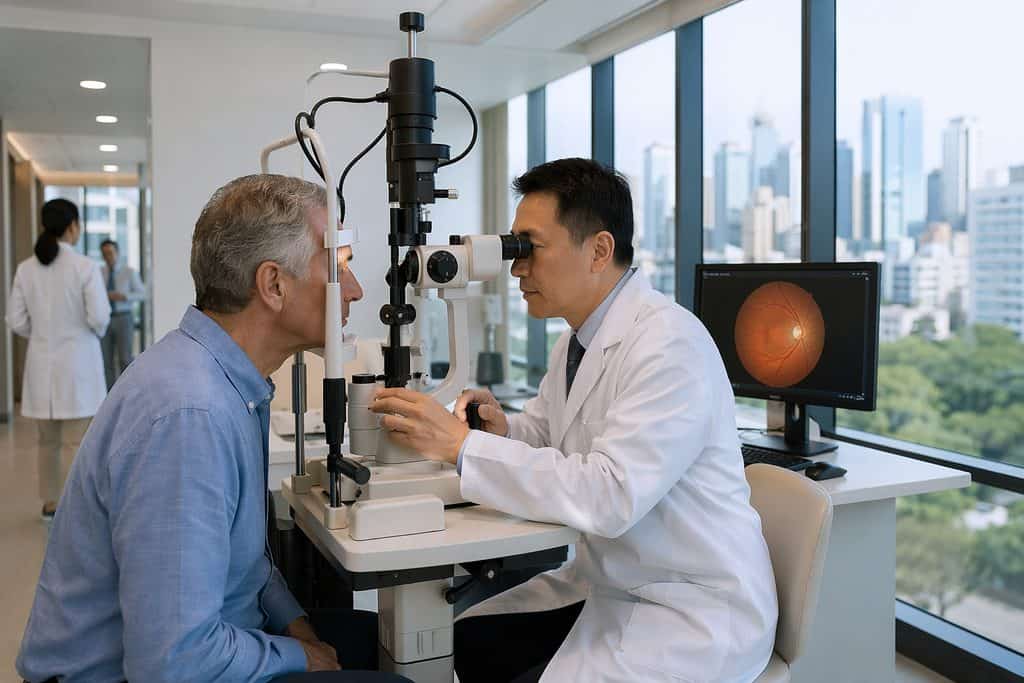
While a retinal detachment repair in the United States routinely runs between $8,000 and $15,000 for uninsured patients, the same procedure at a top Chinese specialty hospital often lands between $2,500 and $6,000. The gap isn’t a sign of lower quality. It’s a function of how China’s ophthalmic centers are structured. Zhongshan Ophthalmic Center in Guangzhou performs over 20,000 vitreoretinal surgeries annually, making it one of the highest-volume retina centers in the world. That volume creates efficiency, and efficiency shows up on the invoice.
This article is for the patient who has already been told they need a vitrectomy, a scleral buckle, or a membrane peel. You’re not browsing. You’re comparing. And the search that brought you here—”Zhongshan Ophthalmic Center Retina and Vitreous for International Patients”—tells us you’ve done enough homework to know that this specific institution matters. What you need now is the unvarnished version: what it costs, how the process works from outside China, what can go wrong, and whether the savings justify the distance.
We coordinate medical care in China for patients from North America, Europe, the Middle East, and Southeast Asia. We are not doctors. We are the people who make sure your records reach the right retina specialist, your appointment is actually booked, and someone who speaks both languages is standing next to you at the registration desk. That matters more than most patients realize, and we’ll explain why throughout this article.
How This Actually Works, Step by Step
The sequence from “I’m considering retina surgery in China” to “I’m on a plane home with my post-op instructions” follows a predictable path. Here’s the real version, not the brochure version.
Step 1: You send us your existing records. That means your most recent optical coherence tomography (OCT) scans, fundus photographs, visual field tests if you have them, and the written diagnosis from your current ophthalmologist. If your records are in English, German, Arabic, or French, we translate the key clinical terms into Chinese for the reviewing specialist. You don’t need to be in China for this step. Most patients start from their living room.
Step 2: A retina specialist at Zhongshan Ophthalmic Center reviews your file. This is a written second opinion. The doctor looks at your scans and gives a preliminary assessment: whether surgery is indicated, which procedure they’d recommend, and whether your case is routine or complex. This typically costs $300–500 and takes about 5 to 10 business days. The written opinion is for reference only—it is not a prescription and does not bind the hospital to a specific treatment plan.
Step 3: You decide whether to proceed. If the specialist confirms surgery is appropriate and you want to move forward, we coordinate the next layer: a video consultation with the clinical team. This costs $100–300 for a standard international department consult or $500–800 if you want a top-specialist video session. During the call, you can ask about surgical approach, expected recovery, and realistic outcomes for your specific retinal condition.
Step 4: We book your in-person consultation. Here’s the part that surprises most Western patients: public hospitals in China do not let you book surgery from overseas. You must be seen in person first. The specialist needs to examine your eye directly before the operating room is scheduled. We handle the appointment booking through the hospital’s international department, which means you skip the general registration line but still attend a face-to-face consult.
Step 5: You travel to Guangzhou. Your visa, your flight, your hotel—we guide you through the visa paperwork (S2 visa for medical treatment) and recommend accommodation within walking distance of the hospital. A bilingual companion meets you at the airport or the hospital entrance, depending on the package you choose.
Step 6: In-person consult, then surgery. The specialist examines you, confirms the surgical plan, and schedules the procedure. For most vitrectomies, surgery happens within 3 to 7 days after the in-person consult. The hospital requires prepayment before admission. You’ll pay the hospital directly—never through us.
Step 7: Post-op follow-up, then home. Retinal surgery requires careful follow-up. You’ll have at least two or three post-operative visits in Guangzhou before you’re cleared to fly. Your surgeon will give you a written summary in Chinese and English for your home ophthalmologist.
Zhongshan Ophthalmic Center Retina and Vitreous for International Patients: What the Center Actually Offers
Zhongshan Ophthalmic Center is the ophthalmic hospital of Sun Yat-sen University in Guangzhou. It is consistently ranked among China’s top three eye hospitals in the Fudan University hospital rankings, and its retina and vitreous department is one of the busiest subspecialty units in Asia. The center treats the full spectrum of vitreoretinal disease: rhegmatogenous retinal detachment, tractional detachment from diabetic retinopathy, macular holes, epiretinal membranes, vitreous hemorrhage, and complex trauma cases.
For international patients, the practical question is simpler than the institutional reputation. Can you actually get care there as a foreigner? The answer is yes—through the international department, which handles overseas patients with English-speaking coordinators, priority appointment scheduling, and private or semi-private inpatient rooms. The international channel costs more than the standard public channel, roughly 1.5 to 2 times the local rate. But that multiplier still leaves you far below Western prices.
What does a vitrectomy actually cost at Zhongshan through the international department? Based on recent patient-reported figures and our coordination experience, a standard pars plana vitrectomy for retinal detachment runs between $4,000 and $7,000 including hospital stay, operating room fees, and surgeon’s fee. A scleral buckle procedure is typically $3,000 to $5,000. Complex cases involving silicone oil tamponade or combined cataract-vitrectomy surgery run higher, sometimes $8,000 to $12,000. Every quote varies by hospital and case complexity—these are ranges, not guarantees.
For comparison, the same vitrectomy in the United States averages $13,000 to $20,000 at hospital-based surgical centers. In the UK, private vitrectomy runs £6,000 to £9,000. In Germany, €5,000 to €8,000. The savings are real, but they come with the logistical weight of traveling 6,000 miles for eye surgery.
If you’re still comparing options across borders, our overview of China’s top-ranked hospitals for international patients puts Zhongshan’s standing in context with other specialty centers.
A Realistic Timeline
Patients underestimate how long the pre-surgery phase takes. Here’s the honest schedule, assuming no complications in your case review.
| Stage | What Happens | Realistic Duration |
|---|---|---|
| Week 1 | You send records; we translate and submit to Zhongshan’s retina department | 3–5 business days |
| Week 2–3 | Written second opinion from the reviewing specialist | 5–10 business days |
| Week 3–4 | Video consultation with the clinical team (optional but recommended) | 3–7 days to schedule |
| Week 4–6 | S2 visa application with hospital invitation letter | 5–15 business days, varies by consulate |
| Week 6–7 | Travel to Guangzhou; in-person consultation at Zhongshan | 1–2 days |
| Week 7–8 | Surgery scheduled and performed | 3–7 days after in-person consult |
| Week 8–10 | Post-operative follow-up visits in Guangzhou | 2–3 visits over 10–14 days |
| Week 10 | Cleared to fly home with written discharge summary | — |
Total time from first contact to flying home: roughly 8 to 10 weeks. Some patients compress this to 6 weeks if their visa processes quickly and their case is straightforward. Others stretch to 12 weeks if the specialist requests additional imaging or if the consulate is slow.
The step people forget is document translation. If your OCT scans were taken on a machine that outputs in a proprietary format, the reviewing doctor may need the raw DICOM files, not just the printed report. Getting those from your home clinic can take a week on its own. Start early.
What Can Go Wrong — and What Happens Then
Retina surgery abroad carries risks beyond the surgical ones. Here are the failure modes we’ve seen, and what the actual recourse looks like.
The specialist disagrees with your home diagnosis. This happens more often than patients expect. The reviewing doctor at Zhongshan looks at your scans and says surgery isn’t urgent, or a different procedure is indicated, or a period of observation is appropriate. What then? You’ve spent $300–500 on a written opinion that saved you from unnecessary surgery. That’s not a loss. That’s the system working. You go home with a second opinion that either confirms or corrects your treatment plan.
Your case is more complex than the initial review suggested. The written second opinion is based on scans alone. When the surgeon examines your eye in person, they may find additional pathology—a small tear that wasn’t visible on OCT, or vitreous traction that requires a different approach. The surgical plan changes, and the cost changes with it. This is why we never quote a fixed surgical price before the in-person consult. The hospital’s final quote comes after the specialist sees you.
Post-operative complications require extended stay. Retinal detachment surgery carries a 5–10% risk of re-detachment, depending on the original pathology. If your retina re-detaches while you’re still in Guangzhou, you’ll need a second procedure. That means extending your visa, your hotel, and your time away from home. Some patients purchase travel insurance that covers medical complications abroad; most standard policies exclude pre-existing conditions. Read the fine print before you fly.
Language breakdown at the hospital. Even at an international department, the nursing staff, the pharmacy, and the imaging technicians may speak limited English. The surgeon speaks English. The front desk coordinator speaks English. But when you’re in the OCT room at 9 a.m. and the technician needs you to position your chin differently, that conversation happens in Mandarin. A bilingual companion costs from $300 per day and eliminates this friction entirely. For many patients, this is the difference between a stressful week and a manageable one.
Is Vitreoretinal Surgery Safe in China? Evaluating the Evidence
The question behind the search “is vitreoretinal surgery safe in China” deserves a direct answer. Safety in retinal surgery is a function of three things: surgeon volume, equipment quality, and infection control. Zhongshan Ophthalmic Center scores high on all three.
Surgeon volume matters because vitrectomy is a technically demanding procedure. A surgeon who performs 500 vitrectomies a year has hands that a surgeon performing 50 a year simply doesn’t. Zhongshan’s retina department operates at a volume that few Western centers match. The center’s annual surgical volume exceeds 20,000 vitreoretinal procedures, and individual senior surgeons routinely perform 300 to 500 cases annually. That repetition produces a level of procedural fluency that translates into shorter operating times and lower complication rates.
Equipment is the second factor. Zhongshan operates with the same platforms used in major Western centers—Alcon Constellation and Bausch + Lomb Stellaris vitrectomy systems are standard. The imaging suite includes spectral-domain OCT, swept-source OCT, and ultra-widefield fundus imaging. There’s no equipment gap. The hospital also participates in international clinical research and maintains quality standards aligned with academic medical centers globally.
Infection control in Chinese hospitals is a legitimate concern for Western patients. The honest answer is that top-tier academic centers like Zhongshan maintain rigorous sterilization protocols, but the overall hospital environment is busier and more crowded than a private Western clinic. The international department mitigates this by providing separate waiting areas and priority access to imaging and pharmacy services. Endophthalmitis rates—the most feared post-operative infection—are reported at less than 0.05% for routine vitrectomy at major Chinese centers, consistent with international benchmarks.
If you’re weighing this against other destinations, our guide to China’s top specialty departments by Fudan ranking includes ophthalmology alongside cardiac surgery, orthopedics, and oncology, so you can see where retina care sits in the broader landscape.
But safety isn’t just about the operating room. It’s about the entire arc of care. The follow-up schedule, the availability of your surgeon for post-op questions, the clarity of your discharge instructions—these determine whether a technically successful surgery becomes a clinically successful outcome. This is where coordination matters. A patient who flies home with a one-page discharge summary and no plan for follow-up has a different risk profile than one who leaves with a structured handoff to their home ophthalmologist.
Practical Considerations: Records, Visa, Payment, and Follow-Up
No. Chinese public hospitals do not schedule surgery without an in-person consultation. You can complete a written second opinion and a video consultation remotely, but the operating room is booked only after the surgeon examines your eye directly in Guangzhou. Plan for 3 to 7 days between your in-person consult and your surgery date.
At top academic centers like Zhongshan Ophthalmic Center, the surgical equipment, infection control protocols, and surgeon experience are comparable to major Western teaching hospitals. The center’s annual vitreoretinal surgical volume exceeds 20,000 procedures, and post-operative infection rates are consistent with international benchmarks. The main difference is the hospital environment—busier and more crowded than a private Western clinic—which is mitigated by the international department’s separate facilities.
What do international patient reviews say about Zhongshan Ophthalmic Center?
Patient-reported experiences consistently highlight
Frequently Asked Questions
Yes. The hospitals used for international patients are JCI-accredited and follow the same international safety standards as top hospitals in the US and Europe. Surgical teams perform high volumes of procedures — often more than their Western counterparts — which studies show leads to better outcomes.
Costs vary by procedure and hospital, but international patients typically save 40-80% compared to US prices — even when factoring in travel and accommodation. A consultation with our team will give you an exact, all-inclusive quote with no hidden fees.
Send us your existing medical reports to get started. We handle everything from hospital selection and appointment scheduling to visa assistance and post-operative recovery planning. Your medical records are reviewed by the specialist before you even book a flight.
For more medical information and treatment options in China, visit chinamedservices.com (China Medical Services).
