PLA General Hospital Cardiology for International Patients: Access and Costs
PLA General Hospital Cardiology for International Patients: What to Know Before You Go
Key Takeaways
- PLA General Hospital (Chinese PLA General Hospital, also known as 301 Hospital) in Beijing operates one of China’s highest-volume cardiac centers, with an international medical department that handles foreign patients daily.
- Heart bypass surgery in China at top public hospitals typically runs $12,000–$20,000 — roughly one-fifth to one-tenth of the $120,000+ charged by major US centers.
- The hospital’s public outpatient clinics cannot be pre-booked from overseas. Foreign patients must go through the International Medical Department or a coordination service to lock in appointments before flying to Beijing.
- Language is the single biggest barrier. The hospital is enormous, signage is predominantly Chinese, and without bilingual support, navigating registration, testing, and consultations is extremely difficult.
The Problem: Cardiac Care Costs Are Crushing Patients in the West
According to the American Heart Association’s 2024 Heart Disease and Stroke Statistics update, cardiovascular disease remains the leading cause of death globally, claiming an estimated 19.5 million lives per year. For patients who need intervention — a bypass, a valve replacement, an angioplasty — the financial reality in the United States is brutal. The average cost of coronary artery bypass grafting (CABG) in the US now exceeds $120,000 before insurance adjustments, and even with coverage, out-of-pocket maximums frequently leave patients with $10,000–$20,000 in bills. For the uninsured or underinsured, the numbers are simply impossible.
Wait times add another layer. In Canada, the median wait for elective CABG stretches beyond 10 weeks in several provinces, according to the Canadian Institute for Health Information. In the UK, NHS data shows some patients waiting 18 weeks or longer from referral to treatment for cardiac surgery. For someone with unstable angina or a tight left main stenosis, that is not a scheduling inconvenience. That is a daily risk of myocardial infarction.
So patients start looking elsewhere. Thailand, India, Turkey, South Korea — all have established medical tourism industries. But China, despite having some of the highest cardiac surgery volumes on the planet, remains under the radar for most Western patients. That is changing.
Why PLA General Hospital Cardiology for International Patients Is Worth a Serious Look
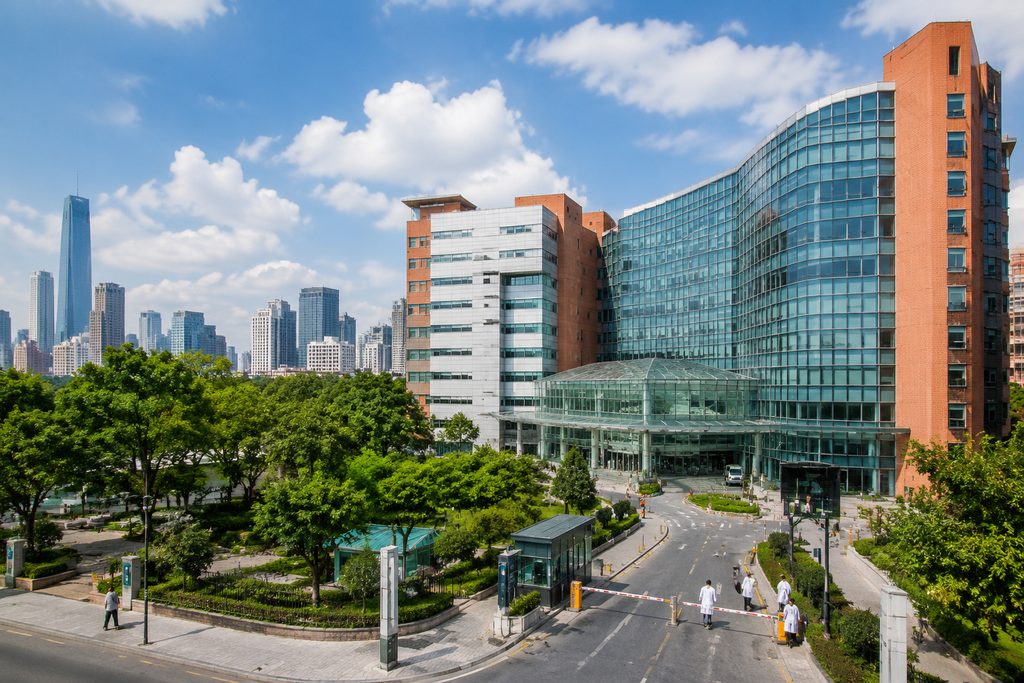
PLA General Hospital — formally the Chinese PLA General Hospital, commonly called 301 Hospital — sits in Beijing’s Haidian District. It is one of the largest hospital complexes in Asia, a military-affiliated institution that also serves civilian and international patients. Its Department of Cardiovascular Medicine and Department of Cardiovascular Surgery handle enormous patient volumes. That volume is not just a statistic. It translates directly into procedural experience.
Clinical Volume That Most Western Centers Cannot Match
Chinese cardiac centers operate at a scale that is hard to comprehend from a Western perspective. Fuwai Hospital in Beijing, the national cardiovascular center, performs more than 14,000 cardiac surgeries annually — the highest volume of any heart hospital globally. PLA General Hospital’s cardiac program is smaller than Fuwai’s but still ranks among the top cardiac surgery departments in China by case volume. A surgeon there may complete 300–500 bypass procedures per year. The average US cardiac surgeon performs roughly 100–150. Volume correlates with outcomes in cardiac surgery, a relationship documented repeatedly in peer-reviewed literature, including a widely cited 2017 study in the New England Journal of Medicine showing lower mortality at high-volume CABG centers.
For international patients, this matters in a specific way: the teams at PLA General Hospital have seen nearly every anatomical variant, every comorbidity combination, every intraoperative complication. That depth of experience is exactly what you want when your sternum is about to be opened.
The International Medical Department Changes the Equation
Most foreigners researching PLA General Hospital cardiology international patients do not realize the hospital has a dedicated International Medical Department. This is not a marketing gimmick. It is a separate clinical pathway with English-speaking coordinators, expedited registration, and access to senior specialists. The department handles everything from initial consultation scheduling to inpatient admission for foreign nationals.
But here is the honest part: you cannot simply email the public hospital switchboard and book a cardiac consultation. The public system requires in-person registration on the day of the visit, often starting at 6:00 AM with queue numbers. For a foreign patient flying in from abroad, that model is unworkable. The International Medical Department operates differently — appointments can be arranged in advance, though typically through a coordination service or direct contact with the department’s patient relations office.
Cost Structure: Why the Numbers Are So Much Lower
Let’s address the elephant in the room directly. When Western patients hear “military hospital in Beijing,” they assume either cutting-edge elite care or something opaque and inaccessible. The reality is more mundane: PLA General Hospital is a public institution with government-regulated pricing. Labor costs in China are a fraction of US levels. Hospital administrative overhead is lower. Malpractice insurance premiums are a rounding error compared to American figures. None of that touches clinical quality — it is structural economics.
| Procedure | China (Top Public Hospital) | United States (Average) | Thailand (Private International) |
|---|---|---|---|
| Coronary Artery Bypass Graft (CABG) | $12,000 – $20,000 | $120,000+ | $25,000 – $40,000 |
| Angioplasty with 1 Drug-Eluting Stent | $8,000 – $15,000 | $35,000 – $50,000 | $12,000 – $18,000 |
| Aortic Valve Replacement (Surgical) | $18,000 – $30,000 | $150,000 – $200,000 | $35,000 – $55,000 |
| Diagnostic Cardiac Catheterization | $1,500 – $3,000 | $5,000 – $10,000 | $2,500 – $4,000 |
Prices vary by hospital and case complexity. The international department charges more than the public pathway — typically 1.5 to 2 times the standard rate — because it includes English coordination, priority scheduling, and often a private room. Even at that multiplier, the total cost for a bypass at PLA General Hospital’s international wing lands well under $30,000 in most cases. For a patient facing a $120,000 US bill, that is a 75–85% reduction.
Is PLA Hospital Good for Heart Surgery? What the Data Actually Shows
The question is PLA hospital good for heart surgery deserves a straight answer. PLA General Hospital’s Department of Cardiovascular Surgery is consistently ranked among China’s top 10 cardiac surgery departments in the Fudan University Hospital Rankings — the most authoritative hospital ranking system in China. The hospital performs over 2,000 cardiac surgical procedures annually across its adult and pediatric programs. Its interventional cardiology division handles more than 10,000 catheterization procedures per year.
Those numbers place it in the same tier as major European centers. The difference is that European centers publish outcomes in English-language journals more frequently. Chinese outcome data exists but is less accessible to Western readers. What we can say with confidence: the hospital’s volume, its Fudan ranking, and its status as a national-level military medical institution all point to clinical competence that meets or exceeds international benchmarks for routine cardiac procedures.
For complex cases — redo bypass, valve plus CABG combinations, adult congenital heart disease — the hospital’s cardiac surgery team has dedicated subspecialists. But patients with extremely rare conditions may find more focused expertise at Fuwai Hospital, which is exclusively cardiovascular. We cover the comparison in our guide to China’s top-ranked specialty departments.
How to Actually Access PLA General Hospital Cardiology as a Foreign Patient
The process is not as simple as booking a flight and showing up. Here is the real sequence, based on how the international pathway works in practice.
Step 1: Gather your records. You need a complete medical file: recent ECG, echocardiogram, coronary angiogram if available, stress test results, blood work, and a referral or summary letter from your treating cardiologist. All documents should be in English or translated into Chinese. The international department will review these before confirming an appointment.
Step 2: Establish contact with the International Medical Department. This is where most foreign patients hit a wall. The department’s direct contact channels are not always responsive to cold emails from overseas. Many patients work through a coordination service that has existing relationships with the department’s scheduling staff. That is not a bribe or a backdoor — it is simply how Chinese hospital administration works. Relationship-based scheduling is the norm.
Step 3: Secure your S2 visa. Foreign nationals traveling to China for medical treatment apply for an S2 visa, which is the short-stay category used for private affairs including medical treatment. You will need an invitation letter or medical appointment confirmation from the hospital, plus standard visa documentation. Family members accompanying you also apply for S2 visas. The M visa is for commercial and trade activities and is not appropriate for medical travel. Processing time varies by embassy; allow at least 3–4 weeks.
Step 4: Fly to Beijing and complete your consultation. Your first visit will include a face-to-face consultation with a cardiologist or cardiac surgeon, additional testing as needed, and a treatment plan. If surgery is indicated, the hospital will schedule it — typically within 1–2 weeks for international patients, though this depends on bed availability and surgeon schedule.
Step 5: Recovery and follow-up. For bypass surgery, expect 7–10 days in hospital and another 1–2 weeks in Beijing before flying home. Your discharge summary and operative report will be provided in English upon request. Follow-up with your home cardiologist is essential.
Comparing Your Real Options: Beijing vs. Shanghai vs. Staying Home
If you are searching for the best cardiac hospital Beijing for foreigners, PLA General Hospital is one answer — but not the only one. Beijing offers Fuwai Hospital (the highest-volume cardiac center globally), Anzhen Hospital (also top-ranked for cardiac surgery), and Peking Union Medical College Hospital (elite across all specialties). Shanghai counters with Zhongshan Hospital, whose cardiac surgery program is consistently ranked among China’s top three.
Some patients search for a cardiology package for international patients Shanghai, assuming Shanghai is more foreigner-friendly. It is true that Shanghai has a larger expatriate community and more Western-oriented private hospitals like Jiahui and Parkway. But for serious cardiac surgery, the public hospital cardiac centers in both cities outperform the private international hospitals in case volume and specialist depth. The private hospitals excel at outpatient cardiology, diagnostics, and English-language comfort. They are not where you want a complex CABG.
Here is a decision framework that cuts through the noise:
- Maximum cardiac surgery volume: Fuwai Hospital, Beijing
- Strong all-around with international department: PLA General Hospital, Beijing
- Best in Shanghai: Zhongshan Hospital, Fudan University
- English-first experience for diagnostics only: United Family or Jiahui private hospitals
- Cost-sensitive with solid outcomes: Provincial top-tier cardiac centers in cities like Wuhan or Chengdu
If you want to understand how much does angioplasty cost in China across different hospital tiers, the range is $8,000–$15,000 at top public hospitals for a single drug-eluting stent, including hospital stay. Private international hospitals charge $18,000–$25,000 for the same procedure. The public hospital figure includes the stent itself, which in China is often a domestic brand (Lepu, MicroPort) rather than Abbott or Medtronic. Domestic stents cost $500–$800; imported stents run $1,500–$2,500. That single line item explains much of the cost differential.
Practical Considerations: Documentation, Payment, and the Language Barrier
You cannot walk into PLA General Hospital with a US insurance card and expect direct billing. The international department requires prepayment — typically a deposit before admission, with the balance settled upon discharge. Payment is accepted via international credit card or wire transfer. Your US insurance may reimburse you after the fact, but you will need itemized receipts and a translated discharge summary. Check with your insurer before committing; some policies exclude treatment at non-US facilities entirely.
Language is the single most underestimated challenge. The hospital’s international department has English-speaking staff, but once you are on the ward, the nurses, technicians, and junior doctors may speak limited English. Diagnostic imaging, pharmacy, and billing are all conducted in Chinese. If you do not speak Mandarin, you need a bilingual companion — someone who can translate during consultations, explain test instructions, manage paperwork, and advocate for you with the nursing staff. This is not a luxury. It is the difference between a smooth experience and a disorienting, stressful one.
Documentation requirements are strict. The hospital will not schedule surgery without a complete medical record. Bring originals and digital copies of everything: imaging discs, not just reports. Chinese cardiologists want to see the actual angiogram images, not a written summary. If your records are incomplete, expect additional testing in Beijing before any surgical decision — which adds time and cost.
After you return home, follow-up is your responsibility. The hospital will provide a discharge summary and medication list. Your home cardiologist manages long-term care. Telemedicine follow-up with the Chinese team is possible but not routine; most patients communicate through their coordination service if questions arise.
Frequently Asked Questions
Not through the public outpatient system. The public clinics require same-day, in-person registration. The International Medical Department can arrange advance appointments for foreign patients, but direct contact from overseas is often slow. Most patients work through a coordination service that has established scheduling channels with the department.
PLA General Hospital has a 24-hour emergency department with cardiac capabilities. If you experience chest pain, go to the emergency department immediately — do not wait for an international department appointment. Emergency care is provided regardless of visa status or payment method, though you will be billed afterward.
Top Chinese public hospitals use internationally certified equipment. Catheterization labs at PLA General Hospital use Siemens or Philips imaging systems. Stents may be domestic (Lepu, MicroPort) or imported (Abbott, Medtronic). Domestic stents have extensive clinical trial data and are used in millions of procedures annually. If you prefer an imported stent, ask your cardiologist — it will cost more but is available.
This is the hardest question to answer honestly. The hospital’s responsibility ends at discharge. If you develop a complication after returning to your home country, your local cardiologist must manage it. Your Chinese medical records will be provided, but the Chinese team will not be directly involved in your ongoing care. This is true of any cross-border medical treatment, not just China. Patients who accept this reality and have a strong relationship with a home cardiologist are best positioned for good outcomes.
No. The M visa is for commercial and trade activities. Medical travelers apply for an S2 visa (short stay, private affairs including medical treatment) or S1 for stays exceeding 180 days. You will need supporting documents from the hospital confirming your appointment or admission.
Your Next Step
PLA General Hospital cardiology for international patients represents a genuine option for those facing prohibitive costs or long waits at home. The clinical volume is real, the international pathway exists, and the cost savings are substantial. But the logistics are not trivial — visa timing, documentation completeness, language support, and post-discharge planning all require attention. We help international patients navigate exactly these steps: hospital matching, appointment coordination, bilingual medical companionship, and visa guidance. We are not a hospital, and we do not provide medical advice or diagnoses. If you are considering cardiac care in China, start by reviewing our guide to China’s top-ranked hospitals or explore cardiac surgery department rankings to understand your options. When you are ready to discuss your specific case, request a free consultation through our patient services page — we will help you think through whether this path makes sense for you.
For more medical information and treatment options in China, visit chinamedservices.com (China Medical Services).
