Beijing Chao-Yang Hospital Respiratory Medicine: A Guide for International Patients
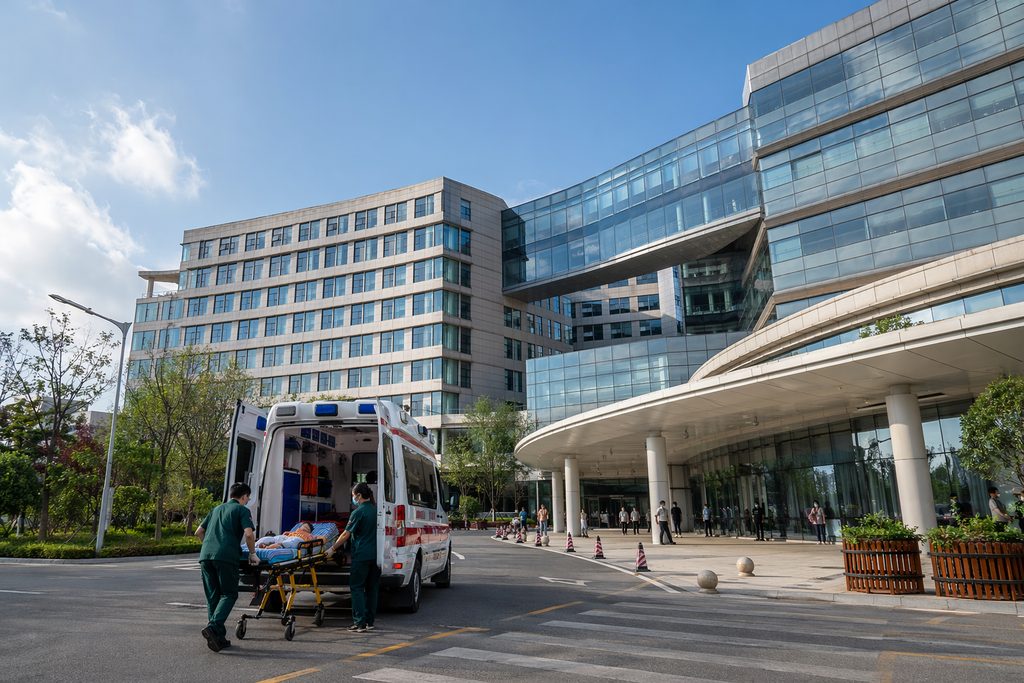
Respiratory disease doesn’t respect borders. Chronic obstructive pulmonary disease (COPD) now affects approximately 1 in 8 adults globally, according to a 2023 analysis published in The Lancet Respiratory Medicine. When standard treatments at home stall, patients start looking elsewhere. Beijing Chao-Yang Hospital‘s respiratory medicine program draws a growing share of that search traffic — and for good reason. The hospital’s respiratory department handles over 300,000 outpatient visits annually across its pulmonary, critical care, and thoracic surgery units. For a Beijing Chao-Yang Hospital respiratory department international patient, the question isn’t whether the expertise exists. It’s how to access it without wasting months or money. Our team at China Medical Services has spent years mapping exactly that path.
How This Actually Works, Step by Step
You don’t fly to Beijing hoping for an open slot. That approach fails for Chinese public hospitals. Here’s the sequence that actually works.
First, you send us your existing records — CT scans, spirometry results, blood work, current medication list, and a summary of what your home pulmonologist has tried. We translate everything into medical-grade Chinese and forward it to the respiratory department’s international coordination desk. The specialists review your file, typically within 3 to 5 business days. They come back with one of three responses: a written second opinion, a request for additional imaging, or a recommendation for a video consultation before any travel commitment.
If the assessment points toward in-person treatment, we then coordinate the appointment through the hospital’s official international channel. That’s the critical distinction. Walk-in registration at a public hospital means lining up at 6 a.m. and hoping. The international channel books a specific specialist at a specific time. You’ll still need a face-to-face consultation before any procedure — that’s non-negotiable at Chinese public hospitals — but the slot is reserved.
Visa comes next. You’ll apply for an S2 visa with a medical treatment annotation, supported by an official invitation letter from the hospital. Processing takes 1 to 3 weeks depending on your home country’s Chinese embassy workload.
Then you travel. A bilingual companion meets you at the hospital, handles registration, payment, and queue logistics, and sits with you during the consultation to translate in real time. After the visit, you receive a written summary in English plus a treatment plan with cost estimates.
What Makes Beijing Chao-Yang’s Respiratory Program Different
Beijing Chao-Yang Hospital is not a boutique private clinic. It’s a 2,000-bed public teaching hospital affiliated with Capital Medical University, and its respiratory medicine department is consistently ranked among China’s top 10 in the Fudan University hospital specialty rankings. That ranking matters because it’s based on peer review from Chinese physicians who know which departments actually deliver outcomes.
The department runs one of China’s largest pulmonary function testing labs, a dedicated interventional pulmonology suite for bronchoscopy and endobronchial procedures, and a respiratory intensive care unit that handles severe COPD exacerbations and complex pneumonia. For asthma, the department’s allergy and immunology subgroup performs comprehensive phenotype testing — something many Western clinics only offer at tertiary academic centers.
But here’s what most foreign patients don’t realize. The volume is staggering. Chinese respiratory specialists see more interstitial lung disease cases in a month than many Western pulmonologists see in a year. That volume translates into pattern recognition. When a rare presentation walks in, the Chao-Yang team has usually seen it before.
And the cost difference is stark. A full pulmonary function test battery, CT scan, specialist consultation, and initial treatment plan at Beijing Chao-Yang typically runs $400 to $900. At a major U.S. academic center, the same workup easily exceeds $4,000 before insurance.
A Realistic Timeline
People underestimate the waiting steps. Here’s what a typical timeline looks like for a Beijing Chao-Yang Hospital respiratory department international patient pursuing COPD or asthma evaluation.
| Stage | What Happens | Typical Duration |
|---|---|---|
| Day 1–3 | You submit records; we translate and format them | 2–3 days |
| Day 4–8 | Respiratory department reviews your file | 3–5 business days |
| Day 9–14 | Video consultation or written second opinion scheduled | 5–7 days lead time |
| Week 3–5 | Visa application with hospital invitation letter | 1–3 weeks |
| Week 4–6 | Travel to Beijing; in-person consultation | 48–72 hours on the ground |
| Week 5–8 | Additional testing, treatment plan finalization | 3–10 days depending on complexity |
The part people forget is the document translation. A 200-page medical record doesn’t translate itself. Our team handles that, but it adds 2 to 3 days to the front end. Visa processing is also outside anyone’s control — we can prepare the paperwork, but the embassy sets the pace.
For patients needing bronchoscopy or other interventional procedures, add another 5 to 7 days after the initial consultation. The hospital schedules these based on equipment availability and specialist rotation.
What Can Go Wrong — and What Happens Then
Let’s be honest about failure modes.
Your records are incomplete. Chinese specialists won’t make treatment decisions on partial data. If your home physician didn’t run a full spirometry with bronchodilator response, Chao-Yang will ask for it before proceeding. That means a round-trip to your local clinic before anything moves. We flag this early — often during the initial records review — so you’re not surprised later.
The specialist recommends against travel. This happens more than people expect. If your condition is well-managed on current therapy, or if a video consultation reveals that treatment at home is sufficient, the Chao-Yang team will say so. We don’t push patients to fly halfway around the world for a confirmation of what they already know. A written second opinion often resolves the uncertainty for $300 to $500 instead of a $3,000 trip.
Appointment availability shifts. Public hospital schedules move. A specialist may be called to a conference or an emergency. When that happens, the international coordination desk reschedules — usually within 2 to 3 days. Our companion service handles the rebooking so you’re not stranded in a hospital lobby with a paper ticket and no Mandarin.
Your insurance won’t pay upfront. Chinese public hospitals require prepayment. You settle the bill at each step — consultation, imaging, procedures — and then file for reimbursement with your insurer. If your policy requires direct billing, you’ll need to use the hospital’s international VIP department, which costs 1.5 to 2 times the standard rate.
Is Chao-Yang the Right Choice for Your Specific Condition?
Not every respiratory problem belongs at Chao-Yang. Here’s how to think about it.
For COPD, asthma, chronic cough, and complex pulmonary infections, Chao-Yang is among the strongest options in Beijing. The department’s pulmonary rehabilitation program — often overlooked by international patients — combines exercise training, nutritional counseling, and medication optimization in a structured outpatient format. That’s rare in China and genuinely useful for COPD patients who’ve plateaued on inhalers alone.
For lung cancer, the picture shifts. Chao-Yang’s thoracic surgery and oncology teams are competent, but Beijing’s top lung cancer programs are at Peking Union Medical College Hospital and the Chinese Academy of Medical Sciences Cancer Hospital. If your imaging suggests malignancy, we’d route you there instead. Our department ranking database breaks this down by specialty so you’re not guessing.
For interstitial lung disease, Chao-Yang’s rheumatology-pulmonology crossover clinics are excellent. The hospital runs one of China’s few dedicated ILD multidisciplinary teams, which matters because ILD treatment requires coordinated input from pulmonologists, rheumatologists, and radiologists. A fragmented approach wastes months.
Practical Considerations: Records, Visa, and Money
Before you book anything, get your paper in order.
Medical records. You need: all imaging on CD or DICOM files (not just printed reports), complete pulmonary function test results, current medication list with dosages, and a summary letter from your pulmonologist. If your records aren’t in English or Chinese, we arrange certified translation. This is the step that most often delays the process.
Visa. The S2 visa covers short-term private affairs including medical treatment. You’ll need the hospital’s official invitation letter, proof of appointment, and evidence of sufficient funds. Family members traveling with you apply for the same S2 category. Processing times vary wildly by country — plan for 2 to 4 weeks and don’t book flights until the visa is in hand.
Payment. Bring a credit card that works internationally and a backup. Chao-Yang accepts UnionPay and major international cards at the international department, but some imaging centers within the hospital only take UnionPay or cash. Our companion can handle cash payments on your behalf if needed. Budget for $500 to $1,500 for a typical diagnostic workup, more if procedures are involved.
Language. The international department has English-speaking staff, but the specialists themselves often conduct consultations in Mandarin. A bilingual companion bridges that gap — and handles the practical logistics of navigating a hospital that sees over 10,000 outpatients daily.
Follow-up at home. Before you leave Beijing, ask for a written treatment plan in English, all imaging on a USB drive, and contact information for the department’s international desk. Chao-Yang doctors typically offer follow-up video consultations for established patients, which keeps your care continuous without another flight.
Frequently Asked Questions
You can’t book directly from overseas through the standard public registration system. The international channel requires either an in-country proxy or a coordination service that works with the hospital’s international department. We handle the registration, medical card creation, and specialist scheduling on your behalf. Expect 3 to 5 business days for confirmation after records submission.
Yes, with qualifications. The respiratory department runs comprehensive asthma phenotyping — including fractional exhaled nitric oxide testing, allergen panels, and spirometry with bronchodilator response — that matches what you’d get at a top Western academic center. The catch is language and logistics. Without a bilingual companion, you’ll struggle to navigate the hospital and communicate with your specialist. The medical quality is there; the accessibility requires support.
A full diagnostic workup — consultation, spirometry, chest CT, blood work, and initial treatment plan — typically runs $400 to $900 through the international department. A pulmonary rehabilitation program adds $200 to $500 depending on duration and intensity. Medication costs vary widely by drug class. Compare that to $3,000 to $6,000 for equivalent care in the U.S. or Europe, and the savings are substantial even after travel costs.
Yes. The respiratory department offers video consultations for international patients who’ve submitted their records in advance. You’ll speak directly with a respiratory specialist, discuss your symptoms and treatment history, and hear their preliminary assessment. The cost ranges from $100 to $300. Any consultation fee is credited in full toward on-the-ground coordination if you decide to travel within 90 days.
Then you don’t come. That’s the honest outcome. Sometimes a written second opinion confirms your current treatment is appropriate, and that’s worth $300 to $500 for the peace of mind. We don’t manufacture reasons for travel. The goal is the right medical decision, not a booked flight.
Your Next Step
Beijing Chao-Yang Hospital’s respiratory medicine department offers genuine expertise at a fraction of Western costs — but only if you navigate the system correctly. That’s the gap our team fills. We coordinate records, appointments, visas, and on-the-ground support so you can focus on your lungs, not logistics. We don’t practice medicine, and we don’t promise outcomes. We connect you with specialists who can tell you what you actually need. If you’re considering respiratory care in Beijing, start with a free consultation at our patient services page and we’ll map the most sensible path forward.
For more medical information and treatment options in China, visit chinamedservices.com (China Medical Services).
