China-Japan Friendship Hospital Endocrinology: A Guide for International Patients
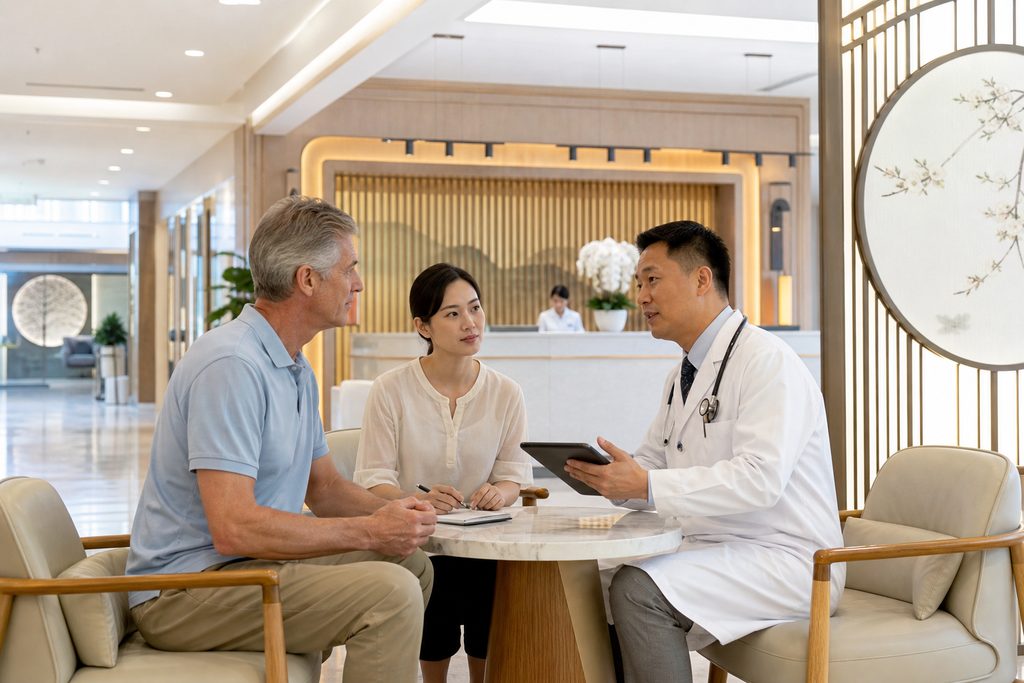
When 42-year-old Daniel from London received an unexpected diagnosis of Graves’ disease during a routine checkup, his first thought was not about treatment. It was about time. The NHS wait for an endocrinology referral stretched past four months. His symptoms—rapid heartbeat, hand tremors, weight loss—would not wait. He started searching for alternatives. That search brought him to Beijing, and specifically to the question of whether the China-Japan Friendship Hospital endocrinology department could serve him as an international patient.
The short answer is yes, but the path requires understanding how Chinese public hospitals actually work. This guide explains the department’s strengths, the real costs, and the practical steps for booking an appointment. We cover the options without sugarcoating the challenges.
China-Japan Friendship Hospital Endocrinology: The Short Answer
The China-Japan Friendship Hospital (CJFH) in Beijing operates a well-regarded endocrinology department within a major public tertiary hospital. For international patients, access runs through the hospital’s international medical services or a third-party coordinator. You cannot simply call the general outpatient line from overseas and book a slot. The system requires either an in-person visit, a proxy consultation, or a coordinated international patient pathway.
The department handles the full spectrum of endocrine disorders: type 1 and type 2 diabetes, thyroid dysfunction including Graves’ disease and Hashimoto’s, adrenal disorders, pituitary conditions, and metabolic bone disease. The hospital’s reputation in endocrinology is solid, though it does not carry the same international brand recognition as Peking Union Medical College Hospital. That matters less than you might think. What matters more is whether the specific specialist you need is available and whether the logistics work for your situation.
Who This Is Right For — and Who It Isn’t
Coming to Beijing for endocrine care makes sense for certain patients and not for others. Be honest about which group you fall into.
Good candidates typically include:
- Patients with a confirmed diagnosis who need a second opinion on treatment strategy
- People already living in Beijing or planning an extended stay who need ongoing endocrine management
- Patients facing long wait times at home for non-urgent endocrine evaluation
- Those specifically seeking evaluation of complex thyroid nodules or unusual diabetes presentations
- Expats in China who want an English-speaking pathway into a top public hospital
This route is probably not right for you if:
- You need emergency care for diabetic ketoacidosis or thyroid storm — go to the nearest emergency department, not a planned international visit
- You expect a fully Western-style experience with guaranteed English from every staff member
- You want a single appointment that solves everything in one afternoon — Chinese public hospitals operate on a different rhythm
- Your condition is stable and well-managed at home — the travel and coordination may not justify the benefit
How to Book an Appointment at China-Japan Friendship Hospital Endocrinology
The booking process for international patients follows a different track than the one locals use. Here is the reality of each pathway.
Direct approach: The hospital has an international medical services office. You or a Chinese-speaking contact can reach out to inquire about scheduling. Response times vary, and you will likely need to provide translated medical records before any confirmation. The hospital’s China-Japan Friendship Hospital profile on our database outlines the departments and general contact channels. But direct booking from abroad is slow and uncertain.
Proxy consultation: This is where a coordinator acts on your behalf in Beijing. You send your existing lab results, imaging reports, and a summary of your condition. The coordinator registers at the hospital, creates a medical card in your name, and presents your materials to the endocrinology department. The doctor reviews everything and provides written feedback or a recommended treatment direction. This costs from $300 and avoids an initial trip that might prove unnecessary.
Video consultation: For $100 to $300, you can speak directly with a specialist from the hospital’s international department or a partner private clinic. You discuss symptoms, goals, and hear preliminary recommendations. This is often the smartest first step for overseas patients.
In-person pathway: If remote evaluation suggests you should come to Beijing, we coordinate the visit. That includes registration assistance, bilingual accompaniment, and navigation through the hospital’s sprawling campus. The bilingual medical companion service handles queues, payments, and translation on the day of your appointment.
Diabetes Treatment Cost for International Patients in China
Cost is a major reason international patients consider China. The numbers below reflect typical ranges for public hospital international departments and private clinics in Beijing. They vary by hospital and case complexity.
| Service | China Public Hospital (International Dept.) | China Private International Clinic | US Average (for reference) |
|---|---|---|---|
| Initial endocrinology consultation | $100–$300 | $200–$400 | $250–$500 |
| Comprehensive diabetes panel (HbA1c, C-peptide, antibodies, lipids, renal function) | $80–$200 | $150–$300 | $400–$900 |
| Thyroid ultrasound with fine-needle aspiration | $150–$400 | $300–$600 | $1,000–$2,500 |
| Continuous glucose monitoring (14-day sensor) | $100–$250 | $150–$300 | $300–$500 |
| Written second opinion from specialist | $300–$500 | $400–$600 | $800–$1,500 |
These figures do not include travel, accommodation, or visa costs. They also assume you are paying out of pocket. Public hospital international departments generally require prepayment, with reimbursement claimed from your insurer afterward. Private international clinics in Beijing sometimes offer direct insurance billing, which simplifies the process considerably. If you have a comprehensive expat policy, check whether the specific hospital is in-network before committing.
Finding an Endocrinology Specialist for Foreigners in Beijing
Beijing has no shortage of endocrinologists. The challenge is finding one who can communicate effectively with you and who has experience treating international patients. The distinction matters more than the specialty itself.
The endocrinology department rankings on our site draw from the Fudan University hospital reputation lists, which evaluate clinical strength across 45 specialties. Several Beijing hospitals appear in the top tier for endocrinology. Peking Union Medical College Hospital consistently ranks at or near the top. China-Japan Friendship Hospital holds a strong position as well, particularly for thyroid and diabetes care. Other notable options include Peking University First Hospital and Beijing Hospital.
But rankings tell only part of the story. For an international patient, the practical differences come down to three things: whether the hospital has a functioning international department, whether English-speaking staff are reliably available, and whether the logistics of registration and follow-up are manageable. A top-ranked department with no international pathway is less useful to you than a solid department with a smooth one.
That is why many expats and overseas patients end up working with a coordinator. We handle the language barrier, the registration bureaucracy, and the navigation. You focus on the medical conversation itself.
Thyroid Specialist English Speaking Beijing Hospital: What to Expect
Thyroid disorders are among the most common reasons international patients seek endocrine care in Beijing. Nodules, hyperthyroidism, hypothyroidism, and post-surgical monitoring all bring patients to the city. The good news: thyroid evaluation in China is fast and thorough. A thyroid ultrasound with fine-needle aspiration can often be completed within days, not weeks.
The less good news: English proficiency among hospital staff varies widely. Doctors in international departments generally speak functional English. Nurses, technicians, and registration staff often do not. You will encounter moments where you need help. That is not a failure of the hospital — it is simply the reality of receiving care in a non-English-speaking country.
A bilingual companion changes the experience. They translate during consultations, explain what the lab technician is asking you to do, and read the signs that direct you to the right floor. For a thyroid workup that involves ultrasound, blood draws, and possibly a biopsy, that support is not a luxury. It is the difference between a stressful day and a manageable one.
Practical Considerations: Records, Visa, Payment, and Follow-Up
Before you book anything, get your paperwork in order. Chinese endocrinologists will want to see your existing lab results, imaging reports, and medication list. Translate everything into Chinese if possible. If not, at minimum provide English versions — many specialists read English medical documents, but the hospital’s administrative staff may not.
Visa: For medical treatment in China, the appropriate visa category is S2, which covers short stays for private affairs including medical purposes. Family members accompanying you also apply for S2 visas. Stays exceeding 180 days require an S1 visa. The hospital or your coordinator should provide supporting documentation confirming your medical appointment. China Medical Services guides patients through this process, but final approval always rests with the Chinese embassy or consulate reviewing your application. No one can guarantee visa issuance.
Payment: Public hospital international departments typically require prepayment via cash, UnionPay, or major credit cards. Some accept international cards; some do not. Bring multiple payment options. Private international clinics are more flexible and often bill insurers directly.
Follow-up after returning home: This is the part patients forget to plan. Your Chinese endocrinologist will give you a treatment plan, but ongoing monitoring happens wherever you live. Ask for a written summary in English before you leave. Request copies of all lab results and imaging. Your home physician will need them. Video follow-ups with the Chinese specialist are possible through the same channels you used initially, typically costing $100 to $300 per session.
Frequently Asked Questions
Not through the general outpatient system. Public hospital outpatient registration in China operates on a same-day or short-window basis for locals. International patients need to work through the hospital’s international medical services or a coordinator who can register on your behalf. A video consultation or written second opinion can happen remotely before you travel, but an in-person appointment requires either you being in Beijing or a proxy visit.
Expect to pay between $300 and $800 for a comprehensive initial evaluation, including consultation, laboratory panels, and any indicated imaging. That compares favorably to US prices, where the same workup often exceeds $1,500. The exact figure depends on which hospital you use, whether you go through an international department or a private clinic, and how extensive your testing needs to be.
Doctors in the international department generally have working English proficiency. Senior specialists at top Beijing hospitals often read English medical literature and can communicate adequately. But do not expect fluent conversational English from every staff member you encounter. Nurses, lab technicians, and front-desk staff may speak little or no English. A bilingual companion fills those gaps.
You are never obligated to proceed with a recommendation made during a consultation. Chinese doctors, like doctors everywhere, will propose what they believe is medically appropriate. If surgery is suggested — for example, thyroidectomy for a suspicious nodule — you can and should seek a second opinion before deciding. A written second opinion from another Beijing specialist costs $300 to $500 and provides an independent assessment. Any decision to proceed with treatment in China is yours alone, made after you understand the risks and alternatives.
Your Next Step
China-Japan Friendship Hospital’s endocrinology department offers competent, efficient care at a fraction of Western prices. The barrier is not medical quality. It is logistics. Language, registration, navigation, and follow-up coordination are the real challenges for international patients.
We exist to remove those barriers. China Medical Services is not a hospital and we do not provide diagnoses or treatment. We connect you with the right specialists, handle the paperwork and translation, and stand beside you in the hospital. If you are considering endocrine care in Beijing, start with a conversation. Tell us your diagnosis, your goals, and your timeline. We will tell you honestly whether this path makes sense for you, and what it would cost. Book a free consultation and get a straight answer.
Good endocrine care in Beijing is within reach. You just need someone who knows the system.
For more medical information and treatment options in China, visit chinamedservices.com (China Medical Services).
