Physical Therapy Cost in China: 2026 Price Guide for Foreign Patients
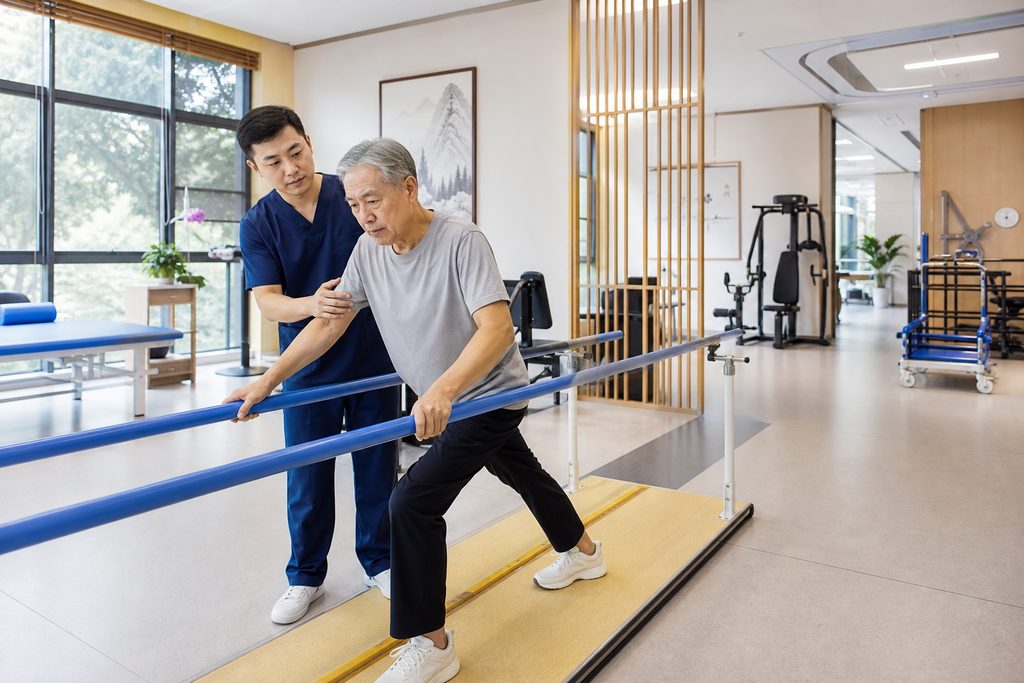
You’ve probably heard that medical care in China means either sketchy back-alley clinics or impersonal state hospitals with no English support. The reality for physical therapy is far more nuanced — and far more affordable than most Western patients expect. The physical therapy cost China patients actually pay runs between $30 and $150 per session at accredited facilities, with specialized neurological or sports rehabilitation programs reaching $200 to $400 per day for intensive inpatient care. That’s a fraction of what comparable treatment costs in the United States, where a single PT session routinely bills at $150 to $350 before insurance. But the number on the price sheet is only part of the story.
What makes the real cost harder to pin down is the three-tier system: public hospital rehabilitation departments, private international clinics, and dedicated rehabilitation hospitals. Each operates on a different pricing model, accepts different payment methods, and offers different levels of English-language support. Understanding which tier fits your situation determines whether you’ll pay $30 or $300 for essentially the same exercise protocol.
Physical Therapy Cost China: The Short Answer
For a standard outpatient session — evaluation, manual therapy, therapeutic exercise, and modalities like ultrasound or electrical stimulation — expect to pay $30 to $80 at a top-tier public hospital’s rehabilitation department. The same session at a JCI-accredited private international clinic in Shanghai or Beijing runs $100 to $150. Inpatient rehabilitation programs, which include daily therapy sessions, nursing care, and room charges, start around $150 per day at public facilities and reach $400 or more at private rehabilitation hospitals. These figures reflect 2026 pricing and vary by hospital tier, therapist seniority, and case complexity.
One caveat that surprises many foreign patients: Chinese public hospitals typically require payment upfront at each visit, not monthly billing. Insurance reimbursement happens after the fact, meaning you’ll need to carry documentation and submit claims yourself unless you’re at a private facility with direct billing arrangements.
Who This Is Right For — and Who It Isn’t
Traveling to China for physical therapy makes sense for a specific profile of patient. The savings are real, but they come with logistical friction that isn’t worth it for everyone.
Good candidates typically include:
- Patients already planning to be in China for work, study, or family reasons who need ongoing PT
- Individuals recovering from orthopedic surgery who want intensive, daily rehabilitation at a fraction of Western costs
- Patients with chronic musculoskeletal conditions — persistent back pain, frozen shoulder, post-stroke deficits — who have exhausted insurance-covered sessions at home
- Medical tourists combining a procedure with a structured rehabilitation stay
- Patients seeking TCM-adjacent modalities like acupuncture and tuina massage alongside conventional PT
Who should think twice:
- Anyone requiring ventilator support or intensive neurorehabilitation after a severe traumatic brain injury — the flight itself poses risks, and continuity of care across borders is complicated
- Patients whose condition is still being actively diagnosed — physical therapy in China works best when you arrive with a clear diagnosis and treatment goals
- Those with unstable cardiovascular conditions that make long-haul travel inadvisable
- Anyone expecting a fully Western-style experience at public hospital pricing — English-speaking staff are concentrated in international departments and private clinics, which cost more
- Patients whose insurance requires in-network providers — most Chinese facilities are out-of-network for Western insurers, meaning higher out-of-pocket exposure
The Options, Compared
China’s physical therapy landscape splits into three distinct tiers. Here’s what each actually delivers for your money.
| Facility Type | Cost per Session (USD) | English Support | Insurance Billing | Best For |
|---|---|---|---|---|
| Public Hospital Rehab Dept (Tier 3A) | $30–$80 | Limited; interpreter needed | Pay upfront, self-submit claims | Budget-conscious patients with a clear diagnosis |
| Private International Clinic | $100–$150 | Full English-speaking staff | Direct billing with many insurers | Expats and travelers wanting convenience |
| Dedicated Rehab Hospital (Inpatient) | $150–$400/day | Varies; some have English liaisons | Pay upfront, self-submit claims | Post-surgical or stroke patients needing intensive daily therapy |
Public hospital rehabilitation departments offer the best value if you’re comfortable navigating language barriers or hiring a bilingual companion. Private international clinics trade higher prices for frictionless care — direct insurance billing alone can save hours of paperwork. Dedicated rehabilitation hospitals are the choice for intensive programs where daily therapy frequency matters more than per-session cost.
Rehabilitation Center Price Shanghai and Beijing: A Closer Look
The two cities most foreign patients consider — Shanghai and Beijing — have meaningfully different pricing structures. Understanding the rehabilitation center price Shanghai patients encounter versus what you’d pay in Beijing helps you budget realistically.
Shanghai’s private international clinics, including Jiahui and Parkway facilities, typically charge 800 to 1,200 RMB per PT session — roughly $110 to $165. Public hospital rehabilitation departments affiliated with Fudan University or Shanghai Jiao Tong University run 200 to 500 RMB per session, or $30 to $70. Inpatient rehabilitation at dedicated centers like Shanghai YangZhi Rehabilitation Hospital starts around 1,000 RMB per day for basic rooms with therapy included.
Beijing prices run slightly higher across the board. Private clinics like United Family charge 900 to 1,400 RMB per session, while public hospital departments at Peking Union Medical College Hospital or Beijing Hospital run 250 to 600 RMB. If you’re wondering how much is physiotherapy in Beijing, the honest answer is: budget 20-30% more than Shanghai for equivalent private care, and roughly the same for public hospital services.
Both cities have strong rehabilitation reputations. Shanghai excels in sports medicine and orthopedic rehabilitation, while Beijing’s strengths include neurological rehabilitation and traditional Chinese medicine integration. Neither city is objectively better — the choice depends on your specific condition and which specialists you need to see.
What Drives the Price Difference — and Where the Value Hides
The gap between a $30 public hospital session and a $150 private clinic session isn’t just about marble lobbies. It reflects real differences in what you’re buying.
Public hospital pricing assumes you’ll manage most logistics yourself. You register at a payment window, queue for your therapist, and communicate through gestures or a translation app. The therapist may see 15-20 patients daily, meaning your session might last 30 minutes rather than 45. The clinical quality is often excellent — these are the same therapists who train residents and publish research — but the experience is efficient rather than luxurious.
Private clinics bundle coordination into the price. The receptionist speaks English. Your therapist speaks English. Insurance paperwork gets handled for you. Sessions run a full 45-60 minutes with one-on-one attention. You’re paying for time and language, not necessarily better clinical outcomes.
The value play for budget-conscious foreign patients: book a public hospital therapist and hire a bilingual medical companion for $300 per day. Even with that added cost, you’ll spend less than a private clinic charges — and you’ll get the same therapeutic expertise with someone handling translation and navigation.
What It Costs: A Realistic Budget Breakdown
Let’s put concrete numbers on a typical scenario. Suppose you’re coming to Shanghai for four weeks of post-knee-surgery rehabilitation, attending PT three times weekly.
Public hospital route (12 sessions):
- PT sessions: 12 × $50 average = $600
- Bilingual companion for initial visits and registration: 3 days × $300 = $900
- Total: approximately $1,500
Private international clinic route (12 sessions):
- PT sessions: 12 × $130 average = $1,560
- No companion needed for most visits
- Total: approximately $1,560
Interesting, isn’t it? The routes converge when you factor in companion costs. For shorter stays, private clinics often cost less overall because you skip the companion expense. For longer treatment courses — eight weeks or more — the public hospital route pulls ahead as companion needs taper off after the first week.
What’s not included in either figure: initial physician consultation ($50-$200 depending on tier), imaging if needed (MRI runs $150-$400 in China), and any orthotics or equipment. Inpatient programs bundle most of these but add room and board, which explains the $150-$400 daily rates at dedicated rehabilitation hospitals.
Practical Considerations: Documentation, Visas, and Payment
Getting physical therapy in China as a foreigner isn’t complicated, but it requires preparation. The pieces you’ll need:
Medical records. Bring your diagnosis, imaging reports, surgical notes if applicable, and a letter from your home physician outlining treatment goals. Chinese therapists will want to see these before designing your program. Have them translated to Chinese if possible — while many top therapists read English medical terminology, the intake staff at public hospitals may not.
Visa. Medical treatment falls under the S2 visa category, which covers short-term private affairs including medical care. You’ll need supporting documentation from the hospital or clinic confirming your appointment. The S2 visa typically allows stays up to 180 days. Family members accompanying you also apply for S2 visas. Processing times vary by consulate, so start at least six weeks before your planned arrival.
Payment. Public hospitals accept cash, Chinese debit cards, and increasingly international credit cards at major facilities. Private clinics accept all major credit cards and often bill insurers directly. Some public hospital international departments can arrange direct billing with select insurers — ask before you arrive. Bring enough cash or a working international card for the first week regardless.
Language. Public hospital therapists in major cities often understand basic English medical terms but struggle with nuanced conversation about pain levels, exercise tolerance, and goals. A bilingual companion solves this. Private clinics rarely need one. If you’re going the public route without a companion, download a medical translation app and prepare written descriptions of your condition in Chinese.
Follow-up after returning home. Ask your Chinese therapist for a written discharge summary and home exercise program in English. Most will provide this if you request it. Your home PT can then continue the protocol seamlessly. This handoff document matters more than most patients realize — without it, you lose the thread of what was actually done in China.
Frequently Asked Questions
You can arrange appointments through a hospital’s international department or a patient coordination service before traveling. The book physiotherapy session China process typically involves sending your medical records for review, receiving a recommended treatment plan and schedule, and confirming dates. Walk-in appointments at public hospitals are possible but involve long waits and no guarantee of seeing a specific therapist. For a structured rehabilitation stay, advance booking is essential.
The quality at top-tier facilities is genuinely competitive with Western standards — but it’s unevenly distributed. Therapists at Fudan-affiliated hospitals, Peking Union Medical College Hospital, and major rehabilitation centers train rigorously and treat high volumes of complex cases. The best physical therapy hospital China rankings consistently place these institutions at the top. What you sacrifice at public hospitals is not clinical quality but convenience: shorter sessions, less one-on-one time, and language barriers. Private clinics close that gap at a higher price point.
Most Western insurers treat Chinese facilities as out-of-network providers, meaning you pay upfront and submit claims for reimbursement. Reimbursement rates vary widely — some plans cover 50-70% of out-of-network costs, others cover nothing until you meet a high deductible. Private international clinics with direct billing arrangements simplify this significantly. Check with your insurer before committing to a treatment plan, and request itemized receipts in English from whatever facility you use.
Physical therapy outcomes depend heavily on your condition, the therapist’s skill, and your adherence to home exercises. Chinese facilities don’t offer outcome guarantees, and you should be skeptical of anyone who does. If you need extended care beyond your planned stay, extending an S2 visa is possible but requires leaving China and reapplying in some cases. Some patients transition to telehealth follow-ups with their Chinese therapist after returning home — ask if this is available before you leave.
Some private hospitals and medical tourism facilitators offer medical tourism physical therapy packages China visitors can book that include accommodation, airport transfers, treatment sessions, and translation services. These packages typically start around $3,000 for a two-week program and go up from there. They’re convenient but not always the cheapest option — if you’re comfortable booking your own hotel and arranging a bilingual companion separately, you can often replicate the same experience for 20-30% less. The package premium buys coordination and peace of mind, not better therapy.
Your Next Step
Physical therapy in China offers genuine value for patients who plan carefully and understand the trade-offs between public hospital affordability and private clinic convenience. The savings are real — often 50-70% below US prices even at top facilities — but they require navigating a system that wasn’t designed for foreign patients.
We help international patients sort through the options at China Medical Services. Our team coordinates appointments at top-ranked rehabilitation departments, arranges bilingual medical companions, and helps with the documentation you need for an S2 visa. We’re not a hospital and we don’t provide medical advice — we’re the logistical bridge between you and the care you’re seeking.
If you’re considering physical therapy in China, start with a conversation. Tell us about your condition and goals, and we’ll help you understand which facilities fit your budget and needs. You can learn more about our patient coordination services or explore our database of top-ranked hospitals to see what’s available.
Physical therapy in China isn’t the right choice for everyone. But for patients who plan well, the combination of clinical quality and cost savings is hard to match anywhere else.
For more medical information and treatment options in China, visit chinamedservices.com (China Medical Services).
