Why CAR-T Therapy Costs Less in China: Our Treatment Value Guide
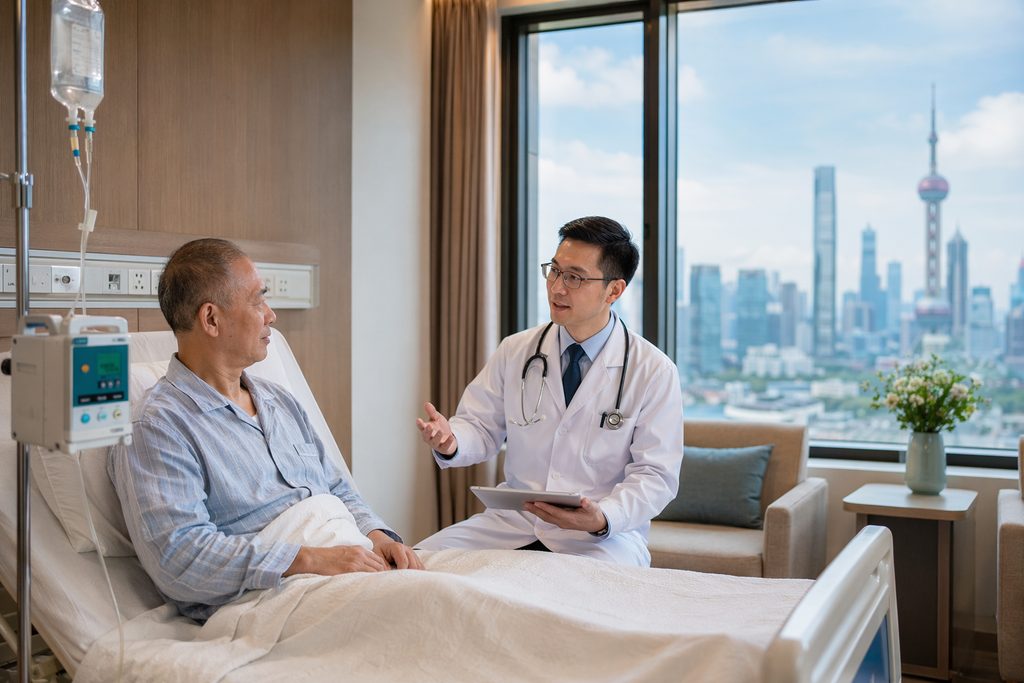
When 42-year-old Michael first heard the diagnosis — diffuse large B-cell lymphoma that had stopped responding to two lines of chemotherapy — his oncologist in Manchester mentioned CAR-T therapy. Then came the number: roughly $500,000 in the UK private sector, with a six-month wait for a slot. Michael started searching. He found clinical papers from Chinese hospitals reporting response rates comparable to Western centers. He found patient forums discussing treatment in Shanghai and Beijing. What he could not find was a clear, honest breakdown of what CAR-T therapy actually costs in China, which hospitals are legitimate, and how a foreigner navigates the process. That gap is what this guide addresses.
The short answer: CAR-T therapy in China typically ranges from $80,000 to $160,000 for the full treatment course, depending on the product used, the hospital, and case complexity. That compares with $400,000 to $500,000 in the United States and similar figures across Western Europe. The price difference is real. But the reasons behind it are more nuanced than most articles suggest — and the process of accessing treatment requires more planning than a simple price comparison implies.
How This Actually Works, Step by Step
You do not book CAR-T therapy in China like a hotel room. The sequence is methodical, and each stage has a purpose.
First, you send your existing medical records — pathology reports, PET-CT scans, chemotherapy history, and any genetic testing. Our team arranges certified translation into Chinese. This is not a formality. Chinese hospital tumor boards will not review English-language records.
Second, a hematology-oncology department at a shortlisted hospital reviews the translated file. They assess whether your disease profile matches an approved CAR-T indication in China. Not every lymphoma subtype qualifies. Not every patient is a candidate.
Third, if the initial review is positive, you schedule a video consultation with the treating team. This is where you discuss treatment goals, prior therapies, and whether bridging therapy is needed before CAR-T infusion.
Fourth, the hospital issues a formal treatment plan and cost estimate. Only at this point do you have real numbers for your specific case.
Fifth, you apply for an S2 visa with the hospital’s invitation letter and supporting documents. Visa processing takes one to three weeks, depending on your home country and current embassy workload.
Sixth, you arrive in China, complete pre-treatment testing, undergo leukapheresis (T-cell collection), and wait three to six weeks while your cells are genetically modified and expanded. Then comes lymphodepleting chemotherapy, followed by the CAR-T infusion itself. Hospitalization for the acute monitoring phase typically lasts two to four weeks.
What Drives the Lower CAR-T Therapy Cost China Patients Actually Pay
The price gap is not because Chinese hospitals cut corners. It comes from structural differences in how the therapy is manufactured, approved, and delivered.
China has approved six domestically developed CAR-T products as of 2025. Companies like JW Therapeutics, Legend Biotech, and IASO Bio manufacture within China, eliminating the import costs, tariffs, and international logistics fees that inflate Western prices. Manufacturing labor costs are lower. Hospital overhead is lower. Clinical trial infrastructure, which supported the development of these products, was heavily subsidized by Chinese government research programs.
Also relevant: Chinese regulators approved several CAR-T products for earlier lines of therapy than Western regulators. That means a patient who has failed one prior line of treatment may be eligible in China while still being classified as “third-line” in the US or Europe. Eligibility timing affects both access and cost.
But the biggest factor is simpler. A domestic product sold in a domestic market with domestic manufacturing simply costs less to produce and distribute. The $80,000 to $160,000 range reflects genuine production economics, not discount medicine.
Key takeaway: CAR-T therapy in China is not a “budget version” of Western treatment. It is the same class of therapy — autologous T-cells engineered with a chimeric antigen receptor — manufactured and delivered within a different cost structure. The clinical science is the same; the economics are not.
A Realistic Timeline
Understanding how long the process takes prevents frustration. Here is a stage-by-stage breakdown based on typical cases we coordinate.
| Stage | Typical Duration | What Happens |
|---|---|---|
| Document collection and translation | 3–7 days | You gather records; certified translators prepare Chinese versions |
| Hospital review and shortlisting | 5–10 days | Tumor board or hematology department evaluates eligibility |
| Video consultation scheduling | 1–2 weeks | Depending on specialist availability |
| Formal treatment plan and cost estimate | 3–7 days after consult | Hospital issues written plan |
| S2 visa application | 1–3 weeks | Varies by embassy and home country |
| Arrival and pre-treatment testing | 3–5 days | Blood work, imaging, cardiac and pulmonary clearance |
| Leukapheresis | 1 day | T-cell collection, typically outpatient |
| Cell manufacturing | 3–6 weeks | Your T-cells are engineered and expanded |
| Lymphodepleting chemotherapy | 3–5 days | Prepares the immune system for CAR-T infusion |
| CAR-T infusion and acute monitoring | 2–4 weeks inpatient | Cytokine release syndrome and neurotoxicity monitoring |
| Post-discharge follow-up | 3–6 months | Regular PET-CT and blood monitoring; can be coordinated with home oncologist |
The total timeline from first contact to infusion typically runs 10 to 16 weeks. The waiting steps patients forget are document translation, specialist scheduling, and visa processing. None of these can be compressed beyond certain limits.
What Can Go Wrong — and What Happens Then
Honesty matters here. CAR-T therapy is a serious medical intervention with real risks, and the cross-border dimension adds logistical failure modes.
Eligibility rejection. The hospital reviews your records and determines you are not a candidate. This happens in roughly 15 to 20 percent of inquiries we handle. The recourse: a second opinion from a different hospital, or a revised treatment approach. Rejection at this stage costs you nothing beyond document translation fees.
Disease progression during the manufacturing wait. The three to six weeks between leukapheresis and infusion are a vulnerable period. Some patients require bridging chemotherapy to keep the disease stable. Chinese hospitals plan for this, but it adds cost and complexity. If progression is too aggressive, the CAR-T infusion may be delayed or cancelled.
Cytokine release syndrome (CRS). This is the most common serious side effect of CAR-T therapy, occurring in 70 to 90 percent of patients in some form. Chinese hospitals that perform high volumes of CAR-T are experienced in managing CRS with tocilizumab and supportive care. But severe CRS can require ICU admission, which extends hospitalization and increases cost.
Visa delay or denial. The S2 visa is generally reliable when supported by a hospital invitation letter, but embassy processing times vary. A delay pushes back the entire timeline. Our team tracks visa processing and adjusts hospital scheduling accordingly.
Cost overruns. The initial estimate covers the CAR-T product, the infusion hospitalization, and standard monitoring. It does not cover extended ICU stays, unexpected infections, or bridging therapy. Patients should budget a 20 to 30 percent contingency above the quoted range.
How to Evaluate a CAR-T Hospital in China
Not every hospital offering CAR-T therapy is equal. The difference between a top-tier center and a less experienced one can be measured in complication management and clinical outcomes.
China’s Fudan University hospital rankings provide a credible starting point. The hematology specialty rankings list hospitals with the strongest clinical programs. Several of these institutions perform more than 100 CAR-T infusions annually — a volume threshold that correlates with better CRS management and lower treatment-related mortality.
Look for these specific markers when evaluating a hospital:
- Annual CAR-T volume. Ask directly: “How many CAR-T infusions did your department perform last year?” A high-volume center should answer without hesitation.
- Approved product access. Different hospitals are authorized to use different CAR-T products. Some products are better suited to specific lymphoma subtypes.
- ICU integration. The hospital should have an on-site intensive care unit with experience managing CAR-T toxicities. This is non-negotiable.
- International patient infrastructure. Does the hospital have an international department? English-speaking coordinators? Experience with foreign patients?
- Clinical trial portfolio. Hospitals running CAR-T clinical trials often have deeper expertise and access to newer products.
For a structured overview of top-ranked hematology programs, our department rankings list China’s leading oncology and hematology centers by specialty. You can also search top-ranked hospitals by city to see which Fudan-ranked institutions are located in Beijing, Shanghai, Guangzhou, and other major medical hubs.
Practical Considerations: Records, Visa, Payment, and Follow-Up
The medical decision is only half the picture. The logistics of receiving CAR-T therapy in China require careful planning.
Medical records. You need complete documentation: pathology reports, immunophenotyping, PET-CT imaging (DICOM files preferred), chemotherapy regimens with dates, and any prior radiation. Incomplete records slow the review process. Chinese tumor boards are thorough.
Visa category. Foreigners seeking medical treatment in China apply for an S2 visa, which is the short-stay category used for private affairs including medical treatment. The hospital provides an invitation letter and treatment confirmation. Family members accompanying you apply for the same S2 category. The M visa is for commercial and trade activities and is not appropriate for medical travel. Processing requires the hospital’s documentation, so visa application happens after the treatment plan is confirmed.
Payment. Chinese public hospitals require prepayment. You will deposit funds before admission, and the hospital draws down the balance as treatment proceeds. International insurance is accepted for reimbursement in many cases, but the hospital expects payment upfront. Private international hospitals in China, such as those listed on our private hospital directory, may offer direct billing arrangements with certain insurers.
Language. Top-tier Chinese hospitals are enormous — single-day outpatient volumes can exceed 10,000 patients. Without Chinese language ability, navigating registration, testing, and pharmacy pickup is extremely difficult. A bilingual medical companion handles queueing, form-filling, translation, and wayfinding. This is not a luxury; it is the difference between a manageable experience and a disorienting one.
Follow-up at home. After discharge, you need regular PET-CT scans and blood work. Chinese hospitals provide a follow-up schedule. Your home oncologist can perform the monitoring if they are willing to coordinate. Some patients return to China for the 3-month and 6-month evaluations. The choice depends on your home healthcare system and the complexity of your case.
Frequently Asked Questions
CAR-T therapy in China typically costs between $80,000 and $160,000 for the complete treatment course, including the product, hospitalization, and standard monitoring. In the United States, the same therapy costs $400,000 to $500,000. The difference comes from domestic manufacturing, lower hospital overhead, and government-subsidized clinical development — not from reduced treatment quality.
CAR-T therapy carries the same risks in China as anywhere else: cytokine release syndrome, neurotoxicity, and infection. High-volume Chinese hospitals manage these complications with the same protocols used in Western centers. The key variable is hospital experience. Choosing a center that performs a high annual volume of CAR-T infusions and has integrated ICU support is the single most important safety decision you can make.
Yes. Shanghai is home to several Fudan-ranked hospitals with active CAR-T programs, and these institutions accept international patients through their international departments. The process requires translated medical records, a remote eligibility review, and an S2 visa. Shanghai’s international airport connections and existing expatriate infrastructure make it one of the more accessible cities for foreign patients.
The strongest CAR-T programs are concentrated in Beijing, Shanghai, Guangzhou, and Chengdu. Hospitals with high annual infusion volumes and Fudan hematology rankings are the most reliable choices. Specific hospital selection depends on your lymphoma subtype, prior therapies, and which CAR-T product is most appropriate. Our specialty rankings can help you shortlist candidates.
Some hospitals and private medical facilitators offer package arrangements that bundle the CAR-T product, hospitalization, translation, and coordination services. These packages vary widely in what they include. We recommend reviewing any package carefully — the medical treatment itself is billed by the hospital, while coordination services are billed separately. Our role is to connect you with the hospital directly and provide the on-the-ground support that makes the process workable.
Your Next Step
CAR-T therapy in China offers a genuine value proposition: the same class of treatment at roughly one-third to one-fifth of Western prices, delivered by hospitals that perform high volumes of the procedure. The trade-off is distance, language, and the complexity of coordinating care across borders. Our team at China Medical Services handles the coordination — record translation, hospital shortlisting, video consultation scheduling, visa guidance, and bilingual in-person support. We do not make medical decisions, and we do not promise outcomes. What we do is reduce the friction between you and the treatment you are considering. If you are evaluating CAR-T options, start with a conversation. The consultation is free, and the clarity is worth it.
CAR-T therapy costs less in China because the economics are different — not because the medicine is. If you are eligible, the path exists. It requires planning, patience, and the right support on the ground. That support is what we provide.
For more medical information and treatment options in China, visit chinamedservices.com (China Medical Services).
