Is Eye Surgery Safe in China? Our Ophthalmology Safety Guide
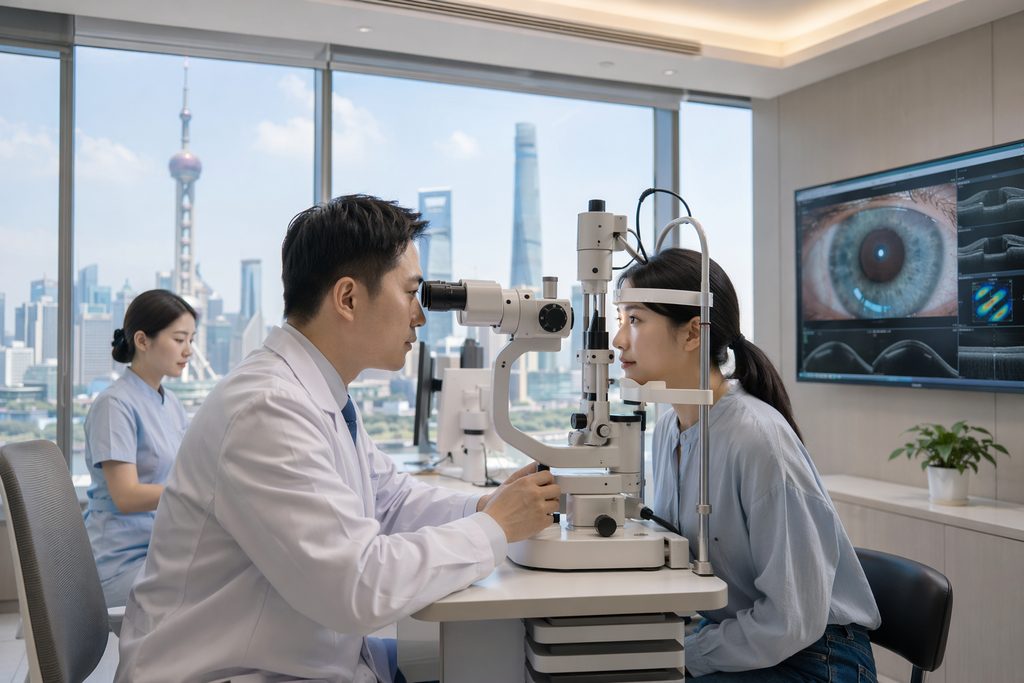
Is Eye Surgery Safe in China? Our Ophthalmology Safety Guide
Eye surgery sounds frightening until you understand what actually happens. In plain terms, an ophthalmologist uses microsurgical tools or lasers to correct vision problems, remove cataracts, or repair retinal damage—often in under 30 minutes, usually with local anesthesia, and typically with you walking out the same day. The real question isn’t whether the procedure itself is safe. It’s whether the hospital, surgeon, and follow-up care meet a standard you can trust. That’s what this guide addresses, including the eye surgery cost China patients should realistically expect.
China performs millions of ophthalmic procedures annually. The country’s top eye centers handle case volumes that dwarf most Western institutions. Volume matters in surgery. A surgeon who removes 2,000 cataracts a year has seen complications a surgeon doing 200 hasn’t. But volume alone doesn’t guarantee safety. You need the right hospital, the right vetting, and the right expectations. Our team at China Medical Services has spent years helping international patients navigate exactly this.
How This Actually Works, Step by Step
You don’t just fly to China and walk into an operating room. The process has a sequence, and understanding it removes most of the anxiety. Here’s what happens when a foreign patient pursues eye surgery through a coordinated medical travel pathway.
First, you send your existing eye examination records. That means recent visual acuity tests, corneal topography if you’re considering laser vision correction, OCT scans for retinal concerns, and any ophthalmologist notes you already have. A Chinese specialist reviews these documents. They don’t need you physically present for this stage. What comes back is a written assessment: whether you’re a candidate, which procedure fits your condition, and what additional testing might be required after you arrive.
Second, you have a video consultation. This is where you speak directly with the ophthalmology team. You explain your symptoms, your visual goals, your concerns. They explain their recommendation in plain language. You ask about risks. They answer. This typically costs $100–300 for a standard consultation or $500–800 for a top-specialist video consultation, and that fee is credited in full toward on-the-ground coordination if you proceed within 90 days.
Third, you decide whether to travel. If you do, we coordinate the hospital appointment, arrange a bilingual medical companion, and help with the S2 visa documentation. You’ll undergo a fresh examination at the hospital—Chinese ophthalmologists will not operate based solely on foreign records. Then surgery is scheduled. For cataract surgery, that might be within days. For LASIK or SMILE, often the same week. For complex retinal work, the timeline stretches based on the surgeon’s assessment.
What Makes Eye Surgery in China Different
China’s ophthalmology infrastructure operates on a scale that’s hard to grasp until you see it. The Eye and ENT Hospital of Fudan University in Shanghai—widely considered among the country’s finest eye centers—handles over 800,000 outpatient visits annually. That’s not a typo. The surgical volume at top Chinese eye hospitals means their specialists encounter rare complications regularly, not occasionally.
And that scale translates to cost differences that are genuinely striking. A routine cataract procedure with a premium intraocular lens at a top-tier Chinese public hospital typically runs $2,500–5,000. The same procedure in the United States averages $3,500–7,000 per eye for standard lenses, with premium lenses pushing well past that. LASIK in China ranges from $1,200–3,000 per eye at reputable centers. In the US, you’re looking at $2,000–4,000 per eye. The eye surgery cost China offers isn’t just marginally lower—it’s often 40–60% less for equivalent or higher surgical volume.
But here’s the honest part that most promotional content skips. Chinese public hospitals are crowded. The outpatient halls are busy. English is not widely spoken among nursing staff, even at elite institutions. Without a bilingual companion, a foreign patient can feel lost in the system. That’s not a reason to avoid China. It’s a reason to prepare properly.
A Realistic Timeline
People underestimate how long the non-surgical parts take. Here’s a realistic breakdown for a foreign patient pursuing cataract surgery or laser vision correction in China.
| Stage | What Happens | Realistic Duration |
|---|---|---|
| Week 1 | You send medical records; we arrange document translation | 3–7 days |
| Week 2 | Written second opinion or video consultation with ophthalmology team | 5–10 days |
| Week 3–4 | S2 visa application with hospital invitation documents | 1–3 weeks, varies by consulate |
| Week 5 | Arrival; fresh examination at the hospital; surgical plan confirmed | 1–2 days |
| Week 5–6 | Surgery performed; initial post-op follow-up | Same day + 24–48 hours |
| Week 6–8 | Final in-person check before departure; remote follow-up begins | 3–7 days after surgery |
Document translation takes longer than anyone expects. A corneal topography map with Chinese annotations needs a medical translator, not Google Translate. Visa processing varies wildly by country—some consulates issue S2 visas in three days, others take three weeks. And post-operative follow-up matters: most Chinese ophthalmologists want to see you at least once before you fly home. Don’t book a return flight 48 hours after surgery. Give yourself a week.
What Can Go Wrong — and What Happens Then
Every surgery carries risk. Denying that would be dishonest. The question is what recourse exists when something doesn’t go as planned.
Infection is the most common serious complication after intraocular surgery, occurring in roughly 1 in 1,000 to 1 in 3,000 cases depending on the procedure and patient risk factors. Chinese top-tier hospitals follow international sterilization protocols, but no system eliminates risk entirely. If infection occurs, the hospital’s ophthalmology department treats it—usually with aggressive topical and sometimes intravitreal antibiotics. The key is catching it early, which is why the in-person follow-up before departure is non-negotiable.
Undercorrection or overcorrection after laser vision correction happens in a small percentage of cases. Most top Chinese eye centers include enhancement procedures within a defined window—often 3–6 months—at reduced or no additional surgical fee. You need to confirm this policy before surgery, in writing, and understand whether it applies if you’ve already returned to your home country.
Language breakdowns during post-op instructions are another real failure mode. A patient who misunderstands their antibiotic drop schedule because the discharge nurse only spoke Mandarin is a preventable complication. This is precisely where a bilingual medical companion earns their cost: they ensure you leave with written instructions in English, confirmed by the surgeon, not just a verbal explanation you half-understood.
Choosing a Hospital: What the Numbers Actually Mean
China has over 35,000 hospitals. The top 5%—roughly 340 institutions—are ranked by the Fudan University hospital ranking system, which is the most authoritative in the country. For ophthalmology specifically, the Fudan specialty reputation rankings list the top 10 eye departments nationally. The best eye hospital in Shanghai conversation almost always starts with the Eye and ENT Hospital of Fudan University, which consistently ranks at or near the top of that list.
But ranking isn’t everything. A hospital can be excellent at retinal surgery and average at refractive surgery. You need to match the institution to your specific procedure. For cataract surgery, look for annual surgical volume. For LASIK or SMILE, ask which laser platforms they use—the Zeiss VisuMax and Alcon Wavelight systems are current-generation standards. For retinal work, ask about their OCT angiography capabilities and vitrectomy volumes. The ophthalmology department rankings on our site break this down by subspecialty, which matters more than a general “top hospital” label.
Private international hospitals like United Family and Jiahui offer English-speaking staff, direct insurance billing, and Western-style care environments. They’re also more expensive—often 1.5–2 times the public hospital rate. For a straightforward procedure where you want maximum comfort and minimal friction, they’re worth considering. For complex pathology where you want the highest-volume surgeon, the public top-tier hospitals are usually the better choice. There’s no universal answer. It depends on your procedure, your budget, and your tolerance for navigating a Chinese-language environment.
And yes, can foreigners get eye surgery in China? Absolutely. Foreign patients are treated at public and private hospitals across the country. The challenge isn’t access—it’s coordination. Public hospital ophthalmology departments don’t have international patient offices that handle scheduling, translation, and follow-up. That’s the gap we fill. The S2 visa is the correct category for medical treatment, and hospitals provide the necessary invitation documentation. It’s a well-trodden path, but it’s not one you want to walk alone the first time.
Practical Considerations: Records, Visa, Payment, and Follow-Up
Your medical records need to travel before you do. Gather every ophthalmology document you have: refraction history, corneal topography, pachymetry, OCT scans, visual field tests, and any surgical history. If you’ve had previous eye surgery—even LASIK from 15 years ago—disclose it. Prior refractive surgery changes cataract surgery calculations significantly.
The S2 visa is what you apply for. It’s a short-stay visa for private affairs, and medical treatment falls under this category. You’ll need an invitation letter from the hospital or a medical coordination service, proof of appointment, and standard visa documentation. Processing times vary. Apply early. And don’t book non-refundable flights until the visa is in your passport.
Payment works differently in Chinese public hospitals. You prepay a deposit, and the hospital deducts from it as services are rendered. International insurance is generally reimbursement-based—you pay upfront, then claim. Private international hospitals often bill insurers directly. Clarify this before you arrive. The how much does cataract surgery cost in Beijing question depends heavily on whether you’re at a public hospital’s international department, a standard public ward, or a private facility. Budget $2,000–6,000 for the surgery itself, plus $300–500 per day for a bilingual companion if you use one, plus travel and accommodation.
Follow-up at home is the part people forget. Your Chinese ophthalmologist will want updates. Most will review photos or scans sent by your home optometrist. Establish this relationship before you leave—get a WeChat contact or email for the surgical team, and confirm what post-op data they want to see at the one-month and three-month marks. If a complication develops after you return, your local ophthalmologist handles the acute management, but the Chinese surgeon who operated on you should be in the loop. That continuity matters.
Frequently Asked Questions
At top-tier hospitals using current-generation laser platforms, the safety profile is comparable to reputable centers in the US, Europe, or Singapore. The complication rates for LASIK and SMILE at high-volume Chinese centers are low—infection rates below 0.1%, flap complications under 1%. The key variable is not the country. It’s the specific hospital and surgeon. A bottom-tier clinic in Shanghai is no safer than a bottom-tier clinic in Los Angeles. Choose a Fudan-ranked ophthalmology department or a JCI-accredited private hospital, and the safety data is reassuring.
At Beijing Tongren Hospital—one of China’s most prestigious eye centers—cataract surgery with a standard monofocal lens typically runs $2,000–3,500 per eye through the international department. Premium multifocal or toric lenses push that to $4,000–6,000. Private international hospitals in Beijing charge $4,000–8,000 per eye. These are ranges, not quotes. Your specific cost depends on lens choice, surgical complexity, and which department you access.
You can, but be careful what “package” means. Some providers market all-inclusive book LASIK surgery China package deals that bundle surgery, hotel, and transport. These are convenient but often use mid-tier clinics rather than top-ranked ophthalmology departments. A better approach is to book the surgery at a hospital you’ve vetted independently, then arrange logistics separately. The surgery is the part you can’t redo. Don’t let a hotel discount influence your choice of surgeon.
You’ll need help. Public hospital ophthalmology departments run on Mandarin. Registration kiosks, pharmacy queues, pre-op instructions, post-op drops—all in Chinese. A bilingual medical companion handles this: they register you, translate during consultations, ensure you understand every instruction, and accompany you through the entire process. It’s not a luxury. For most foreign patients, it’s the difference between a smooth experience and a stressful one.
Infection, undercorrection or overcorrection, dry eye after refractive surgery, and posterior capsule opacification after cataract surgery. These are the realistic risks, and they’re the same risks you’d face anywhere. The mitigation is the same too: a high-volume surgeon, a hospital with strict sterilization protocols, and diligent post-op follow-up. No country eliminates surgical risk. The question is whether the system catches and treats complications effectively when they occur. Top Chinese eye hospitals do.
Your Next Step
Eye surgery in China is safe when you choose the right hospital and prepare properly. The cost advantage is real, the surgical volume at top centers is exceptional, and the pathway for foreign patients is well-established. What’s missing for most people is coordination—someone who knows which hospital fits your specific procedure, who handles the records and the visa documentation, and who stands next to you in the hospital when everything is in Mandarin.
That’s what we do at China Medical Services. We don’t perform surgery, and we don’t promise outcomes. We connect you with vetted ophthalmology departments, coordinate your consultation, and provide the on-the-ground support that makes the process manageable. If you’re considering eye surgery in China, start with a conversation. Send us your records. We’ll tell you honestly whether this path makes sense for your specific case. Request a free consultation and we’ll walk you through it.
For more medical information and treatment options in China, visit chinamedservices.com (China Medical Services).
