China Health Declaration for Travelers: How We Prepare You
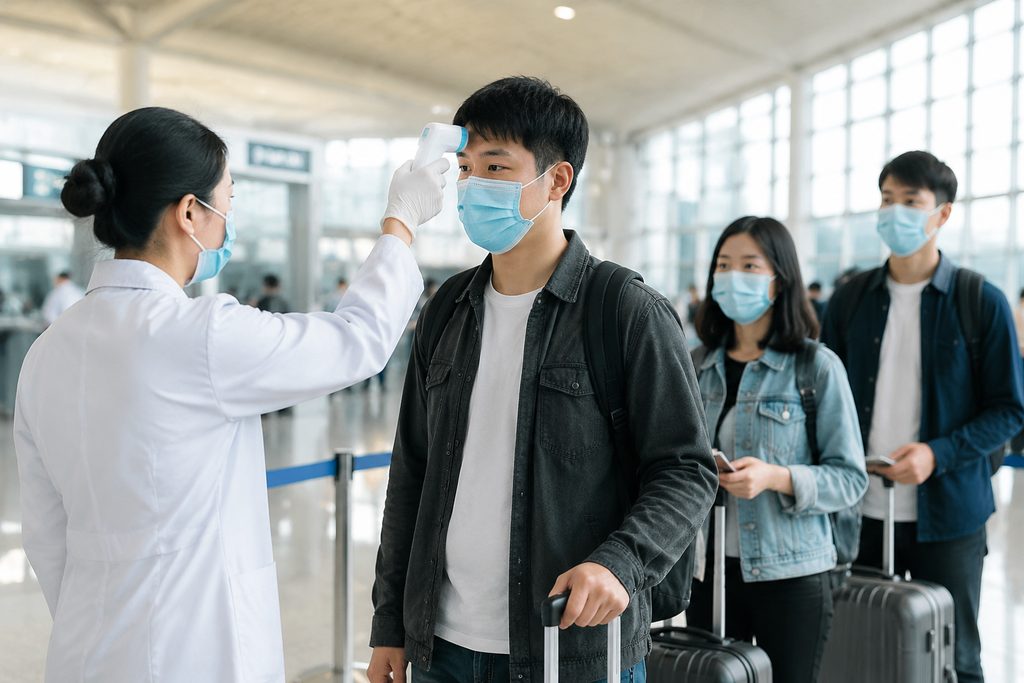
China Health Declaration for Travelers: How We Prepare You for the Best Hospitals in China for Foreigners
According to the China National Tourism Administration, over 300,000 international patients traveled to China for medical treatment in 2023, a figure that has grown steadily since border restrictions lifted. If you are among those planning a trip, you have probably encountered the entry requirement that causes the most confusion: the China Health Declaration form. It is a mandatory digital document, and getting it wrong can delay your arrival by hours. Our team handles this form for every patient we support, alongside hospital matching and appointment coordination at 340+ top-ranked hospitals across 37 cities.
This guide explains exactly what the health declaration involves, how we prepare it for you, and what the broader journey looks like when you are seeking care at the best hospitals in China for foreigners. No vague reassurances. Just the sequence, the forms, the costs, and the honest risks.
How This Actually Works, Step by Step
The health declaration is not the first step. It is one of the last. Here is the real order of operations for a medical traveler coming to China.
Step 1: You send us your medical records. Discharge summaries, imaging reports, pathology results, current medication list. We translate these into Chinese using medical translators, not general linguists. A cardiology report mistranslated as “chest pain of unknown origin” versus “stable angina, controlled” changes how a hospital triages you.
Step 2: We match your case to a department. Not just a hospital. A specific department within a specific hospital. For oncology, that might be the Cancer Hospital Chinese Academy of Medical Sciences in Beijing. For cardiac surgery, Fuwai Hospital, which performs over 14,000 cardiac operations annually. You can review specialty rankings on our department pages covering 45 specialties.
Step 3: The hospital reviews your translated records. This takes 3 to 7 business days. The department head or a senior attending decides whether your case is appropriate for their service. If yes, they issue a treatment invitation letter. This letter is essential for your visa.
Step 4: We prepare your visa application. Medical travelers use the S2 visa, annotated for medical treatment purposes. Family members accompanying you also apply for S2. The M visa is for commercial trade activity and has nothing to do with medical care. We assemble the invitation letter, hospital registration proof, accommodation details, and your translated records into a single application package.
Step 5: We complete the China Health Declaration form. This happens 24 to 72 hours before your flight. The form asks for your travel history over the past 14 days, current symptoms, and contact details in China. We fill it out on your behalf, using the information you confirm with us by phone or email. You receive a QR code. You show this QR code at check-in and again upon arrival.
Step 6: You land, clear customs, and meet your bilingual companion. From this point, someone from our team is with you at the hospital for every appointment, every payment, every queue.
How to Fill the China Health Declaration Form Without Errors
The form itself is administered through the China Customs app or the web portal. It is available in English, but the interface has quirks that trip up first-time users. A dropped menu, a date format switch, a mismatched passport number — any of these generates an error code at the airport kiosk.
You will need:
- Your passport number, exactly as printed on the bio page
- Your flight number and seat assignment
- The address where you will stay in China, in Chinese characters if possible
- A phone number that works in China — your hotel’s number is acceptable if you do not have a local SIM yet
- Your vaccination status and dates, if applicable
- Honest answers about symptoms in the past 14 days
One common mistake: entering your departure date as your arrival date. The form asks for your entry date into China. If you depart New York on March 10 and land in Shanghai on March 11, your entry date is March 11. Sounds obvious. Under travel fatigue, people get it wrong.
We complete this form during a scheduled video call with you, reading each field aloud and confirming your answers in real time. You get the QR code by email and WhatsApp before you board. If the form changes between our call and your departure — which has happened twice in the past year — we redo it and send the updated code.
A Realistic Timeline
Medical travel to China is not a one-week process. Here is what a typical timeline looks like for a patient seeking elective surgery or a complex second opinion.
| Stage | What Happens | Duration |
|---|---|---|
| Day 1–3 | You send medical records; we review completeness and request missing items | 1–3 days |
| Day 4–10 | Translation of records into Chinese; quality check by a second translator | 5–7 days |
| Day 11–17 | Hospital department review; treatment invitation letter issued or decline with reasons | 3–7 days |
| Day 18–30 | S2 visa application at your nearest Chinese embassy or consulate | 5–10 business days |
| Day 25–35 | Health declaration form completed; flights booked; accommodation confirmed | 2–5 days |
| Day 30–40 | Arrival in China; first in-person consultation with the treating specialist | 1–3 days after landing |
| Week 6–8 | Surgery or treatment, if the in-person consultation confirms the plan | Varies by case |
Note the gap between the remote review and the in-person consultation. Chinese public hospitals require face-to-face evaluation before scheduling surgery. No reputable hospital will book an operating room based on remote records alone. That is not bureaucracy. It is clinical safety.
What Can Go Wrong — and What Happens Then
Let us be direct about failure modes, because they exist.
The hospital declines your case. A top-tier oncology department may review your records and conclude that your disease has progressed beyond what their protocols can meaningfully treat. This happens. When it does, we take the same records to a second hospital in a different city. If two departments decline, we tell you honestly and discuss whether travel is still worth pursuing for a palliative or second-line opinion.
Your visa is delayed. Embassy processing times vary by country. A patient from Nigeria waited 14 business days. A patient from Germany waited 4. We build buffer into the timeline and never book non-refundable flights until the visa is stamped in your passport.
The health declaration QR code fails at the airport. This is rare when the form is completed correctly, but airport kiosks can be finicky. Our team is reachable by phone during your departure window. We can regenerate the form from our side in under ten minutes if you have internet access at the gate.
The in-person consultation changes the plan. The specialist reviews your imaging in person and decides the surgical approach needs modification. Or that surgery is riskier than the remote review suggested. You make the final call. Our role is to ensure you understand exactly what the doctor is saying, in real time, without language gaps.
Is It Safe to Have Surgery in China? Evaluating the Real Evidence
The question we hear most often from Western patients is blunt: is it safe to have surgery in China? The answer depends on where you go. China has over 35,000 hospitals. The top 5% — roughly 1,700 institutions — deliver care comparable to major Western centers. The bottom tier does not.
The hospitals we work with are drawn from the Fudan University hospital rankings and JCI-accredited international facilities. Fuwai Hospital in Beijing performs more cardiac surgeries than any hospital in the world — over 14,000 annually — with mortality rates for routine bypass procedures that track with or beat US benchmarks. Zhongshan Hospital in Shanghai handles some of the highest volumes of liver cancer resections globally. Volume matters in surgery. A surgeon who does 300 Whipple procedures a year has different complication rates than one who does 20.
But volume alone is not safety. Safety also means infection control, anesthesia standards, and postoperative monitoring. JCI accreditation addresses these systematically. The private international hospitals — United Family, Jiahui, Parkway — hold JCI accreditation and operate with Western-style nursing ratios and English-speaking staff. They cost more than public hospitals, roughly 1.5 to 2 times the standard international department rate, but they offer direct insurance billing and a care environment closer to what you know at home.
For a fuller picture of how we evaluate hospitals, see our breakdown of Fudan-ranked public hospitals by city and our directory of JCI-accredited private international hospitals.
Medical Tourism China Cost Comparison: What the Numbers Actually Show
Cost is the reason most patients look east. The savings are real, but they are not uniform.
| Procedure | China (Top Public Hospital, International Dept.) | United States (Average) | Approximate Savings |
|---|---|---|---|
| Coronary artery bypass graft | $12,000–20,000 | $120,000+ | 80–90% |
| Total hip replacement | $8,000–15,000 | $40,000–60,000 | 70–80% |
| Liver cancer resection | $15,000–25,000 | $100,000–200,000 | 75–85% |
| IVF cycle (full) | $5,000–10,000 | $20,000–30,000 | 60–70% |
| Total knee replacement | $10,000–18,000 | $35,000–50,000 | 65–75% |
These figures vary by hospital and case complexity. A complex revision surgery costs more than a primary joint replacement. A patient with multiple comorbidities pays more for anesthesia and ICU time. The numbers above are ranges we have seen across cases we coordinated, not quotes.
One thing the tables do not show: travel costs, accommodation for a companion, and the value of your time away from work. A $15,000 surgery in Shanghai is not a $15,000 total bill if you spend three weeks in a serviced apartment and your spouse takes unpaid leave. Budget realistically. We help patients build full cost projections before they commit.
China Health Declaration for Medical Travelers: What Changes for Patients
Medical travelers fill out the same health declaration as tourists. There is no special exemption. But your situation differs in one practical way: you are likely traveling while managing a medical condition, which means some of the form’s symptom questions require careful, honest answering.
If you have a persistent cough from lung cancer, you check “yes” to the respiratory symptom question. That does not bar you from entry. It may trigger a secondary screening at customs, where an officer asks about your condition. We prepare a one-page medical summary in Chinese and English that you carry with your travel documents. It states your diagnosis, your treating hospital in China, and your appointment details. This document resolves most secondary screenings in under fifteen minutes.
Do not be tempted to answer “no” to symptoms you actually have. Chinese customs performs random temperature checks and may ask follow-up questions. A false declaration is a legal violation and can result in denied entry. Honesty, with documentation, is the smoother path.
Practical Considerations: Documents, Payment, and Follow-Up
Fifteen to twenty minutes if you have all your information ready. Most of that time is double-checking passport numbers and dates. We complete it with you on a video call so you are not guessing at any field.
You can still receive treatment. The international departments of top public hospitals and the private international hospitals have English-speaking administrative staff. But the depth of communication during a nuanced surgical consent discussion needs a medical interpreter, not just a bilingual receptionist. Our companions provide that level of translation.
That depends entirely on the hospital and department you choose. A complex cardiac history is well within the capability of Fuwai Hospital. A rare autoimmune condition might be better served at Peking Union Medical College Hospital, which handles some of China’s most diagnostically challenging cases. The key is matching your specific case to a department with demonstrated volume in that exact condition, not just choosing a famous hospital name.
Your Next Step
You now have a clear picture of the health declaration, the visa path, the timeline, and the honest risks. The next move is simple: send us your medical records and tell us what you are hoping to achieve. We will review them, tell you honestly whether China is a good option for your case, and if it is, we will handle the declaration, the visa package, the hospital coordination, and the on-the-ground support. We do not promise outcomes. We promise that you will never be alone in a Chinese hospital, guessing at a form or a doctor’s words. Request a free consultation and we will respond within one business day.
Frequently Asked Questions
Yes. The hospitals used for international patients are JCI-accredited and follow the same international safety standards as top hospitals in the US and Europe. Surgical teams perform high volumes of procedures — often more than their Western counterparts — which studies show leads to better outcomes.
Costs vary by procedure and hospital, but international patients typically save 40-80% compared to US prices — even when factoring in travel and accommodation. A consultation with our team will give you an exact, all-inclusive quote with no hidden fees.
Send us your existing medical reports to get started. We handle everything from hospital selection and appointment scheduling to visa assistance and post-operative recovery planning. Your medical records are reviewed by the specialist before you even book a flight.
For more medical information and treatment options in China, visit chinamedservices.com (China Medical Services).
