Liver Cancer China Middle East: Resection, Prayer Facilities & Costs
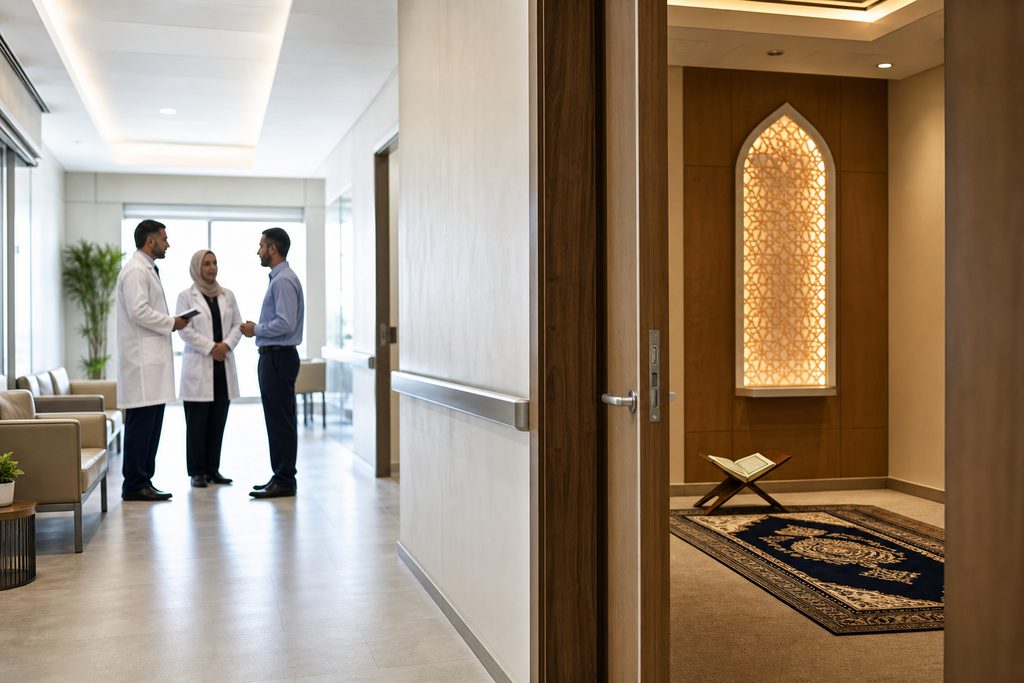
When 54-year-old Ahmed from Jeddah received his hepatocellular carcinoma diagnosis, the first thing he did was open Google Maps. Not to find a local hospital. He already knew the wait times there. He typed in “Shanghai oncology hospital” and then, a few searches later, the question that truly kept him awake: “Will I be able to pray there?” For a patient facing a partial hepatectomy, the technical skill of the surgeon and the availability of a quiet, clean space for salah are not competing priorities. They are the same priority. Our team has coordinated care for hundreds of patients from the Gulf region, and the intersection of world-class surgical volume and spiritual logistics is where our daily work happens.
Liver Cancer Resection in China: The Short Answer
The liver cancer resection cost in China typically ranges from $18,000 to $35,000 USD for an uncomplicated partial hepatectomy at a top-tier public hospital’s international wing. That figure is roughly one-fifth to one-tenth of the $150,000+ bill common in the United States. But the raw price tag is only the surface layer. The deeper value lies in surgical volume: a single high-volume center in Shanghai may perform more liver resections in a month than a regional Western hospital does in a year. That repetition translates into a level of operative fluency that is hard to replicate elsewhere. The caveat: accessing that fluency requires navigating a system not built for walk-in international patients. You do not simply book a surgery slot online. You enter through a structured pathway—one that we manage daily.
Who This Is Right For — and Who It Isn’t
This pathway is not a universal solution. It fits a specific profile, and we are direct about that because a mismatch wastes everyone’s time and hope.
Patients who typically do well with this approach:
- Those with a confirmed, localized HCC or liver metastasis where the tumor is anatomically resectable.
- Patients whose liver function (Child-Pugh A, or compensated B in select cases) can tolerate a major resection.
- Individuals who have already obtained a clear CT/MRI and lab workup from their home country—this is the raw material for a meaningful remote evaluation.
- Families who are comfortable with a 2-4 week in-country stay for surgery and initial recovery, followed by a structured handoff back to their local oncologist.
Situations where this is unlikely to be the right move:
- Diffuse, multi-focal disease that is beyond surgical cure and requires systemic therapy only. Traveling across continents for a surgery that is not indicated makes no sense.
- Severe, decompensated cirrhosis (Child-Pugh C) where the operative risk outweighs any potential benefit, regardless of the surgeon’s skill.
- An expectation of a five-star hotel experience inside a public hospital. The international VIP wards are comfortable and private, but they sit within massive, busy institutions. The corridors are crowded. The pace is fast. That is the trade-off for the surgical volume.
- Patients who need a guaranteed surgery date before they buy a plane ticket. No ethical surgeon will commit to a date without first examining you in person. We can coordinate a rapid in-person assessment, but we cannot skip it.
The Options, Compared
When a patient from the Middle East considers traveling for a liver resection, the decision matrix usually includes staying local, traveling to a Western center, or coming to China. The table below lays out the trade-offs with concrete figures, not adjectives.
| Factor | Local Private Hospital (Gulf Region) | Major US/EU Cancer Center | China Top-Tier Public Hospital (Intl. Wing) |
|---|---|---|---|
| Resection Cost (Partial Hepatectomy) | $40,000 – $70,000 | $120,000 – $200,000+ | $18,000 – $35,000 |
| Annual Liver Resection Volume (per center) | 30 – 80 | 100 – 250 | 400 – 1,200+ |
| Wait Time for Surgery Slot | 1 – 3 weeks | 4 – 12 weeks | 1 – 3 weeks (after in-person consult) |
| Halal Food Availability | Default | Requires request; limited in some cities | Available with coordination; major cities have halal restaurants and hospital kitchen arrangements |
| Dedicated Prayer Space in Hospital | Common | Rare; multi-faith room sometimes available | Not standard, but a private room can be arranged; nearby mosques in major Chinese cities |
| Language Barrier in Clinical Care | None (Arabic/English) | None (English) | Significant; bilingual companion essential for non-Mandarin speakers |
If your primary filter is cost and surgical volume, the right-hand column pulls weight. If your filter is zero logistical friction and built-in spiritual infrastructure, staying local wins. Most patients we work with from the Gulf are optimizing for the first two factors while accepting that the third requires a deliberate, pre-planned layer of support.
What “Prayer Facilities” Actually Look Like in Chinese Hospitals
Let’s address the question that search engines rarely answer well. A standard Chinese public hospital does not have a dedicated, signposted Muslim prayer room. That is the honest truth. But the practical reality on the ground is more workable than that fact suggests, provided you plan ahead.
In the international VIP wards of major hospitals in Shanghai, Beijing, and Guangzhou, the patient rooms are private and spacious. A patient or family member can lay down a prayer mat, orient themselves toward the Qibla, and perform salah without interruption. The nursing staff, especially in international departments accustomed to Middle Eastern patients, are familiar with this need and will not disturb you during prayer times. We also provide a Qibla compass app recommendation and can confirm the direction in your specific room before you arrive.
For Friday prayers, the solution is outside the hospital. Shanghai has several active mosques—the Huxi Mosque and the Songjiang Mosque are two well-known ones. Beijing’s Niujie Mosque is over a thousand years old and still vibrant. Guangzhou’s Huaisheng Mosque is one of the oldest in the world. A member of our bilingual companion team can escort a stable patient or a family member to Friday prayer and back. This is not a theoretical offering; it is a scheduled, line-item part of the day’s logistics.
Halal food requires similar advance coordination. The hospital kitchen in an international ward can usually accommodate a halal diet request, but you must specify it clearly and early. Outside the hospital, halal restaurants are common in the major cities where we operate—Shanghai alone has dozens of Lanzhou lamian shops and Xinjiang-style restaurants that are reliably halal. We map these out for families before they land. The key is that none of this is automatic. It is all achievable, but it requires a coordinator who knows the landscape.
What It Costs: Breaking Down the Liver Cancer Resection Cost China
The liver cancer resection cost China figure of $18,000 to $35,000 is your hospital bill. That typically covers the surgeon’s fee, anesthesiology, operating room time, the inpatient stay in the international ward (usually 7-14 days post-op), standard nursing care, and basic pathology on the resected tumor. It does not include pre-operative imaging if you need repeat scans in China, which can add $1,000 to $2,500. It does not include airfare, accommodation for family before and after the hospital stay, or our coordination and companion services.
Our bilingual medical companion service starts from $200 per day. A typical two-week surgical trip might involve 3-4 days of pre-op consultations and tests, a 7-10 day inpatient stay, and 2-3 days of post-discharge monitoring before you are cleared to fly home. That adds a companion cost in the range of $2,800 to $4,000. The video consultation or written second opinion that precedes all of this—the step where a Chinese liver surgeon reviews your existing scans and labs—runs from $300 to $800. That fee is fully credited toward our on-the-ground coordination service if you proceed to surgery within 90 days.
So a realistic all-in budget, excluding international flights, sits in the $25,000 to $45,000 range. That is the number to compare against the $150,000+ quote from a US center.
Practical Considerations: Documentation, Visas, and the Fast-Track Reality
The phrase “fast track” gets thrown around loosely. Here is what it actually means in this context. You cannot skip the queue for a public hospital’s general ward. That queue is long and moves on its own logic. What you can do is enter through the international VIP channel, which operates on a separate, appointment-based schedule. That is the only ethical pathway for an overseas patient who wants to book a liver tumor removal surgery in China with minimal waiting.
The sequence works like this. First, you send us your existing medical records: contrast-enhanced CT or MRI, recent liver function tests, AFP tumor marker levels, and any prior biopsy reports. We translate these and submit them to the international department of the hospital you have chosen—often a center ranked among China’s top 10 for oncology, such as Zhongshan Hospital Fudan University in Shanghai. A specialist reviews the materials and provides a written opinion or a video consultation. If the surgeon confirms resectability and agrees to take your case, we then schedule your in-person consultation. You fly to China on an S2 visa, which is the correct short-stay category for private medical treatment. Your accompanying family members also apply for S2 visas. The hospital provides the invitation letter that supports the application.
You land, meet the surgeon, complete any additional pre-op tests, and typically have surgery within a week. That is the fast track: not a magic bypass, but a pre-vetted, pre-scheduled pathway that eliminates the months of uncertainty a cold inquiry would involve.
Payment is upfront. Chinese public hospitals require a deposit before admission, and you settle the balance upon discharge. International insurance is rarely accepted for direct billing at public hospitals; you pay and then claim reimbursement from your insurer. Private international hospitals like United Family or Jiahui do offer direct billing, but their surgical volumes for something as complex as a major hepatectomy are lower. For liver cancer, the volume is in the public giants.
Frequently Asked Questions
The safety profile at a high-volume center is comparable to any top Western institution. The major hepatobiliary surgery departments in Shanghai and Beijing publish their mortality and complication rates in peer-reviewed journals, and for a standard partial hepatectomy in a well-compensated patient, the 90-day mortality rate is under 2%. The risk is not the operating theater—it is the communication breakdown that can happen on the ward if no one speaks the patient’s language. That is a solvable problem with a bilingual companion present for every clinical interaction.
They are not purpose-built facilities. You will not find a permanent, multi-faith room with ablution stations in a standard Chinese public hospital. What you will find, with proper coordination, is a private patient room that serves as your prayer space, a nursing team that respects your schedule, and a companion who can escort you or your family to a nearby mosque for Jumu’ah. It is a functional solution, not a purpose-designed one. For many patients, that is sufficient. For some, it is not. We encourage you to be honest with yourself about which camp you fall into before you commit to travel.
There is no off-the-shelf “package” that bundles surgery, halal meals, and a prayer room into a single SKU. That is not how Chinese hospitals sell their services. What we do instead is build a coordinated plan around your specific surgery. The hospital provides the clinical care. We arrange the halal food logistics—either by coordinating with the hospital kitchen or by directing your family to nearby halal restaurants for daily meal runs. We ensure your room is set up for prayer. The pieces are all available; they just require someone to assemble them.
Zhongshan Hospital Fudan University consistently ranks among China’s top three for hepatobiliary surgery and oncology. Its liver surgery department performs over 4,000 liver resections annually—a number that dwarfs most Western centers. The international medical center there has experience with patients from the Gulf region and understands the dietary and privacy requirements that often matter to Middle Eastern families. Other strong options include Renji Hospital and Shanghai Eastern Hepatobiliary Surgery Hospital. The right choice depends on the specifics of your tumor location and your liver function. We help you match the case to the center.
Your Chinese surgeon will provide a detailed operative note, pathology report, and a post-operative care plan in English. You hand this to your local oncologist or hepatologist, who takes over your surveillance imaging and long-term management. The Chinese team is available for follow-up questions via email or a scheduled video call, but they will not manage your day-to-day recovery from across the ocean. The handoff must be planned before you leave China. If you do not have a local doctor willing to receive you back, this entire pathway becomes riskier. We ask about your home-team situation in the very first conversation.
Your Next Step
Traveling to China for a liver resection is not a leap of faith. It is a calculated decision that makes sense when the surgical volume, the cost differential, and the logistical support align with your specific diagnosis. Our team does not provide medical advice or make promises about surgical outcomes—we are not a hospital, and we do not diagnose. What we do is handle the coordination that turns a daunting idea into a structured, day-by-day plan: the record translation, the specialist connection, the visa guidance, the bilingual companion who stays with you from airport pickup to post-op discharge, and the spiritual logistics that make a foreign hospital room feel a little less foreign. If you have your imaging and lab reports ready, start with a free consultation. We will tell you honestly whether this pathway fits your case, and if it does, we will map out every step before you spend a single dollar on a plane ticket.
For more medical information and treatment options in China, visit chinamedservices.com (China Medical Services).
