Chemotherapy in China: How Scheduling Works, Real Costs, and Timelines
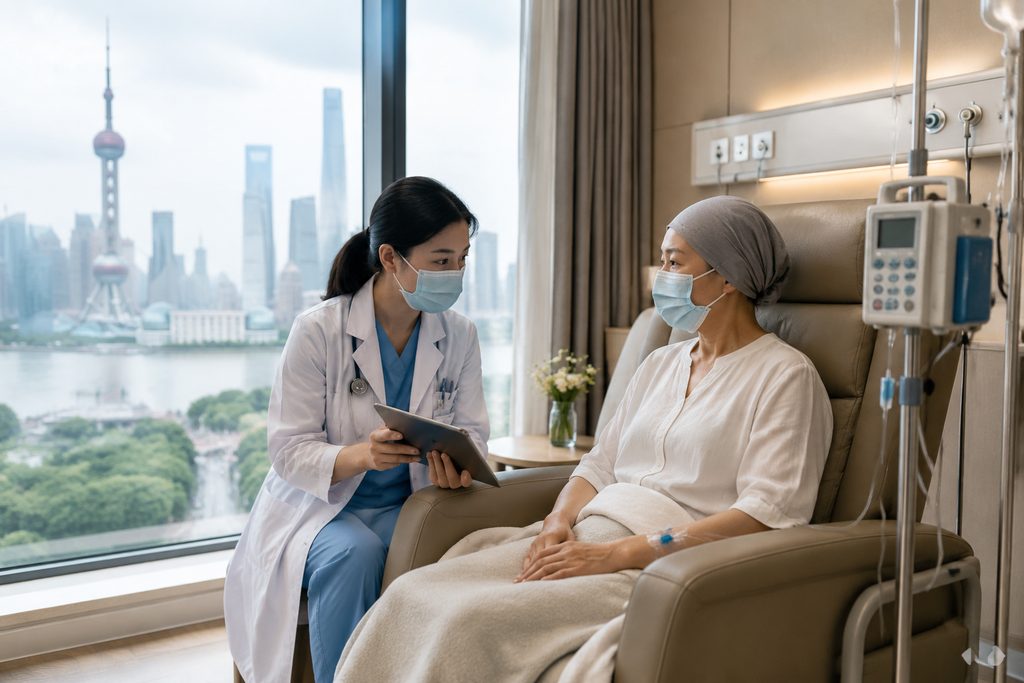
While a patient in the United Kingdom might wait 62 days from urgent GP referral to first chemotherapy under NHS targets, a patient moving through China’s private and international hospital channels can often complete evaluation and begin a first cycle within 2 to 3 weeks of document submission. That gap is not about lower medical standards. It is about system design, hospital capacity, and a different administrative pathway. For anyone facing a cancer diagnosis, the question “How does chemotherapy scheduling work in China?” is rarely academic. It is usually asked at 2 a.m., after a difficult conversation with a local oncologist, by someone trying to figure out if another option exists. The short answer is that scheduling depends almost entirely on which channel you enter: the public outpatient system, where you queue in person, or the international and VIP departments, where your records are reviewed remotely and a treatment slot is reserved before you fly. The chemotherapy cost China patients actually pay reflects that channel choice, and the difference is significant.
Our team at China Medical Services coordinates this process daily for patients from North America, Europe, the Gulf states, and Southeast Asia. We do not administer treatment. We translate records, route them to the right oncology departments, arrange video consultations, and handle the on-the-ground logistics. This article explains the scheduling mechanics without glossing over the friction points. Because there are friction points, and you should know them before you book a flight.
How This Actually Works, Step by Step
The process starts before you ever set foot in a Chinese hospital. It starts with paper. You send us your existing medical records: pathology reports, imaging studies, blood work, current medication list, and a summary of prior treatments. These must be translated into Chinese. Not summarized loosely—translated precisely, because a mislabeled receptor status or an ambiguous staging note changes everything downstream.
From there, the sequence looks like this:
Step 1 — Record review. The oncology department at your target hospital reviews the translated file. This usually takes 3 to 5 business days. They are checking whether your case falls within their treatment scope and whether they need additional imaging or biopsy material. Sometimes they ask for tissue blocks to be shipped. That adds time.
Step 2 — Video consultation. You speak directly with the oncology team. This is where they take your history, explain their proposed regimen, and answer your questions. The consultation typically costs between $100 and $300 for a standard international department, or $500 to $800 for a top-specialist session. If you need a written second opinion before committing to anything, that runs $300 to $500 and comes back within about a week.
Step 3 — Treatment plan and cost estimate. After the consultation, the hospital issues a formal treatment plan and a line-item cost estimate for the first cycle. This is not a binding contract, but it is specific enough to plan around. The estimate reflects drug choice, dosing, supportive medications, and the administration channel.
Step 4 — Visa and travel. You apply for an S2 visa, which is the short-stay category used for private medical treatment in China. The hospital provides an invitation letter and treatment confirmation document. Processing time varies by consulate, but plan for 1 to 3 weeks. Your accompanying family member applies for the same S2 category.
Step 5 — Arrival and first appointment. You land, attend your first in-person consultation, complete any remaining pre-treatment tests, and receive your first infusion. In the international department pathway, this first appointment is scheduled before you arrive. That is the fundamental difference from the public system.
Chemotherapy Scheduling in China: Public vs. International Channels
Not as a fixed-price package. Hospitals do not sell chemotherapy as a bundled product. What you can do is complete the remote evaluation, receive a treatment plan and cost estimate, and have your first appointment reserved through the international department. The final cost depends on the regimen and your response to treatment.
At top-tier hospitals, yes. Chinese oncology departments at Fudan-ranked institutions follow international treatment guidelines, use the same drug classes, and maintain rigorous safety protocols. The main variable is the hospital tier. A small regional hospital is not equivalent to a top-ten oncology center. Choose the institution carefully.
Your treating hospital will give you an emergency contact protocol. International departments have 24-hour phone lines, and you can return to the hospital’s emergency department at any time. If you are staying far from the hospital, factor that into your accommodation choice. Most patients stay within 30 minutes of the hospital for the duration of treatment.
Yes, if you request it. The Chinese oncology team will provide treatment summaries and discharge documents in English (or translated to English) that you can share with your home physician. Coordination between your Chinese team and your local oncologist is important, especially for long-term follow-up after you return home.
Your Next Step
Chemotherapy scheduling in China is not mysterious. It is a structured process with clear steps, known costs, and a realistic timeline—once you are in the right channel. The patients who struggle are the ones who arrive without records, without a visa, and without a plan, expecting the public system to accommodate them. The patients who do well are the ones who complete the remote evaluation first, speak with the oncology team before flying, and arrive with a reserved appointment and a translated file.
We are China Medical Services. We coordinate the process described in this article: record translation, hospital matching, video consultation scheduling, visa documentation support, and on-the-ground bilingual accompaniment. We do not provide medical advice, and we do not guarantee outcomes. But we do make the pathway navigable. If you are considering chemotherapy in China, start with a conversation. Tell us your diagnosis, send your records, and we will tell you honestly whether this makes sense for your case. Request a free consultation and we will walk you through the next step.
Frequently Asked Questions
Yes. The hospitals used for international patients are JCI-accredited and follow the same international safety standards as top hospitals in the US and Europe. Surgical teams perform high volumes of procedures — often more than their Western counterparts — which studies show leads to better outcomes.
Costs vary by procedure and hospital, but international patients typically save 40-80% compared to US prices — even when factoring in travel and accommodation. A consultation with our team will give you an exact, all-inclusive quote with no hidden fees.
Send us your existing medical reports to get started. We handle everything from hospital selection and appointment scheduling to visa assistance and post-operative recovery planning. Your medical records are reviewed by the specialist before you even book a flight.
For more medical information and treatment options in China, visit chinamedservices.com (China Medical Services).
