Why Choose China for Same-Day Diagnosis: Speed and Cost Advantages
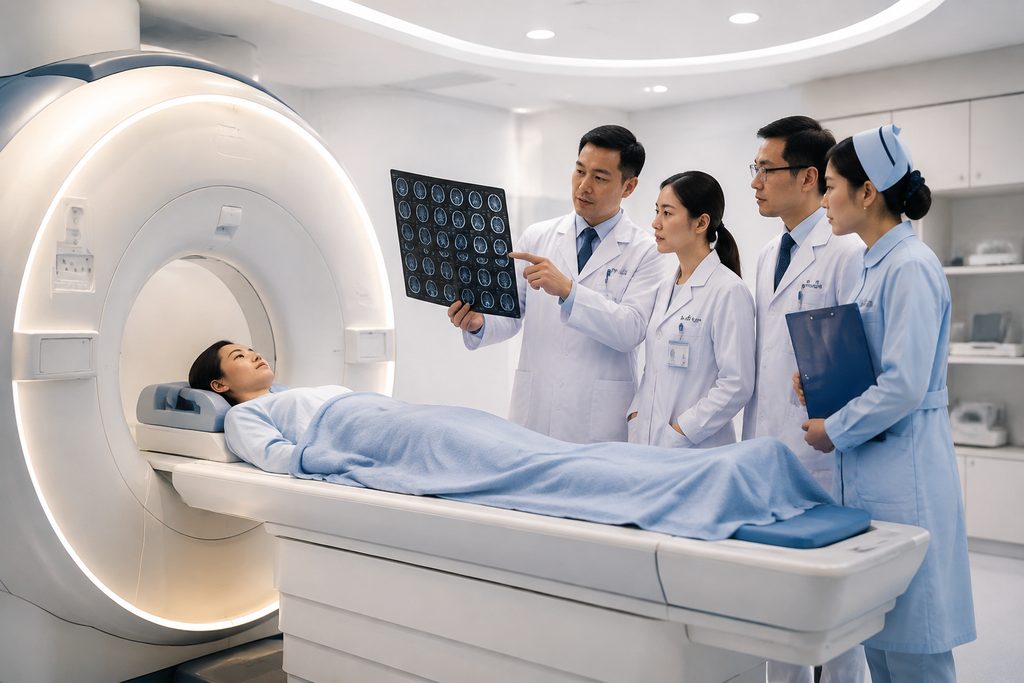
Have you waited three weeks for an MRI result that a radiologist in Shanghai could deliver before dinner? For patients with a suspicious lump, unexplained pain, or an abnormal blood panel, waiting is not an inconvenience. It is a clinical risk. The search for same day diagnosis China cost usually starts with frustration — a referral delay in London, a prior authorization denial in Houston, or a six-month queue for a specialist in Toronto. Our team at China Medical Services has spent years mapping the diagnostic pathways inside China’s top-tier hospitals. The speed gap is real. It is also measurable, structured, and available to foreign patients who understand how the system operates.
Key Takeaways
- Top Chinese hospitals routinely return MRI reports within 2–6 hours and lab panels within 1–3 hours, compared to 3–14 days in many Western systems.
- Same-day diagnostic packages in Beijing and Shanghai cost $150–$600, roughly one-fifth to one-tenth of comparable US private scans.
- Speed comes from operational design — on-site radiologists, same-day lab runs, and hospital-scale volume — not from cutting clinical corners.
- Foreign patients need an S2 visa for medical treatment; ordinary public outpatient queues cannot be booked from overseas without a local presence.
The Problem: Diagnostic Waiting Is a Hidden Health Cost
In the United Kingdom, the National Health Service reported in 2024 that over 1.6 million patients waited more than 28 days for a diagnostic test result. In Canada, the median wait between a general practitioner referral and an MRI scan reached 10.6 weeks, according to the Fraser Institute’s annual survey. The United States performs better on raw speed for insured patients, but the financial gatekeeping is brutal: a brain MRI without contrast averages $1,600–$2,800 at hospital-based imaging centers, and a comprehensive metabolic panel can bill at $200–$500 before insurance negotiation.
What happens during those weeks? For oncology patients, a delay of even four weeks between symptom presentation and treatment initiation is associated with measurably worse survival outcomes in breast, colorectal, and head-and-neck cancers. A 2020 BMJ study found that each month of delay in cancer treatment increased mortality risk by approximately 10%. The waiting is not neutral. It changes the clinical picture. And for patients with unexplained neurological symptoms, a slow workup means living with uncertainty that erodes the ability to work, travel, or plan a life.
Why China’s Diagnostic Infrastructure Delivers Speed
The speed is not accidental. It is engineered into the operational model of China’s 340+ top-ranked hospitals, which sit within the top 5% of the country’s 35,000+ medical institutions. Three structural factors explain why a patient can land in Beijing on Tuesday morning and hold a full diagnostic report by Tuesday evening.
Radiology Departments Run Like Production Lines
At hospitals such as Zhongshan Hospital Fudan University in Shanghai or Peking Union Medical College Hospital in Beijing, MRI machines operate 16–18 hours per day, seven days a week. A single high-volume center can complete 300–500 MRI studies daily. Radiologists work in shifts inside the hospital, not remotely on a queue. The reporting turnaround for a standard non-contrast brain or lumbar spine MRI at these centers typically runs 2–6 hours after scan completion. Contrast studies take slightly longer. But the same study at a typical US outpatient imaging center often waits 24–72 hours for a report, and the patient waits another week for the ordering physician to call with results.
Laboratory Medicine Is Centralized and Automated
Chinese tertiary hospitals process routine hematology and biochemistry panels on fully automated lines that return results in 1–3 hours. Tumor marker panels, thyroid function tests, and coagulation profiles are batched continuously throughout the day, not sent to a regional reference lab. That means a fasting blood draw at 8:00 AM can produce a complete metabolic panel, complete blood count, lipid profile, and HbA1c by 11:00 AM. Patients frequently ask can I get blood test results same day China — the honest answer is yes for the vast majority of routine panels, with the caveat that specialized genetic or pathology tests require days to weeks anywhere in the world.
Physical Examination Centers Are Built for Throughput
Many large Chinese hospitals operate dedicated health examination centers that run executive-style checkups as a core service line, not an afterthought. A quick medical check up package Beijing at a public tertiary hospital’s international department typically includes chest X-ray, abdominal ultrasound, ECG, full blood panel, and physician consultation, with results compiled the same afternoon. The price range is $150–$400 depending on hospital tier and package depth. Private international hospitals such as United Family or Jiahui offer the same service with English-speaking staff and direct insurance billing, usually at $400–$800 for a more comprehensive package.
How Fast Can I Get MRI Results in Shanghai: A Timeline
The question how fast can I get MRI results in Shanghai deserves a concrete answer, not a vague promise. Here is the realistic workflow at a top-tier public hospital’s international or VIP department, based on our coordination experience:
| Time | Action | Typical Outcome |
|---|---|---|
| Day 0 (before travel) | Send existing records for remote review; hospital confirms scan appropriateness | Written recommendation within 48–72 hours |
| Day 1, 8:00 AM | In-person registration at international department; specialist orders the MRI | Scan scheduled same day or next morning |
| Day 1, 10:30 AM | MRI performed (30–45 minutes for single region) | Images available immediately on hospital PACS |
| Day 1, 2:00–4:00 PM | Radiologist report finalized; treating specialist reviews images directly | Verbal interpretation same afternoon |
| Day 1, 5:00 PM | Written report and CD/DVD of images provided; treatment discussion begins | Patient leaves with complete diagnostic package |
This timeline assumes a single-region MRI without contrast and a hospital with an active international department. Multi-region scans, contrast administration, or specialized sequences (cardiac MRI, MRCP, functional MRI) extend the process by a day. But the core point stands: the bottleneck is not the scanner or the reporting. It is scheduling access. And that access is managed differently in China’s international departments.
Same Day Diagnosis China Cost: What the Numbers Look Like
Let us address the financial question directly. The same day diagnosis China cost structure differs sharply from Western billing. Chinese hospitals price diagnostics as line items, not as negotiated insurance bundles. That transparency cuts both ways — you see exactly what each test costs, and you pay before the service is rendered. Here is a representative comparison for a standard diagnostic workup:
| Diagnostic Item | China Top Public Hospital (USD) | US Hospital-Based Imaging (USD) | UK Private (USD) |
|---|---|---|---|
| Brain MRI (non-contrast) | $150–$300 | $1,600–$2,800 | $800–$1,500 |
| Complete blood panel + metabolic panel | $30–$80 | $200–$500 | $150–$350 |
| Chest CT (low-dose) | $100–$250 | $700–$1,500 | $500–$900 |
| Abdominal ultrasound | $40–$100 | $300–$700 | $200–$400 |
| Specialist consultation (international dept.) | $100–$300 | $350–$700 | $250–$500 |
Prices vary by hospital and case complexity. A full one-day executive screening at a private international hospital in Beijing or Shanghai runs $500–$1,200. The same package at a public hospital’s VIP clinic costs 40–60% less. Neither price includes travel or accommodation. But even adding a round-trip flight from Europe or the Middle East, the total cost often lands below the out-of-pocket cost of diagnostics alone in the US for uninsured or high-deductible patients.
One Day Full Body Scan China Price and What It Actually Includes
The phrase one day full body scan China price often comes from patients who want a comprehensive cancer and cardiovascular screen in a single visit. Chinese hospitals do offer this — but the terminology matters. What patients call a “full body scan” is usually a combination of low-dose chest CT, abdominal and pelvic ultrasound, thyroid ultrasound, ECG, and a broad tumor marker panel. Some executive packages add a brain MRI or coronary calcium scoring.
At a public tertiary hospital’s international department, this runs $400–$800. At a private international facility, expect $800–$1,500. The scan itself takes 3–5 hours spread across imaging suites. Results are compiled the same day, with a physician review before discharge. A word of caution: whole-body MRI screening is not routinely recommended by most evidence-based guidelines due to high false-positive rates. Reputable Chinese hospitals will tell you this. If a package promises a full-body MRI with “zero false positives,” that is a marketing red flag, not a medical statement.
Fast Diagnosis Hospitals China for Foreigners: How to Identify Them
Not every Chinese hospital serves foreign patients well. The term fast diagnosis hospitals China for foreigners points to a specific subset of institutions. Here is what separates them:
- Accredited international departments. These units employ English-speaking coordinators, accept foreign insurance documentation, and schedule diagnostics without requiring a local national ID card. The Fudan-ranked top 100 hospitals are concentrated in Beijing (21 hospitals) and Shanghai (18 hospitals), with Guangzhou, Chengdu, and Hangzhou adding another 20+ combined.
- Same-day lab and imaging capacity. The hospital must operate its own MRI, CT, ultrasound, and laboratory on campus. Off-site or outsourced imaging kills the speed advantage. All top-tier public hospitals meet this bar; smaller district hospitals may not.
- Private international hospitals with JCI accreditation. Facilities like United Family, Jiahui, Parkway, and Raffles offer Western-style care, English-speaking physicians, and direct insurance billing. They are more expensive than public VIP departments but remove nearly every friction point. Our private hospital directory lists accredited options across major cities.
Reality check: Ordinary public outpatient departments in China cannot be booked from overseas. You cannot email a hospital and reserve a Tuesday morning neurology slot at the standard public price. The international department or VIP channel is the only route that allows advance scheduling from abroad, English-language support, and same-day result compilation. That channel costs 1.5–2 times the standard public price — still far below Western private rates, but not free.
Practical Considerations: Documentation, Visas, and Payment
If you are seriously evaluating a same-day diagnostic trip to China, the logistics are manageable but specific. The visa category for medical treatment is the S2 visa, issued for short-term private affairs including medical care. Accompanying family members also apply for S2. The hospital’s international department will issue an invitation letter and treatment confirmation, which you submit with your application. Processing typically takes 5–10 business days, depending on your home country’s Chinese embassy or consulate. No visa category guarantees approval; the embassy reviews each application on its merits.
Payment is almost always required upfront at public hospitals. International departments accept major credit cards, wire transfers, and sometimes WeChat Pay or Alipay if you have a Chinese bank account. Private international hospitals may bill your insurer directly if they have a contracted relationship. Otherwise, you pay and seek reimbursement from your insurer afterward. Bring all prior imaging on CD or in DICOM format — Chinese radiologists will want to compare against your baseline. Bring a complete medication list, including generic names. And bring a family member or companion who can help you navigate the physical space; a single-day diagnostic marathon involves a lot of walking between departments.
Request your written report and imaging in both Chinese and English before leaving the hospital. The international department can usually provide an English translation of the radiologist’s report within 24–48 hours. This matters for your home physician’s review.
Frequently Asked Questions
Yes, at top-tier hospitals with international departments, a standard non-contrast MRI report is typically available 2–6 hours after the scan. The treating specialist can often review the images with you the same afternoon. Contrast studies, multi-region scans, or specialized sequences may require an extra day.
For most imaging and lab panels, yes. A brain MRI that costs $1,600–$2,800 in the US hospital system costs $150–$300 at a Chinese top public hospital. Even with international department pricing (1.5–2 times the standard rate), the total is usually one-fifth to one-tenth of US list prices. Private international hospitals in China are more expensive but still typically undercut Western private rates.
The specialist who ordered the scan will discuss the findings with you directly. If surgery or further treatment is needed, the same hospital can usually schedule it — but admission and surgical planning follow the hospital’s own clinical rules, not a guaranteed timeline. You are never obligated to proceed with treatment in China. You can take the complete diagnostic record home and continue care with your local physician.
Yes. Medical treatment falls under the S2 visa category for short-term private affairs. The hospital issues an invitation letter that supports your application. Processing time varies by country, so plan at least 2–3 weeks ahead. A standard tourist visa is not the correct category for medical care and may be rejected if the purpose is treatment.
You can contact hospital international departments directly, but response times vary and language barriers are common outside Beijing, Shanghai, and Guangzhou. Many international patients use a coordination service to handle scheduling, record translation, and on-the-ground navigation. The choice is yours — the hospital will not refuse a direct inquiry, but the process moves much faster with a local point of contact.
Your Next Step
The diagnostic speed available in China’s top hospitals is not a secret — it is a structural feature of how their radiology, laboratory, and examination systems are built. Whether you are chasing a same day diagnosis China cost advantage or simply tired of waiting weeks for answers, the option deserves serious evaluation. Our team at China Medical Services helps international patients match with appropriate hospitals, coordinate appointments, and navigate the process on the ground. We are not a hospital and we do not provide diagnoses. But we do know how the system works, and we can help you use it efficiently. If you would like to explore whether a diagnostic trip to China makes sense for your situation, start with a free consultation. We will review your case, suggest realistic options, and let you decide from there.
For more medical information and treatment options in China, visit chinamedservices.com (China Medical Services).
