Is It Worth Flying to China for a Full Body MRI? Our Honest Guide
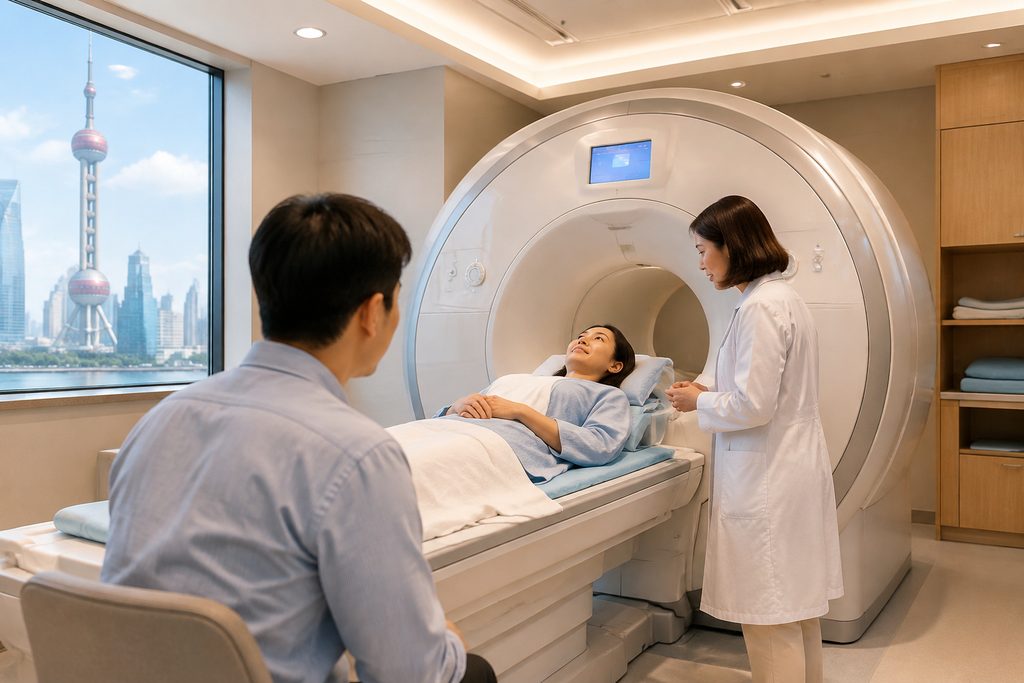
You’ve probably heard that getting a full body MRI in China means walking into a chaotic public hospital, waiting for hours, and hoping someone speaks English. The reality is different. A network of 340+ top-ranked hospitals across 37 cities has spent the last decade building international patient departments specifically for people flying in from abroad. The imaging technology is often newer than what you’d find in a typical Western clinic. The radiologists read thousands of scans a year. And the full body mri cost china is typically 60-80% lower than comparable private-pay scans in the United States or Europe.
But is it actually worth getting on a plane for a scan? That depends on what you’re comparing it to, what you expect from the results, and how you handle the logistics. This guide walks through the real numbers, the safety questions, and the honest trade-offs.
How This Actually Works, Step by Step
Let’s say you’re sitting in London or Los Angeles, and you’ve decided to explore a full body scan in China. Here’s the sequence that actually plays out.
First, you reach out to a coordination service or directly to a hospital’s international department. You’ll send basic information: age, medical history, any specific concerns, and what type of scan you’re considering. A whole-body MRI usually covers the brain, spine, chest, abdomen, and pelvis. Some packages add cardiac imaging or a low-dose CT for lung screening.
Next, the hospital reviews your case. A radiologist or international liaison confirms that a full body MRI is appropriate for you. This matters more than you’d think. Not everyone should get one. If you have no symptoms and no family history of certain cancers, some hospitals will push back and suggest a more targeted scan instead.
Then comes scheduling. Most top-tier Chinese hospitals can book an MRI slot within 1-2 weeks. That’s dramatically faster than the 6-12 week waits common for private MRI in the UK or Canada. You’ll need to plan travel around the appointment.
On the day of the scan, you’ll arrive at the international department, not the main public lobby. A bilingual coordinator typically meets you, handles registration, and walks you through the consent forms. The scan itself takes 60-90 minutes depending on the protocol. You lie still. The machine does the work.
Results come back in 2-5 days. Most international departments provide a written report in English, often with the images on a USB drive or via a secure online portal. Some hospitals include a follow-up video consultation with the radiologist to walk through findings.
What the Full Body MRI Cost China Actually Looks Like
Let’s talk numbers, because that’s what most people search for first. The full body mri cost china varies significantly by city, hospital tier, and what’s included in the package. Here’s a realistic breakdown based on published international department pricing and patient-reported costs.
| Location & Hospital Type | Typical Full Body MRI Price (USD) | What’s Usually Included |
|---|---|---|
| Public hospital, standard international department (Beijing, Shanghai, Guangzhou) | $800 – $1,500 | Scan only, basic English report |
| Top-tier public hospital, VIP international wing (e.g., Peking Union, Zhongshan, Ruijin) | $1,500 – $2,500 | Scan, senior radiologist read, English report, consultation |
| Private international hospital (United Family, Jiahui, Parkway) | $2,000 – $3,500 | Scan, English-speaking staff, same-day preliminary results, concierge service |
| Comprehensive executive health screening package including full body MRI | $3,000 – $6,000 | MRI plus labs, cardiac tests, ultrasound, physician summary, sometimes hotel coordination |
Compare that to the United States, where a private-pay whole-body MRI at a boutique imaging center runs $2,500 to $6,000, and a full executive physical with MRI can hit $10,000. In the UK, private full body scans through companies like Prenuvo or Vista Health range from £1,500 to £3,000. The gap narrows when you factor in flights and hotels, but for many people the math still works.
How much is a full body scan in Beijing? At a public hospital’s international department, expect $1,000 to $2,000. At a private hospital like Beijing United Family, plan for $2,500 to $3,200. Shanghai runs slightly higher on average, especially at the international wings of Fudan-affiliated hospitals. Guangzhou and Chengdu tend to be 10-20% cheaper than Beijing or Shanghai.
One thing people miss: the quoted price for a full body MRI in China usually covers the scan and report only. If the radiologist finds something that needs follow-up, that follow-up costs extra. A targeted second MRI, a biopsy, or a specialist consultation all add to the total. Budget for that possibility.
Is Full Body MRI in China Safe?
The short answer: yes, at accredited hospitals. The longer answer requires understanding how imaging safety actually works.
MRI itself does not use ionizing radiation. That’s a key advantage over CT-based full body scans, which expose you to a meaningful radiation dose. A whole-body CT scan delivers roughly 10-20 mSv of radiation, equivalent to 3-7 years of background exposure. MRI uses magnetic fields and radio waves. No radiation. That safety profile is identical whether you’re scanned in Shanghai or Seattle.
The safety question for China specifically comes down to equipment quality, technician training, and radiologist expertise. Here’s what we tell patients:
China’s top 5% of hospitals, ranked by the Fudan University hospital rankings and JCI accreditation, operate the same MRI machines you’d find at leading Western centers. Siemens Magnetom, GE Signa, Philips Ingenia — these are the standard platforms. Many were installed within the last 5-7 years. Some are newer than what a mid-sized Western hospital runs.
Technician training varies. At the 340+ top-ranked hospitals we work with, MRI technologists complete formal training programs and perform thousands of scans annually. The volume matters. A technologist who runs 20 scans a day sees positioning issues, motion artifacts, and anatomical variants that a low-volume operator might miss.
Radiologist expertise is where China’s top hospitals genuinely stand out. A senior radiologist at a major Chinese hospital may read 50-100 cross-sectional imaging studies per day. That volume builds pattern recognition that’s hard to replicate elsewhere. For a full body scan, which generates hundreds of images, an experienced reader is essential.
A Realistic Timeline
People assume the hard part is the scan itself. It isn’t. The waiting steps around the scan are where timelines stretch. Here’s an honest schedule, assuming no major findings and no visa complications.
| Stage | What Happens | Realistic Timeframe |
|---|---|---|
| Initial inquiry | You contact a coordinator or hospital. Basic health questionnaire exchanged. | Day 1 – Day 3 |
| Case review | Hospital confirms appropriateness of full body MRI. May request existing records. | Day 3 – Day 7 |
| Scheduling | MRI slot confirmed. You book flights and accommodation. | Day 7 – Day 21 |
| Visa processing | S2 visa application with hospital invitation letter. Processing time varies by embassy. | 1 – 4 weeks |
| Travel to China | Arrive 1-2 days before scan. Acclimatize, handle any pre-scan paperwork. | Day before scan |
| Scan day | Full body MRI. 60-90 minutes in the machine. 2-3 hours total at hospital. | 1 day |
| Results | Written English report delivered. Optional video consult with radiologist. | 2 – 5 days after scan |
| Return home | You fly back with report and images. Share with your local doctor. | Within 1 week of scan |
Total door-to-door: 3 to 6 weeks from first inquiry to having results in hand. The visa is usually the longest single step. Some patients qualify for visa-free transit or already hold multi-entry visas, which cuts the timeline significantly.
And here’s the step people forget: document translation. If you have prior imaging or medical records in a language other than English or Chinese, those need translation before the Chinese radiologist can meaningfully compare. That adds 3-7 days if you don’t have translations ready.
What Can Go Wrong — and What Happens Then
Let’s be direct about the failure modes. They exist, and you should know them before booking a flight.
The scan finds something ambiguous. This is the most common “problem” and it’s not unique to China. Full body MRIs find incidental findings — small cysts, benign lesions, minor disc bulges — in a significant percentage of asymptomatic people. Some studies suggest incidental findings occur in 30-50% of whole-body MRI scans. Most are harmless. But each one creates a question: does this need follow-up? In China, the answer is straightforward: you can often get a targeted follow-up scan or specialist consultation within days, not months. That’s actually an advantage of being on-site. But it also means your “quick scan trip” might extend by a week if you want the follow-up done before flying home.
The report is in Chinese. At top international departments, English reports are standard. At smaller hospitals or if you book through a local agent without international experience, you might receive a Chinese-only report. Fixing this means paying for a medical translator, which costs $100-300 and adds 3-5 days. This is why hospital selection matters. The Fudan-ranked hospitals with established international departments handle English reporting routinely.
Your home doctor questions the scan quality. It happens. A Western physician unfamiliar with Chinese imaging standards might request a repeat scan. If this occurs, the hospital should provide the DICOM files on a USB drive so your local radiologist can review the raw images. Most will accept a properly performed 3T MRI from an accredited Chinese hospital. But you should be prepared for the possibility of a repeat scan, which adds cost and time.
You can’t get a visa in time. S2 visa processing times vary by country and season. Some embassies take 4-6 weeks. If your scan date arrives before your visa does, you reschedule. Most hospitals allow one free reschedule with 7 days’ notice. Coordination services can help with the invitation letter, but no one can guarantee embassy processing speed.
How to Choose Where to Get Scanned
If you’ve decided the trip makes sense, the next question is which hospital. This is where most people go wrong. They search “best hospital for full body mri Shanghai” and click the first result. That’s a start, but it’s not enough.
Here’s what actually matters:
Machine strength and age. For a full body scan, you want a 3T machine if possible. It provides better spatial resolution for small lesions, especially in the brain and prostate. Ask the hospital directly: what field strength is the machine, and when was it installed? A 3T installed in 2022 is ideal. A 1.5T from 2015 is still acceptable for most purposes but less sensitive for small findings.
Radiologist subspecialty. A general radiologist reading a whole-body scan is different from a neuroradiologist reading the brain portion, a body radiologist reading the abdomen, and a musculoskeletal radiologist reading the spine. The best centers use a multi-reader approach, where different subspecialists each review their area. Ask whether the hospital does this. It’s a marker of serious imaging programs.
International department infrastructure. You need more than a good machine. You need English-speaking staff, a process for foreign patients, and experience with medical visa documentation. The private international hospitals like United Family and Jiahui are built for this. The international wings of top public hospitals — Peking Union, Zhongshan, Ruijin, West China — also handle it well. A random public hospital without an international department will be difficult even with a translator.
Package contents. Some hospitals market “full body MRI packages” that include a scan, a report, and nothing else. Others bundle a physician consultation before the scan, a radiologist debrief after, and a written summary in English. The bundled packages cost more but reduce the risk of flying home with a report you don’t understand and no one to ask about it.
For Shanghai specifically, the best hospital for full body mri Shanghai depends on your priorities. If you want the most experienced radiologists and are comfortable with a large public hospital, the international departments at Zhongshan Hospital or Huashan Hospital are strong choices. If you prefer a Western-style experience with all-English communication, Jiahui International Hospital or Shanghai United Family are better fits. Both approaches produce quality scans. The experience differs significantly.
Medical tourism china full body checkup price varies by these factors more than by city alone. A basic scan at a public hospital in Chengdu might cost $800. The same scan at a private hospital in Shanghai might cost $3,000. The difference isn’t just location — it’s the level of service, the seniority of the reading radiologist, and the reporting language.
Practical Considerations: Visa, Payment, Records, and Follow-Up
These are the logistics that determine whether your trip goes smoothly or becomes a headache.
Visa. For medical travel to China, the applicable short-stay category is the S2 visa, which covers private affairs including medical treatment. You’ll need an invitation letter from the hospital or a coordination service, plus proof of the appointment. Processing time ranges from 1 to 4 weeks depending on your home country’s Chinese embassy. Apply early. If you already hold a valid multi-entry visa, confirm it covers medical visits.
Payment. Public hospitals in China typically require prepayment before the scan. International departments accept major credit cards and sometimes bank transfers. Private international hospitals often bill insurance directly if you have a plan with international coverage. Most patients pay out of pocket and seek reimbursement later. Ask for an itemized receipt in English — you’ll need it for insurance claims.
Records. Bring any prior imaging on a CD or USB drive, plus written reports. If they’re not in English or Chinese, get them translated before you travel. The Chinese radiologist will want to compare old and new images, especially if you have a history of cysts, nodules, or other findings that might show up again.
Follow-up at home. The report you receive in China is a starting point, not a final medical opinion. Share it with your primary care physician or a specialist at home. If the Chinese report flags something, your home doctor can order confirmatory tests or refer you appropriately. Don’t expect the Chinese hospital to manage your long-term care from across the ocean. They can provide follow-up consultations by video, but ongoing treatment belongs with your local providers.
Language. At top international departments, you’ll find English-speaking coordinators and often English-speaking radiologists. At smaller hospitals, you won’t. A bilingual medical companion costs from $300 per day and handles registration, translation, and navigation. For a single scan at a well-chosen hospital, you may not need one. For anything more complex, it’s worth considering.
Frequently Asked Questions
A full body MRI in China typically costs $800 to $3,500 depending on the hospital tier and package contents. In the US, the same private-pay scan runs $2,500 to $6,000. The savings are real but partially offset by travel costs. For many patients, the total cost lands at 40-60% of US private-pay pricing when flights and hotels are included.
Is full body MRI in China safe?
Yes, at accredited hospitals using modern equipment from major manufacturers like Siemens, GE, or Philips. MRI involves no radiation, so the safety profile is the same as anywhere else. The key is choosing a hospital with JCI accreditation or Fudan ranking, a 1.5T or
For more medical information and treatment options in China, visit chinamedservices.com (China Medical Services).
