Why Choose China for a Second Opinion: Volume, Speed, and Cost
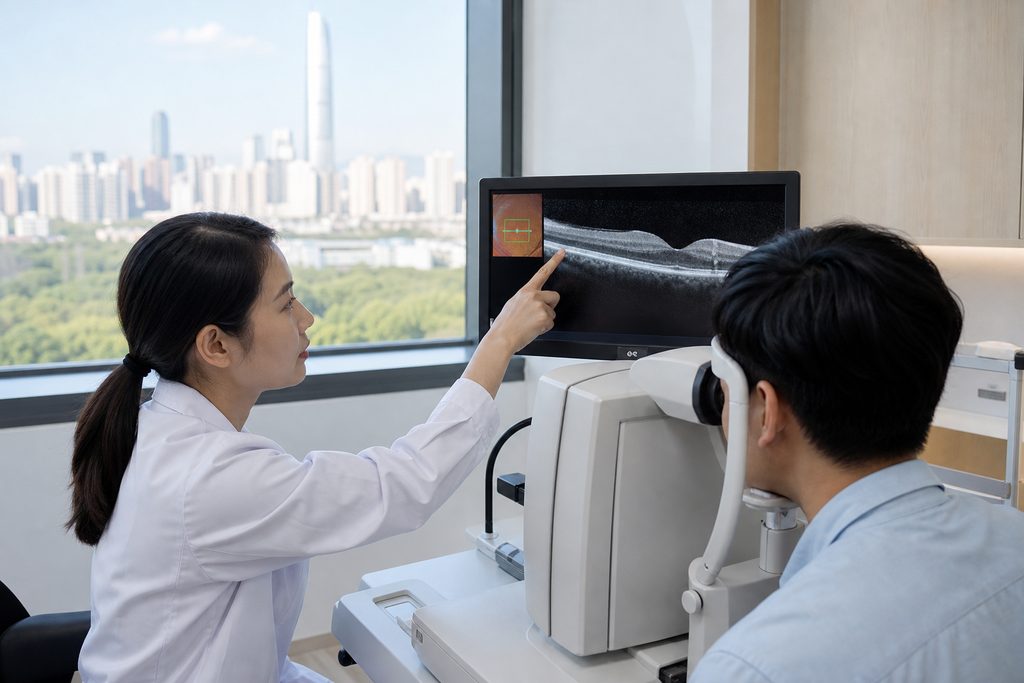
You’ve probably heard that getting medical care in China means compromising on quality. The reality is exactly the opposite for patients seeking a second opinion. China’s top hospitals now handle clinical volumes that dwarf most Western centers, and the second opinion cancer treatment China cost runs roughly 80-90% below what American hospitals charge for the same review. That gap matters when you’re facing a life-altering diagnosis and need clarity without draining your savings.
Key Takeaways
- A written second opinion from a top-tier Chinese specialist typically costs $300-500, compared to $2,000-5,000 at major US cancer centers.
- Fuwai Hospital alone performs over 14,000 cardiac surgeries annually — more than any single US hospital, and volume correlates with outcomes.
- Language barriers and hospital navigation are real obstacles; a bilingual companion costs from $300/day and removes most of the friction.
- Remote second opinions are advisory only — they guide your treatment direction but cannot replace an in-person examination or prescribe medication.
The Problem: A Second Opinion Shouldn’t Cost More Than Your First
An American patient diagnosed with stage II lung cancer faces an average first-year treatment cost of $140,000. Before starting chemotherapy, the oncologist recommends a second opinion. The patient calls a major US cancer center. The quote for a pathology review and written second opinion: $3,200. The appointment is in six weeks. That is the status quo.
Now multiply that scenario across 1.9 million new cancer diagnoses in the United States each year. Roughly 40% of patients seek a second opinion. Many of them pay out of pocket because their insurance network restricts them to a single hospital system. The result: patients either skip the second opinion entirely or delay treatment while waiting for an appointment slot. Neither option is acceptable when tumor progression is measured in weeks.
Western Europe isn’t much better. NHS patients in the UK wait an average of 18 weeks for a specialist referral. Private second opinions in London start around £500 for a basic review and climb quickly for multi-specialist input.
Why China Delivers Results for Second Opinions
Chinese hospitals operate on a scale that changes the economics of expertise. A specialist who sees 80 patients per day has seen your condition hundreds of times before. That repetition produces pattern recognition that no textbook can teach.
Clinical Volume Drives Diagnostic Accuracy
Fuwai Hospital in Beijing performs over 14,000 cardiac surgeries annually. The busiest US cardiac center, Cleveland Clinic, performs around 4,000. For cancer, Fudan University Shanghai Cancer Center treats over 300,000 outpatients yearly. MD Anderson sees approximately 180,000. Volume alone doesn’t guarantee better outcomes, but studies consistently show that hospitals performing more than 20 esophagectomies annually have significantly lower mortality rates than those performing fewer than 5. Chinese top-tier hospitals clear that threshold many times over.
Technology and Efficiency at Scale
Chinese hospitals adopted digital pathology and AI-assisted imaging review faster than most Western systems. A patient’s CT scans can be uploaded, reviewed by a radiologist, and cross-checked by an AI triage system within 48 hours. The workflow is built for speed because the patient volume demands it. No six-week waiting lists. No administrative bottlenecks.
Cost Advantage Without Quality Compromise
The second opinion cancer treatment China cost is lower for structural reasons, not quality reasons. Chinese specialists earn less than their US counterparts — a senior oncologist in Shanghai earns roughly $80,000-120,000 annually versus $300,000-500,000 in the US. Hospital administrative overhead is leaner. Malpractice insurance costs a fraction of American rates. These savings pass directly to the patient. A written second opinion from a top Chinese hospital costs $300-500. The same review at Memorial Sloan Kettering costs $2,000-5,000. The clinical expertise is comparable; the price is not.
How to Get a Medical Second Opinion in China: The Remote Process
You don’t need to fly to Beijing to get answers. The remote second opinion process works in three stages.
Stage 1: Document preparation. You gather your existing medical records — pathology reports, imaging files (DICOM format preferred), blood work, surgical notes, and your current treatment plan. These get translated into Chinese by a medical translator. Accuracy here is non-negotiable; a mistranslated pathology term can change the entire review.
Stage 2: Specialist review. Your case is assigned to a specialist in the relevant department at a top-tier hospital. For cancer cases, this might be a thoracic surgeon at Fudan University Shanghai Cancer Center or a hematologist at Peking Union Medical College Hospital. The specialist reviews your records, writes a detailed analysis of your diagnosis, and outlines treatment options — including whether they agree with your current plan or recommend changes.
Stage 3: Delivery and discussion. You receive the written opinion in English, typically within 5-10 business days. If you want to discuss the findings directly, a video consultation with the specialist costs $100-300 for a standard international department session, or $500-800 for a top specialist. The online second opinion from Shanghai hospital price typically falls in the $300-500 range for a written review, with video consultation adding $100-300 on top.
Is a Second Opinion from Chinese Doctors Reliable? Evaluating the Evidence
This is the question every patient asks, and it deserves a straight answer. Chinese top-tier hospitals are not the same as Chinese average hospitals. The country has over 35,000 hospitals. The top 5% — roughly 340+ institutions ranked by the Fudan University hospital ranking system and JCI accreditation — operate at international standards. These are the hospitals included in our database at China Medical Services.
Peer-reviewed research supports the quality. A 2023 study in The Lancet Oncology found that five-year survival rates for breast cancer at major Chinese cancer centers now match or exceed rates in many European countries. The gap with the US has narrowed to within 2-3 percentage points for most common cancers. For certain procedures — liver cancer resection, esophageal cancer surgery, nasopharyngeal carcinoma treatment — Chinese centers report outcomes that lead the world, largely because these diseases are more prevalent in East Asia and Chinese surgeons accumulate unmatched experience.
But reliability has limits. A remote second opinion is only as good as the records you provide. If your imaging is low-resolution or your pathology slides are unavailable for re-review, the Chinese specialist works with incomplete information. The opinion is advisory — it guides your treatment direction. It does not replace an in-person examination, and no reputable Chinese hospital will prescribe medication based solely on a remote review.
| Service | China (from) | United States (typical) |
|---|---|---|
| Written second opinion (top specialist) | $300-500 | $2,000-5,000 |
| Video consultation (standard international dept.) | $100-300 | $400-800 |
| Video consultation (top specialist) | $500-800 | $1,500-3,000 |
| Multidisciplinary team (MDT) review | $1,500-2,000 | $5,000-10,000 |
| Bilingual medical companion (per day) | $300 | N/A (not typically offered) |
Prices vary by hospital and case complexity. The figures above reflect published rates at Chinese public hospital international departments and private international hospitals as of 2026.
Best Hospitals in China for Second Opinion: Where to Start
Hospital selection depends on your diagnosis. China’s Fudan ranking system publishes specialty reputation rankings across 45 clinical departments, and these are more useful than any general “best hospital” list.
For oncology, the top choices include Fudan University Shanghai Cancer Center, Peking Union Medical College Hospital, and Sun Yat-sen University Cancer Center in Guangzhou. These institutions rank among China’s top 10 for oncology and handle patient volumes that exceed most Western cancer centers. You can browse specialty rankings on our department-specific hospital guides.
For cardiac surgery, Fuwai Hospital in Beijing is the undisputed volume leader. For orthopedics, Peking University Third Hospital and Shanghai Sixth People’s Hospital carry strong reputations. For neurology, Xuanwu Hospital in Beijing and Huashan Hospital in Shanghai lead the specialty rankings.
If you prefer a Western-style experience with English-speaking staff and direct insurance billing, private international hospitals like United Family, Jiahui, and Parkway offer second opinion services too. These come at a higher price point — typically 1.5 to 2 times the public hospital international department rate — but with smoother logistics. Our private hospital directory covers JCI-accredited options in major cities.
Medical Second Opinion Package China for International Patients: What’s Included
A medical second opinion package China for international patients typically bundles several services into one fixed price. At minimum, you should expect: medical record translation (Chinese-English), specialist assignment and review, a written opinion report in English, and a follow-up video consultation to discuss findings.
Some packages add extras: pathology slide re-review, imaging re-interpretation by a Chinese radiologist, or a multidisciplinary team discussion. The MDT option costs $1,500-2,000 and involves 3-5 specialists reviewing your case together — valuable for complex or rare diagnoses where a single specialist’s view may be insufficient.
One structural advantage worth noting: any consultation fee you pay for a remote second opinion can be credited in full toward on-the-ground coordination services if you later decide to travel to China for treatment. The credit applies within 90 days and covers coordination fees only — never hospital treatment charges.
Practical Considerations: Documents, Visas, and Payment
If you’re only getting a remote second opinion, you never need to enter China. Everything happens online. But if the second opinion leads you to consider in-person treatment, the logistics change.
Visa. Foreigners traveling to China for medical treatment apply for an S2 visa, annotated for medical purposes. Accompanying family members also apply for S2. Stays exceeding 180 days require an S1 visa. The M visa is for commercial and trade activities — it has nothing to do with medical travel. Visa approval is never guaranteed and depends on supporting documentation from the receiving hospital, including an invitation letter and treatment plan.
Documents. Bring everything: original pathology reports, imaging discs (not just printed films), surgical records, medication lists, and a summary of your treatment history. Chinese specialists will want to re-review your pathology slides — request these from your original hospital before traveling.
Payment. Chinese public hospitals require prepayment for services. International departments accept major credit cards and bank transfers. Private international hospitals often bill insurance directly. Public hospital international departments typically require payment upfront, with you handling insurance reimbursement afterward.
Language. This is the single biggest practical barrier. Public hospital staff outside international departments rarely speak English. Even within international departments, communication gaps occur. A bilingual medical companion costs from $300/day and handles registration, queue management, payment, navigation, and interpretation. For most patients, this is the difference between a smooth visit and a stressful one.
Frequently Asked Questions
A written second opinion typically takes 5-10 business days after your complete medical records are received and translated. Video consultations can usually be scheduled within 1-2 weeks. Complex cases requiring MDT review may take 2-3 weeks.
Most US and European insurers do not cover out-of-network international second opinions. Some international health insurance plans (Cigna Global, Bupa International, Allianz) may reimburse consultation fees — check your policy. You will likely pay out of pocket and seek reimbursement if your plan allows it.
That is exactly what you want to know. A disagreement doesn’t mean your original doctor was wrong — it means you now have two professional perspectives to weigh. Bring the Chinese opinion back to your treating physician and discuss the differences. The goal is informed decision-making, not replacing one authority with another.
No. A remote second opinion is advisory only. Chinese law prohibits prescribing medication without an in-person examination. If the specialist recommends a specific treatment, you would need to either travel to China for evaluation or discuss the recommendation with your local physician.
Your Next Step
A second opinion should give you clarity, not financial stress. China’s top hospitals offer that clarity at a fraction of Western prices, backed by clinical volumes that produce genuine expertise. We are not a hospital and we do not provide diagnoses — we are a coordination service that connects international patients with China’s top-tier medical institutions, handling document translation, hospital matching, and bilingual support throughout the process. If you’re considering a second opinion, start with a conversation. Get a free consultation to discuss your diagnosis and explore which Chinese hospitals and specialists fit your case.
For more medical information and treatment options in China, visit chinamedservices.com (China Medical Services).
